Best iGaming Affiliate Software Compared: The Operator's Shortlist for 2026

What makes iGaming affiliate software different from generic tracking tools?
iGaming affiliate software must handle RevShare calculated on net gaming revenue, CPA triggers tied to first deposit and wagering thresholds, negative carryover rules, and geo-blocking enforcement — none of which generic SaaS affiliate tools like ShareASale or Impact were built to do. The compliance and commission complexity alone eliminates most non-vertical solutions.
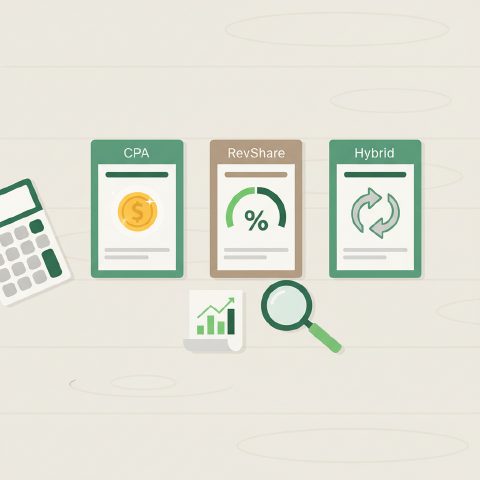
The fundamental difference is the commission model. E-commerce affiliate platforms are built around last-click CPA or percentage-of-sale. iGaming runs on RevShare (typically 25–45% of net gaming revenue), CPA deals tied to qualifying deposits, hybrid models, and increasingly sub-affiliate tiers. Calculating RevShare correctly means pulling real-time NGR data from your casino back-office, applying bonus cost deductions, and handling negative balance carryover — a concept that doesn't exist in retail affiliate marketing.
Regulatory enforcement is the second hard requirement. If you hold a Curaçao eGaming license or an MGA license, your affiliate program must be able to block traffic from restricted jurisdictions at the tracking link level, not just at the landing page. That means your affiliate software needs geo-aware redirect logic and audit-ready logs showing you acted on exclusion lists. I've seen operators get flagged during MGA audits because their affiliate platform had no geo-block records — they were relying on the front-end alone.
Fraud detection is the third dimension. iGaming affiliates have strong financial incentives to send self-referrals, use VPN traffic, or inflate CPA counts with low-value depositors. Dedicated iGaming affiliate platforms build bonus abuse detection, duplicate account flagging, and velocity checks into the tracking layer. A tool like Google Analytics or a generic SaaS tracker simply doesn't have those guardrails. By the time you've manually caught a fraudulent affiliate, you've already paid out commissions you'll never recover.
Finally, the reporting requirements differ. Your affiliate managers need to see player lifetime value segmented by affiliate, cohort NGR over 30/60/90 days, and chargeback rates by traffic source — all in one dashboard. Building that reporting on top of a generic tool means custom development work that will cost more than a purpose-built iGaming platform from day one.
Which iGaming affiliate software platforms should operators actually shortlist?
The five platforms that consistently appear on serious operator shortlists are Affilka by SoftSwiss, MyAffiliates, Income Access (now part of Paysafe), TUNE, and Income Access competitor Cellxpert. Each targets a different operator profile — from crypto-native startups to regulated EU operators running multi-brand programs.
Affilka by SoftSwiss is the obvious choice if you're already running on the SoftSwiss Casino Platform. The native integration means NGR data flows directly into the affiliate dashboard without custom API work, and the RevShare engine handles negative carryover out of the box. SoftSwiss quotes Affilka as a standalone product too, so you don't have to be on their casino platform — but the integration advantage disappears if you're on EveryMatrix or Softgamings.
MyAffiliates has been the workhorse for mid-market EU operators for over a decade. It's not the most polished UI, but it handles multi-brand setups exceptionally well, supports complex commission plan logic, and has a strong track record with MGA and UKGC operators who need detailed audit trails. Pricing is license-based rather than pure SaaS, which can work out cheaper at volume but requires a larger upfront commitment.
Income Access, now sitting inside the Paysafe ecosystem, is the legacy enterprise choice. It's used by some of the largest regulated operators in North America and Europe. The platform is mature, compliance-heavy, and comes with a managed service option — which matters if you don't want to staff an internal affiliate team on day one. The trade-off is cost: you're looking at enterprise pricing that smaller operators simply can't justify.
Cellxpert has gained real traction since 2020 among crypto casinos and newer offshore operators. The onboarding is faster than legacy platforms, the UI is genuinely modern, and it handles multi-currency (including crypto) commission payouts natively. TUNE (formerly HasOffers) is technically generic but has enough iGaming customers and API flexibility that some operators use it as a foundation and build iGaming-specific logic on top — though that approach requires development resources most startups don't have.
| Platform | Best For | Commission Models | Multi-Brand | Crypto Payouts | Approx. Starting Cost/Month |
|---|---|---|---|---|---|
| Affilka (SoftSwiss) | SoftSwiss platform operators, crypto casinos | RevShare, CPA, Hybrid, Sub-affiliate | Yes | Yes | ~$800 |
| MyAffiliates | MGA/UKGC regulated, multi-brand EU operators | RevShare, CPA, Hybrid, CPL | Yes | Limited | ~$600–$1,200 (license) |
| Income Access (Paysafe) | Large regulated operators, NA market | RevShare, CPA, Hybrid | Yes | No | Enterprise (custom) |
| Cellxpert | Crypto casinos, newer offshore operators | RevShare, CPA, Hybrid, Sub-affiliate | Yes | Yes | ~$500–$900 |
| TUNE (HasOffers) | Tech-savvy operators building custom logic | CPA, CPL, custom (API) | Via API | Via API | ~$500–$2,000 |
What commission models must your affiliate tracking software support?
At minimum, your platform needs RevShare on NGR with configurable negative carryover rules, CPA with qualifying deposit and wagering conditions, and hybrid plans combining both. Sub-affiliate (MLM-style) tiers are increasingly expected by affiliates. Any platform that can't configure all three independently per affiliate deal will limit your program's growth.
RevShare is the backbone of iGaming affiliate programs, but the devil is in the NGR calculation. Net gaming revenue = gross bets minus winnings, minus bonuses, minus chargebacks. Some operators also deduct payment processing fees. Your software must let you define exactly what goes into that NGR formula, because affiliates will scrutinize it — and if your calculation doesn't match what they see in their own player tracking, you'll lose your best partners to a competitor who's more transparent.
Negative carryover is the most contentious RevShare issue in the industry. If a player wins big in January, the affiliate's RevShare account goes negative. Do you carry that negative balance into February, or reset to zero? Most affiliates expect a reset; many operators prefer carryover to protect margin. Your software needs to enforce whichever policy you've set contractually, automatically, at the affiliate level — not as a manual adjustment. I've seen operators running MyAffiliates with negative carryover misconfigured for six months before anyone caught it during a commission dispute.
CPA deals require trigger conditions: minimum first deposit amount, minimum number of qualifying wagers, minimum total wagered amount, sometimes a time window. The more granular your CPA trigger logic, the better you can protect against low-quality traffic. Platforms like Affilka and MyAffiliates let you stack conditions; simpler tools often only support a single deposit threshold, which is exploitable.
Sub-affiliate tiers — where an affiliate earns a percentage of commissions generated by affiliates they've recruited — are standard in the crypto casino space and increasingly common in regulated markets. If you want to build a tiered referral network, confirm the platform handles it natively. Bolting sub-affiliate logic onto a platform that wasn't designed for it creates reporting gaps that are almost impossible to audit cleanly.
How does affiliate tracking software handle fraud prevention in iGaming?
Purpose-built iGaming affiliate platforms include duplicate player detection, IP/device fingerprinting, velocity limits on CPA triggers, and bonus abuse flags. These aren't optional features — fraudulent affiliates are a real cost center, and the industry standard is to have automated holds on suspicious commissions pending manual review rather than paying first and investigating later.
The most common fraud vector is self-referral: an affiliate registers as a player through their own tracking link to collect a CPA. Basic duplicate detection checks registration IP against the affiliate's login IP, but sophisticated fraudsters use residential proxies. Better platforms — Affilka and Cellxpert both do this — cross-reference device fingerprints, email domain patterns, and deposit method ownership. It's not foolproof, but it raises the cost of fraud enough to deter most opportunistic attempts.
Velocity limits are underused. If a single affiliate sends 50 first deposits in 48 hours from accounts registered in the same city, that's a flag — not a payout trigger. Your software should let you set thresholds that automatically hold commissions for review rather than processing them in the next payment run. Most platforms support this; most operators never configure it properly because the default settings are permissive.
Chargeback attribution is a specific iGaming fraud problem. A player deposits, wagers enough to trigger a CPA, then initiates a chargeback. The affiliate gets paid; you eat the chargeback. Your software needs to claw back CPA commissions when a qualifying deposit is later charged back within a defined window — typically 30–90 days. This requires a live data feed from your payment processor into the affiliate platform. Confirm that integration exists before you commit to a platform, because retrofitting it is painful.
What integrations should operators verify before choosing an affiliate platform?
The three integrations that matter most are: your casino back-office (for real-time NGR data), your payment processor (for deposit confirmation and chargeback feeds), and your CRM or bonus engine (for wagering condition verification). If any of these requires a custom build, add three to six months and significant developer cost to your timeline.
Back-office integration is the critical path. Affilka integrates natively with SoftSwiss Casino Platform. EveryMatrix has its own affiliate module (EvenBet Affiliate, or third-party via API). Softgamings supports MyAffiliates and Affilka via documented APIs. If you're on a custom or white-label platform, you'll need to build the NGR data feed yourself — budget $15,000–$40,000 in development depending on complexity, and expect the integration to be the longest item on your launch timeline.
Payment processor integration determines how quickly deposits confirm in the affiliate dashboard and whether chargeback clawbacks are automated. Platforms with pre-built connectors to Nuvei, Skrill, Neteller, or major crypto processors (Coinspaid, B2BinPay) will save you weeks of integration work. For operators in LATAM or Southeast Asia where local payment methods dominate, verify that your affiliate platform can ingest deposit confirmations from PIX, OXXO, or GCash — many can't without custom middleware.
CRM integration matters if your bonus strategy is tied to affiliate traffic segments. If you're offering exclusive welcome bonuses to players from specific affiliates, your bonus engine needs to know which affiliate link the player came through. That's a three-way integration: affiliate platform → CRM → bonus engine. EveryMatrix's ecosystem handles this internally; on a mixed-vendor stack, you're writing glue code. It's doable, but it's not free.
How do regulatory requirements affect your choice of affiliate software?
MGA and UKGC licenses impose specific obligations on affiliate programs: responsible gambling messaging on marketing materials, geo-blocking of restricted jurisdictions, player opt-out from affiliate marketing, and audit-ready commission records. Your software must enforce these programmatically. Curaçao requirements are lighter but still require documented affiliate contracts and traffic source records for compliance reviews.
Under MGA rules (Malta Gaming Authority, last updated in its 2023 affiliate compliance guidance), operators are responsible for their affiliates' marketing conduct. That means your affiliate platform needs to log every creative asset served, with timestamps and geo data, so you can demonstrate to the MGA that a non-compliant affiliate was using approved materials. Income Access and MyAffiliates both have creative approval workflows built in. Affilka has added this functionality more recently. If your platform doesn't have it, you're managing creative compliance in spreadsheets — which is how operators get fined.
UKGC operators face the strictest affiliate marketing rules globally. The 2022 CAP Code updates and UKGC's ongoing affiliate guidance require that affiliates targeting UK players display responsible gambling messaging on every page, don't target under-25s with certain content types, and are registered with the operator's compliance team. Your software needs to enforce affiliate-level geo-targeting so that UK-facing campaigns are separated from global ones, with separate tracking parameters and reporting. Running a single global affiliate link that also converts UK traffic is a compliance failure waiting to happen.
For Curaçao eGaming licensed operators (now under the new Curaçao Gaming Authority framework that took effect in 2024), the requirements are less prescriptive but the regulator has increased scrutiny on affiliate-driven player acquisition. You need documented affiliate agreements, clear records of traffic sources, and the ability to terminate and blacklist affiliates who send traffic from prohibited jurisdictions. Any platform on this shortlist can handle that — but make sure your team actually configures the blocked-country lists rather than leaving them at defaults.
US-facing operators in regulated states (New Jersey, Pennsylvania, Michigan, etc.) face the strictest regime. Affiliates must be licensed or registered in each state where they operate. Your affiliate software needs to support affiliate-level geo-restrictions so that an affiliate approved only for New Jersey cannot serve tracking links that convert Pennsylvania traffic. This is a hard technical requirement, not a policy one — the state regulators will check it.
What does iGaming affiliate software actually cost, and what's included?
Expect to pay $500–$3,000+ per month depending on platform tier, number of affiliate accounts, and whether managed services are included. Most platforms charge a base SaaS fee plus a percentage of commissions processed or a per-click/per-conversion fee. Enterprise platforms like Income Access price on custom contracts — budget $5,000–$15,000/month at the high end.
The pricing structures vary more than vendors advertise. Affilka by SoftSwiss prices on a per-operator basis with tiered plans roughly in the $800–$2,000/month range depending on affiliate count and features. MyAffiliates uses a software license model — you pay an upfront license fee (often $3,000–$8,000) plus a monthly maintenance fee, which can work out cheaper than SaaS at high volume. Cellxpert is SaaS-native, starting around $500/month for smaller programs with pricing that scales by affiliate count and monthly tracked conversions.
Watch for the hidden costs. Most platforms charge extra for dedicated IP tracking, custom domain setup, and API access above a certain call volume. If you want white-labeled affiliate portals (your brand, not the platform's), that's often a premium add-on. Some platforms charge per-affiliate above a threshold — fine when you have 50 affiliates, painful when you scale to 500. Get the full pricing schedule in writing before you sign, and model out what your cost looks like at 10x your current affiliate count.
Managed services are a real option worth considering for operators who don't have an in-house affiliate manager. Income Access offers full program management — recruiting affiliates, negotiating deals, running payment runs — as a service on top of the platform. This costs significantly more but removes a hiring dependency. For a startup operator launching in a new market, paying for managed services for the first 12 months while you build internal expertise can be the right call. Just make sure the contract allows you to take the program in-house without a punitive exit clause.
| Platform | Pricing Model | Entry Cost/Month | Enterprise Cost/Month | Setup Fee | Managed Services |
|---|---|---|---|---|---|
| Affilka (SoftSwiss) | SaaS (per operator) | ~$800 | ~$2,000+ | Varies | No |
| MyAffiliates | License + maintenance | ~$600 | ~$1,500+ | $3,000–$8,000 | No |
| Income Access | Custom enterprise | N/A | $5,000–$15,000+ | Custom | Yes |
| Cellxpert | SaaS (per conversion tier) | ~$500 | ~$2,500+ | Low/none | Partial |
| TUNE | SaaS (per event) | ~$500 | ~$2,000+ | Low | No |
How long does it take to launch an affiliate program with dedicated software?
With a SaaS platform and a pre-integrated casino back-office, a functional affiliate program can go live in four to eight weeks. Custom integrations — especially NGR data feeds from bespoke platforms — push that timeline to three to six months. The affiliate recruitment phase is separate and takes longer than the technical setup in most cases.
The technical setup itself is faster than most operators expect. Signing up for Cellxpert or Affilka, configuring commission plans, and setting up tracking links takes days, not weeks. The bottleneck is almost always the back-office integration — getting real-time NGR data from your casino platform into the affiliate dashboard. If you're on SoftSwiss with Affilka, that's a configuration task. If you're on a custom platform, it's a development project. Scope it properly before you promise affiliates a launch date.
Legal documentation is often the slowest part of the launch. You need affiliate terms and conditions that are jurisdiction-specific, a data processing agreement (mandatory under GDPR for EU-facing programs), and a marketing compliance policy. If you're MGA-licensed, your affiliate T&Cs need to be reviewed by your compliance team before the program goes live. Budget two to four weeks for legal review, and don't try to copy another operator's T&Cs verbatim — the MGA has seen that approach and it doesn't end well.
Affiliate recruitment is the long game. The technical platform can be live in eight weeks; building a program with 50 active affiliates sending quality traffic takes six to twelve months of outreach, relationship management, and deal negotiation. The platforms themselves don't solve the recruitment problem — they just make the management of affiliates you've already signed more efficient. Factor that into your revenue projections for year one.
What reporting and analytics capabilities do serious operators need from affiliate software?
Operators need cohort-based NGR reporting by affiliate and traffic source, player LTV segmented by acquisition channel, real-time conversion tracking from click to first deposit, and commission liability forecasting. If your affiliate software can't show you 90-day NGR per affiliate with drill-down to individual player cohorts, you're flying blind on your most important acquisition channel.
The baseline reporting — clicks, registrations, first deposits, commissions — every platform on this list provides. The differentiation is in the depth of post-acquisition reporting. You need to see what players acquired through each affiliate are worth at 30, 60, and 90 days. A high-volume CPA affiliate sending players who churn after one session looks great in week one and destroys your margin by month three. Without cohort NGR reporting, you won't catch that pattern until you've paid out significant commissions.
Commission liability forecasting is underrated. Your finance team needs to know, at any point in the month, what your projected affiliate commission payout will be based on current NGR performance. Platforms like MyAffiliates and Income Access have this built in. On simpler platforms, you're exporting data and running the calculation in Excel — which is fine until you have 200 active affiliates and the calculation takes half a day.
Custom reporting APIs are worth paying for if you have a BI team. Being able to pull affiliate performance data into your own data warehouse (Snowflake, BigQuery) and join it with your CRM data gives you a complete picture of acquisition economics that no affiliate platform dashboard can replicate. Affilka and TUNE both have well-documented APIs. Income Access is more restrictive with data exports, which is a legitimate complaint from operators who've tried to build their own analytics on top of it.
White-label affiliate programs versus custom-built: which should new operators choose?
New operators should start with a purpose-built SaaS affiliate platform — not a custom build. Custom affiliate tracking is a six-figure development project that takes 12+ months to stabilize. The SaaS platforms on this list are already battle-tested at scale. Invest in customizing the commission logic and reporting, not in rebuilding the tracking infrastructure.
I've seen two operators in the last three years attempt to build proprietary affiliate tracking systems from scratch. Both underestimated the complexity of the fraud detection layer and the real-time data requirements. One launched 14 months late; the other launched on time but had attribution errors that took six months to fully resolve — and paid commissions they couldn't recover in the process. The total cost in both cases exceeded $400,000 in development. Affilka at $1,500/month for five years costs $90,000. The math isn't close.
The legitimate argument for a custom build is differentiation at scale. If you're running a program with 2,000+ active affiliates, deeply custom commission structures, and proprietary fraud signals from your player database, a purpose-built platform eventually becomes a constraint. But that's a year three or four problem, not a launch problem. Start on a proven platform, migrate when you have the data and the engineering team to do it properly.
White-label affiliate portals — where your affiliate program appears to run under your own brand — are available on most enterprise platforms. This matters for brand consistency and affiliate trust. Affiliates who see a generic 'powered by [platform]' portal are less likely to treat you as a serious partner. Income Access, MyAffiliates, and Affilka all support full white-labeling. Cellxpert offers it as a premium tier. TUNE's white-label is more limited. If brand presentation matters to your affiliate recruitment strategy, confirm white-label capability before shortlisting.
- Affilka by SoftSwiss — Best for SoftSwiss platform operators and crypto casinos. Native NGR integration, full RevShare/CPA/hybrid support, crypto commission payouts, and a modern UI. Starting around $800/month.
- MyAffiliates — The workhorse for regulated EU operators. Handles multi-brand programs, complex commission logic, and has deep MGA/UKGC audit trail functionality. License-based pricing from ~$600/month plus setup.
- Income Access (Paysafe) — Enterprise choice for large regulated operators, especially in North America. Mature platform with managed service options. Custom enterprise pricing — not suited to startups or mid-market operators.
- Cellxpert — Modern SaaS platform gaining traction with crypto casinos and newer offshore operators. Fast onboarding, multi-currency payouts, clean UI. Starting around $500/month with scalable tiers.
- TUNE (HasOffers) — Technically generic but API-flexible enough for tech-savvy operators who want to build custom iGaming logic on top. Best suited to operators with in-house development resources. Starting ~$500/month.





Comments
No comments yet, be the first.