How Much Does It Cost to Start an Online Casino in 2026: Real Numbers, Hidden Fees & ROI Timelines
Starting an online casino in 2026 costs anywhere from $30,000 for a lean white-label offshore setup to well over $2 million for a licensed, custom-built operation in a regulated market. This guide breaks down every cost layer — licensing, platform, games, payments, compliance, and marketing — plus realistic timelines to profitability.

The honest range is $30,000 to $2,000,000+, depending on jurisdiction, platform model, and target market. A bare-bones white-label with a Curaçao sub-license sits at the low end. A fully licensed, custom-built casino targeting New Jersey or the UK sits at the high end. Most serious operators land somewhere between $150,000 and $600,000 for a credible mid-market launch.
License costs range from roughly $15,000 for a Curaçao Gaming Control Board (GCB) license under the new 2023 framework, to $35,000–$100,000 for an MGA license, to $10 million+ for a Pennsylvania iGaming license. Annual renewal fees, compliance infrastructure, and required bank reserves are often larger than the license fee itself — and operators consistently underestimate this.
Platform costs split three ways: white-label (low upfront, high ongoing revenue share), turnkey (moderate upfront, low ongoing share), and custom build (high upfront, zero share). For most new operators, turnkey from a provider like SoftSwiss, EveryMatrix, or Digitain is the right balance — you own your margins without the 18-month development risk of going custom.
Game content is one of the most misunderstood cost lines. Integrating via an aggregator like Relax Gaming, Softswiss Game Aggregator, or GameHub costs $10,000–$30,000 in setup fees and typically 1–3% of GGR per provider, plus the aggregator's own cut. Direct studio deals with providers like Pragmatic Play or Evolution require minimums and certifications that most new operators can't meet.
Payment processing is where casino operators get quietly destroyed. Expect blended processing fees of 3–8% on card transactions, 1–3% on e-wallets, and 0.5–1.5% on crypto. But the real cost is the rolling reserve — most acquiring banks hold 5–10% of monthly volume for 180 days — which acts as a massive working capital drain that most operators don't model in their launch budgets.
The costs that kill operator ROI aren't the obvious ones — they're KYC/AML tooling, fraud losses, responsible gambling infrastructure, chargeback fees, and the gap between 'soft launch' and actual player acquisition. In my experience, these hidden costs add 25–45% to the total first-year budget that operators didn't model when they wrote their business plan.
Player acquisition is the largest single cost in a casino operation — typically 30–60% of total first-year spend. In competitive markets, a depositing player costs $200–$600 to acquire through paid channels. Affiliates are cheaper per player but slower to scale and require their own management infrastructure. There is no such thing as a successful casino launch without a serious marketing budget.
Most offshore casino operators reach break-even between months 12 and 24, assuming they execute competently on marketing and retention. Regulated EU operators (MGA, UKGC) typically need 18–36 months. US state-licensed operators rarely see positive ROI before year three, and many never do without significant scale. The operators who fail almost always underestimated CAC and overestimated early organic traffic.
Ongoing monthly costs for a mid-market online casino typically run $60,000–$180,000 before marketing, depending on jurisdiction and headcount. The biggest line items are platform fees or GGR share, game content revenue share, payment processing, compliance tooling, and customer support. Most operators underestimate ongoing costs by 30–50% when writing their initial business plans.
Crypto casinos can launch for 20–40% less than fiat operations because they bypass card acquiring, rolling reserves, and some KYC requirements. But the trade-off is real: a crypto-only casino narrows your addressable market, faces increasing regulatory scrutiny, and struggles to access mainstream affiliate traffic. It's a viable niche strategy, not a shortcut to a mainstream casino.
Tax treatment varies enormously by jurisdiction and can be the difference between a viable and unviable business model. Offshore jurisdictions like Curaçao tax GGR at 0–2%, while Colombia takes 17% of GGR, the UK levies 21% Remote Gaming Duty, and US states take 15–54% of GGR. Operators targeting regulated markets must model tax as a first-order cost, not an afterthought.
Explore the launch guides
 tool
tool
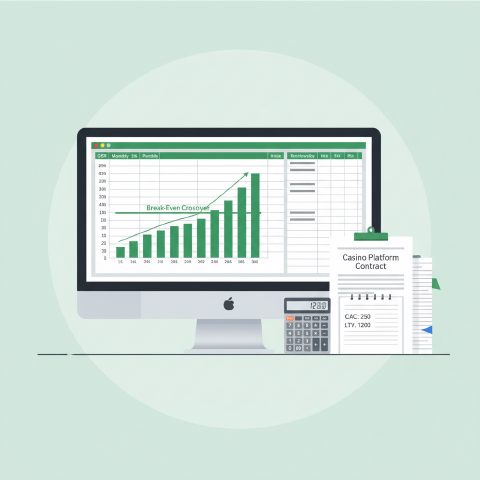
iGaming ROI and Payback Period Calculator
Before you sign a platform contract or wire a licensing fee, you need a working financial model. This guide walks through every variable that drives iGaming ROI and payback period, with real operator benchmarks and a structured calculator framework you can apply immediately.
 comparison
Casino Pricing Models Setup vs Monthly vs Revenue Share
Choosing between a setup fee, monthly retainer, or revenue share deal is one of the highest-stakes decisions a new operator makes. This breakdown gives you the real numbers and the trade-offs vendors rarely volunteer.
 spoke
spoke
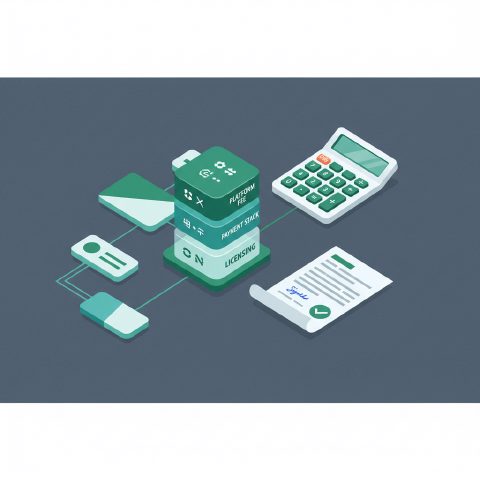
The Real Hidden Costs of Running an Online Casino Year-One TCO
Most operators budget for licensing and platform fees, then get blindsided by chargeback reserves, KYC per-verification charges, and revenue-share floors. This guide breaks down the true year-one total cost of ownership so you can model it before you commit.
 spoke
spoke
White Label Crypto Casino Cost Breakdown
Launching a white label crypto casino looks cheaper on the vendor slide deck than it turns out to be. This breakdown covers every real cost layer, from platform setup to licensing and payment processing, so you can build an accurate budget before signing anything.
 spoke
spoke
Hidden Costs of Starting an Online Casino
The sticker price on a white-label or turnkey casino launch looks manageable — until the invoices start arriving from directions nobody warned you about. This breakdown covers every cost layer operators routinely underestimate.
 spoke
spoke
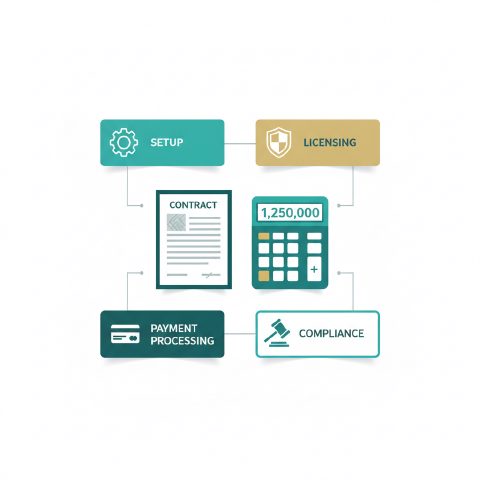
Online Casino Software Price What You Really Pay
Online casino software pricing looks deceptively simple on a vendor slide deck. This guide cuts through the marketing to show what operators actually pay — from setup fees and rev-share to payment processing, compliance, and the costs that only surface after you sign.
 spoke
spoke
White Label Casino Cost Full Pricing Breakdown
White label casino cost runs far deeper than the setup fee vendors quote on their sales calls. This breakdown covers every line item — platform fees, rev-share, compliance, payments and the charges most operators only discover after launch.
 pillar
How Much Does It Cost to Start an Online Casino 2026
Starting an online casino in 2026 requires far more capital than most vendor decks suggest. This breakdown covers every major cost bucket — licensing, platform, games, payments, marketing, and compliance — so you can build a realistic budget before you spend a dollar.
 pillar
How Much Does It Cost to Start an Online Casino
Starting an online casino in 2026 requires anywhere from $30,000 for a lean white-label setup to well over $500,000 for a turnkey or custom build — and the gap between those numbers comes down to decisions you make in the first 30 days. This playbook breaks down every cost layer, in the order you'll actually face them.
Get our 2026 cost & licensing breakdown by email.