White Label Crypto Casino Cost Breakdown: What Operators Actually Pay in 2026
What does a white label crypto casino actually cost to launch?
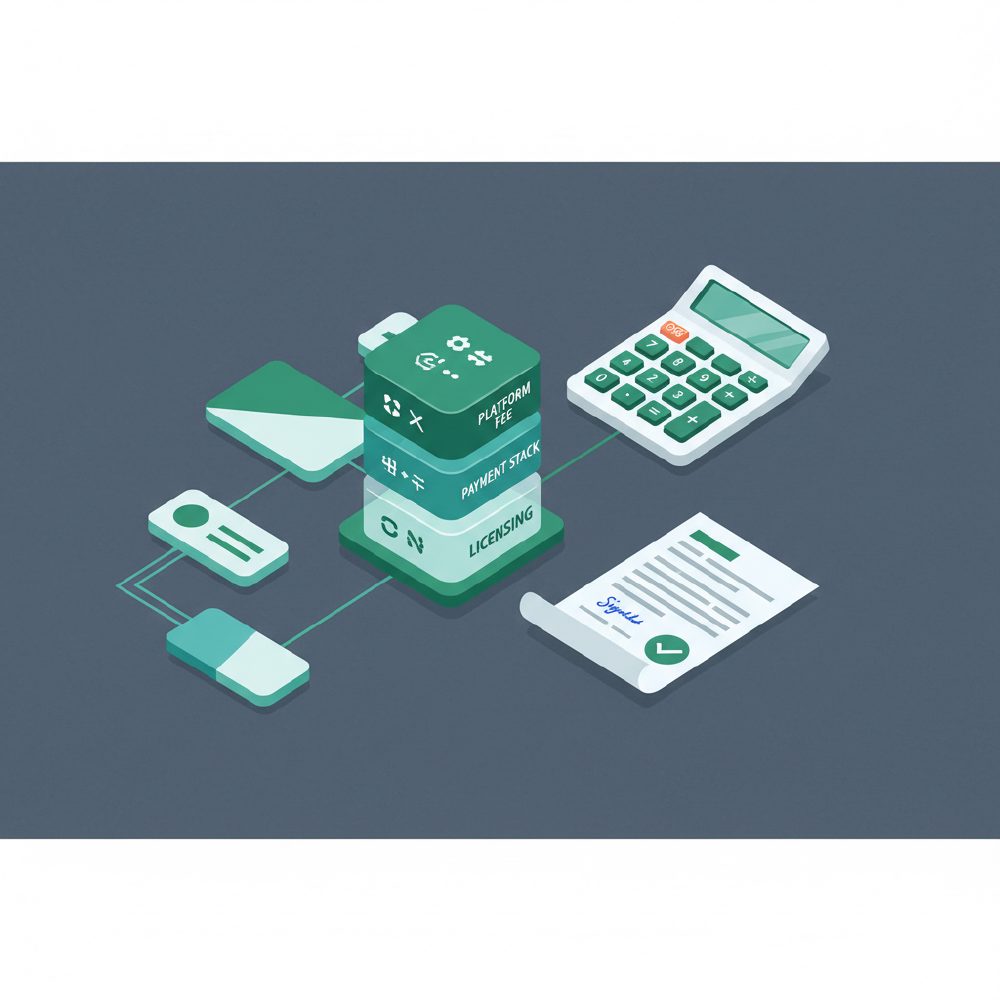
Expect to spend between $30,000 and $120,000 to get a white label crypto casino live, depending on the provider tier, the license you choose and how much front-end customization you need. That range is wide because the variables are real, not because the question is unanswerable. Most operators land somewhere in the $45,000 to $75,000 zone for a credible first launch.
The setup fee from the platform provider is usually the first number you see and the least representative of total spend. SoftSwiss, EveryMatrix and Turnkey Casino (among others) publish starting prices, but those figures cover the base platform license and a standard skin. The moment you add a custom front-end, a specific game aggregator integration or a bespoke bonus engine, the invoice grows. Budget a separate line item of $10,000 to $25,000 for design and front-end development if you want anything that doesn't look identical to every other operator on the same white-label stack.
Licensing is the second major upfront cost and the one operators most frequently underestimate. A Curaçao eGaming sublicense through a master license holder (Antillephone, Cyberluck, Gaming Curacao) costs roughly $15,000 to $30,000 in year one when you include the application fee, registered agent, compliance officer and local entity requirements introduced under the 2023 reform. An Anjouan license from the ACCS runs lower, typically $10,000 to $15,000 all-in for year one, which is why it has become popular with crypto-first operators who want a faster, cheaper path to legitimacy.
Then there is the payment and crypto stack. A white-label provider may include a basic fiat gateway, but a proper crypto cashier with BTC, ETH, USDT and LTC support, plus automated wallet generation and on-chain AML screening through a tool like Chainalysis or Elliptic, adds meaningful cost. Integration and configuration fees from the cashier provider typically run $5,000 to $20,000, and some providers charge a per-transaction fee on top. Build this into your model from day one rather than treating it as an optional add-on.
Finally, factor in the soft costs that don't appear on any vendor invoice: legal review of your terms and privacy policy ($3,000 to $8,000 from a specialist iGaming firm), responsible gambling tooling if your license requires it, and the three to five months of runway you need before the operation reaches breakeven. Operators who budget only for the setup fee and go live undercapitalized are the ones who end up selling the business at a loss six months later.
| Cost Item | Low Estimate | High Estimate | Notes |
|---|---|---|---|
| Platform setup fee | $15,000 | $50,000 | Base white-label license from provider |
| Custom front-end / skin | $8,000 | $25,000 | Depends on design scope and CMS complexity |
| Curaçao sublicense (year 1) | $15,000 | $30,000 | Includes agent, entity, compliance officer |
| Anjouan license (year 1) | $10,000 | $15,000 | Faster process, lower cost, less recognition |
| Crypto cashier integration | $5,000 | $20,000 | Wallet gen, AML screening, multi-coin support |
| Legal review (T&Cs, privacy) | $3,000 | $8,000 | iGaming specialist firm |
| KYC/AML tooling setup | $2,000 | $10,000 | Sumsub, Onfido or similar |
| Total estimated range | $58,000 | $158,000 | Before ongoing monthly costs |
How does revenue share with a white label platform provider work, and what is a fair rate?
Most white label crypto casino providers charge a revenue share of 15% to 35% of your gross gaming revenue (GGR), taken monthly. Some providers use a tiered structure where the percentage drops as your GGR grows. Revenue share is the single most consequential commercial term in your contract, because it compounds every month for the life of the agreement.
A 25% GGR revenue share sounds reasonable at launch when your monthly GGR is $50,000. At that level you are paying the platform $12,500 per month. Scale to $500,000 monthly GGR and that same rate costs you $125,000 every month, or $1.5 million per year. At that point, migrating to a turnkey or proprietary setup almost always makes financial sense, but migration is painful and expensive if your contract has a long lock-in period. Read the exit clause before you sign anything.
Some providers bundle the game aggregator fee inside the revenue share, which simplifies accounting but makes it harder to benchmark whether you are getting a good deal. Others charge the platform revenue share separately from the game content fee, which typically runs an additional 10% to 15% of GGR paid to the aggregator (EveryMatrix's CasinoEngine, SoftSwiss's Game Aggregator, Relax Gaming's Silver Bullet, etc.). If both are separate line items, your blended content-plus-platform cost can reach 35% to 45% of GGR before you have paid for marketing, support or hosting.
Negotiating the revenue share down is possible, but only if you can demonstrate a credible traffic plan or bring existing player volume. A first-time operator with no track record will almost always pay the standard rate. The better negotiating lever is the minimum monthly fee: some providers charge a floor of $2,000 to $5,000 per month regardless of GGR, which is brutal in the first three months when revenue is thin. Push to waive or reduce the minimum for the first six months, and make sure the contract defines GGR clearly so there is no dispute about whether bonuses are deducted before or after the calculation.
Which crypto casino white label solutions are worth considering in 2026?
SoftSwiss, EveryMatrix, Turnkey Casino and Slotegrator are the most established white-label providers with native crypto support. Each has a different pricing model, game library depth and jurisdictional track record. Choosing the wrong provider for your target market is an expensive mistake that takes months to unwind.
SoftSwiss is the most crypto-native of the major platforms. They built their stack around Bitcoin from the beginning and their Casino Platform product integrates with their own Sportsbook and the SOFTSWISS Game Aggregator, which has over 13,000 games as of 2025. Their setup fees are mid-to-high tier and they are selective about new clients, but their compliance tooling for Curaçao and MGA operators is genuinely mature. If you are serious about a crypto-first brand and have the budget, SoftSwiss is a credible choice.
EveryMatrix is a better fit if you want modular flexibility. You can license their CasinoEngine game aggregator independently from their full platform, which means you can build a custom front-end on top without paying for features you don't need. Their WalletEngine supports crypto deposits and their compliance modules are well-documented. The trade-off is that their sales process is slower and they are more selective about jurisdictions than some smaller providers.
Slotegrator and Turnkey Casino sit at a lower price point and are more accessible for first-time operators. Slotegrator's APIgrator integration covers 9,000+ games and they have experience with Curaçao and Anjouan licensees. Turnkey Casino offers faster deployment timelines, sometimes under 30 days for a standard package. The honest caveat: at the lower price tier, you get less hands-on support and the platform infrastructure is shared more heavily, which can affect performance during traffic spikes.
There are also crypto-specialist providers like Softswiss's white-label offering, Blockchain.poker's B2B arm and a growing number of smaller vendors out of Eastern Europe and Asia. I would be cautious about any provider that cannot show you a live reference casino you can test anonymously and who cannot provide a clear data ownership clause in the contract. Your player data is your business. Any provider who won't confirm you own it outright is a red flag.
| Provider | Setup Fee Range | Revenue Share | Crypto Native | Best For |
|---|---|---|---|---|
| SoftSwiss | $50,000+ | 15-25% GGR | Yes (BTC-first) | Serious crypto brands, MGA/Curaçao |
| EveryMatrix | $40,000-$80,000 | 15-30% GGR | Partial (via WalletEngine) | Modular builds, EU-facing operators |
| Slotegrator | $20,000-$50,000 | 20-35% GGR | Yes | First-time operators, offshore |
| Turnkey Casino | $15,000-$40,000 | 25-35% GGR | Yes | Fast launch, limited budget |
| Custom build (comparison) | $150,000-$500,000 | 0% (own it) | Configurable | Scale operators, 2+ year horizon |
What licensing options work best for a white label crypto casino?
Curaçao eGaming and Anjouan are the two most practical licensing jurisdictions for a crypto casino white-label launch in 2026. Both accept crypto-native businesses, process applications in weeks rather than years, and cost a fraction of an MGA or UKGC license. The MGA remains the gold standard for EU player trust, but it is not a realistic starting point for most crypto operators.
The Curaçao eGaming framework went through a significant reform in 2023, moving from the old master/sublicense model toward direct operator licenses issued by the newly established Curaçao Gaming Control Board (GCB). As of 2025, new applicants apply directly for a National Gambling Ordinance (LOK) license rather than through a master license holder. The process takes approximately three to six months and costs have increased: budget $20,000 to $35,000 all-in for year one including the application fee, registered local entity, compliance officer and technical audit. The upside is that a direct GCB license carries more credibility than the old sublicense arrangement and is more defensible with payment processors.
Anjouan (issued by the Anjouan Council for Commerce and Industry, ACCI) is the faster, cheaper alternative. Application timelines of four to eight weeks are common, and total year-one costs typically stay under $15,000. It is accepted by a growing number of crypto payment processors and is legitimate for offshore operations, but it carries less brand recognition than Curaçao and some affiliate networks will not work with Anjouan-licensed operators. For a crypto-first brand where most traffic comes through direct channels and crypto communities, the brand recognition gap matters less.
Malta (MGA) and Gibraltar are worth mentioning only to explain why most crypto white-label operators avoid them at launch. An MGA license costs $25,000 in application fees alone, requires a local presence, a compliance officer on payroll, and takes 12 to 18 months to process. It also comes with strict player protection and AML requirements that add ongoing operational cost. If you are building a crypto casino targeting EU recreational players who care about trust signals, the MGA path is eventually worth pursuing. For an offshore crypto brand at launch, it is overkill.
What are the ongoing monthly costs of running a white label crypto casino?
Once live, a white label crypto casino carries $15,000 to $60,000 in monthly operating costs before marketing spend. The exact figure depends on your player volume, support headcount and which SaaS tools you are running. Most operators significantly underestimate this number when building their pre-launch financial model.
The platform revenue share is the largest recurring cost and we covered it above. Beyond that, the next biggest line items are typically customer support and fraud/risk operations. A 24/7 support team of four to six agents (common for a mid-size crypto casino) costs $8,000 to $20,000 per month depending on whether you hire in-house, use a BPO in Eastern Europe or the Philippines, or outsource to a specialist iGaming support provider. Do not understaff this. Crypto players move fast and are vocal on social media and forums. A slow support response kills retention.
KYC and AML tooling is a recurring SaaS cost that most operators underestimate. Sumsub charges on a per-verification basis, typically $1.50 to $3.50 per check depending on volume tier and the checks you run. If you are processing 1,000 verifications per month, that is $1,500 to $3,500 just for identity checks, before any enhanced due diligence or ongoing monitoring costs. Add Chainalysis or Elliptic for crypto wallet screening and you are looking at another $1,000 to $5,000 per month depending on transaction volume. These are not optional if you want to maintain your license and keep payment processors happy.
Hosting and infrastructure for a white-label platform is usually included in the provider's fee, but CDN costs, DDoS protection (Cloudflare Pro or Business tier), email delivery (SendGrid or similar) and monitoring tools add $500 to $3,000 per month depending on traffic. Affiliate software is another recurring cost: Income Access, MyAffiliates and TUNE all charge $500 to $2,000 per month for a basic setup. If affiliates are part of your acquisition strategy, this is non-negotiable.
| Cost Category | Low (Early Stage) | High (Growth Stage) | Notes |
|---|---|---|---|
| Platform revenue share (on $100k GGR) | $15,000 | $35,000 | 15-35% GGR depending on contract |
| Customer support (outsourced) | $4,000 | $20,000 | Depends on volume and hours |
| KYC/AML tooling | $1,500 | $8,000 | Per-check + ongoing monitoring |
| Crypto wallet screening | $500 | $5,000 | Chainalysis, Elliptic or similar |
| Hosting / CDN / infra | $500 | $3,000 | Usually partial in provider fee |
| Affiliate software | $500 | $2,000 | Income Access, MyAffiliates, TUNE |
| Legal/compliance retainer | $1,000 | $5,000 | Ongoing regulatory monitoring |
| Total (excl. marketing) | $23,000 | $78,000 | Before any player acquisition spend |
How does crypto payment processing affect costs and margins for a white label casino?
Crypto processing fees are substantially lower than fiat card processing, typically 0.5% to 1.5% per transaction versus 2% to 4% for credit cards. That margin improvement is real, but it comes with setup costs for a compliant crypto cashier, exchange rate risk management and AML obligations that fiat processors handle differently.
The most common crypto payment approach for white-label operators is integrating a B2B crypto cashier provider such as CoinsPaid, Bitpay for Business or NOWPayments. CoinsPaid is the dominant choice in the iGaming space: they process for hundreds of licensed casinos, support 30+ cryptocurrencies, handle automatic conversion to fiat if you want to hold in USD or EUR, and their integration with SoftSwiss and other major platforms is well-documented. Their fee structure is volume-tiered but typically runs 0.8% to 1.5% per processed transaction for mid-size operators.
The exchange rate risk question matters more than most operators realize at launch. If a player deposits 0.05 BTC and Bitcoin drops 15% before you settle, you have absorbed a loss on that deposit if you are holding in crypto. Most operators solve this by auto-converting to a stablecoin (USDT or USDC) or to fiat at the point of deposit. CoinsPaid and similar providers offer this as a feature, but the conversion itself carries a spread of 0.5% to 1.5%. Build that into your margin model rather than treating it as a rounding error.
AML obligations for crypto transactions are increasingly strict regardless of your license jurisdiction. Curaçao's 2023 reforms explicitly require crypto operators to implement transaction monitoring and wallet screening. In practice this means integrating a blockchain analytics tool and maintaining records of wallet addresses, transaction hashes and source-of-funds documentation for high-value deposits. The operational overhead is real. Operators who treat crypto as a way to skip AML compliance are taking a license-threatening risk, not a clever shortcut.
What is the realistic timeline from signing a white label contract to going live?
A white label crypto casino can go live in as little as 30 days on a standard package, but a properly configured launch with a real license, custom front-end and compliant payment stack typically takes three to five months. Operators who rush to launch in 30 days almost always spend the following three months fixing what they skipped.
The fastest path is a turnkey package from a provider like Turnkey Casino or Slotegrator: standard skin, standard game library, a sublicense under the provider's own Curaçao master license (where this is still offered), and a pre-integrated crypto cashier. You can be live in four to six weeks. The problem is that this approach gives you the least differentiation, the weakest compliance posture and the most restrictive contract terms. It is fine for a proof-of-concept or a market test, but it is not a long-term business foundation.
A more serious launch timeline looks like this: weeks one through four for platform contract negotiation and license application submission; weeks four through ten for front-end design and development, game content configuration and payment integration; weeks ten through sixteen for QA, compliance review and licensing approval (Anjouan is faster, Curaçao GCB takes longer); week sixteen onward for soft launch with limited marketing, then full launch once player support and risk operations are staffed. That is roughly four months minimum and five to six months is more realistic if you hit any snags in the licensing process.
The licensing timeline is the variable you have the least control over. Curaçao GCB has been processing new applications more slowly since the 2023 reform, and some operators have reported six-month waits. Anjouan is faster but requires you to have your documentation in order from day one. Hiring an iGaming licensing consultant rather than relying on the platform provider's in-house team is worth the $3,000 to $8,000 fee because a single missed document can add two months to your timeline.
What hidden costs do operators discover after launch that they didn't budget for?
The costs operators most frequently miss are responsible gambling tooling, chargebacks and fraud reserves, affiliate fraud monitoring, and the cost of migrating away from the white-label provider once they outgrow it. None of these appear on a vendor proposal, and collectively they can add $20,000 to $50,000 in year-one costs that weren't in the original model.
Responsible gambling (RG) tooling is increasingly a license requirement, not just a best practice. Curaçao's 2023 reforms require operators to implement deposit limits, self-exclusion and cooling-off periods. Building these features on a white-label platform that doesn't natively support them means paying for custom development or integrating a third-party RG tool like Gamban or the GAMSTOP API (for UK-facing operators). Budget $3,000 to $10,000 for this if it isn't already included in your platform package, and ask your provider explicitly before you sign.
Fraud and chargeback reserves are a cash flow trap that catches crypto casino operators off guard. Even though crypto transactions are irreversible (which eliminates traditional chargebacks), bonus abuse, multi-accounting and money laundering attempts are common. You need a fraud management tool, a risk analyst or at minimum a well-configured rule set in your platform's back-office. If you are also accepting any fiat payments via card, your payment processor will require a rolling reserve of 5% to 10% of processed volume held for 90 to 180 days. That is real cash tied up and unavailable for operations.
Migration cost is the hidden cost nobody talks about because it only becomes relevant after you have scaled. When your GGR reaches the point where the platform revenue share is costing you $50,000+ per month, you will want to move to a turnkey or proprietary setup. But migrating a player database, game history, bonus balances and payment methods from one platform to another is a six-figure engineering project that takes three to six months and risks player churn. The time to negotiate a migration clause and data portability guarantee is before you sign your first contract, not after you are locked in.
How do white label crypto casino costs compare to a turnkey crypto casino platform?
A turnkey crypto casino platform gives you more ownership and lower long-term revenue leakage than a white-label, but costs $80,000 to $300,000 more upfront and takes three to six months longer to build. The breakeven point where turnkey becomes cheaper than white-label depends on your GGR trajectory, but most operators hit it somewhere between $200,000 and $500,000 monthly GGR.
The core difference is ownership. With a white-label, you are renting the platform and paying a percentage of every dollar you earn for as long as you operate on that stack. With a turnkey build, you commission a complete platform (front-end, back-office, payment integrations, game aggregator connections) from a provider like SoftSwiss's turnkey offering, BetConstruct or a custom development agency, pay a larger upfront fee, and own the software outright or under a perpetual license. After that, your only recurring costs are hosting, maintenance and the game aggregator revenue share, which is a fundamentally different cost structure.
The math is straightforward. Assume a 25% white-label revenue share on $300,000 monthly GGR: that is $75,000 per month, or $900,000 per year going to the platform provider. A turnkey build that costs $200,000 upfront pays for itself in less than three months at that GGR level. The catch is that you need the $200,000 upfront and the six months of development time before you have a live product. Most operators launch white-label first, validate the market and player acquisition model, then migrate to turnkey once they have the cash flow and the confidence that the business works.
There is a middle path worth knowing about: some providers offer a hybrid model where you start on a white-label revenue share and convert to a flat monthly SaaS fee after hitting a GGR threshold. EveryMatrix has offered arrangements like this for larger operators. It is worth asking about during contract negotiations even if the provider doesn't advertise it, because it aligns incentives better than a perpetual revenue share as you scale.
What ROI timeline should a white label crypto casino realistically target?
Most white label crypto casinos that are properly funded and operated reach breakeven within 12 to 18 months. Profitable operations at meaningful scale typically require 24 to 36 months. Operators who project breakeven in six months are almost always working from an overly optimistic player acquisition cost assumption.
The ROI math hinges on two variables: player acquisition cost (PAC) and player lifetime value (LTV). Crypto casino players acquired through affiliate channels typically cost $150 to $400 per depositing player depending on the affiliate network and the bonus offer. If your average player LTV is $300 over 12 months, you are barely breaking even on acquisition before platform costs. The operators who build profitable businesses do so by optimizing for LTV through retention programs, VIP management and a game mix that drives session length, not by chasing volume at any acquisition cost.
Bonus costs are another ROI killer that operators underestimate. A 100% deposit match welcome bonus with a 30x wagering requirement sounds standard, but if your game mix includes high-RTP slots and players grind through the wagering on low-margin games, your effective bonus cost can exceed 20% of deposited volume. Run the math on your specific game mix and wagering terms before you set your bonus structure. A tighter wagering requirement or a lower match percentage with better game restrictions often improves margins without significantly reducing conversion.
The honest answer on ROI timeline is that a lot depends on your marketing channel mix. Operators who build organic SEO traffic and a strong affiliate program from day one have a fundamentally different cost structure than those who rely on paid social or influencer campaigns. Crypto-native marketing channels (Telegram communities, crypto forums, Twitter/X) can be highly cost-effective if you have the right brand positioning, but they take time to build. Budget for 18 months of runway before you expect the business to be self-sustaining, and treat anything faster than that as a bonus rather than a baseline assumption.




Comments
No comments yet, be the first.