Online Casino Games API Integration Explained: The Operator's Real-World Guide for 2026

What exactly is an online casino games API and how does it work?
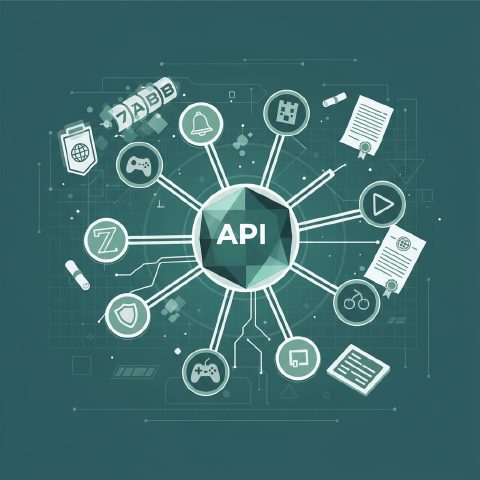
An online casino games API is a protocol — almost always REST or WebSocket — that lets your casino platform request game launches, pass wallet debit/credit events and receive certified RNG outcomes from a remote game server. The game itself runs on the studio's infrastructure; your platform handles the session, the money movement and the player record.
The mechanics are less glamorous than vendor decks suggest. When a player clicks a slot, your platform calls the API to open a game session, passing a signed token that identifies the player and their balance. The game client loads from the studio's CDN, and every bet triggers a debit callback to your wallet endpoint — your server must acknowledge that call within a tight SLA (typically 300–500 ms) or the round is voided. That wallet callback is where most first-time operators get burned: if your payment processing or database is slow, you start seeing transaction mismatches and player complaints within the first week of go-live.
There are two broad API architectures you'll encounter. The first is a seamless wallet integration, where the game server calls your wallet in real time on every bet and win. The second is a transfer wallet (sometimes called a fun-money or sub-wallet model), where a fixed credit is transferred to the game provider at session start and reconciled at session end. Transfer wallets are operationally simpler and reduce latency risk, but they complicate responsible gambling controls because your platform loses real-time visibility of the player's balance mid-session. MGA licensees in particular get scrutinized on this point.
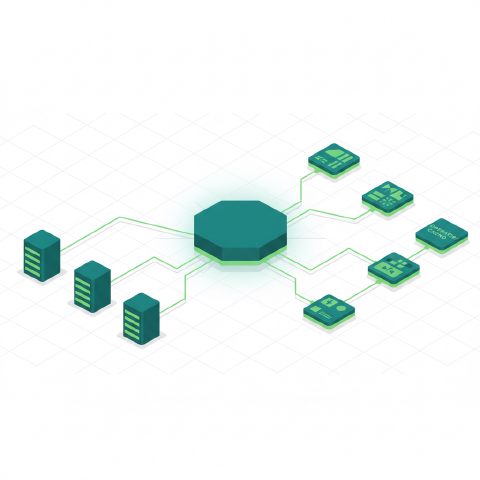
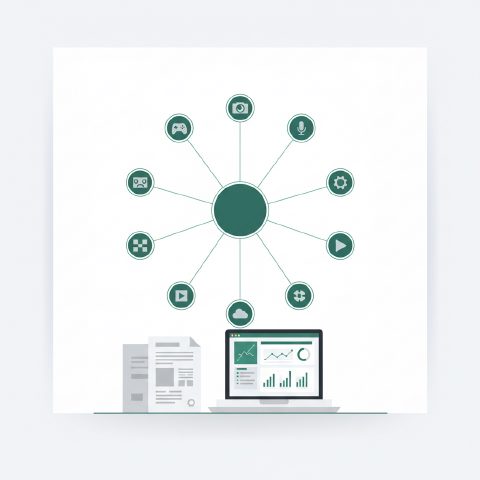
Most operators in 2026 are not integrating directly to a single game studio's API. They're connecting to an aggregator's unified API — one endpoint that proxies requests to dozens or hundreds of studios behind it. EveryMatrix's GameHub, SoftSwiss's Game Aggregator, Relax Gaming's Silver Bullet and Slotegrator's APIgrator are the names you'll hear most. The aggregator normalizes the different studio protocols into one schema, which is a genuine engineering time-saver. The trade-off is an additional revenue-share tier — typically 1–3 percentage points of GGR — sitting between you and the studio margin.
Aggregator API vs direct studio integration — which should you choose?
For most new operators, an aggregator API is the right call at launch. Direct studio deals make financial sense only once you can demonstrate volume — most studios want a minimum monthly GGR guarantee of $20,000–$50,000 per integration before they'll prioritize your technical onboarding. Going direct too early locks engineering time and cash into integrations that won't recoup for 12–18 months.
The economics shift once you're generating meaningful revenue. Pragmatic Play, for example, charges a revenue share in the 10–15% GGR range for direct deals (exact figures vary by market and negotiation leverage), while the same content through an aggregator costs you the studio rate plus the aggregator's 1–3% cut. At $500K monthly GGR, that 2% aggregator premium is $10K per month — $120K per year. At that point, a direct integration that costs $30–50K in engineering and certification time pays back in under six months.
There's also a content exclusivity angle. Some studios — particularly live casino suppliers like Evolution and Ezugi — only deal directly. Evolution does not distribute through third-party aggregators for live tables; you integrate their API directly or you don't carry their product. That's a hard constraint, not a negotiating point. If live dealer is central to your product strategy, budget for a direct Evolution or Pragmatic Play Live integration from day one.
A hybrid model is what most mature operators run: one aggregator API covering the long tail of slots and virtual games, plus two or three direct connections to tier-one studios and the live casino supplier. This gives you the breadth of an aggregator with the margin efficiency of direct deals on your highest-volume content. The operational complexity is real — you're managing multiple API credentials, separate reconciliation feeds and different compliance documentation per connection — but it's manageable with the right back-office setup.
| Factor | Aggregator API | Direct Studio Integration |
|---|---|---|
| Time to launch | 4–12 weeks (one integration) | 3–6 months per studio |
| Game catalogue | 2,000–10,000+ titles via one contract | One studio's portfolio only |
| Revenue share overhead | Studio rate + 1–3% aggregator fee | Studio rate only (10–18% GGR typical) |
| Minimum volume requirement | Low or none at launch | $20K–$50K monthly GGR guarantee common |
| Live casino access | Limited — Evolution not via aggregators | Required for Evolution, Pragmatic Live |
| Compliance documentation | Aggregator manages studio certs (verify scope) | Operator manages certs per studio per jurisdiction |
| Reconciliation complexity | Single feed from aggregator | Separate feeds per studio |
| Negotiating leverage on rates | Low — aggregator sets terms | High once volume is proven |
What are the main online casino games API providers operators actually use in 2026?
The aggregator market has consolidated around a handful of platforms that cover most operator needs: EveryMatrix GameHub, SoftSwiss Game Aggregator, Relax Gaming Silver Bullet, Slotegrator and BetConstruct. Each has a different strength — EveryMatrix leads on European regulated markets, SoftSwiss on crypto-friendly offshore setups, Relax on premium content curation.
EveryMatrix GameHub is probably the most widely cited aggregator in EU-regulated markets. They carry 20,000+ game variants from 200+ studios and have pre-certified content for MGA, UKGC, Romanian ONJN and several other regulated jurisdictions. Their API documentation is thorough and their SLA commitments are among the stronger ones in the market. The downside: their commercial terms favor larger operators, and smaller launches can find the onboarding process slow without a dedicated account manager pushing things along.
SoftSwiss Game Aggregator is the go-to for operators launching on Curaçao or Anjouan licenses who want fast time-to-market with a crypto-native payment stack. SoftSwiss integrates neatly with their own casino platform but also operates as a standalone aggregator. Their catalogue skews toward the studios popular in LATAM and Eastern Europe, and their bonus engine integration is tighter than most competitors. If you're building a white-label on SoftSwiss infrastructure, the game API and the platform wallet talk to each other natively — which eliminates a whole category of integration risk.
Relax Gaming's Silver Bullet program is a content aggregator with a curated angle — they focus on quality over raw title count and have some exclusive distribution agreements with boutique studios. For operators positioning on premium UX rather than sheer game volume, Relax is worth the conversation. Slotegrator's APIgrator is popular with smaller operators and white-label resellers because the entry barrier is lower and the documentation is accessible. BetConstruct covers sportsbook and casino under one API umbrella, which matters if you're launching a combined product.
For direct integrations, Pragmatic Play is the highest-priority first call for most operators — their slots dominate player preference metrics across EU, LATAM and parts of Asia, and their API is well-documented with a relatively predictable certification timeline. Evolution is non-negotiable if you want live dealer. Playtech remains relevant for tier-one licensed markets but their commercial model is historically less accessible to new entrants.
| Provider | Best For | Approx. Game Count | Notable Strength | Watch Out For |
|---|---|---|---|---|
| EveryMatrix GameHub | EU regulated operators | 20,000+ variants | MGA/UKGC pre-certified content | Slower onboarding for small operators |
| SoftSwiss Game Aggregator | Crypto/offshore, Curaçao | 10,000+ | Native crypto wallet integration | Less depth in US-facing content |
| Relax Gaming Silver Bullet | Premium-positioned brands | 4,000+ | Curated exclusives, boutique studios | Smaller catalogue than rivals |
| Slotegrator APIgrator | Smaller operators, white-labels | 8,000+ | Low entry barrier, good docs | Fewer tier-one exclusive titles |
| BetConstruct | Combined sportsbook + casino | 6,000+ | Unified API across verticals | Casino depth thinner than pure-play aggregators |
What does online casino games API integration actually cost?
Expect to spend $15,000–$80,000 on the technical integration work itself, depending on whether you're building custom or using a white-label platform with pre-built connectors. That's before the ongoing revenue share, which is the real long-term cost — typically 12–20% of GGR across studio fees and aggregator margins combined.
The integration cost breaks down into three buckets. First, platform development: if you're building on a custom stack or adapting an open-source framework, expect 200–600 hours of backend engineering to implement the wallet callbacks, session management, game launch flows and reconciliation logic correctly. At offshore development rates, that's $15K–$40K; at Western European or North American rates, double it. If you're on a white-label platform like SoftSwiss, EveryMatrix or Digitain that has the aggregator pre-wired, this cost drops to near zero — which is the real argument for white-label at launch, not just the licensing speed.
Second, certification and compliance: every game you serve in a regulated jurisdiction needs a valid certificate from a test lab (BMM, GLI, eCOGRA, iTech Labs are the main ones). If you're going through an aggregator, most studios have already obtained these certs and the aggregator can provide documentation. But you still need to verify that the certification covers your specific jurisdiction. An MGA cert doesn't automatically cover UKGC, and a Curaçao approval is not accepted in any US state. Budget $5,000–$20,000 for compliance documentation, legal review and any supplemental testing your regulator requires.
Third, the ongoing commercial cost: this is where operators consistently underestimate the drag. A typical slot from a mid-tier studio through an aggregator costs 14–18% GGR. On $100K monthly GGR, that's $14,000–$18,000 per month leaving the door before you've paid hosting, support or marketing. Live casino is more expensive — Evolution's rates are not publicly disclosed but industry consensus puts them in the 20–25% GGR range for smaller operators. Model this carefully before you commit to a game mix strategy, because the content cost structure directly determines your viable player LTV.
How does the wallet integration within a casino games API actually work — and where does it break?
The wallet integration is the most failure-prone part of any casino games API setup. Every bet and win generates a synchronous HTTP callback to your wallet endpoint. If your server is slow, unavailable or returns an unexpected response code, the game engine either voids the round or enters a recovery flow — neither outcome is good for player trust or regulator audits.
The seamless wallet model works like this: player bets → game server sends a debit request to your wallet API → your server deducts the balance and returns a transaction ID → game server processes the round → game server sends a credit request → your server applies the win. The entire debit-acknowledge cycle must complete within the studio's timeout window, which is typically 300–800 ms depending on the provider. Miss that window consistently and you'll see transaction disputes in your back-office within days of launch.
The failure modes I see most often with new operators are: database locking under concurrent load (your wallet table can't handle 50 simultaneous bet calls during a promotion), missing idempotency handling (you process the same debit twice because the game server retried after a timeout), and incorrect HTTP response codes (returning a 200 with an error message in the body instead of a 4xx, which confuses the game engine's retry logic). These are solvable engineering problems, but they require someone who has actually read the API specification carefully — not just copy-pasted the integration example.
Transfer wallet architectures sidestep the latency problem by pre-loading a credit to the game provider's system at session start. Your wallet only gets called twice per session rather than on every bet. The reconciliation happens at session close. This is significantly more resilient to infrastructure hiccups, but it creates a responsible gambling blind spot: your platform doesn't know the player's real-time balance during the session, which makes it harder to enforce deposit limits mid-session. Regulators in MGA and UKGC jurisdictions are increasingly scrutinizing this, so check your licensing requirements before defaulting to transfer wallet for convenience.
What compliance and licensing requirements apply to casino games API integrations?
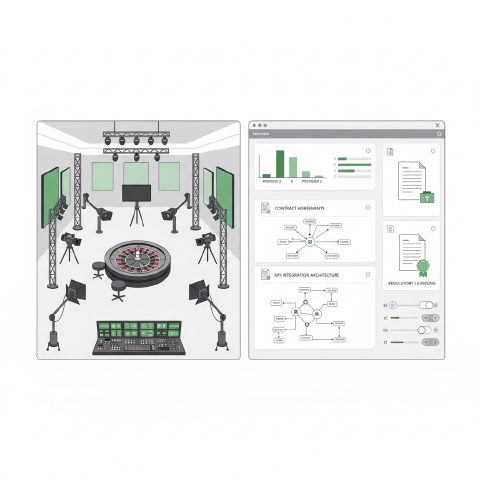
The API connection itself isn't licensed — the games it serves are. Every game title streamed through your API must carry a valid certificate for the jurisdiction where the player sits. Your aggregator contract does not automatically make you compliant; it gives you access to games that may or may not be certified for your specific market. Verify this per jurisdiction before go-live.
Under a Curaçao eGaming license (the new Curaçao Gaming Authority framework that replaced the old sub-license system in 2023–2024), you need to demonstrate that your game content comes from certified suppliers. The CGA's requirements are less granular than MGA's, but they're tightening. Operators who launched under the old Curaçao sub-license model and assumed their aggregator's supplier list was compliant are now going through remediation. The practical step: get your aggregator to provide a supplier certification matrix showing which studios hold CGA-accepted certificates.
MGA (Malta Gaming Authority) is more demanding. Every game studio integrated into an MGA-licensed platform must itself hold an MGA B2B Critical Gaming Supply license, or be on the approved list of recognized jurisdictions. EveryMatrix and SoftSwiss both maintain MGA-compliant game catalogues, but not every title in their aggregator is MGA-approved — there's a filtered subset. If you're launching under MGA, work with your aggregator to get the compliant-only game feed, and make sure your CMS can suppress non-approved titles by jurisdiction automatically.
US state licensing is the most fragmented. New Jersey's DGE, Pennsylvania's PGCB, Michigan's MGCB and other state GLCs each maintain their own approved game lists. A game certified in New Jersey is not automatically approved in Michigan. Evolution holds approvals across most US states with live iGaming, but slot studios vary significantly in their US certification coverage. If you're building a US-facing product, your game selection process has to start with the approved game list for your target state, not with the aggregator's full catalogue. This is a constraint that catches operators off guard — you might have 8,000 games in your API but only 400 are playable in Pennsylvania.
How long does a casino games API integration take from contract to go-live?
On a white-label platform with a pre-built aggregator connector, you can be live with a full game catalogue in 6–12 weeks. A custom integration to a single aggregator API takes 3–5 months. Adding direct studio connections on top of that adds 3–6 months per studio. These timelines assume no regulatory delays — factor in another 2–6 months if you're waiting on a license.
The fastest path to go-live is a white-label platform that has already integrated the aggregator you want. SoftSwiss, EveryMatrix and Digitain all offer white-label casino products where the game API is pre-wired. In that setup, your technical work is mostly configuration — setting up your brand's game lobby, applying jurisdiction filters and testing the wallet flow end-to-end. Operators who have done this report 8–10 weeks from contract signing to soft launch, assuming their payment stack is also ready.
Custom integrations take longer because every step requires your engineering team. The aggregator's API documentation is usually solid, but there are always edge cases — specific error codes, retry behaviors, currency handling for multi-wallet setups — that require back-and-forth with the aggregator's technical support team. Budget 4–6 weeks for initial integration, 4–6 weeks for QA and load testing, and 2–4 weeks for any compliance review your regulator requires before you can go live. That's a realistic 3–4 month minimum, and it assumes your team has prior API integration experience.
Direct studio integrations are slower because the studio controls the timeline. Pragmatic Play, for example, has a formal onboarding queue. You submit your technical integration request, their team reviews your platform architecture, and you're assigned a slot in their certification pipeline. During busy periods — around major industry conferences or at year-end — that queue can stretch to 3–4 months before you even start the technical work. Plan direct integrations in parallel with your aggregator setup, not sequentially, or you'll delay your live dealer or premium slots launch by half a year.
What technical infrastructure do you need to support a casino games API reliably?
You need sub-500ms wallet API response times under peak load, 99.9%+ uptime on your wallet endpoints, proper idempotency handling for duplicate transaction detection, and a real-time reconciliation feed. Most new operators underspec their database and caching layer, then discover the problem during their first promotional event when concurrent sessions spike.
The wallet endpoint is the performance-critical component. It gets called on every single bet — at 1,000 concurrent players averaging one bet every 5 seconds, that's 200 requests per second sustained, with spikes to 500+ during bonus drops. Your database must handle this without locking. The standard approach is to run a Redis cache layer in front of your balance store: the wallet API reads from Redis, queues the write to your primary database, and returns the response within the SLA window. This pattern works well but requires careful cache invalidation logic to prevent balance discrepancies.
Uptime matters more than most operators realize at the planning stage. If your wallet endpoint goes down for 5 minutes during peak hours, every active game session either freezes or auto-completes via the studio's recovery flow. Players get confused, support tickets spike and you potentially have a regulatory incident depending on how the recovery was handled. The major aggregators monitor your wallet endpoint's availability and will flag repeated outages — some have SLA clauses that allow them to suspend your game feed if your uptime drops below a threshold. Host your wallet service on a dedicated instance with auto-scaling, separate from your main web application.
Reconciliation infrastructure is the unglamorous part that operators skip and then regret. Every aggregator provides a transaction feed — either a real-time webhook or a periodic settlement file — that you need to reconcile against your internal wallet records. Discrepancies happen: network timeouts, duplicate callbacks, timezone handling bugs. You need automated reconciliation tooling that flags mismatches daily, not a manual process someone runs at month-end. SoftSwiss and EveryMatrix both provide reconciliation reporting dashboards, but you still need to match those against your own records. Build this before launch, not after your first audit.
How do you evaluate and select the right casino games API for your specific market?
Start with your target jurisdiction's approved game list, then work backward to which aggregators carry those certified titles. Content breadth is the last thing you should optimize for — compliance coverage, wallet architecture fit and commercial terms matter far more than whether the aggregator has 8,000 or 12,000 games.
The evaluation framework I use with operators has four filters. First: jurisdictional coverage. Does the aggregator have certified content for your specific license and target player markets? Ask for a certification matrix, not a general statement that they're 'compliant.' Second: wallet architecture compatibility. Does their API support seamless wallet, transfer wallet, or both? Which model fits your platform's architecture and your licensing requirements? Third: commercial terms. What's the revenue share structure, what are the minimum commitments, and what happens if you want to add a direct studio integration later — does the aggregator contract have exclusivity clauses that would prevent that?
Fourth — and this is the one operators skip — technical support quality. During integration, you will hit edge cases that require the aggregator's technical team to answer questions or push a fix on their side. Ask for references from other operators who integrated in the last 12 months. Ask specifically about response times on technical tickets. A slow support team can add 4–6 weeks to your integration timeline, and that's before you're live and dependent on them for production issues.
For LATAM markets specifically — Colombia (Coljuegos), Peru (MINCETUR), Mexico (SEGOB) — the compliance landscape is evolving fast. Not all aggregators have invested in obtaining approvals for these regulators. If LATAM is your primary market, EveryMatrix and SoftSwiss have the broadest coverage, but verify the specific country approvals rather than assuming regional coverage means country-level compliance. Brazil's regulatory framework (under SPA/MF) is being implemented through 2025–2026, and the game certification requirements are still being finalized — watch that space carefully before committing your content stack.
What are the most common casino games API integration mistakes operators make?
The top mistakes are: launching without load-testing the wallet endpoint, not implementing idempotency on transaction callbacks, assuming the aggregator's compliance coverage extends to your specific jurisdiction, and signing an aggregator contract with exclusivity clauses that block direct studio deals later. These are expensive to fix post-launch.
The idempotency failure is probably the most technically damaging. Game servers retry failed callbacks — if your wallet endpoint timed out on a debit call, the studio will retry that same transaction. Without idempotency logic, you process the debit twice: the player loses double the bet amount, files a complaint, and you have a regulatory incident. Every wallet endpoint that handles financial transactions must check whether the transaction ID has already been processed before applying the debit or credit. This is basic API design but I still see new operators skip it because they're rushing to launch.
The compliance assumption mistake is more subtle but equally costly. Operators sign with an aggregator, see a catalogue of 8,000 games and assume they can serve all of them. They go live, a regulator audit flags unlicensed game content, and they're scrambling to suppress titles and file remediation reports. The fix is straightforward — ask the aggregator for a per-jurisdiction approved game list and build your lobby CMS to filter by that list — but it requires doing the homework before launch, not after.
The exclusivity clause problem shows up 12–18 months into operation, when the operator has grown enough to want direct studio deals and discovers their aggregator contract has a right-of-first-refusal or exclusivity provision covering studios the aggregator already distributes. Read the contract before signing. Specifically look for clauses about 'competing integrations,' 'most favored nation' pricing and what happens commercially if you add a direct connection to a studio that's also in the aggregator's catalogue. Some aggregators will reduce your revenue share on their feed for any studio you integrate directly — that can neutralize the financial benefit of going direct entirely.


Comments
No comments yet, be the first.