Cheapest Gambling Licenses for a Turnkey Online Casino in 2026: Ranked and Compared
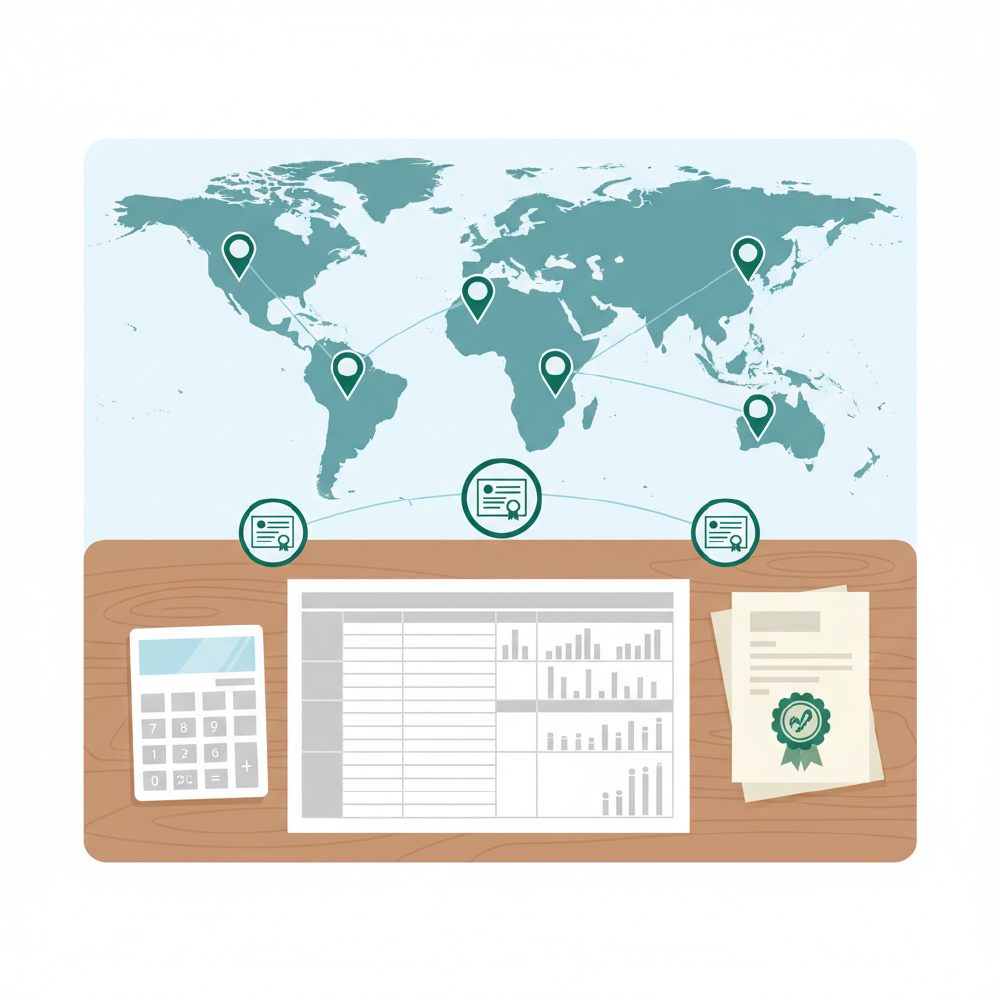
What is the cheapest gambling license you can actually use to launch a turnkey online casino?
Anjouan (Comoros Islands) is currently the cheapest credible option at $15,000–$25,000 all-in for year one. Curaçao sits in the $30,000–$50,000 range after the 2023 reform. Both are viable for offshore turnkey launches, but your real ceiling is determined by which payment processors and game aggregators will board you — not by what the authority charges.
I've watched operators make the mistake of optimizing purely for the license fee, then discover three months post-launch that their preferred PSP won't board a specific jurisdiction. The license cost is maybe 30–40% of your total compliance spend in year one. The rest is registered agents, AML/KYC tooling, a compliance officer (or outsourced equivalent), and the bank or e-wallet relationships that actually let you move money.
For a turnkey online casino — where you're typically on a white-label platform like SoftSwiss, EveryMatrix, or Digitain — the platform provider also has a say. Most white-label operators in the offshore tier are built to support Curaçao and increasingly Anjouan. Some will support Isle of Man or MGA, but those require you to clear a higher compliance bar that the platform itself has to maintain on your behalf. So the 'cheapest' license is really the cheapest license your entire supply chain will accept.
In 2026, the practical shortlist for cost-conscious operators is: Anjouan, Curaçao (new GCB direct license), Isle of Man (mid-tier), and MGA Malta for operators serious about EU traffic. I'll break each down in detail below, including the ones that look cheap on the surface but carry hidden costs that bite you at the payment layer.
How does the Curaçao gaming license work in 2026 and what does it actually cost?
Curaçao completed its licensing reform in 2023, replacing the old master-license/sublicense structure with direct licensing through the Gambling Control Board (GCB). A new B2C license costs roughly $15,000–$20,000 in government fees plus $10,000–$20,000 in setup costs through a local service provider. Annual renewal and compliance overhead push year-one all-in costs to $30,000–$50,000 for most operators.
The old Curaçao model — where operators bought a sublicense under one of four master license holders like Antillephone or Cyberluck — is effectively dead for new entrants. The GCB now issues licenses directly, which is better for legitimacy but slower and more expensive than the sublicense era. Under the old system you could be operational in 4–6 weeks for under $15,000. Under the new framework, expect 3–5 months and a more thorough fit-and-proper assessment.
What you get for that spend is still the most widely accepted offshore license in the industry. The vast majority of B2B game aggregators — think Relax Gaming, Pragmatic Play, Evolution — will supply content to Curaçao-licensed operators. Most crypto-friendly payment processors board Curaçao. And the major white-label platforms (SoftSwiss, EveryMatrix, BetConstruct) have their own Curaçao master licenses or support structures that make onboarding straightforward. That ecosystem advantage is worth real money.
The honest trade-off: Curaçao is not accepted by premium card payment processors like Visa/Mastercard acquiring banks in the EU or UK. You'll be working with crypto, e-wallets, and specialist high-risk PSPs. That's fine for a crypto-first or emerging-market operator, but if your target audience expects Visa checkout, Curaçao alone won't get you there. Also worth noting — the GCB has started issuing fines and suspensions since the reform, so the days of treating Curaçao as a rubber-stamp are over.
| Cost Item | Estimated Range | Notes |
|---|---|---|
| Government application fee | $15,000–$20,000 | One-time; payable to GCB |
| Local registered agent / service provider | $5,000–$10,000/yr | Mandatory; handles local compliance liaison |
| AML/KYC compliance setup | $3,000–$8,000 | Tooling + policy documentation |
| Server/data hosting (Curaçao or approved) | $2,000–$5,000/yr | Some platforms handle this |
| Annual renewal fee | $10,000–$15,000 | Estimate; GCB fee schedule subject to change |
| Total Year 1 (all-in estimate) | $30,000–$50,000 | Excludes platform fees and marketing |
Is the Anjouan gaming license a legitimate cheaper alternative to Curaçao?
Yes — with caveats. Anjouan (part of the Comoros Islands) issues B2C gambling licenses through the Anjouan Offshore Finance Authority (AOFA) for roughly $10,000–$15,000 in government fees, making it the cheapest credible offshore option in 2026. It's legitimate in the sense that it's a real regulatory framework with AML obligations, but payment processor and studio acceptance is narrower than Curaçao.
I've reviewed a handful of Anjouan-licensed operations over the past 18 months and the license itself is structurally sound — there's a proper application process, fit-and-proper checks, and annual renewal. The AOFA has been issuing licenses since around 2022 and has built up enough of a track record that some B2B suppliers will now board Anjouan operators without requiring a Curaçao license alongside it. That wasn't true 18 months ago.
The gap versus Curaçao shows up at the payment layer. Fewer PSPs have Anjouan on their approved jurisdiction list, and the ones that do tend to be crypto-native or neobank-style processors rather than the established high-risk acquirers. If you're building a crypto-first turnkey casino — using USDT, BTC, and maybe a few fiat e-wallets — Anjouan can absolutely work and the cost saving is real. If you need broad fiat coverage from day one, the narrower PSP ecosystem will cost you in conversion rates and player friction.
On the game content side, the picture is improving but still patchy. Aggregators like Softswarm or smaller content hubs are comfortable with Anjouan. Tier-1 studios with stricter compliance teams may still require Curaçao or a higher-tier license. My practical advice: if you're launching on a white-label platform that already holds an Anjouan license (some do), you inherit their supplier relationships and the content gap largely disappears. If you're going independent, do the supplier due diligence before you pay the application fee.
| Factor | Anjouan (AOFA) | Curaçao (GCB) |
|---|---|---|
| Year 1 government fees | $10,000–$15,000 | $15,000–$20,000 |
| All-in year 1 estimate | $15,000–$25,000 | $30,000–$50,000 |
| Timeline to license | 6–10 weeks | 3–5 months |
| Tier-1 game studio acceptance | Limited / improving | Broad |
| Crypto PSP acceptance | Good | Very good |
| Fiat card PSP acceptance | Limited | Limited (high-risk only) |
| White-label platform support | Growing | Widespread |
| Market reputation / player trust | Emerging | Established offshore standard |
What does an MGA Malta license cost and when does it make sense for a turnkey operator?
An MGA B2C Gaming Service License carries a non-refundable application fee of €5,000, a compliance contribution of €25,000 per year (for a Class B2C license), plus substantial setup costs for compliance infrastructure. Total year-one spend typically lands between €80,000–€150,000. It makes sense when you're targeting EU players who expect Visa/Mastercard, or when your B2B partners require it.
The MGA is a Tier-1 regulator — the same category as the UK Gambling Commission and Gibraltar. That matters enormously for payment processing. An MGA license opens doors to mainstream EU acquiring banks, which means you can offer Visa and Mastercard checkout to players in Germany, Finland, or the Netherlands in a way that Curaçao simply cannot. If your business model depends on fiat card deposits from European recreational players, the MGA premium pays for itself in conversion.
The timeline is the killer for early-stage operators. MGA reviews typically run 4–6 months, sometimes longer if the authority requests additional documentation — and they frequently do. You need a demonstrable corporate structure, a qualified Key Function holder (essentially a licensed compliance officer), AML policies, technical certifications, and a responsible gambling framework that can survive scrutiny. Most turnkey casino operators aren't ready for that on day one, which is why I generally position MGA as a second-stage license: launch offshore on Curaçao, prove your model, then apply for MGA when you have revenue to fund the compliance overhead.
One nuance worth flagging: some white-label platforms — EveryMatrix's Turnkey solution, for instance — hold their own MGA license and can sub-license or white-label under it, which dramatically reduces your personal compliance burden. You're essentially renting their license compliance infrastructure. That changes the cost calculus significantly, though you're also more constrained in how you operate. Read those platform agreements carefully; the revenue share or flat fee for operating under a platform's MGA umbrella can be substantial.
Which other cheap gambling licenses are worth considering in 2026?
Beyond Curaçao and Anjouan, operators in 2026 are looking at Isle of Man (mid-tier, ~£35,000+ year one), Gibraltar (prestige, expensive), Kahnawake (Canada-based, declining acceptance), and emerging options like Tobique (New Brunswick, Canada). None are cheaper than Anjouan, but some offer better payment processor access for specific target markets.
Kahnawake deserves a mention because it's been issuing licenses since 1999 and has real history — but its acceptance among EU-facing PSPs has declined over the past five years. It's still viable for North American-facing crypto operations, and the fees are relatively modest (roughly CAD $25,000–$35,000 all-in for year one). If your player base is primarily Canadian or US-adjacent and you're crypto-first, it's worth a conversation with their commission. For EU-facing operations, I'd skip it.
Isle of Man sits in an interesting middle ground — more credible than Curaçao in the eyes of some payment processors, less burdensome than MGA, and the Isle of Man Gambling Supervision Commission has a solid reputation. The year-one cost is roughly £35,000–£60,000 depending on your business model. The catch is that the GSC is thorough — they actually read your application and ask hard questions. Operators who've cut corners on their corporate structure or AML policies tend to get rejected or face extended review periods. If you're serious about building a sustainable business and want a step up from offshore, Isle of Man is underrated.
I'd steer most operators away from Tobique and similar emerging micro-jurisdiction licenses for now. They're cheap, but the B2B supplier acceptance is even thinner than Anjouan, and the jurisdictions lack the enforcement track record that gives payment processors confidence. In two or three years that may change, but in 2026 the risk-reward isn't there unless you have a very specific use case.
How do license costs compare across jurisdictions on a total-cost-of-ownership basis?
Government fees are rarely the biggest line item. When you add registered agent requirements, AML/KYC tooling, compliance officer costs, technical audits, and annual renewals, the total-cost-of-ownership gap between Anjouan and MGA is roughly €15,000 versus €120,000+ per year. The gap narrows if you're on a white-label platform that absorbs some compliance overhead.
The table below is my best-estimate synthesis from actual operator engagements and publicly available fee schedules. Treat the ranges as directional — individual operator circumstances vary significantly based on corporate structure complexity, target markets, and whether you're using a white-label platform versus a standalone build.
The compliance officer line is one operators consistently underestimate. An MGA-qualified MLRO (Money Laundering Reporting Officer) commands €60,000–€90,000 per year in salary if you hire in-house, or €20,000–€40,000 if you use an outsourced compliance firm. Curaçao and Anjouan have less prescriptive requirements, but any serious operation — one that expects to onboard reputable PSPs and game suppliers — needs someone accountable for AML. Budget for it regardless of jurisdiction.
| License | Gov't Fee (Year 1) | Compliance Overhead | Estimated Total Year 1 | Renewal (Year 2+) |
|---|---|---|---|---|
| Anjouan (AOFA) | $10,000–$15,000 | $5,000–$10,000 | $15,000–$25,000 | $10,000–$18,000/yr |
| Curaçao (GCB) | $15,000–$20,000 | $15,000–$30,000 | $30,000–$50,000 | $20,000–$35,000/yr |
| Kahnawake | CAD $25,000–$35,000 | $10,000–$20,000 | ~$35,000–$55,000 | $20,000–$30,000/yr |
| Isle of Man (GSC) | £20,000–$35,000 | £15,000–$25,000 | £35,000–$60,000 | £25,000–$45,000/yr |
| MGA Malta | €25,000–$30,000 | €55,000–$120,000 | €80,000–$150,000 | €60,000–$120,000/yr |
| UK Gambling Commission | £25,000–$50,000 | £80,000–$200,000+ | £100,000–$250,000+ | £80,000–$200,000+/yr |
What are the real risks of launching a turnkey casino on the cheapest possible license?
The biggest risk isn't regulatory — it's operational. Cheap licenses often mean limited PSP access, which kills conversion. Game studios may restrict content. Banking relationships become nearly impossible. And if you ever want to sell the business or raise investment, a Tier-3 offshore license is a significant valuation drag. Know these trade-offs before you sign the application.
I've seen operators spend $20,000 on an Anjouan license, launch their turnkey casino, and then spend the next three months trying to find a PSP that will board them — burning runway while their platform fees keep ticking. The payment layer is where cheap licenses hurt most. High-risk PSPs that accept offshore licenses charge 3–6% processing fees versus 1.5–2.5% for MGA-licensed operators. On any meaningful volume, that margin difference dwarfs the license cost saving.
There's also a geographic restriction reality that operators don't always read carefully. Curaçao's license explicitly prohibits accepting players from certain jurisdictions — the Netherlands, the US, France, and others depending on the license conditions. Anjouan has similar restrictions. Violating these isn't just a regulatory problem; it's a payment processor termination risk. PSPs audit merchant player bases, and if they find restricted-market players, they close the account, sometimes with a reserve hold on your funds. That's a business-ending event for a small operator.
On the exit side: if you build real value and want to sell your casino business in three to five years, a buyer's due diligence team will scrutinize your license. Curaçao is manageable. Anjouan is a harder conversation. MGA or Isle of Man significantly increases your multiple. It's worth thinking about your exit strategy when choosing your launch license, not just your launch cost.
How does your license choice affect which turnkey casino platforms will work with you?
Most major white-label and turnkey platforms — SoftSwiss, EveryMatrix, BetConstruct, Digitain — support Curaçao natively and increasingly support Anjouan. MGA support exists but requires you to clear a higher compliance bar. Some platforms hold their own licenses and can operate you under their umbrella, which changes the equation entirely.
When you engage a white-label platform like SoftSwiss's BGAMING Turnkey or EveryMatrix's CasinoEngine, the platform provider has its own regulatory obligations. They're not just building you software — they're a B2B supplier operating under their own license, and they can only serve operators whose license they're approved to support. SoftSwiss, for example, holds a Curaçao license and has built its compliance infrastructure around that. They'll onboard Anjouan-licensed operators on a case-by-case basis. They won't onboard an operator with no license at all, regardless of what the operator tells them about 'pending applications.'
The sub-licensing model is worth understanding properly. Some platforms — particularly older white-label setups — let you operate under their master license rather than obtaining your own. This was the dominant model under old Curaçao sublicenses. Under the new GCB framework, direct licensing is required, so pure sublicensing is largely gone for Curaçao. However, some Isle of Man and MGA-licensed platforms still offer a managed B2B structure where your operation runs under their regulatory umbrella. The cost is usually a higher revenue share (30–50% vs. 15–25% for a standalone license model), but the compliance burden on you is dramatically lower. For operators who want to test a market before committing to full licensing, this is a legitimate path.
My general recommendation: if you're evaluating turnkey platforms, ask each vendor directly which licenses they support, which they hold themselves, and whether they offer sub-licensed operation. Get that in writing. The sales deck will say 'we support all major jurisdictions' — the contract will tell you the truth.
What do US state regulations mean for operators considering a cheaper offshore license?
A Curaçao or Anjouan license gives you zero legal right to accept US players. Full stop. US online gambling is regulated state by state — New Jersey, Pennsylvania, Michigan, and others issue their own licenses through state gaming commissions, and those cost $250,000–$500,000+ in application fees alone. Offshore licenses and US player acquisition is a federal wire act and UIGEA risk that no cheap license mitigates.
I flag this because I regularly talk to operators who've read something about 'offshore casinos accepting US players' and assume their Curaçao license covers it. It doesn't. The Unlawful Internet Gambling Enforcement Act (UIGEA) and various state statutes create real legal exposure for operators knowingly targeting US residents, regardless of where the operator is licensed. The license jurisdiction doesn't provide a shield — it just determines where the regulator sits.
If you want to operate legally in the US, you need a state-issued license. New Jersey's Division of Gaming Enforcement, the Pennsylvania Gaming Control Board, and Michigan's Gaming Control Board all run formal licensing processes. The application fees alone are $200,000–$500,000 depending on the state, and you'll need an existing land-based casino partner in most states (the 'tethering' requirement). This is a fundamentally different business than launching an offshore turnkey casino, and the capital requirements are an order of magnitude higher.
The practical upshot for offshore operators: geo-block US states in your platform settings, make sure your PSP has US IP blocking in place, and don't let your marketing agency run US-targeted campaigns. The risk isn't just regulatory — US payment processors will terminate your account if they identify US player transactions, and that's a much faster and more painful consequence than a regulator letter.
What is the fastest path from zero to a licensed turnkey casino launch in 2026?
The fastest credible path is an Anjouan license plus a white-label platform that already supports it — you can be live in 8–12 weeks from application submission. Curaçao under the new GCB framework takes 3–5 months. Operating under an existing platform's license (sub-licensing) can get you live in 4–6 weeks but at the cost of revenue share and operational flexibility.
Here's the sequence I'd recommend for an operator prioritizing speed: First, engage a licensed white-label platform — SoftSwiss, EveryMatrix, or BetConstruct are the reliable names — and confirm which jurisdictions they support and whether they offer any sub-licensed operation. Second, engage an Anjouan registered agent (there are three or four reputable ones; ask the platform for referrals, they've seen which agents deliver). Third, submit your application and simultaneously begin your PSP onboarding process — don't wait for the license to arrive before approaching processors, because PSP onboarding has its own 4–8 week timeline. Fourth, get your game content agreements in place through the platform's aggregator relationships. Fifth, launch with a soft-open to a limited player base before full marketing spend.
The mistake I see constantly is operators treating these steps as sequential rather than parallel. If you wait for the license before starting PSP conversations, you add 6–8 weeks to your timeline for no reason. PSPs will start the KYB (Know Your Business) process on a pending license — they just won't activate the account until the license is issued. Run everything in parallel and you can realistically be live in 10–14 weeks on Anjouan, 16–22 weeks on Curaçao GCB.
One more thing: budget for the platform integration and content setup separately from the license cost. A white-label setup fee typically runs $20,000–$50,000 depending on the provider, plus ongoing revenue share or flat monthly fees. Some platforms offer a 'revenue share only' model with no upfront fee, which is attractive for capital-constrained operators but usually comes with a higher long-term revenue share. Model both scenarios over 24 months before you decide.
- Anjouan (AOFA) License — Cheapest credible offshore license in 2026. Government fees $10,000–$15,000, all-in year one $15,000–$25,000. Fast 6–10 week timeline. Best for crypto-first turnkey casinos; PSP acceptance is improving but narrower than Curaçao.
- Curaçao (GCB) License — The offshore industry standard. Post-2023 reform costs $30,000–$50,000 all-in year one with a 3–5 month timeline. Broadest game studio and crypto PSP acceptance of any offshore license. The default choice for most turnkey casino launches.
- Kahnawake Gaming Commission License — Canada-based, issued since 1999. Roughly CAD $25,000–$35,000 in fees, all-in ~$35,000–$55,000 year one. Declining EU PSP acceptance but still viable for North American crypto-focused operations.
- Isle of Man (GSC) License — Mid-tier Tier-2 license. £35,000–£60,000 all-in year one. Better payment processor access than Curaçao for some EU markets. Thorough application process — not suitable for operators with incomplete compliance infrastructure.
- MGA Malta B2C License — Tier-1 EU regulator. €80,000–€150,000+ all-in year one. Opens mainstream Visa/Mastercard EU processing. 4–6 month timeline. Best suited as a second-stage license after proving the business model offshore.
- Gibraltar Regulatory Authority License — Prestige Tier-1 license favored by large operators. High cost (£100,000+ year one) and selective application process. Overkill for new entrants but a strong choice for operators targeting UK/EU institutional investment or partnership.
- US State Licenses (NJ, PA, MI, etc.) — Required for legal US player acquisition. Application fees alone run $200,000–$500,000 per state, plus land-based partner requirements in most states. A fundamentally different business model from offshore turnkey casino operation.


Comments
No comments yet, be the first.