US iGaming Legal Map 2026: How to Start an Online Casino in the 7 States That Actually Allow It
Which US states allow real-money online casino games in 2026?
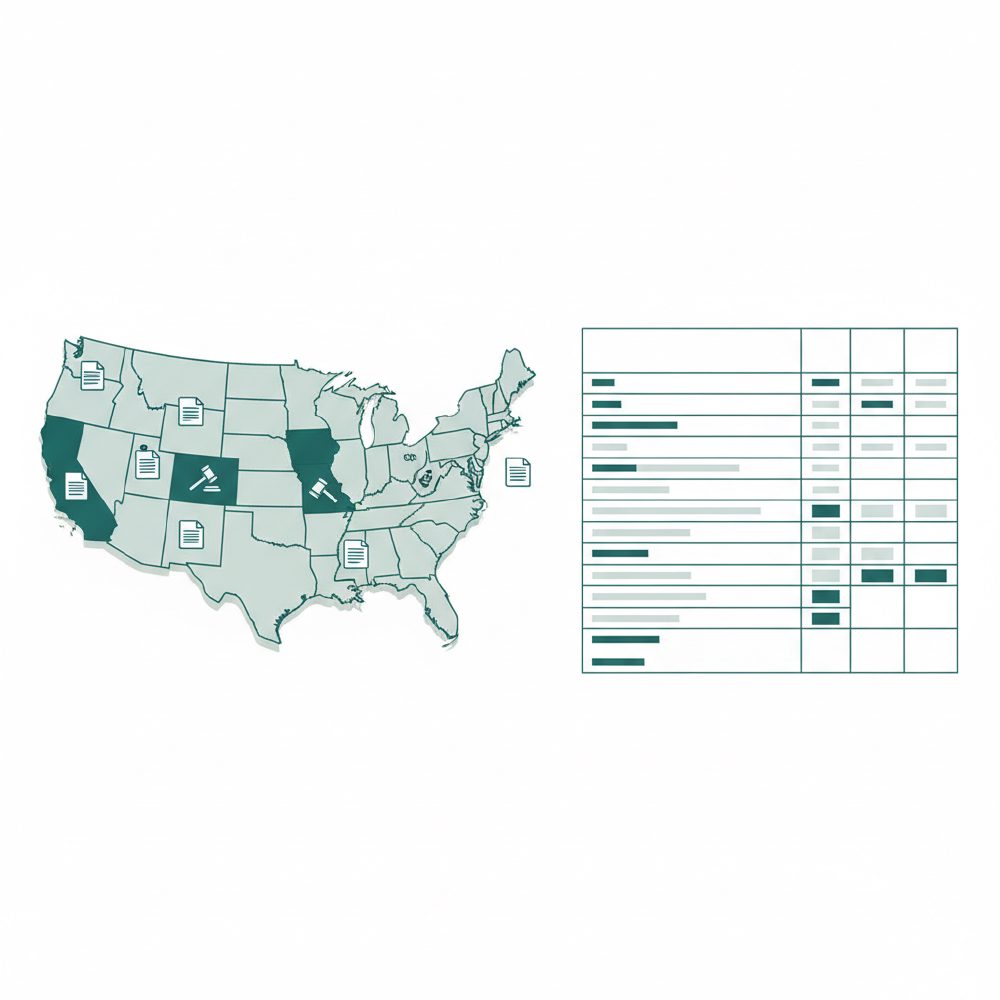
As of mid-2026, seven states have active, regulated real-money online casino frameworks: New Jersey, Pennsylvania, Michigan, Delaware, West Virginia, Connecticut, and Rhode Island. No other state has passed iGaming legislation that is currently operational, though several — New York, Illinois, Maryland, Indiana — have active bills in committee.
New Jersey remains the benchmark. It launched in 2013 under the Division of Gaming Enforcement (DGE) and has processed over $7 billion in annual gross gaming revenue in recent years. Pennsylvania followed in 2019 under the Pennsylvania Gaming Control Board (PGCB) and is now the second-largest market by revenue. Michigan's market, regulated by the Michigan Gaming Control Board (MGCB), went live in January 2021 and surprised everyone with its growth trajectory — partly because it includes tribal operators, which most other states don't.
Delaware is the smallest market by far. It runs through a state lottery monopoly model, meaning there's no realistic path for a private operator to enter independently. West Virginia and Connecticut are similarly constrained — WV ties iGaming licenses to its five land-based casinos, and Connecticut operates through two tribal compacts (Mohegan and Mashantucket Pequot). Rhode Island launched in 2024 under a state-run model through IGT's platform, making it another closed-to-private-operators market for now.
The practical takeaway: if you're a private operator looking to enter a regulated US state, New Jersey, Pennsylvania, and Michigan are your three realistic targets. Everything else either has no framework, runs as a state monopoly, or is locked to existing land-based licensees. Don't let a consultant sell you a 'multi-state strategy' that includes Delaware or Connecticut as near-term opportunities — they aren't.
| State | Status | Regulator | Private Operator Entry? | Est. Launch Year |
|---|---|---|---|---|
| New Jersey | Live | DGE | Yes — via skin/partnership | 2013 |
| Pennsylvania | Live | PGCB | Yes — direct license or skin | 2019 |
| Michigan | Live | MGCB | Yes — tribal & commercial | 2021 |
| Delaware | Live | State Lottery / DGE | No — state monopoly | 2013 |
| West Virginia | Live | WVLCB | Limited — tied to 5 casinos | 2020 |
| Connecticut | Live | CTHC / Tribal Compacts | No — tribal only | 2021 |
| Rhode Island | Live | Rhode Island Lottery | No — state-run via IGT | 2024 |
| New York | Pending legislation | NYSGC | Possible 2026-2027 | TBD |
| Illinois | Bill in committee | IGB | No live framework | TBD |
| Maryland | Bill failed 2025 | MGC | Not operational | TBD |
Why does sports betting being legal in 38 states NOT mean you can run an online casino there?
Sports betting and online casino gaming are governed by entirely separate state statutes, licensing regimes, and tax structures. A sports betting license authorizes wagering on sporting event outcomes — nothing more. Offering slots, blackjack, or poker under a sports betting license is a criminal offense in every US state, full stop.
This is the single most common misconception I see from operators entering the US market, especially those coming from offshore or European backgrounds where a single gambling license often covers multiple verticals. In the US, each vertical — sports betting, online casino (iGaming), poker, lottery — is carved out by its own enabling legislation. The Wire Act, UIGEA, and individual state statutes all draw these lines explicitly. The Supreme Court's 2018 PASPA repeal opened the door for states to legalize sports betting; it said nothing about casino games.
The practical consequence is stark. DraftKings, FanDuel, and BetMGM all hold sports betting licenses in 20+ states, but they can only offer online casino games in the seven states listed above. In every other state, their casino tabs are geofenced off. If you're building a business plan that says 'we'll start with sports betting and add casino later as more states open up,' that's a reasonable long-term thesis — but 'later' could easily mean 2030 or beyond for most states, and the political dynamics in states like Texas, California, and Florida make iGaming expansion genuinely uncertain.
There's also a tax rate divergence that matters for your P&L modeling. Sports betting is taxed at rates ranging from 6.75% (Nevada) to 51% (New Hampshire, Rhode Island). Online casino GGR tax rates in the iGaming states run from 15% in New Jersey to 36% in Pennsylvania. If you're modeling a multi-state entry, don't assume the sports betting tax rate applies to your casino vertical — it almost never does, and Pennsylvania's 36% rate has materially squeezed operator margins compared to NJ.
| Dimension | Sports Betting | Online Casino (iGaming) |
|---|---|---|
| States with active legal framework | ~38 states | 7 states |
| Federal enabling event | PASPA repeal (2018) | State-by-state legislation only |
| Typical GGR tax range | 6.75% – 51% | 15% – 36% |
| Land-based anchor required? | Often, but not always | Almost always |
| Platform certification required? | Yes (state-specific) | Yes (stricter — RNG, RTP audits) |
| Operator license fee range | $100K – $1M+ | $100K – $10M+ |
| Content/game approval process | Minimal | Game-by-game approval (NJ, PA) |
How much does it actually cost to start an online casino in a regulated US state?
Budget at minimum $2–5M to launch in New Jersey or Pennsylvania as a new operator — and that's before marketing. Licensing fees, land-based partnership costs, platform certification, compliance infrastructure, and the initial game library approval process stack up fast. Pennsylvania's interactive gaming certificate alone costs $10M for a Category 1 or 2 licensee.
Let me break down the cost stack in New Jersey, which is the most operator-friendly of the three realistic markets. The DGE charges a $400K initial license fee for an Internet Gaming Permit, plus a $200K renewal every five years. But the license fee is the smallest line item. You need a transactional waiver or a partnership with one of NJ's nine licensed Atlantic City casinos — those partnerships typically involve a revenue share of 15–25% of GGR going to the land-based partner, on top of your state tax obligations. Then you need a platform certified to NJ's technical standards, which means working with a vendor that has already gone through the DGE's Division of Technical Services review — think SG Gaming, IGT, or a handful of B2B platforms that have been through the process. New platforms can take 12–24 months to certify.
Pennsylvania is even more expensive at the license level. The PGCB's interactive gaming certificate costs $10M for Tier 1 (Category 1 or 2 casino) operators. Smaller 'interactive gaming manufacturer' and 'interactive gaming operator' licenses exist at lower price points ($1M–$4M range, though I'd verify current PGCB fee schedules directly), but they still require land-based affiliation. Michigan is somewhat more accessible — the MGCB's initial application fee is around $100K, with annual fees based on GGR, and the tribal gaming pathway adds complexity but also opens a route that doesn't exist in NJ or PA.
Beyond licensing, budget for: a compliance officer (typically $150–250K/year salary), an AML/KYC system (providers like Jumio, Onfido, or IDology run $50–150K/year at launch volumes), geolocation technology (GeoComply is effectively mandatory in US regulated states — plan for $0.10–0.30 per session), responsible gambling tooling, and a customer support operation that meets state requirements for response times. The operators who blow their budget typically underestimate the ongoing compliance cost, not the one-time licensing fee.
What is the land-based casino partnership requirement and how does it work?
Most US iGaming states require an online operator to be affiliated with — or actually be — a licensed land-based casino. This 'tethering' model means a standalone online-only operator cannot get a direct license in New Jersey, Pennsylvania, or West Virginia without a brick-and-mortar partner. It's the biggest structural barrier for new entrants without existing US land-based assets.
The tethering requirement exists because US iGaming legislation was designed to extend existing casino franchises online, not to create new standalone digital operators. In New Jersey, each Atlantic City casino can support up to three online 'skins' — meaning three separate branded online casinos. As of 2026, most of the available skin slots are taken by major operators (Caesars, BetMGM, DraftKings, Borgata, etc.). Finding an Atlantic City casino willing to take on a new skin partner is genuinely difficult, and those that are open to it will negotiate hard on revenue share.
In Pennsylvania, the model is similar but the market is newer and there are more land-based licensees (over a dozen commercial casinos), so skin availability is somewhat better. Michigan's tribal gaming compact structure is different again — tribal operators have their own licensing pathway through the MGCB and the tribal gaming commissions, which creates opportunities for operators willing to work in a tribal partnership structure, but it adds a layer of governance complexity that most operators from European or offshore backgrounds haven't encountered before.
The practical workaround some operators pursue is acquiring a minority stake in a land-based entity, or structuring a management agreement that satisfies the regulatory affiliation requirement without a full acquisition. This is legally complex and expensive in its own right, but it's the path that companies like Rush Street Interactive and Golden Nugget used to build their US iGaming positions. If you're a well-capitalized operator serious about the US market, a land-based acquisition or partnership negotiation should be your first call, not your platform vendor.
Which platform and technology vendors are actually certified for US regulated states?
Not every iGaming platform vendor is certified — or even certifiable — for US regulated states. The technical standards in New Jersey, Pennsylvania, and Michigan are materially stricter than offshore jurisdictions, and many popular European or white-label platforms (SoftSwiss, EveryMatrix, Softgamings) have no US state certifications. You need vendors that have already cleared state-level technical review.
In New Jersey, the DGE's Division of Technical Services certifies platforms, games, and peripheral systems independently. The major platform vendors with NJ certification include IGT (which powers several NJ skins), SG Gaming, GAN (now part of Sightline), and Scientific Games' OpenSports platform. On the RGS/game content side, studios must submit each game for individual approval — a process that takes 60–120 days per title and requires detailed RTP and RNG documentation. This is why NJ casinos typically launch with 200–400 games rather than the 3,000+ you'd see on an offshore operator's site.
Michigan and Pennsylvania have similar technical standards requirements, though the specific certification bodies differ. In Michigan, the MGCB's Technical Standards Division handles this. In PA, it's the PGCB's Bureau of Gaming Laboratory Operations. The good news is that certification in one state often (but not always) accelerates the process in another — IGT, for instance, has certified content across all three major iGaming states. The bad news is that if you're planning to use a European aggregator like Relax Gaming or Yggdrasil, you'll find that their US-certified game catalog is a fraction of their full library.
GeoComply deserves a special mention because it's not optional. The company provides the geolocation layer that verifies players are physically within state borders — a federal and state legal requirement. Every major US iGaming operator uses it. Budget around $0.10–0.30 per player session, which adds up quickly at scale. There are alternatives (Xpoint, for instance, focuses on sports betting geolocation), but GeoComply has the deepest regulatory relationships and is effectively the default choice for online casino compliance teams. If a platform vendor tells you they have their own geolocation solution that doesn't use GeoComply, ask them specifically which states it's approved in.
What is the realistic timeline to launch a regulated US online casino from scratch?
Expect 18–36 months from initial application to live launch in a US regulated state, assuming you already have a land-based partner identified. The bottleneck is almost never the business setup — it's the regulatory review queue, platform certification, and game-by-game content approval process, all of which run on the regulator's timeline, not yours.
Here's a realistic phased timeline for New Jersey, which I'll use as the benchmark. Months 1–3: secure your land-based partnership agreement, engage NJ-licensed legal counsel, begin the background investigation process for all key principals (this involves extensive personal financial disclosure — budget 6–8 weeks just for document collection). Months 3–9: submit your Internet Gaming Permit application to the DGE; the DGE has a statutory review period but in practice, complex applications take 6–12 months. Simultaneously, begin platform vendor selection and initiate the technical certification process with the DGE's Division of Technical Services.
Months 9–18: platform certification review (can run 12–24 months for a new platform; faster if you're using an already-certified vendor). Game content submission and approval — submit your initial game library in batches; expect 60–120 days per batch. Build out your compliance infrastructure: AML program, responsible gambling tools, KYC integration, GeoComply integration. Months 18–30: assuming no major regulatory issues, soft launch with a limited game library, then expand as additional content approvals come through. Full-scale launch typically happens 6–12 months after initial go-live as the game library grows.
Pennsylvania can move slightly faster if you're using a platform already certified in PA, and Michigan has shown faster regulatory processing times in recent years. But I've never seen a clean-slate operator go from zero to live in under 18 months in any US regulated state. Anyone quoting you 12 months is either assuming you already have a land-based partner, a certified platform, and clean principals — or they're being optimistic in a way that will cost you later.
Can offshore casino operators legally serve US players in the 39 states without iGaming laws?
Technically, there is no federal law that explicitly criminalizes a player in the US accessing an offshore casino — but operating a business that knowingly accepts US players without state authorization carries serious federal risk under the Wire Act, UIGEA, and potentially the Illegal Gambling Business Act. The 'grey market' is getting greyer and enforcement risk is rising.
The UIGEA (Unlawful Internet Gambling Enforcement Act of 2006) doesn't criminalize gambling per se — it targets the financial transactions that facilitate unlawful internet gambling. 'Unlawful' is defined by reference to underlying federal or state law. In states without iGaming frameworks, online casino play sits in a legal grey zone: it may not be explicitly prohibited, but it's not authorized either. The DOJ's 2019 re-interpretation of the Wire Act (since partially walked back by court decisions) created further uncertainty. The practical result is that payment processors, banks, and payment facilitators are extremely cautious about processing US-facing gambling transactions, which is why offshore operators serving the US market rely heavily on cryptocurrency and e-wallets.
The enforcement risk isn't theoretical. PokerStars, Full Tilt, and Absolute Poker were indicted in 2011 (Black Friday). More recently, several operators have faced state-level actions — New Jersey's DGE has sent cease-and-desist letters to offshore operators explicitly marketing to NJ residents. The FTC and state attorneys general have shown increasing interest in operators using deceptive marketing to US consumers. If you're running an offshore operation that accepts US players, the question isn't whether there's legal risk — there clearly is — it's whether your business model can sustain that risk, and whether the regulatory environment in 2026 is more or less forgiving than it was in 2020. My read: it's less forgiving, and the trend is toward more enforcement, not less.
That said, the offshore market serving US players is large and operators in it are making real money. The operators who survive long-term in this space tend to be disciplined about which states they accept traffic from (avoiding the seven regulated states where their activity is unambiguously illegal), invest seriously in payment processing redundancy, and maintain enough operational distance from the US that federal jurisdiction is genuinely contested. None of that eliminates the risk — it just manages it. If your goal is a sustainable, investable, acquirable business, the regulated path is the only one that gets you there.
How do US iGaming tax rates compare across the seven legal states, and what does it mean for margins?
GGR tax rates across the seven US iGaming states range from 15% in New Jersey to 54% in Pennsylvania for slot revenue — a spread that fundamentally changes unit economics and should drive your market prioritization. Pennsylvania's slot tax rate in particular is one of the highest effective iGaming tax rates of any regulated market globally.
New Jersey taxes online casino GGR at 15% — the most operator-friendly rate among the seven states, which is one reason NJ has consistently attracted the most operator brands and the most competitive market dynamics. Michigan applies a blended rate: 20% for commercial operators, with tribal operators paying rates specified in their compacts (which vary). West Virginia taxes iGaming GGR at 15%, making it similar to NJ, though the market is far smaller. Delaware's state lottery model means operators don't face a direct GGR tax in the traditional sense — but they also don't get to keep most of the revenue.
Pennsylvania is the outlier that every operator needs to model carefully. The PGCB taxes online slots at 54% of GGR and online table games and poker at 16%. That 54% slot rate is not a typo — it's the result of Pennsylvania's aggressive fiscal approach to iGaming legislation, and it's why several operators have publicly stated that PA is their least profitable regulated US market despite being one of the largest by revenue. At 54% tax on slots, plus your land-based partner's revenue share (say 20%), you're paying out 74% of slot GGR before a single dollar of platform cost, marketing, or compliance expense. The math works if you have scale and a strong brand, but it's brutal for a new entrant trying to build market share.
Rhode Island and Connecticut, as state-run or tribal-compact markets, don't offer meaningful private operator economics to model. If you're building a US iGaming business plan, your financial model should be built around NJ and MI as your primary markets, with PA as a scale play once you've established a profitable base. The operators who entered PA first and tried to build from there often found themselves in a cash-flow hole that NJ or MI revenues had to rescue.
| State | Online Slots Tax Rate | Online Table Games Tax Rate | Online Poker Tax Rate | Private Operator Entry? |
|---|---|---|---|---|
| New Jersey | 15% | 15% | 15% | Yes |
| Pennsylvania | 54% | 16% | 16% | Yes |
| Michigan | 20% (commercial) | 20% (commercial) | 20% (commercial) | Yes |
| West Virginia | 15% | 15% | 15% | Limited |
| Delaware | State lottery model | State lottery model | State lottery model | No |
| Connecticut | Tribal compact rates | Tribal compact rates | Tribal compact rates | No |
| Rhode Island | State-run model | State-run model | N/A | No |
Which US states are most likely to legalize online casino gaming next, and when?
New York, Illinois, and Maryland are the most-watched near-term prospects — but 'near-term' in US iGaming politics often means 3–5 years, not 12 months. New York has the largest potential market but faces the strongest opposition from land-based casino interests. Illinois has a complex regulatory history that makes timeline prediction genuinely difficult.
New York is the prize everyone is watching. With 20 million residents and a demonstrated appetite for online gambling (NY sports betting generated over $2 billion in GGR in its first full year), the potential market is enormous. The New York State Gaming Commission has studied iGaming expansion, and Governor Hochul has expressed openness to it. The obstacle is the land-based casino lobby — particularly the racinos and the three new commercial casino licenses being awarded in the downstate market — which has historically resisted online expansion that could cannibalize their floor revenue. My read: NY iGaming is a 2027–2028 event at the earliest, more likely 2028–2029 if the new downstate casinos use their political capital to delay it.
Illinois is complicated. The state has 16 licensed casinos, a large sports betting market, and a gaming board (IGB) that has shown competence in regulating complex markets. But Illinois also has a history of slow-moving gaming legislation — the 2019 Gaming Act that expanded casinos and legalized sports betting took years of negotiation. iGaming bills have been introduced but haven't advanced significantly. Indiana, Maryland, and New Hampshire are all in similar positions: bills introduced, stakeholder opposition active, no clear legislative path in the next 12 months.
The states I'd watch as potential surprise movers are Iowa and Virginia. Iowa has a well-run gaming commission, an established commercial casino industry, and a state legislature that has shown willingness to expand gaming incrementally. Virginia legalized sports betting efficiently and has a growing commercial casino sector — it's not inconceivable that iGaming legislation moves there in the 2026–2027 session. Neither is a high-probability bet for 2026, but both are worth monitoring if you're planning a 5-year US market entry strategy.
What payment processing challenges should US-facing operators prepare for?
Payment processing is the operational bottleneck that kills US iGaming launches more often than licensing delays. Even in regulated states, major credit card networks and most US banks apply extra friction to gambling transactions. In offshore markets serving US players, the challenge is an order of magnitude harder — expect high decline rates, frequent processor churn, and significant reliance on cryptocurrency.
In regulated US states, the payment stack is manageable but requires dedicated attention. Visa and Mastercard both allow gambling transactions in states where it's explicitly legal, but individual issuing banks can — and do — block them at the cardholder level. ACH/bank transfer is the workhorse payment method in US iGaming, with providers like Trustly (Pay N Play) and VIP Preferred (a Everi product specifically built for US casino ACH) being the dominant players. PayPal has a gambling division and is live in several US states, which is a meaningful trust signal for players. Online banking via Plaid-connected ACH has grown significantly. Play+ prepaid card programs (also an Everi product) are common across US iGaming operators.
What you won't have easy access to in the US that you might rely on in European markets: Skrill, Neteller (both MGA-licensed products not available for US gambling), most crypto payment processors (regulated states generally prohibit or heavily restrict crypto deposits), and open banking solutions common in the UK. The US iGaming payment stack is narrower than European operators expect, and the conversion rate on payment attempts is lower — budget for a 10–15% decline rate on card transactions even in regulated states, higher if your player acquisition skews toward certain demographics or geographies within a state.
For offshore operators serving US players, the situation is fundamentally different. UIGEA creates compliance obligations for US banks and payment processors, which means most mainstream processors won't touch offshore gambling transactions. The offshore US-facing market runs primarily on crypto (Bitcoin, Ethereum, USDT), offshore-acquired Visa/MC bins with high decline rates, and voucher systems like PayNearMe or CashtoCode. Processor relationships are fragile — expect to cycle through multiple processors per year and maintain redundancy. Any business plan for an offshore US-facing operation that doesn't account for significant payment processing friction and cost is not a realistic plan.




Comments
No comments yet, be the first.