How to Start an Online Casino in the US in 2026: The 7-State Reality vs. 39 States Still Off-Limits
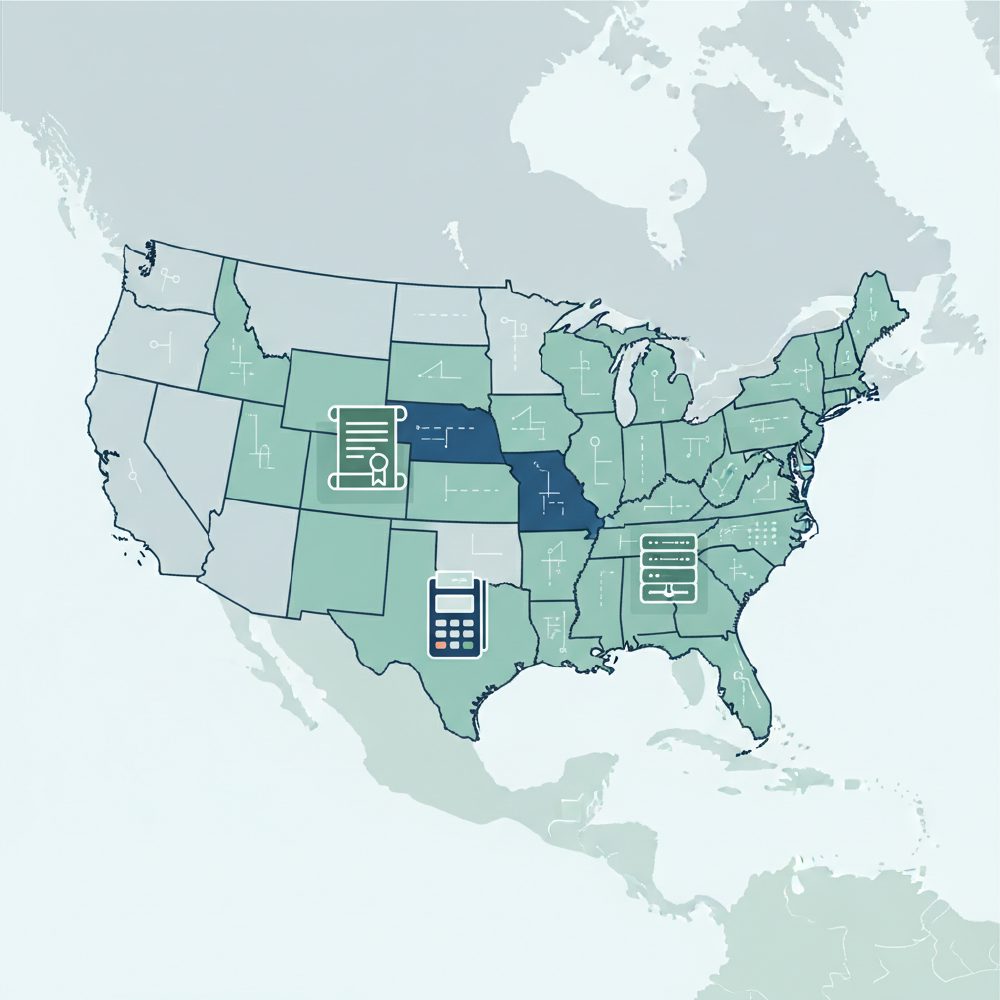
Which US states have legalized online casino gambling in 2026?
Seven states have authorized real-money online casino games as of 2026: New Jersey, Pennsylvania, Michigan, Connecticut, Delaware, West Virginia, and Rhode Island. Each operates under its own regulatory framework — there is no federal online casino license. Every other state either prohibits iGaming outright or has no enabling legislation on the books.
New Jersey was the trailblazer, going live in November 2013 under the Division of Gaming Enforcement (DGE). Pennsylvania followed in 2019 under the Pennsylvania Gaming Control Board (PGCB), Michigan launched in January 2021 under the Michigan Gaming Control Board (MGCB), and Connecticut went live the same year under the Connecticut Department of Consumer Protection. West Virginia authorized iGaming in 2019 but the market only became commercially active in 2020. Delaware has technically had online casino since 2013 through its state lottery, though it remains a tiny, state-run market. Rhode Island passed legislation in 2023 and launched in 2024, making it the seventh and most recent entrant.
The commercial scale varies enormously. New Jersey and Michigan are the two markets serious operators care about — New Jersey generated roughly $2.1 billion in gross gaming revenue (GGR) in 2023, and Michigan crossed $1.9 billion in the same period. Pennsylvania sits between them but carries the highest tax burden of the group. Delaware and Rhode Island are structurally small; Delaware's market is essentially a state monopoly run through its lottery, which means private operators have no real entry path. West Virginia has seen modest handle but remains commercially underdeveloped relative to its licensing cost.
Connecticut is an interesting outlier — the state authorized only two operators (DraftKings and FanDuel, tied to the Mohegan and Mashantucket Pequot tribal compacts respectively). That isn't a typo: if you're an independent operator, Connecticut is effectively a closed market regardless of your capitalization. This is one of the structural realities that vendor sales decks tend to skip over when they pitch you on the 'seven-state US opportunity.'
| State | Regulator | Live Since | Approx. Tax Rate on GGR | Open to New Operators? | Estimated 2023 GGR |
|---|---|---|---|---|---|
| New Jersey | DGE | 2013 | 15% (slots) / 8% (table games) | Yes (via Atlantic City casino partner) | ~$2.1B |
| Pennsylvania | PGCB | 2019 | 36% (slots) / 16% (table games) | Yes | ~$1.8B |
| Michigan | MGCB | 2021 | 20–28% (tiered) | Yes | ~$1.9B |
| Connecticut | CTDCP | 2021 | 18% | No (duopoly) | ~$400M |
| West Virginia | WVLCB | 2020 | 15% | Yes (limited) | ~$100M |
| Delaware | DE Lottery | 2013 | ~50% (state-run revenue share) | No (state monopoly) | ~$10M |
| Rhode Island | RI Lottery / RIDGC | 2024 | ~51% (state-run) | Extremely limited | Early stage |
Why are 39 states still closed to online casino operators?
The short answer is politics, not technology. Most states have active land-based casino industries, tribal gaming compacts, or lottery commissions that lobby hard against iGaming expansion. Without a federal framework, each state must pass its own enabling legislation — a process that typically takes years and faces well-funded opposition from brick-and-mortar interests.
The Wire Act of 1961, as reinterpreted by the DOJ in 2011 (and then re-reinterpreted in 2019 in a more restrictive direction), created persistent legal uncertainty at the federal level. The 2011 opinion opened the door for states to authorize intrastate online gambling; the 2019 reversal attempted to walk that back but was challenged in court. The First Circuit Court of Appeals sided against the DOJ's 2019 position in 2021, which gives states operating iGaming programs cleaner legal footing — but the ambiguity still gives cautious state legislators a reason to wait.
Tribal gaming is the single biggest structural obstacle in states like California, Arizona, and Florida. Tribes hold compact rights that generate hundreds of millions in annual revenue, and any iGaming bill that doesn't give tribes a dominant position faces a well-funded campaign against it. California has attempted iGaming legislation multiple times — it consistently dies in committee or at referendum. Florida's situation is even more complex: the Seminole Tribe's compact with the state covers digital sports betting (currently tied up in federal courts), and online casino expansion would require renegotiating those compacts entirely.
New York is arguably the most watched closed market. The state has authorized mobile sports betting (which launched in January 2022 and immediately became the largest sports betting market in the US), and several legislators have introduced iGaming bills each session since 2022. The tax revenue argument is compelling — estimates suggest New York iGaming could generate $1B+ annually for the state — but opposition from land-based casinos and racinos has blocked progress each time. Most industry analysts I track expect New York to be the next state to legalize, but 'next' has meant 'not yet' for three consecutive legislative sessions.
How do you actually start an online casino in a legal US state?
You don't launch directly — you attach to an existing land-based license holder or obtain a 'skin' arrangement through an already-licensed operator. In New Jersey, for example, every online casino must be tethered to one of Atlantic City's nine casinos. In Pennsylvania and Michigan, you apply for a standalone iGaming license, but the process is capital-intensive and slow. Budget 12–24 months and $1M–$5M+ before going live.
The tethering model in New Jersey is the most common entry point for operators who want US market access without the full cost of a Pennsylvania or Michigan license application. You negotiate a revenue-share deal with an Atlantic City casino (the 'skin' holder), pay the DGE's fees, pass a suitability review, and operate under the casino's master license. The DGE's initial license fee is $400,000 for an internet gaming permit, and renewal runs $250,000 annually — those are just the regulatory fees, not the compliance buildout. In practice, most operators spend considerably more on the technical integration requirements alone, since the DGE mandates specific geofencing standards, self-exclusion database integration (NJ's Self-Exclusion Program), and approved RNG certification from a lab like GLI or BMM.
Pennsylvania and Michigan allow operators to apply for their own licenses without a casino tether, which sounds cleaner but carries heavier upfront costs. Pennsylvania's iGaming license application fee is $10 million — yes, ten million dollars — though that includes a portion that is credited against future tax obligations. The PGCB's review process is thorough: background investigations on all principals, source-of-funds documentation, technical system reviews, and a minimum internal control standards (MICS) submission. Michigan's MGCB is somewhat more approachable in terms of fees (the license fee is $100,000 plus a $50,000 investigation fee), but the technical and compliance requirements are similarly demanding.
On the platform side, you need a gaming system that is certified in each state. SoftSwiss, EveryMatrix, and Kambi (on the sportsbook side) have US-certified or US-certifiable components, but most operators entering regulated US markets end up working with suppliers who have already gone through the GLI-19 or GLI-33 certification process for each specific state. That certification work adds time and cost that doesn't appear in any vendor's initial pitch deck. Budget separately for geolocation technology — GeoComply is essentially the industry standard for US regulated markets and is mandated or strongly preferred by most state regulators.
How do US state iGaming licensing costs and timelines compare?
Pennsylvania is the most expensive US iGaming market to enter by a significant margin — the $10M license fee alone prices out most mid-tier operators. Michigan and New Jersey are more accessible but still require $1M–$3M in total launch investment. Timelines across all three markets run 12–24 months from application to go-live, assuming no regulatory delays.
The table below captures the key licensing variables across the three commercially meaningful open markets. Note that these figures reflect the regulatory fees and estimated compliance costs — they do not include platform development, game content licensing, marketing, or working capital. Those costs add another $500K–$2M+ depending on your operational model.
One thing operators consistently underestimate is the ongoing compliance cost after launch. Each state requires regular reporting, responsible gambling tool updates (deposit limits, cooling-off periods, self-exclusion integrations), and periodic system re-certifications when you add new game content or payment methods. Michigan's MGCB, for example, requires that all new games be certified before going live — which creates a content pipeline bottleneck that can slow your game launch cadence significantly compared to an offshore operation where you can push new titles same-day.
| State | License Fee | Investigation Fee | Estimated Total Launch Cost | Typical Timeline | Annual Tax Rate (Slots) |
|---|---|---|---|---|---|
| New Jersey (skin) | $400K initial + $250K/yr | Included in DGE review | $1M–$2.5M total | 12–18 months | 15% |
| Pennsylvania (own license) | $10M (partially credited) | $50K–$200K | $12M–$15M total | 18–24 months | 36% |
| Michigan (own license) | $100K + $50K investigation | ~$50K | $1.5M–$3M total | 12–18 months | 20–28% (tiered) |
| West Virginia | $50K + investigation | ~$25K | $750K–$1.5M total | 12–18 months | 15% |
What are the real technical requirements for launching in a regulated US state?
Every regulated US state mandates geolocation verification (GeoComply is the de facto standard), RNG certification from an approved test lab (GLI, BMM, or eCOGRA in some states), integration with the state's self-exclusion database, and a full internal controls submission. These aren't optional add-ons — they are hard go-live gates that regulators enforce.
Geolocation is non-negotiable and more technically demanding than most offshore operators expect. GeoComply's solution uses a combination of IP analysis, GPS, Wi-Fi triangulation, and device data to confirm a player is physically inside state lines at the time of each session. The system needs to be integrated at the platform level, not bolted on afterward. GeoComply charges on a per-transaction or per-session basis, and the cost adds up at scale — but there is no credible alternative for US regulated markets right now. Some operators have tried to use other providers and hit regulatory pushback during the certification process.
RNG certification is required for every game type you offer. If you're aggregating content through a platform like EveryMatrix's CasinoEngine or SoftSwiss's Game Aggregator, you need to confirm that each specific game title has been certified for the state you're launching in — not just certified generically. Pragmatic Play, Evolution, and NetEnt (now part of Evolution) have done the state-by-state certification work for major markets, but smaller studios may not have, which limits your content catalog at launch. This is a real operational constraint that affects your day-one game lobby depth.
The self-exclusion database integration varies by state. New Jersey uses its own NJ Self-Exclusion database plus the national NCPG exclusion list. Michigan uses GameSense and the MGCB's exclusion registry. Pennsylvania has the iExclusion program. Your platform must check against these lists at registration and at login — a player on the exclusion list who manages to deposit and lose money is a serious regulatory liability, not just a compliance checkbox. I've seen operators get hit with significant fines in other jurisdictions for exclusion failures; US regulators are no less rigorous.
Should you pursue a US state license or launch offshore and geo-block US traffic?
If you have the capital and a genuine long-term US strategy, pursue a state license — the regulated market is real, growing, and defensible. If you're a smaller operator or want to test your product before committing eight figures, launching offshore under Curaçao or Anjouan and blocking US IPs is a legitimate commercial approach, not a gray-area workaround. Just be honest about what it forecloses.
The offshore route under Curaçao eGaming (now reorganized under the new Curaçao Gaming Authority framework that came into force in 2023) or Anjouan costs a fraction of a US state license — typically $30K–$80K for the license itself, plus platform and compliance setup. You can be live in 3–6 months. You geo-block the US, you serve LATAM, Europe, and other permitted markets, and you build a product and a brand. That's a real business. Many operators I've worked with have taken this path deliberately as a capital-efficient first step, with the intention of pursuing a US license once they have revenue and operating history to support the application.
The risk with the offshore approach isn't the license itself — it's the temptation to let US players in anyway. Some operators rationalize this by claiming their geo-blocking 'isn't perfect' or by accepting players from VPN addresses. That's not a gray area; it's a federal exposure under the Unlawful Internet Gambling Enforcement Act (UIGEA) and potentially the Wire Act, depending on the state. US payment processors will not touch you, which is why offshore operators serving US players rely on crypto and third-party processors — and that payment stack creates its own AML and fraud exposure. I'm not moralizing here; I'm flagging that the enforcement risk is real and has resulted in DOJ actions against operators and payment processors.
For operators seriously evaluating a US state license, the sequencing question matters. Michigan is generally the most operator-friendly entry point for a mid-tier operator — lower license fees than Pennsylvania, a genuine commercial market unlike West Virginia, and a regulator that has built a workable relationship with the industry. New Jersey via a skin deal is faster but puts you in a revenue-share arrangement with an Atlantic City casino that will take a meaningful cut. Pennsylvania's 36% slots tax rate is punishing at scale — your effective margin on slot GGR after tax, platform fees, and game royalties can compress to single digits if you're not careful with your bonus economics.
Which US states are most likely to legalize online casino gambling next?
New York is the consensus pick among industry analysts for the next state to legalize — the tax revenue case is overwhelming and the sports betting infrastructure is already in place. Illinois and Indiana have had active legislative efforts, and Maryland is worth watching. None of these are certainties; all have faced tribal or land-based opposition that has blocked prior bills.
New York's iGaming bills have been introduced by Senator Joseph Addabbo and Assembly Member J. Gary Pretlow for multiple consecutive sessions. The argument is straightforward: New York's mobile sports betting market generated over $1.7 billion in handle in its first month alone, and the state's 51% tax rate on sports betting GGR has proven that New York is willing to tax aggressively in exchange for market access. An iGaming bill modeled on Pennsylvania or Michigan could realistically generate $500M–$1B annually for the state. The obstacle is the nine commercial casinos upstate and the three downstate casinos (currently being licensed) that see iGaming as cannibalization. Watch the 2025–2026 legislative session closely — the fiscal pressure is mounting.
Illinois passed sports betting in 2019 and has a large, commercially sophisticated gaming market, but the Illinois Gaming Board has been cautious about iGaming expansion. Several bills have been introduced; none have advanced out of committee. The Chicago casino project (currently under development by Bally's) could shift the political calculus — a major land-based operator with a stake in the Chicago market has more incentive to support iGaming as a revenue supplement than to oppose it.
Indiana is interesting because it has a relatively operator-friendly regulatory environment and a track record of moving gaming legislation efficiently. The Indiana Gaming Commission has been receptive to industry input, and several regional operators (including Churchill Downs and Caesars) have Indiana properties that could anchor an iGaming expansion. I'd put Indiana in the 'realistic by 2027' category if the political environment holds. Maryland and Massachusetts are longer shots but have had recurring legislative interest. For operators doing market planning, I'd recommend building a 'next three states' scenario into any US market strategy — the regulatory pipeline moves slowly but it does move.
How do US iGaming payment requirements differ from offshore operations?
Regulated US states require payment processors that are specifically approved by the state regulator, can handle geolocation-verified transactions, and integrate with state-mandated responsible gambling controls like deposit limits. Credit card acceptance varies by state. Crypto is generally not accepted in regulated US markets. This is a fundamentally different stack from an offshore operation.
In New Jersey, approved payment methods include ACH/e-check, PayPal (one of the few markets where PayPal actively supports gambling), Visa and Mastercard debit (credit card acceptance is restricted), Play+ prepaid cards, and online banking via services like VIP Preferred. The DGE maintains a list of approved payment processors, and you cannot add a new payment method without going through a separate approval process. This is not a fast process — expect 60–90 days minimum to add a new payment method after launch.
Michigan and Pennsylvania have similar approved-processor frameworks. PayNearMe (for cash-to-card deposits at retail locations) is popular in both markets because it serves players who are unbanked or prefer not to link a bank account. Skrill and Neteller, which are workhorses for offshore operators in Europe, are not widely available in US regulated markets. This means your payment conversion rates will look different from what you're used to in European or LATAM markets — US players have specific payment habits, and your deposit funnel needs to be built around ACH, debit card, and PayPal, not e-wallets.
The responsible gambling payment controls are mandatory and technically integrated. Michigan, for example, requires that deposit limit functionality be built into the account management system and that limits take effect immediately when set but can only be increased after a 72-hour cooling-off period. These aren't just UI features — they need to be enforced at the payment processing level. Your platform provider needs to have built this correctly, and you need to test it thoroughly before the MGCB's technical review. I've seen platform certifications delayed by months because the deposit limit enforcement logic had edge cases the regulator caught during testing.
What tax structure should operators model when evaluating US iGaming markets?
Pennsylvania's 36% slots tax is the harshest in any legal US market and materially compresses operator margins. New Jersey at 15% and West Virginia at 15% are more workable. Michigan's tiered structure (20–28%) sits in between. Model your effective margin after tax, platform fees, game royalties, and bonus costs — not just the headline GGR number.
The tax rate conversation is where a lot of operators get surprised. A 36% GGR tax in Pennsylvania sounds manageable until you layer in platform fees (typically 10–20% of GGR for a white-label or aggregator arrangement), game content royalties (typically 10–15% of GGR for slot content from major studios), payment processing fees (2–4% of deposit volume), and bonus costs. In a competitive market where you're running standard welcome bonuses and reload promotions, your effective net revenue margin on slots GGR in Pennsylvania can easily fall below 10%. That's not a viable business at modest scale — you need significant volume to make the unit economics work, which means significant marketing spend, which Pennsylvania also taxes through its promotional credits cap.
New Jersey's structure is more nuanced than the headline 15% rate suggests. Table games are taxed at 8% of GGR, which is genuinely attractive for operators with a strong live casino product. The state also allows promotional credit deductions (up to 12.5% of GGR), which effectively reduces your taxable base if you're running aggressive promotions — a meaningful lever for new market entrants trying to build player databases. Michigan's tiered structure starts at 20% for the first $4M in annual GGR and increases to 28% above $12M, which is progressive in a way that actually helps smaller operators in the early growth phase.
Federal taxation adds another layer. US-based iGaming operators pay federal corporate income tax on net income, and the interplay between state tax deductibility and federal tax creates complexity that requires specialized gaming tax counsel. Don't model this yourself — the accounting treatment of promotional credits, jackpot reserves, and progressive jackpot accruals in a US regulated environment is genuinely specialized. Firms like Deloitte, KPMG, and several boutique gaming CPA firms (Christiansen Capital Advisors, for example) have dedicated gaming tax practices. Budget for that advisory relationship from day one.
How does the operator landscape in legal US states affect new entrants?
The major US iGaming markets are dominated by three to five large operators — DraftKings, FanDuel, BetMGM, Caesars, and Borgata/PokerStars in various states. New entrants face significant customer acquisition cost disadvantages against brands that already have sports betting databases of millions of players. Differentiation strategy matters more in the US than in most offshore markets.
DraftKings and FanDuel converted their daily fantasy sports user bases into real-money casino players at scale — a structural advantage that no new entrant can replicate. BetMGM benefits from MGM's land-based loyalty program (M life Rewards), and Caesars has its Caesars Rewards program doing the same. These loyalty ecosystems mean that a significant portion of the addressable market is already in a retention relationship with a competitor before you acquire them. Customer acquisition costs in New Jersey and Michigan for a new operator run $200–$500+ per depositing player depending on channel — search, affiliate, and paid social are all competitive and expensive.
The strategic question for a new US market entrant is: what is your differentiation? A me-too slots-and-live-casino product with a generic welcome bonus will not carve out meaningful market share against operators spending $100M+ annually on marketing. Operators who have found traction in the US market typically do so through one of three angles: a specific vertical focus (poker, live dealer, specific game types), a specific demographic or cultural angle (regional brands with local affinity), or a significantly better product experience in a specific area (faster withdrawals, better mobile UX, more generous loyalty mechanics). Vague 'better product' claims don't work — you need a specific, defensible point of difference that you can communicate in a cost-efficient channel.
The affiliate market in regulated US states is also more constrained than offshore. US-facing affiliates must be licensed in each state they operate in — the NJ DGE, PGCB, and MGCB all have affiliate registration requirements. This limits the pool of available affiliates and increases the cost of affiliate traffic compared to, say, the European or LATAM markets where affiliate networks operate with fewer restrictions. Build your affiliate relationships early, and make sure your tracking and commission infrastructure is compliant with state reporting requirements before you go live.




Comments
No comments yet, be the first.