Casino API Integration Guide for Operators: What Actually Works in 2026
What exactly is a casino API integration and why does it matter for operators?
A casino API integration is the programmatic connection between your casino platform and an external service—game studios, payment processors, KYC providers, or CRM tools. It matters because the quality, latency, and reliability of these connections directly determine whether players can load a game in two seconds or abandon your site in five.
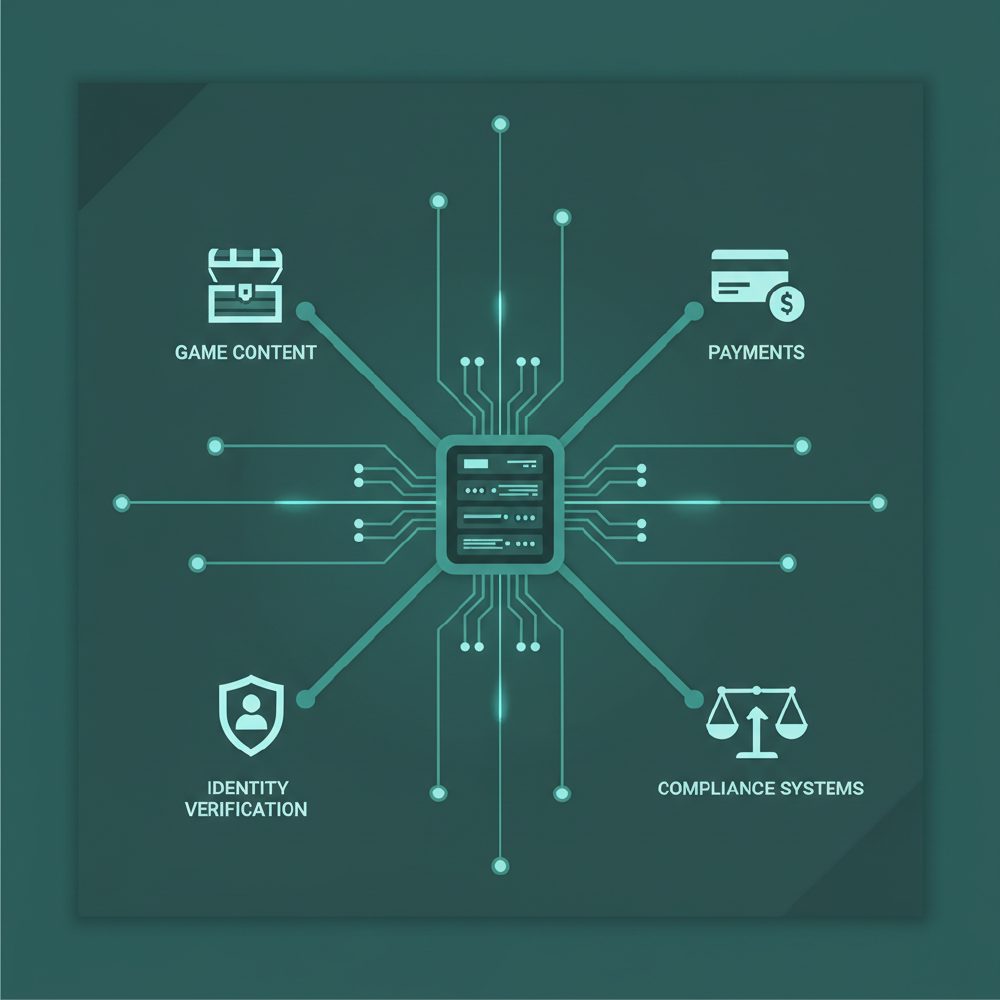
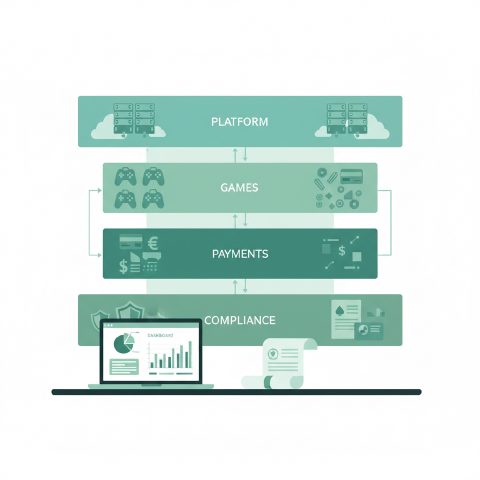
Most founders I talk to arrive thinking 'casino API integration' means plugging in a slot library. In practice it's a layered architecture. At minimum you're integrating a game aggregation API, one or more payment gateway APIs, a KYC/identity verification API, and some form of back-office or CRM feed. Each of those is a separate vendor, a separate contract, and a separate certification process with your regulator. Underestimating this is one of the most reliable ways to blow a launch timeline.
The game-side integration is typically the most visible. Aggregators like EveryMatrix's CasinoEngine or SoftSwiss's BGS (Backbone Gaming System) expose a single unified API endpoint that abstracts away the individual studio protocols—Pragmatic Play, Evolution, NetEnt, and hundreds of others each have their own wallet and launch URL specs, and the aggregator handles that translation. That's genuinely valuable. What it costs you is an aggregation fee on top of studio revenue share, typically somewhere in the 2–5% GGR range, though exact terms vary heavily by volume commitment and exclusivity.
On the payments side, the API integration connects your platform wallet to PSPs, card acquirers, e-wallets like Skrill or Neteller, and increasingly crypto processors. Each of these has its own authentication model, webhook structure, and reconciliation format. A mid-market operator running four or five payment methods is managing four or five live integrations simultaneously—each one a potential point of failure during a high-traffic promotion. This is exactly why platform middleware layers like Paydoo or Praxis Cashier exist: they aggregate payment APIs the same way game aggregators aggregate studios.
The regulatory dimension is the one vendors gloss over most aggressively. MGA-licensed operators must connect to the Malta Gaming Authority's Player Protection API for self-exclusion checks. US state operators in New Jersey or Pennsylvania need certified integrations with the state's central monitoring system. Curaçao's 2023 framework overhaul introduced new AML transaction reporting requirements that touch the payment API layer directly. Build these hooks into your architecture from day one—retrofitting them is painful and expensive.
What are the main types of casino API integrations operators need to manage?
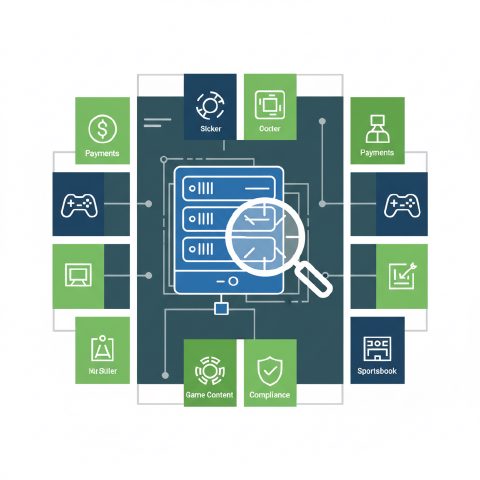
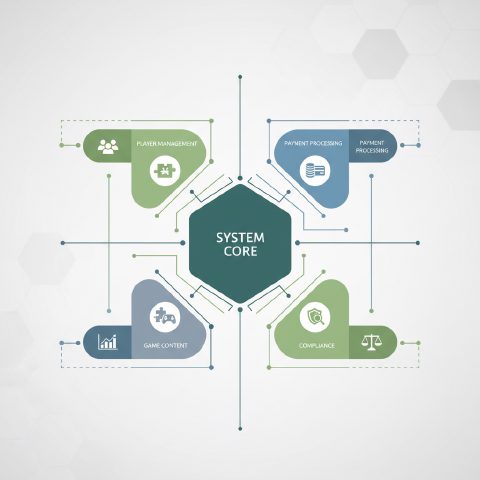
There are five core API integration categories every operator must account for: game content, payment processing, identity and KYC, responsible gambling and compliance, and back-office/analytics. Each category has distinct vendors, latency requirements, and regulatory implications. Treating them as one undifferentiated 'integration project' is a planning mistake.
Game content APIs are the most mature category. Whether you go direct with a studio or through an aggregator, the protocol is usually a variant of the Seamless Wallet or Transfer Wallet model. In the Seamless model, the studio calls your platform's wallet API in real time on every spin to debit and credit the player balance—low latency is critical, and your uptime SLA needs to be rock solid. Transfer Wallet is simpler: the player gets a session wallet funded at launch, and reconciliation happens post-session. Most operators on white-label infrastructure run Transfer Wallet because it reduces the blast radius of any platform downtime.
Payment APIs are where timelines get painful. A PSP like Nuvei or Worldline will require you to submit a full technical integration package, pass their internal compliance review, and complete UAT before going live. In my experience that process runs 6–12 weeks from contract signature—sometimes longer if your licensing documentation isn't clean. Crypto processors like CoinsPaid or NOWPayments move faster (often 2–4 weeks) but introduce their own AML obligations, and regulators in the EU and UK are increasingly asking operators to demonstrate blockchain transaction monitoring. Budget for a tool like Chainalysis or Elliptic if you're running meaningful crypto volume.
KYC and identity APIs—Jumio, Onfido, Sumsub—are non-negotiable in any regulated market and increasingly expected even in softer offshore jurisdictions. The integration itself is straightforward (REST webhooks, usually), but you need to configure the risk rules carefully: trigger levels, document types accepted by jurisdiction, liveness check requirements. Get this wrong and you're either over-blocking legitimate players or under-screening, which is a regulatory finding waiting to happen.
Responsible gambling APIs and back-office feeds are the least glamorous but the most legally exposed category. UKGC operators must integrate with GAMSTOP's exclusion API. MGA requires connections to the RGS (Responsible Gaming System). Several US states mandate real-time feeds to a state-run central monitoring system. These aren't features you ship in v2—they're license conditions. Any platform vendor who positions them as optional upgrades is either selling to unregulated markets or being misleading about what compliance actually requires.
| Integration Type | Example Vendors | Typical Go-Live Timeline | Regulatory Hook? | Complexity |
|---|---|---|---|---|
| Game Aggregation | EveryMatrix, SoftSwiss BGS, Relax Silver Bullet, Pariplay | 4–8 weeks post-contract | Indirect (cert required) | Medium |
| Direct Studio | Pragmatic Play, Evolution, NetEnt/Red Tiger | 8–16 weeks (cert + legal) | Yes (RNG cert, license check) | High |
| Payment Gateway | Nuvei, Worldline, Paydoo, Praxis Cashier | 6–12 weeks | Yes (AML/KYC reporting) | High |
| Crypto Payments | CoinsPaid, NOWPayments, BitPay | 2–4 weeks | Yes (AML monitoring) | Medium |
| KYC / Identity | Sumsub, Jumio, Onfido | 2–3 weeks | Yes (license condition) | Low–Medium |
| Responsible Gambling | GAMSTOP (UK), RGS (MGA), state CMSs (US) | Varies by regulator | Yes (mandatory) | Medium |
| CRM / Back-Office | Optimove, Fast Track, proprietary | 3–6 weeks | Indirect | Medium |
Should operators use a game aggregator API or go direct to studios?
For most operators launching in 2026, a game aggregator API is the right starting point. Going direct to studios makes economic sense only once you're generating enough GGR volume to negotiate meaningful revenue-share reductions—typically above €500K–€1M GGR per studio per month. Below that threshold, the aggregator's margin is worth paying for the speed and reduced integration overhead.
The aggregator model compresses what would otherwise be 20–50 individual studio integrations into a single API contract. EveryMatrix's CasinoEngine, for example, gives you access to over 18,000 games from 200+ providers through one technical endpoint. SoftSwiss BGS offers similar breadth. Relax Gaming's Silver Bullet platform is particularly strong for operators targeting Scandinavian and UK markets where their proprietary content (Money Train, etc.) carries real player value. The trade-off is the aggregation fee—typically 2–5% of GGR on top of whatever the studios charge—and the fact that you're dependent on the aggregator's uptime and their relationship with each studio.
Going direct to a studio like Evolution for live casino or Pragmatic Play for slots means you negotiate your own revenue-share deal (usually 15–20% of GGR for live, 10–15% for RNG, though this varies enormously by volume), handle your own technical certification, and manage the relationship directly. The upside is margin and exclusivity on promotional content. The downside is that each studio has its own integration spec, its own compliance requirements, and its own timeline. Evolution's live casino integration alone can take 3–4 months from contract to go-live, partly because of the studio-specific AML and player protection requirements they enforce.
A hybrid approach is common at scale: use an aggregator for the long tail of RNG content, go direct with two or three anchor studios (typically Evolution for live, Pragmatic for slots) once you hit volume thresholds that justify it. This is exactly what operators like LeoVegas and Betsson do—they maintain aggregator relationships for breadth while running direct deals for their highest-traffic content. If you're launching on a white-label platform, this decision may already be made for you: most white-label providers have pre-negotiated aggregator deals baked into the platform fee.
| Factor | Aggregator API | Direct Studio Integration |
|---|---|---|
| Time to first game live | 4–8 weeks | 8–16 weeks per studio |
| Content breadth | 10,000–20,000+ games | One studio's portfolio |
| Revenue share cost | Studio rate + 2–5% aggregation fee | Studio rate only (negotiated) |
| Technical overhead | Single API to maintain | One API per studio |
| Negotiating leverage | Aggregator negotiates on your behalf | You negotiate directly |
| Promotional content access | Standard/delayed | Direct, often exclusive |
| Recommended for | Launches, sub-€1M GGR/studio/month | Scale operators, anchor studios |
How does the casino API integration process actually work, step by step?
A casino API integration follows a predictable sequence: vendor selection and contract, technical documentation review, sandbox development and testing, compliance certification, UAT in staging, and finally production go-live with monitoring. The sequence sounds simple. The reality is that steps three through five happen in parallel across multiple vendors, and a delay in any one of them can hold up your entire launch.
Step one is vendor selection, but that's really two decisions bundled together: which vendors you want and which vendors will accept you. Some studios and PSPs have minimum traffic or GGR requirements. Evolution won't onboard a brand-new operator with no proven player base—you'll need to go through an aggregator first. Certain PSPs won't touch offshore-licensed operators at all. Do your due diligence on acceptance criteria before you spend weeks in contract negotiations with a vendor who'll decline you at the compliance review stage.
Once contracts are signed, you receive API documentation—usually a REST or GraphQL spec, a sandbox environment URL, and authentication credentials. The sandbox phase is where your development team (in-house or a contracted integration shop) builds the connection, handles error states, and stress-tests the wallet calls. For game aggregation, this typically runs 3–5 weeks of active development. Payment integrations are similar in complexity but often slower because PSPs require you to test specific transaction flows, refund scenarios, and 3DS authentication paths before they'll sign off.
Compliance certification runs in parallel with sandbox development and is often the actual bottleneck. If your platform needs to be certified by an independent test lab (BMM, GLI, eCOGRA) before your regulator will approve the integration, add 6–10 weeks to your timeline. This is a hard requirement for MGA licenses, most US state licenses, and increasingly for Curaçao operators under the new 2024 framework. Don't start sandbox development assuming certification is a formality—it frequently surfaces issues that require platform-level fixes.
UAT (User Acceptance Testing) in a staging environment that mirrors production is the final gate. Run it with real transaction flows, not just happy-path scenarios. Test what happens when a game provider goes down mid-session. Test failed payment webhooks and reconciliation edge cases. Test your KYC API when a document is rejected. The operators who skip thorough UAT are the ones calling me six weeks after launch because their wallet reconciliation is off by 3% and nobody can explain why.
What does casino API integration cost, and what are the hidden fees?
Direct integration costs—developer time, certification fees, and sandbox access—typically run €30,000–€120,000 for a full-stack launch depending on scope and whether you're building in-house or outsourcing. That's before ongoing revenue-share fees, per-transaction costs, and the annual platform or aggregator licensing fees that compound as you scale.
Developer costs are the most variable line item. A competent iGaming integration team—either in-house or a specialist agency like Soft2Bet's tech arm or a boutique Eastern European shop—will charge €8,000–€25,000 per major integration (game aggregator, primary PSP, KYC provider). If you're doing five integrations, you're looking at €40,000–€125,000 in development fees alone, and that assumes the API documentation is clean and the vendor's sandbox is stable. In my experience, about 30% of integrations hit unexpected technical issues that add 2–4 weeks and proportional cost.
Certification fees are fixed but often overlooked in early budgets. An independent test lab audit for a game platform runs roughly €15,000–€40,000 depending on scope and jurisdiction. GLI and BMM are the two names you'll see most often in regulated markets. Some regulators (Curaçao, Anjouan) don't mandate third-party lab certification, which is one reason offshore licensing is faster and cheaper to launch on—but that gap is closing as offshore frameworks tighten.
The ongoing cost structure is where operators get surprised. Aggregator fees of 2–5% GGR sound manageable at launch but become significant at scale. A casino doing €2M GGR per month pays €40,000–€100,000 per month in aggregation fees on top of studio revenue share. Payment processing fees—interchange, PSP margin, chargeback reserves—typically add another 2–4% on card transactions. These aren't one-time integration costs; they're structural margin compression that you need to model in your unit economics before you sign any contract.
One genuinely hidden cost: API version upgrades. Vendors update their APIs, deprecate endpoints, and change authentication models. Every major version change requires developer time to update your integration. Aggregators like EveryMatrix or SoftSwiss handle this for their own layer, but if you have direct studio deals, you're on the hook for every studio's API evolution. I've seen operators get blindsided by a €15,000 development sprint because Evolution deprecated a wallet endpoint with 60 days' notice. Build a maintenance budget—at least 15–20% of initial integration cost annually—into your operating plan.
How does API integration differ across white-label, turnkey, and custom casino builds?
White-label platforms pre-bundle most API integrations—you're buying access to an already-integrated stack. Turnkey gives you more control but requires you to own more vendor relationships. Custom builds mean you own every integration from scratch. The right choice depends on your timeline, technical capacity, and long-term margin ambitions—not on which sales deck looks most impressive.
On a white-label platform—SoftSwiss Casino Management System, EveryMatrix OrchestraOS, Turnkey Sport, BetConstruct—the game aggregation, core payment methods, and KYC tools are already integrated and certified. You're essentially renting access to a pre-built integration stack. This compresses your launch timeline dramatically: a white-label operator can go live in 8–14 weeks from contract signature versus 6–12 months for a custom build. The cost is ongoing platform fees (typically 15–25% of GGR or a fixed monthly fee in the €5,000–€20,000 range) and reduced control over which specific vendors you use and on what terms.
Turnkey solutions sit in the middle. You get a fully functional platform delivered to you, but you own the infrastructure and can—in theory—renegotiate vendor relationships over time. The integration work is done by the turnkey provider, but you're paying a higher upfront build fee (€150,000–€500,000+ depending on scope) and you still need to manage ongoing API maintenance. Operators who choose turnkey usually do so because they want brand independence and the ability to customize the player experience without being constrained by a white-label provider's product roadmap.
Custom builds are for operators with serious technical teams and long-term market ambitions. You're building your own platform from the ground up, integrating every vendor directly, and owning the full stack. The upside is maximum flexibility and, eventually, lower per-unit costs at scale. The downside is that you're looking at 12–24 months to launch, €500,000+ in development costs before you take a single bet, and the ongoing burden of maintaining every integration yourself. Very few operators actually need this—most who choose it do so for the wrong reasons (usually control anxiety rather than genuine technical requirements).
| Build Model | Who Owns Integrations? | Launch Timeline | Upfront Cost Range | Ongoing API Maintenance |
|---|---|---|---|---|
| White-Label | Platform provider (pre-built) | 8–14 weeks | €10,000–€50,000 setup | Provider handles it |
| Turnkey | Shared (provider builds, you own) | 4–9 months | €150,000–€500,000+ | Operator + provider SLA |
| Custom Build | Operator fully | 12–24 months | €500,000+ | Operator fully responsible |
What compliance and regulatory requirements affect casino API integrations?
Regulatory requirements touch the API layer directly in three ways: mandatory technical certifications before go-live, real-time data feeds to regulatory systems, and player protection API hooks that must be active as a license condition. Skipping any of these isn't a calculated risk—it's a license revocation event waiting to happen.
In MGA-licensed jurisdictions, your platform must be certified by an approved test lab before you can accept real-money play. This certification covers the RNG, the game math, and increasingly the platform's responsible gambling controls. The API integration between your platform and the MGA's player protection systems (self-exclusion, spend limits, cooling-off) must be operational and demonstrable before the MGA will grant a B2C license. They test it. Operators who treat compliance hooks as a checkbox rather than a functional system get caught during the licensing audit.
US state markets are the most demanding. New Jersey's Division of Gaming Enforcement requires operators to integrate with the state's Central Credit System and maintain real-time transaction reporting. Pennsylvania's PGCB has similar requirements. Michigan's MGCB mandates specific responsible gambling API integrations with GamStop-equivalent state tools. Each state has its own technical specification document, and none of them are identical. If you're planning a multi-state US rollout, budget for state-specific integration work at each new jurisdiction—you cannot reuse a single certified integration across states without re-certification.
Curaçao's 2023–2024 framework overhaul (moving from the old master license sub-license model to direct licensing under the new GCB) introduced AML transaction monitoring requirements that operators must implement at the platform and payment API level. This means real-time transaction feeds to the GCB's monitoring system for flagged activity. Anjouan (ACGC) is following a similar trajectory. Offshore jurisdictions are no longer the compliance-free environment they were five years ago—factor this into your integration architecture from day one.
One area that catches operators off guard: game provider compliance requirements are separate from your platform's regulatory obligations. Evolution, for example, runs its own KYC and AML checks on operators before onboarding them, and maintains the right to audit your player data handling. Pragmatic Play requires operators to certify that their platform meets specific responsible gambling standards. These aren't just contractual formalities—they affect which API endpoints you can access and what data you must transmit to the studio. Read the provider agreements carefully before signing.
What are the most common casino API integration failures and how do operators avoid them?
The most common integration failures are wallet reconciliation drift, webhook delivery failures during high traffic, and KYC API timeouts that block player deposits. These aren't exotic edge cases—they're the issues I see in almost every operator's first six months post-launch. Most are preventable with proper architecture and testing discipline.
Wallet reconciliation drift is the silent killer. In a Seamless Wallet integration, every game spin triggers a debit or credit call to your platform wallet API. If any of those calls fail silently—no error returned, no retry triggered—the studio's ledger and your platform ledger diverge. Over time, small discrepancies compound. I've seen operators discover they're €50,000 out of balance after three months of live operation, with no clean audit trail to reconstruct what happened. The fix is proper idempotency keys on every transaction, a reconciliation job that runs every 15 minutes comparing studio-side and platform-side balances, and hard alerts when they diverge by more than a configurable threshold.
Webhook failures are a payment API problem. When a PSP processes a deposit, it sends a webhook to your platform to confirm the transaction. If your server is slow, overloaded, or misconfigured, that webhook fails. The PSP may retry two or three times. If all retries fail, the player's deposit sits in limbo—money has left their bank account but their casino balance hasn't updated. This is a support nightmare and a chargeback risk. The solution is a dedicated webhook receiver that queues incoming events asynchronously and processes them independently of your main application load. Don't process webhooks synchronously in your web tier.
KYC API timeouts are a conversion problem. Sumsub, Jumio, and Onfido are generally reliable, but any external API can be slow under load. If your checkout flow makes a synchronous KYC call and waits for a response before allowing a deposit, a 10-second timeout becomes a 10-second checkout delay—and conversion drops sharply. The better architecture is asynchronous: accept the deposit, trigger the KYC check in the background, and hold funds in a pending state until verification completes. Players who pass instantly (the majority) get a seamless experience; edge cases get handled without blocking the main flow.
How long does a full casino API integration take from start to launch?
A realistic timeline for a full casino API integration stack—game aggregator, two to three payment methods, KYC, and compliance hooks—runs 14 to 24 weeks for a white-label or turnkey build. Custom builds stretch to 12–24 months. The single biggest variable is regulatory certification, which is external, largely outside your control, and frequently underestimated.
White-label operators have the shortest path. If you're launching on a platform like SoftSwiss CMS or EveryMatrix OrchestraOS, the core integrations are pre-built. Your timeline is dominated by licensing (Curaçao new-framework licenses are running 3–6 months in 2024–2025; MGA B2C licenses run 4–6 months), brand setup, and payment onboarding. The payment piece is consistently the longest pole in the tent for white-label operators—expect 6–10 weeks per PSP from contract to live, and plan to run two or three PSPs in parallel to ensure you have payment coverage on day one.
Turnkey builds require the integration work to happen before launch. A realistic breakdown: vendor contracts and API documentation review (2–3 weeks), sandbox development across all integrations (6–10 weeks), compliance certification if required (6–10 weeks, running in parallel where possible), UAT and staging (3–4 weeks), soft launch and monitoring (2–4 weeks). Total: 19–31 weeks under good conditions. Add 20–30% for the inevitable vendor delays, API documentation errors, and certification findings. Projects that hit 9–12 months are common, not exceptional.
The most reliable way to compress the timeline is to start the regulatory and certification process before you finish development. Certification bodies like GLI and BMM accept preliminary submissions—you don't need a fully finished platform to begin the audit process. Similarly, start PSP applications the day you sign your platform contract, not after development is complete. The operators who launch on time are the ones who run these workstreams in parallel rather than sequentially.
What should operators look for in a casino API integration service or partner?
A credible casino API integration service should have demonstrable experience with your target jurisdiction's technical requirements, references from live operators (not just testimonials), and a clear scope of what they deliver versus what you own afterward. The two things that matter most: do they understand iGaming-specific compliance, and will they still be reachable six months after go-live?
The iGaming integration services market has a lot of generalist software agencies who have done one or two casino projects and now position themselves as specialists. The tell is whether they can speak fluently about Seamless versus Transfer Wallet trade-offs, whether they've dealt with MGA or UKGC certification requirements before, and whether they understand the specific data formats required by your target PSPs. Ask for a technical reference from a live operator in a similar jurisdiction—not a logo on a case study page, but a contact you can actually call.
Scope clarity is critical. Some integration services deliver a working integration and hand it over; others include ongoing SLA coverage for API version updates and incident response. Know which you're buying. If you're a small operator without an in-house tech team, you need the latter—and you should expect to pay a monthly retainer of €3,000–€8,000 for that coverage. If you have developers in-house, you may prefer a clean handover and own the maintenance yourself.
Dedicated iGaming technology firms—Softswiss's professional services arm, EveryMatrix's integration team, or specialist boutiques like Slotegrator—have the advantage of existing relationships with major studios and PSPs, which can compress onboarding timelines. The downside is that they'll naturally push you toward their own ecosystem. A truly independent integration partner with no vendor affiliations is harder to find but worth the search if you want unbiased architecture recommendations. Always ask directly: do you receive referral fees or revenue share from any of the vendors you recommend? The answer tells you a lot.



Comments
No comments yet, be the first.