iGaming CRM Software for Player Retention: The Operator's Real Guide for 2026

What exactly is iGaming CRM software, and why does it differ from a generic CRM?
iGaming CRM software is a player lifecycle management platform built specifically around gambling events: deposits, withdrawals, game sessions, bonus redemptions, and churn signals. Unlike Salesforce or HubSpot, it natively ingests casino data streams and fires retention actions — bonuses, messages, call-center tasks — based on real-time player behavior without a custom data layer in between.
A generic CRM treats every customer interaction as a contact record with pipeline stages. That model breaks almost immediately in an online casino context, where a single player might generate hundreds of behavioral events per session and where the 'conversion' you're optimizing for isn't a sale but a second deposit, a loyalty tier upgrade, or a prevented churn. Mapping that to Salesforce objects is technically possible — I've seen operators try it — but you end up spending more on the integration than you would have on a purpose-built tool, and your marketing team still can't act on the data without a BI analyst in the room.
Purpose-built iGaming CRM platforms like Optimove, Fast Track CRM, and the SoftSwiss CRM module are architected around a player data model from day one. They understand what a 'dormant player' means in casino terms (no deposit in X days, no session in Y days), they can trigger a bonus directly through the platform's bonus engine via API, and they track the financial outcome of each campaign — bonus cost versus recovered GGR — inside the same dashboard. That closed loop is what makes them operationally useful rather than just a fancier email tool.
The other critical difference is compliance awareness. UKGC and MGA regulations now require operators to demonstrate that their marketing and retention activities include responsible gambling controls — for example, not sending re-engagement offers to players who have set deposit limits or self-excluded. A generic CRM has no concept of those states. A proper iGaming CRM platform either natively integrates with your RG layer or exposes suppression list APIs that your compliance team can actually audit. That's not a nice-to-have in 2026; it's a licensing requirement in most regulated markets.
Which iGaming CRM platforms are operators actually using in 2026?
The shortlist most serious operators evaluate comes down to five or six platforms: Optimove, Fast Track CRM, SoftSwiss CRM (part of their casino management suite), Symplify, Salesforce with iGaming connectors via third parties like Xtremepush, and in-house builds on top of Braze or Iterable. Each has a different price-to-capability profile and fits different operator sizes.
Optimove is the most cited enterprise-tier choice among mid-to-large operators. It was built for iGaming from its early days and its customer data platform (CDP) layer is genuinely strong — cohort modeling, predictive LTV scoring, and multi-channel orchestration are all first-class features. The trade-off is cost and onboarding complexity. Expect a minimum annual contract north of $150,000 for a meaningful deployment, and a 3-to-4 month integration timeline if your platform isn't already on their connector list. It's the right choice if you're running 50,000+ active players and your head of CRM has operated at that scale before.
Fast Track CRM has become the go-to for mid-market operators, particularly those on white-label or turnkey platforms like SoftSwiss or EveryMatrix, where native integrations already exist. Its rule-based automation engine is fast to configure, the UI is operator-friendly without needing a developer on every campaign, and pricing is more accessible — I've seen deals in the $3,000–$8,000 per month range for operators with 5,000–20,000 active players. The platform's real-time event processing is one of its genuine strengths: you can fire a bonus offer within seconds of a player hitting a loss threshold, which matters enormously for retention timing.
SoftSwiss CRM is worth considering if you're already on the SoftSwiss casino platform, simply because the integration is native and the data fidelity is high. You're not paying for a separate middleware layer, and the bonus engine talks directly to the CRM without API latency issues. The downside is that it ties you more deeply into the SoftSwiss ecosystem, which is a reasonable trade-off for new operators but becomes a vendor lock-in concern if you ever want to migrate platforms. Symplify is a strong option for operators who want omnichannel (email, SMS, push, on-site messaging) under one roof at a competitive price point, and it has solid traction in the Nordics and Eastern European markets.
| Platform | Best Fit | Approx. Monthly Cost | Integration Complexity | Standout Feature |
|---|---|---|---|---|
| Optimove | Large operators (50k+ actives) | $12,000–$25,000+ | High (3–4 months) | Predictive LTV & CDP depth |
| Fast Track CRM | Mid-market (5k–30k actives) | $3,000–$8,000 | Medium (4–8 weeks) | Real-time event triggers |
| SoftSwiss CRM | SoftSwiss platform operators | Bundled / $1,500–$4,000 | Low (native) | Zero-latency bonus engine link |
| Symplify | Omnichannel, EU/Nordic focus | $2,000–$6,000 | Medium | Unified multi-channel messaging |
| Braze/Iterable + connector | Tech-heavy operators, custom needs | $5,000–$15,000+ | Very High (custom build) | Flexibility, no iGaming lock-in |
What does iGaming CRM software actually cost, and what drives the price?
Pricing for iGaming CRM platforms typically runs on a combination of active player count, message volume, and feature tier. Realistic monthly costs range from $2,000 for a lean mid-market setup to well over $20,000 for enterprise deployments. Setup fees, integration costs, and professional services are usually separate and can double your first-year spend.
The sticker price vendors quote in a demo is almost never what you'll pay once you're live. Most iGaming CRM platforms charge a base platform fee plus a variable component tied to monthly active players (MAPs) or message sends. Fast Track, for instance, structures pricing around player tiers — you pay more as your active base grows, which aligns incentives reasonably well but can create budget surprises if you run a successful acquisition campaign and your MAP count jumps 40% in a quarter.
Integration and onboarding costs are the line item operators consistently underestimate. If your platform isn't on the CRM vendor's pre-built connector list, you're looking at custom API work — either from the vendor's professional services team (expensive) or your own developers (time-consuming). A realistic integration budget for a non-standard platform connection is $15,000–$40,000 in development cost plus 6–12 weeks of elapsed time. I've seen operators go live on a new CRM platform three months later than planned because they underestimated this phase.
Then there's the ongoing operational cost that doesn't appear in any vendor contract: the CRM manager or retention specialist who actually runs the platform. A competent iGaming CRM operator in a European market commands $50,000–$80,000 annually. If you're a lean startup, you may be tempted to hand this to your general marketing hire — that's usually a mistake. The segmentation logic, bonus cost modeling, and A/B test interpretation in a casino CRM context are genuinely specialized skills. Budget for them from day one or accept that you're paying for software you're underutilizing.
What retention features should an iGaming CRM platform actually include?
The non-negotiables are real-time event triggers, multi-channel outreach (email, SMS, push, on-site), native bonus engine integration, player segmentation with RFM or behavioral scoring, A/B testing at the campaign level, and suppression lists for responsible gambling compliance. Anything short of that list is a marketing tool, not a retention system.
Real-time triggering is the feature that separates genuine retention software from batch-and-blast email tools. The ability to detect that a player just lost their third consecutive session and fire a personalized free spin offer within 30 seconds — before they close the browser — is worth more than any weekly newsletter. Fast Track built its reputation largely on this capability. Optimove's strength is more on the predictive side: using historical behavioral data to identify players showing early churn signals before they've consciously decided to leave, then intervening with a targeted lifecycle campaign.
Bonus engine integration is critical and often poorly executed. The CRM needs to be able to issue bonuses directly — not just send an email with a code the player has to manually redeem. Every additional step in that redemption flow bleeds conversion. The best setups have the CRM talk directly to the platform's bonus engine via API so the offer is pre-loaded in the player's account before the message even arrives. SoftSwiss's native CRM achieves this cleanly. With third-party platforms, you're often managing a webhook handshake that requires monitoring and occasional manual intervention.
Responsible gambling suppression is a compliance requirement in MGA, UKGC, and increasingly in US-licensed states. Your CRM must be able to pull exclusion and limit states from your RG system in real time and suppress those players from bonus and re-engagement campaigns automatically. If your CRM can't do this natively, you're either building a manual process that will eventually fail an audit, or you're exposing yourself to a regulatory fine. This is one area where I push operators hard during vendor evaluation — ask the vendor to walk you through exactly how their platform handles a player who sets a deposit limit mid-campaign. If the answer is vague, that's a red flag.
Multi-channel orchestration matters more than most early-stage operators expect. Email alone has declining open rates in most markets — 20–30% is realistic for a well-maintained list, but SMS and push notifications can reach 60–80% open rates when used judiciously. The key word is judiciously: over-messaging via push is the fastest way to earn an app uninstall. A mature iGaming CRM platform lets you set channel fatigue rules — no more than X messages per player per week across all channels — so your retention program doesn't become an annoyance engine.
How does CRM strategy differ between regulated markets like MGA or UKGC versus offshore operators?
Regulated markets impose hard constraints on CRM activity — bonus wagering transparency rules, mandatory RG suppression, marketing consent requirements, and in the UK, a ban on certain bonus types entirely. Offshore operators on Curaçao or Anjouan licenses have far fewer CRM restrictions but face payment and trust challenges that make retention strategy different in practice.
Under UKGC rules, your CRM program is a compliance document as much as a marketing plan. The UK's 2023 White Paper and subsequent operator guidance tightened rules around bonus targeting — you can't, for example, send a free spins offer to a player who has voluntarily set a deposit limit, and you must ensure your marketing consent records are current and auditable. The UKGC has fined operators specifically for CRM failures: sending promotional emails to self-excluded players is one of the most common compliance breaches cited in regulatory decisions. Your CRM platform needs to interface with your GAMSTOP integration and your own RG controls in real time, not via a nightly batch file.
MGA-licensed operators face similar requirements under Malta's Player Protection Directive, with particular scrutiny on bonus wagering conditions being clearly communicated at the point of offer — not buried in terms. The CRM implication is that your campaign templates need compliance sign-off, your bonus terms need to be surfaced in the message itself, and your audit trail needs to show that each campaign was reviewed before send. Some operators on MGA licenses have built approval workflows directly into their CRM (Fast Track supports this natively) so compliance teams can review and approve campaigns without leaving the platform.
Offshore operators — Curaçao eGaming, Anjouan, or the older Costa Rica registration model — have much more latitude in CRM tactics. No mandatory RG suppression rules, no restrictions on bonus types, no consent audit requirements. That freedom sounds appealing but it creates a different problem: player trust is lower in unlicensed-facing markets, payment options are more volatile, and churn rates tend to be higher because players have less friction switching to a competitor. The CRM strategy for an offshore operator often leans harder on VIP management, personal account management relationships, and crypto-native loyalty mechanics rather than the automated lifecycle programs that work well in regulated markets.
| Jurisdiction | RG Suppression Required | Bonus Transparency Rules | Consent/Audit Requirements | Typical CRM Complexity |
|---|---|---|---|---|
| UKGC (UK) | Yes — GAMSTOP + operator self-exclusion | Strict — wagering terms in comms | Full audit trail required | High |
| MGA (Malta) | Yes — MGA Player Protection Directive | Yes — terms must be visible in offer | Campaign approval records needed | High |
| MINCETUR (Peru) | Partial — evolving framework | Moderate | Growing regulatory scrutiny | Medium |
| Coljuegos (Colombia) | Yes — national self-exclusion registry | Yes — regulated bonus rules | Audit requirements apply | Medium-High |
| Curaçao / Anjouan (Offshore) | No regulatory mandate | No formal requirement | Minimal | Low (but trust challenge) |
| US States (NJ, PA, MI) | Yes — state-level self-exclusion lists | State-specific bonus rules | State gaming board oversight | Very High |
How do you measure whether your iGaming retention software is actually working?
The core metrics are 30/60/90-day retention rates by cohort, reactivation rate on dormant campaigns, bonus cost as a percentage of recovered GGR, and churn prediction accuracy if your platform offers it. Revenue per active player and average session frequency are the business-level outputs that tell you whether the CRM investment is paying back.
Operators new to CRM often measure the wrong things — open rates, click rates, message volume. These are activity metrics, not outcome metrics. A 40% email open rate on a re-engagement campaign is meaningless if the bonus offer isn't converting players into a deposit. The metric that actually matters is recovered GGR per dollar of bonus cost, and most iGaming CRM platforms will calculate this for you if you've set up the bonus tracking correctly. Fast Track's campaign reporting, for example, shows you the net revenue contribution of each campaign after bonus cost — that's the number your CFO cares about.
Cohort retention analysis is the most honest view of whether your CRM program is improving player lifetime value over time. Take the players who registered in January 2025 and track what percentage were still active at 30, 60, and 90 days. Then compare that to the January 2024 cohort. If your retention rates are improving cohort over cohort, your CRM strategy is working. If they're flat despite increasing campaign volume, you have a segmentation or offer relevance problem — you're messaging the right players at the wrong time, or with the wrong incentive.
Churn prediction models, available in Optimove and increasingly in Fast Track, add a proactive dimension. Instead of reacting to dormancy after it happens, you're identifying players with a 70%+ predicted churn probability in the next 14 days and intervening while they're still engaged. The accuracy of these models varies — I'd be skeptical of any vendor claiming above 80% precision without showing you validation data on your specific player base. But even a moderately accurate churn model lets you concentrate your bonus budget on the players most likely to respond, rather than spraying offers across your entire active base.
What's the right time to implement a CRM platform — pre-launch or post-launch?
Pre-launch, without question. Operators who implement their CRM platform during the build phase — not after they've been live for six months — have a significant advantage: they capture behavioral data from day one, they can build onboarding flows before their first player registers, and they don't spend their first year on a retention strategy held together with spreadsheets and manual bonus codes.
The argument for waiting until post-launch is usually budget — 'let's get revenue first, then invest in CRM.' I understand the logic but it's shortsighted. The first 30 days of a player's lifecycle are the highest-leverage retention window you have. If you don't have an automated onboarding sequence in place when your first cohort registers, you've already lost the easiest retention opportunity. Players who receive a structured onboarding journey — welcome email, tutorial prompt, first deposit bonus follow-up, second-session incentive — consistently show higher 30-day retention than those who receive nothing until the operator gets around to setting up their CRM three months later.
The practical pre-launch CRM checklist looks like this: platform integration completed and tested in staging, player data model mapped and validated, onboarding journey built and compliance-reviewed, responsible gambling suppression logic connected to your RG system, and at minimum a dormancy reactivation campaign ready to deploy at the 14-day mark. None of that takes as long as operators fear — if you're on SoftSwiss or EveryMatrix with a native CRM integration, you can have a functional basic setup in four to six weeks. The complexity scales with how sophisticated your segmentation and bonus logic is, not with the integration itself.
One caveat: don't let perfect be the enemy of functional. I've seen operators delay launch because they wanted their full CRM program — predictive churn models, 12-stage lifecycle journeys, full omnichannel orchestration — ready before going live. That's overkill for a new operator with zero player data. Start with the three campaigns that move the needle most: onboarding sequence, first-deposit follow-up, and 14-day dormancy reactivation. Build the sophisticated stuff once you have enough player data to make the segmentation meaningful.
How does iGaming CRM software integrate with the rest of your tech stack?
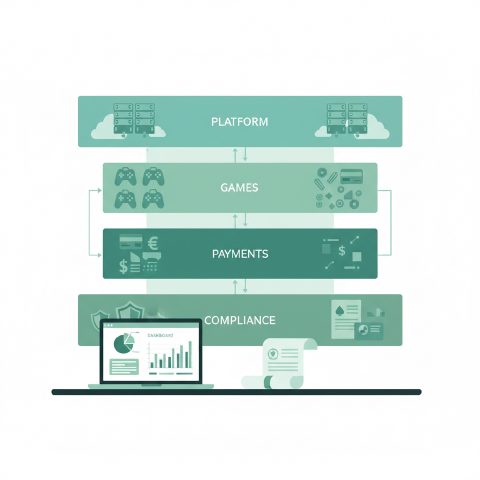
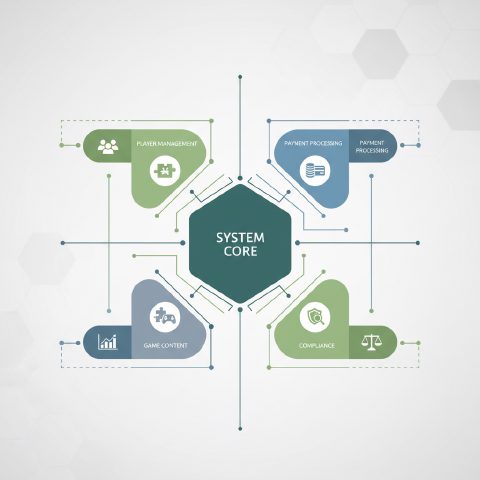
A CRM platform sits at the center of your retention stack and needs clean integrations with your casino platform (for player events and bonus issuance), your payment processor (for deposit/withdrawal triggers), your email and SMS providers, and your responsible gambling system. The integration quality of these connections determines how much of the platform's capability you can actually use.
The casino platform integration is the most critical and most variable connection. If your CRM vendor has a pre-built connector for your platform — SoftSwiss, EveryMatrix, Pragmatic Solutions, Altenar — you're looking at a relatively straightforward configuration exercise. If you're on a custom-built platform or a less common white-label, you're building a custom webhook or API integration, which means developer time and ongoing maintenance. Before signing any CRM contract, get a written answer from the vendor on exactly how their platform connects to yours and who owns the integration if something breaks in production.
Payment event integration is underutilized by most operators. Your CRM should know — in real time — when a player makes a deposit, when a withdrawal is processed, and when a payment attempt fails. A failed deposit is one of the highest-signal churn events there is: if a player tried to deposit and couldn't, they're likely to go elsewhere within hours. A well-configured CRM can trigger a support outreach or a payment method alternative message within minutes of a failed deposit event. That's a retention action most operators aren't taking because they haven't wired their payment processor events into their CRM.
Email and SMS delivery infrastructure matters more than operators expect. Your CRM platform orchestrates the campaign logic, but the actual message delivery runs through an ESP (Email Service Provider) like SendGrid, Mailgun, or SparkPost, and an SMS gateway. Deliverability — whether your emails land in inbox or spam — is a function of your sending domain reputation, your list hygiene, and your ESP's infrastructure. A CRM platform with poor native deliverability or that forces you onto a shared IP pool can undermine your entire email program. Ask vendors specifically about dedicated IP options and their deliverability SLAs.
Can a white-label casino operator use a standalone iGaming CRM, or are they locked into the platform's tools?
Most white-label operators can use a standalone CRM, but it depends on whether the platform exposes the player event data you need via API or webhooks. SoftSwiss and EveryMatrix both support third-party CRM integrations. Some smaller or more closed white-label solutions restrict data access, which effectively locks you into their native tools — a significant limitation if those tools are basic.
This is one of the questions I push operators to ask during white-label platform due diligence, and it's one that often gets glossed over in sales conversations. The platform's marketing will tell you they have 'built-in CRM tools' — what they often mean is a basic segmentation and email module that handles the simplest use cases. Whether you can connect a more capable third-party CRM depends entirely on whether the platform exposes real-time player event data via webhooks or a live API, and whether they allow the CRM to call their bonus engine API to issue bonuses programmatically.
SoftSwiss is generally open here — they have documented integrations with Fast Track CRM and their own CRM module, and they expose the event data operators need. EveryMatrix similarly supports third-party CRM connections through their DataStream product. On the other end of the spectrum, some smaller white-label providers operate on a more closed architecture where you can export player data in batch files but can't get real-time event streams — which makes building a real-time retention program essentially impossible without significant custom work.
If you're evaluating a white-label platform and CRM flexibility matters to you, ask for a technical data sheet showing exactly which player events are available via API, the latency on those events, and whether the bonus engine exposes an issuance API for third-party CRM calls. If the vendor can't answer that question in the sales process, assume the answer is 'no' and factor that into your platform decision. Changing CRM platforms later is annoying. Changing your casino platform because the CRM integration was too limited is genuinely painful.
What are the most common mistakes operators make with iGaming retention software?
The biggest mistakes are over-investing in platform features before having enough player data to use them, under-investing in the human expertise to run the platform, sending volume-based campaigns instead of behavior-triggered ones, and ignoring the compliance layer until a regulator asks about it. Most CRM failures are execution failures, not technology failures.
The 'spray and pray' approach — blasting your entire active player base with the same weekly bonus email — is the most common CRM mistake I see, and it's a slow-motion disaster. It trains players to ignore your messages, burns your sending reputation over time, and costs you bonus margin on players who would have deposited anyway. Behavioral segmentation — sending the right offer to the right player at the right moment — is harder to set up initially but delivers dramatically better ROI. A targeted reactivation campaign to players who are 12 days dormant will outperform a mass email to your full base almost every time.
Neglecting the VIP tier is a structural mistake that costs operators disproportionately. In most online casinos, 5–10% of your player base generates 60–70% of your GGR. Your CRM program should treat these players completely differently from the mass market — dedicated account managers, personalized outreach, bespoke bonus structures, and proactive communication before they show churn signals, not after. Most CRM platforms support VIP segmentation natively, but operators often don't build those journeys until they've already lost a few high-value players they could have retained.
On the compliance side, the mistake I see most often is treating RG suppression as a set-and-forget configuration rather than an ongoing process. Player exclusion and limit states change constantly — someone who was fully active yesterday may have set a deposit limit this morning. If your CRM pulls suppression lists on a nightly batch rather than in real time, you have a window every day where you could be sending promotional content to players who should be excluded. In a UKGC or MGA audit, that gap is a finding. Build the real-time suppression integration properly from day one, even if it requires more development effort.




Comments
No comments yet, be the first.