Online Casino Software Open Source: The 2026 Reality Check Every Operator Needs Before Signing Anything

What exactly is open source online casino software and what is actually available in 2026?
Open source casino software refers to publicly available codebases covering some part of a casino operation, front-end UI, back-office dashboards, or game engines, released under licenses like MIT, GPL, or Apache. In 2026, a handful of GitHub repositories exist, but none ship a complete, regulator-approved, production-grade casino stack. What you find is almost always a starting point, not a finished product.
The most cited open source casino projects are front-end slot simulators, poker room engines, and back-office admin panels. A few examples that circulate in operator forums include OpenPoker, various PHP-based casino CMS forks, and blockchain-native projects like FunFair Protocol (now largely dormant). None of these come close to what a commercial platform like SoftSwiss SOFTSWISS Casino Platform or EveryMatrix CasinoEngine provides out of the box: certified RNG, integrated KYC/AML, payment processing, affiliate management, and a game library with 5,000+ titles from licensed studios.
The gap between a GitHub repo and a deployable licensed casino is enormous. Regulators like the Malta Gaming Authority (MGA) or the Curaçao Gaming Control Board require your platform software to be technically audited, your RNG to carry a certificate from an approved testing lab (BMM, GLI, eCOGRA), and your data handling to comply with GDPR or equivalent. None of that comes bundled with open source code. You are buying raw material, not a product.
Blockchain-based open source casinos are a separate category. Provably fair protocols built on Ethereum or Solana do offer genuine transparency, and projects like Stake originally built on custom open-source-adjacent infrastructure. But even those operations invested millions in proprietary back-office development, payment rails, and legal structuring before they went live. The open source component was the game logic layer, not the entire operation.
My honest assessment after reviewing dozens of these repos: the code quality ranges from educational hobby project to genuinely solid foundation. What is universally missing is the compliance layer, the commercial game content, and the operational tooling that regulators and players expect. Treat any open source casino codebase as a prototype, not a platform.
What are the real costs of building on open source versus a licensed commercial platform?
The sticker price of open source is zero, but the total cost of ownership is not. Operators who have gone this route typically spend $400,000 to $1.5 million over 18-24 months before launch, once you account for development, compliance, integrations, and security audits. A white-label from a reputable provider costs $30,000 to $150,000 upfront and gets you live in months, not years.
Here is where operators get burned. They see free code, hire a development agency at $50-80 per hour, and assume they will save $200,000 compared to a commercial platform. Then reality arrives in stages. First, the RNG certification from GLI or BMM runs $15,000 to $50,000 and takes 3-6 months. Then the payment integrations: connecting to Nuvei, Paysafe, or a crypto processor requires PCI DSS compliance work, which adds another $20,000-$60,000 in security auditing alone. KYC/AML tooling from providers like Sumsub or Jumio is a recurring SaaS cost, typically $0.50-$3.00 per verification. None of this is in the open source repo.
Game content is the biggest hidden cost most people miss. Licensed studios, NetEnt, Pragmatic Play, Play'n GO, do not license directly to operators building on unproven open source stacks. They work through certified aggregators like Relax Gaming, Pariplay, or SoftSwiss Game Aggregator. Aggregator fees typically run 1-5% of GGR on top of studio royalties. You are not saving money on game content by using open source; that cost is entirely separate and identical regardless of your platform choice.
The comparison table below shows realistic cost ranges across three build approaches. Note that these are estimates based on operator conversations and publicly available vendor pricing, actual figures vary significantly by jurisdiction, team size, and feature scope.
| Factor | Open Source Build | White-Label (e.g. SoftSwiss, EveryMatrix) | Turnkey / Full-Service |
|---|---|---|---|
| Upfront platform cost | $0 (code) + $300K-$1M+ dev | $30K-$150K setup fee | $150K-$500K+ |
| Time to launch | 12-24 months | 3-6 months | 6-12 months |
| RNG certification | Required separately ($15K-$50K) | Included | Included |
| Game content access | Via aggregator (same cost as others) | Via aggregator or bundled | Usually bundled |
| KYC/AML tooling | Must integrate separately | Usually bundled or plug-in | Bundled |
| Ongoing maintenance | Full dev team required | Vendor handles core updates | Vendor handles most |
| Regulatory acceptance | Requires full technical audit | Pre-audited in many jurisdictions | Pre-audited |
| Best for | Large operators with tech teams | First-time operators, fast launch | Operators wanting managed ops |
Is open source casino software legal to use for a real money operation?
The code itself is legal to use under its respective license. The legality question is whether the operation built on it can obtain and maintain a gambling license. The answer depends entirely on whether you can get the software technically certified by a regulator-approved testing lab and whether your jurisdiction accepts custom-built platforms at all.
Most offshore jurisdictions that operators favor, Curaçao, Anjouan (COMOROS), Isle of Man, do allow custom-built platforms, provided you submit to a technical audit. Curaçao's Gaming Control Board, which began issuing licenses under the new framework in late 2023, requires platform certification as part of the operator license process. Anjouan (COMOROS) has lighter requirements but still demands a functional demo and basic technical documentation. Neither regulator cares whether your code is open source or proprietary; they care whether it passes the audit.
The MGA is a different story. Malta's technical standards (Gaming Device Testing Directive) are detailed and demanding. Getting a custom platform approved by the MGA typically takes 12-18 months and requires extensive documentation, source code review, and ongoing compliance reporting. Open source code is not disqualifying, but the process is expensive enough that most operators building on open source for an MGA license end up spending more than a white-label would have cost.
US state licenses are the most restrictive. New Jersey's Division of Gaming Enforcement (DGE), Pennsylvania Gaming Control Board (PGCB), and Michigan Gaming Control Board (MGCB) all require platform software to be approved before it can be used with real players. The technical submission process for a new, unproven platform in any of these states runs 18-36 months. No operator I know has successfully launched a US-licensed real-money casino on open source code without a substantial commercial platform underpinning it.
One practical middle ground: use open source components (a React front-end, an open source CRM, a PostgreSQL database) within a broader architecture that sits on top of a certified commercial game engine and payment layer. Regulators audit the gambling-specific components most heavily. The surrounding infrastructure has more flexibility.
What open source components are genuinely useful in a casino tech stack?
Open source is most valuable at the infrastructure and tooling layer, not the gambling engine layer. Database systems, front-end frameworks, analytics pipelines, and CRM foundations built on open source can meaningfully reduce your build costs without creating compliance problems, as long as the certified gambling components sit on top.
Here is where I have actually seen operators save real money using open source intelligently. The front-end: React or Next.js for building the player-facing UI is standard practice even at tier-one operators. The back-office dashboard can be scaffolded on open source admin frameworks and then customized. Your data warehouse for player analytics can run on Apache Kafka plus ClickHouse, both open source, and give you reporting capabilities that rival commercial BI tools at a fraction of the cost.
Bonus engine logic is another area where some operators build custom open source-adjacent tools. Commercial platforms charge per-feature for bonus mechanics; a capable engineering team can build a flexible bonus engine on top of an open source rules framework. The caveat: any bonus mechanic that affects game outcomes needs to be documented for regulators, and some jurisdictions require bonus systems to be part of the certified platform scope.
Fraud and risk tooling is a grey area. Open source machine learning libraries (scikit-learn, TensorFlow) can power custom fraud detection models, but you still need a certified KYC/AML workflow underneath. Providers like Sumsub, Onfido, and ComplyAdvantage offer API-first products that integrate cleanly with custom stacks. I have seen operators combine open source fraud scoring with commercial KYC and get regulatory sign-off without issue.
The line I draw: anything that touches the gambling transaction, bet placement, outcome determination, wallet balance, payout calculation, should sit on certified, audited commercial software. Everything else is fair game for open source components. Blurring that line is where operators create expensive problems for themselves during licensing audits.
| Stack Layer | Open Source Viable? | Recommended Approach | Example Tools/Providers |
|---|---|---|---|
| Front-end UI | Yes | Build on React/Next.js | React, Next.js, Tailwind CSS |
| Game engine / RNG | No | Use certified commercial engine | SoftSwiss, EveryMatrix, Relax Gaming |
| Payment processing | Partial | Open source gateway wrappers + certified PSP | Nuvei, Paysafe, Stripe (non-gambling) |
| KYC/AML | No | Commercial SaaS provider | Sumsub, Jumio, Onfido, ComplyAdvantage |
| Back-office / CRM | Partial | Open source framework + custom build | AdminJS, Metabase, custom |
| Analytics / BI | Yes | Open source data stack | ClickHouse, Apache Kafka, Grafana |
| Bonus engine | Partial | Custom build on open source rules engine | Drools, custom Node.js |
| Affiliate management | Partial | Commercial or hybrid | Income Access, MyAffiliates, custom |
Which commercial platforms are operators actually using instead of open source in 2026?
The dominant white-label and turnkey providers in 2026 are SoftSwiss, EveryMatrix, Delasport, Digitain, and BtoBet for sports-casino hybrids. Each covers different market segments and licensing jurisdictions. For operators who want the flexibility of a custom build without starting from scratch, platform-as-a-service models from providers like Altenar or Hub88 offer API-first architectures that feel closer to open source in flexibility.
SoftSwiss remains one of the most widely deployed platforms for offshore and crypto-friendly operators. Their Casino Platform ships with a game aggregator (6,000+ titles), payment hub, bonus engine, and KYC module. Setup fees have historically ranged from $30,000 to $80,000 depending on configuration, with ongoing revenue share typically in the 10-15% of GGR range. They are pre-certified for Curaçao and have supported MGA applications. For operators who want fast time-to-market and do not want to touch compliance infrastructure, SoftSwiss is a legitimate choice.
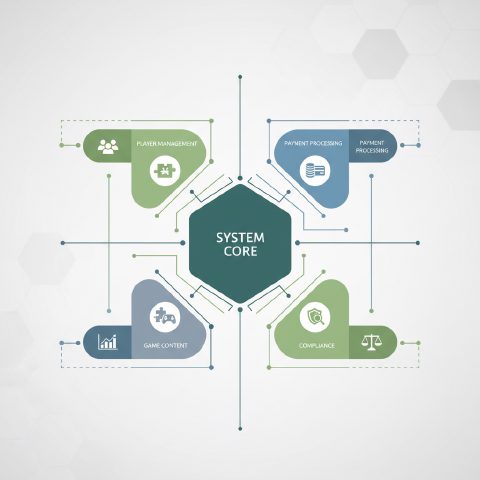
EveryMatrix takes a more modular approach with their suite of products: CasinoEngine (game aggregator), MoneyMatrix (payments), PlayerMatrix (player management), and BonusEngine. Operators can license individual modules, which is appealing if you already have some infrastructure and just need specific components. This modularity is the closest a commercial platform gets to the mix-and-match flexibility that attracts operators to open source in the first place.
Delasport and Digitain are strong in LATAM and Eastern European markets respectively. Digitain has been expanding into regulated markets including Colombia (Coljuegos) and Mexico (SEGOB), which matters if LATAM is your target. BtoBet, now part of Kambi Group, is worth considering if sports betting is your primary vertical with casino as secondary.
For operators who genuinely want technical control, Hub88 and Pariplay offer API-first aggregation that lets you build your own front-end and back-office on top of their certified game and payment infrastructure. You get the compliance safety net without the locked-in white-label UI. This is the model I recommend most often to operators with strong tech teams who are tempted by open source but need a realistic path to licensing.
What are the security risks of running a casino on open source software?
Open source code is publicly readable, which means vulnerabilities are visible to attackers before they are patched. For a gambling platform handling real money and player data, this creates specific risks around wallet manipulation, RNG exploitation, and payment fraud that commercial platforms mitigate through dedicated security teams and private codebases.
The most serious risk is wallet and balance manipulation. Casino back-end code that handles deposits, bets, and withdrawals needs to be hardened against race conditions, replay attacks, and integer overflow exploits. Commercial platforms have dedicated security engineering teams running continuous penetration testing. An open source repo maintained by a small community may go months between security patches. In the time between a vulnerability disclosure and your patch deployment, an attacker can drain player balances.
RNG integrity is another critical area. If your random number generator implementation has a flaw or a predictable seed, sophisticated players can exploit it to gain a mathematical edge. Certified RNGs from testing labs like GLI or BMM have been specifically audited against this class of attack. An open source RNG that has not been through that process is an unknown risk, and regulators will not accept it for real-money play regardless of how good the code looks.
GDPR and data security obligations add another layer. Player data including KYC documents, payment details, and behavioral data must be stored and processed in compliance with applicable privacy law. A data breach on a platform you built on open source is entirely your liability. Commercial platforms typically carry cyber insurance and contractual data security obligations that shift some of that risk. When you build on open source, you own all of it.
PCI DSS compliance for payment card handling is non-negotiable and expensive. Achieving PCI DSS Level 1 certification for a custom-built platform requires a Qualified Security Assessor (QSA) audit costing $50,000-$200,000 annually. Most commercial casino platforms handle card payments through pre-certified payment processors, keeping the operator out of scope for the most demanding PCI requirements. Building on open source typically pulls you back into scope.
Can you build a free casino management system using open source tools?
You can build a functional casino management system using open source components for the back-office, reporting, and CRM layers, and operators do this. But 'free' is misleading. Development time, hosting, security auditing, and ongoing maintenance add up quickly. The gambling-specific components of any CMS still need to meet regulatory standards that open source alone cannot satisfy.
A casino management system (CMS) in the industry context covers player account management, bonus administration, reporting, affiliate tracking, and customer support tooling. None of these functions directly determine game outcomes, so they sit outside the most tightly regulated parts of the platform. This is where open source genuinely helps. Tools like Metabase for reporting, AdminJS or React Admin for back-office interfaces, and open source CRM frameworks can form a serviceable foundation.
The catch is integration complexity. Your open source CMS needs to talk to your certified game aggregator, your KYC provider, your payment processor, and your fraud detection system. Each integration requires development work and testing. Operators who underestimate this typically budget 3-6 months of development time just for integrations, at $50-100 per hour for experienced casino back-end developers. That is $75,000 to $200,000 in development cost before you have done any front-end work.
Affiliate management is a specific area where operators often try to use open source solutions and then regret it. Tools like OSI Affiliate or custom-built tracking systems can work, but they lack the fraud detection, sub-affiliate management, and reporting depth that commercial tools like Income Access, MyAffiliates, or Affilka (SoftSwiss's affiliate platform) provide. Affiliate fraud is a significant revenue leak for new casinos, and under-investing in affiliate management tooling is a mistake I have seen operators make repeatedly.
My recommendation: use open source for reporting, internal dashboards, and CRM workflows where the stakes are operational rather than regulatory. Budget realistically for the development work required. And do not conflate a free casino management system with a free casino platform, the management layer is only one component of what you need to operate legally.
How do regulators in Curaçao, MGA, and US states view platforms built on open source code?
Regulators do not categorically reject open source platforms, but they require technical certification regardless of whether the code is open or proprietary. The practical challenge is that open source platforms have never been through a regulator's approval process, meaning you bear the full cost and timeline of that certification yourself rather than leveraging a pre-approved commercial platform.
Curaçao's Gaming Control Board, operating under the new National Ordinance on Offshore Games of Hazard (NOOGH) framework that took effect in 2023, requires operators to submit technical documentation and pass a platform audit. The GCB has approved dozens of commercial platforms as standard, which means an operator using SoftSwiss or EveryMatrix can reference existing approvals. An operator on a custom open source stack starts from zero. The audit process typically adds 3-6 months and $20,000-$50,000 in testing lab fees.
The MGA's technical standards are codified in the Gaming Device Testing Directive and associated technical guidelines. The MGA requires source code review, penetration testing, RNG certification, and ongoing compliance reporting. I have not seen a successful MGA application built on a publicly available open source casino codebase. Operators who have gone the custom route with the MGA have done so with proprietary code developed by their own teams, not community-maintained repositories. The MGA process for a new platform typically runs 18-24 months from submission to approval.
US state regulators are the most demanding. The New Jersey DGE, Pennsylvania PGCB, and Michigan MGCB all maintain lists of approved internet gaming platforms. Getting a new platform onto those lists requires a multi-year process involving source code escrow, penetration testing, mathematical analysis of all game math, and extensive documentation. No operator should plan a US market entry around an open source platform unless they have a 3-5 year runway and a dedicated compliance engineering team. The practical path to US market entry runs through commercial platforms that already hold state approvals.
What is the realistic timeline for launching on open source versus a commercial platform?
A white-label casino on a commercial platform like SoftSwiss or EveryMatrix can go live in 3-6 months. A custom build on open source code, accounting for development, certification, and licensing, realistically takes 18-30 months before you can accept real-money bets in a licensed jurisdiction. That timeline gap represents significant opportunity cost.
The 3-6 month white-label timeline assumes you have your license application in parallel, your domain and payment accounts set up, and your content decisions made. SoftSwiss has documented sub-90-day launches for operators in Curaçao using their standard configuration. EveryMatrix is comparable. These timelines are achievable because the platform is pre-built, pre-certified, and the operator is configuring rather than building.
The open source timeline breaks down roughly as follows. Months 1-3: scoping, architecture design, and initial development team assembly. Months 4-9: core platform development (game integration layer, wallet, back-office). Months 10-14: payment integration, KYC/AML integration, security hardening. Months 15-18: internal QA, penetration testing, regulatory documentation preparation. Months 19-24: regulator technical audit, licensing process, soft launch. This is an optimistic scenario with a competent, well-funded development team. Many projects take longer.
The opportunity cost calculation matters here. If your target market is generating revenue from day one with a commercial platform, every month you spend building on open source is a month of GGR you are not earning. At a conservative $100,000 per month in GGR for a new operator in a decent market, an 18-month delay versus a 6-month commercial launch represents $1.2 million in foregone revenue. That context reframes the apparent cost saving of free code entirely.
The one scenario where the open source timeline makes sense: you are a large operator or a well-funded startup building a genuinely differentiated product that cannot be delivered on any commercial platform, and you have the technical team and capital to sustain a 24-month build. For everyone else, the commercial platform path is faster and cheaper in total cost of ownership.
What should operators actually do if they want more technical control without going full open source?
The practical answer is a headless or API-first commercial platform combined with custom-built front-end and back-office layers. This gives operators genuine technical differentiation and control over the player experience while keeping the certified gambling engine and compliance infrastructure on a proven commercial foundation.
Several providers now offer what amounts to a platform-as-a-service model for casino operators. Hub88 aggregates game content and payments via clean APIs, letting operators build entirely custom front-ends. Pariplay's Fusion platform works similarly. SoftSwiss offers a headless API mode for operators who want their own UI but need the certified back-end. These models are not widely marketed because they require more technical sophistication from the operator, but they exist and they work.
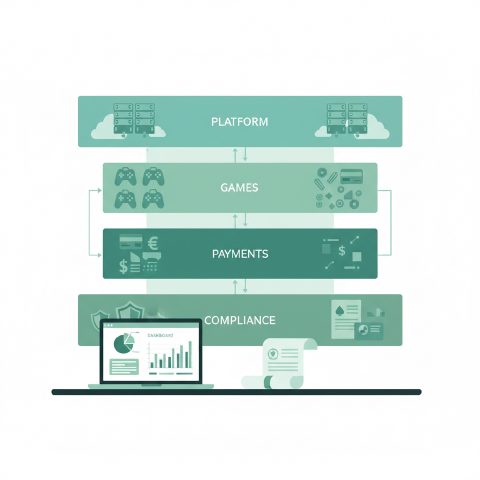
The architecture looks like this: your certified commercial provider handles game content delivery, wallet transactions, RNG, and payment processing. Your team builds the player-facing UI, the lobby experience, the bonus presentation layer, and the back-office reporting tools on top of those APIs. Regulators audit the commercial layer (which is already certified) and your custom layer (which handles no gambling transactions directly). The certification burden is dramatically lower than a full custom build.
This approach also gives you a realistic exit option. If you outgrow the commercial platform's capabilities, you have already built the custom layers that would form the foundation of a fully proprietary stack. You can migrate the certified components incrementally rather than doing a big-bang rebuild. That migration path is much harder if you started on open source and need to replace core gambling infrastructure mid-operation.
Budget for this hybrid approach: expect $150,000 to $400,000 in custom development on top of your commercial platform fees. That is more than a standard white-label, but you get genuine technical differentiation and the compliance safety net of a certified back-end. For operators who are serious about building a long-term business rather than a quick flip, this is the architecture I recommend most often.



Comments
No comments yet, be the first.