What Is PAM Software in iGaming? The Operator's Complete Guide for 2026

What exactly is PAM software in iGaming?
PAM stands for Player Account Management. It is the server-side system that owns the authoritative player record — registration data, KYC status, wallet balance, session history, bonus entitlements, and responsible gambling flags. Every action a player takes on your casino flows through or is recorded by the PAM. Without one, you don't have an operator platform; you have a website with games bolted on.
Think of the PAM as the ledger and rulebook of your operation. When a player registers, the PAM creates the account, assigns a unique ID, and stores the verified identity documents. When they deposit, the PAM credits the wallet and logs the transaction with a timestamp and payment method reference. When they trigger a bonus, the PAM evaluates eligibility, issues the credit, and tracks wagering progress against the terms. When they hit a self-exclusion limit, the PAM enforces the block — not the front-end, not the game aggregator, the PAM.
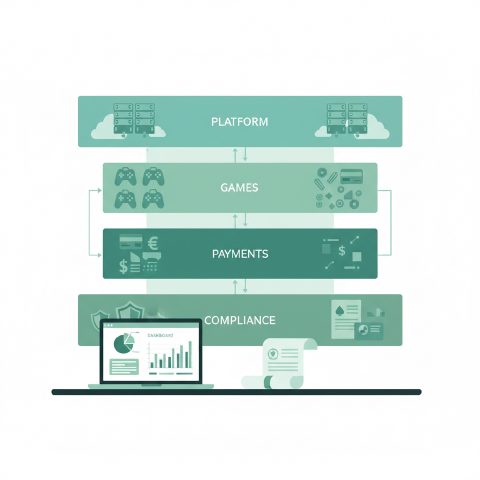
This is the distinction operators miss when they first evaluate vendors. A game aggregator like Relax Gaming or Pariplay delivers certified game content via a single API. A CMS manages your site pages and promotional banners. A payment gateway moves money between your acquirer and your ledger. The PAM sits above all of them, orchestrating the data flow and holding the master record. If your aggregator goes down, players can't spin slots. If your PAM goes down, nothing works at all — accounts, wallets, bonuses, compliance reporting, all of it stops.
In practice, many vendors sell bundled solutions where the PAM is embedded inside a broader platform. SoftSwiss Casino Platform, for example, ships a PAM, a game aggregator integration layer, a back-office dashboard, and a bonus engine as a single product. EveryMatrix's CardsChat suite separates these into distinct modules (OGS for games, PAM for accounts, MoneyMatrix for payments) that can be licensed individually or together. Understanding which layer you're actually buying — and which vendor controls it — is the first question to ask in any platform RFP.
What core functions does a PAM platform handle?
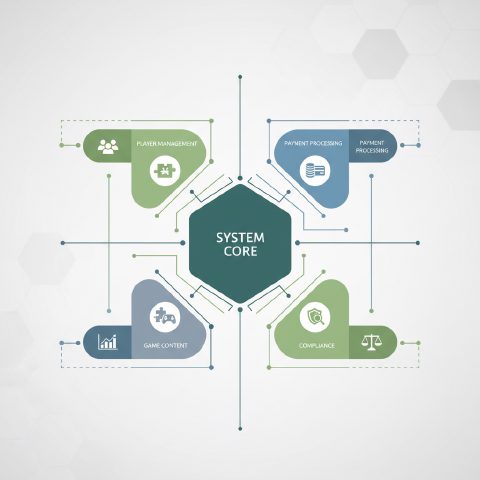
A fully-featured PAM handles six functional areas: player registration and identity verification, wallet and transaction management, bonus and promotion engine, responsible gambling controls, CRM and segmentation data, and compliance reporting. Weak execution in any one of these will create regulatory exposure or revenue leakage — often both simultaneously.
Registration and KYC integration is where most operators first feel PAM friction. The PAM must collect regulated data fields (name, DOB, address, sometimes source of funds), pass documents to a KYC provider like Onfido, Sumsub, or Jumio, receive a verification decision, and update the account status — all in near-real-time while the player is still on the registration screen. A slow or poorly integrated KYC flow kills conversion. The PAM's API architecture and webhook support determine how smoothly this works.
The bonus engine deserves more attention than it gets in vendor demos. Bonus logic is genuinely complex: free spins tied to specific game providers, deposit match with game-category wagering weights, loyalty point accrual, time-bounded promotions, and multi-step welcome sequences. A PAM with a rigid bonus engine forces your marketing team to design promotions around the software's limitations rather than player behavior. I've seen operators lose meaningful margin because their PAM couldn't support a simple 'wager X on live casino, get Y free spins' mechanic without a custom development request.
Responsible gambling controls are no longer optional window dressing. The MGA's Player Protection Directive, the UK Gambling Commission's affordability checks, and even Curaçao's updated 2023 framework all mandate PAM-level enforcement of deposit limits, loss limits, session time limits, cooling-off periods, and self-exclusion. The PAM must apply these controls server-side — client-side enforcement is not acceptable to any serious regulator. Your PAM vendor should be able to show you exactly how limit changes are processed, how self-exclusion propagates across all products, and how audit logs are structured for regulatory inspection.
Compliance reporting is the unglamorous function that bites operators hardest. Regulators want transaction logs, player activity reports, AML flags, and responsible gambling intervention records — often in jurisdiction-specific formats and on short notice. A PAM that can't export structured data or connect to a reporting tool like Kambi's compliance feed or a custom BI stack will cost you analyst hours every single month. Ask every PAM vendor for a sample data export before you sign anything.
| Function | Handled by PAM | Handled by Adjacent System | Notes |
|---|---|---|---|
| Player registration & KYC | Yes — stores status, triggers checks | KYC provider (Sumsub, Onfido) | PAM owns the decision record; KYC vendor does the verification |
| Wallet & balance management | Yes — authoritative ledger | Payment gateway (Nuvei, Praxis) | Gateway moves funds; PAM credits/debits the internal wallet |
| Bonus & promotion engine | Yes — eligibility, issuance, wagering tracking | CRM tool (Optimove, FastTrack) for targeting | CRM triggers the offer; PAM executes and enforces it |
| Game delivery & RTP | No | Game aggregator (Relax, Pariplay, EveryMatrix OGS) | PAM receives bet/win results; aggregator runs the games |
| Responsible gambling controls | Yes — server-side limit enforcement | Front-end UI for player self-service | PAM enforcement is mandatory; UI is just the input layer |
| Compliance reporting | Yes — audit logs, transaction history | BI/reporting tools (Tableau, custom) | PAM generates raw data; reporting tools format and deliver it |
| Content management (site pages) | No | CMS (Contentful, custom) | Completely separate layer; PAM has no role here |
How does PAM software differ from a white-label casino platform?
A white-label casino platform bundles a PAM with a front-end template, game content access, payment processing, and sometimes a license — you get a complete operational package. A standalone PAM is just the account management engine; you integrate everything else yourself. White-label is faster and cheaper to launch; standalone PAM gives you control but demands a real technical team and longer timelines.
The distinction matters because vendors often blur it deliberately. When a white-label provider says 'our platform includes full player management,' they mean their PAM is embedded and non-negotiable. You can't swap it out, you can't access the raw database, and if you ever want to migrate to a different platform, you'll need to export player data in whatever format they'll give you — which is often incomplete. I've worked with operators who discovered mid-migration that their white-label provider owned the player data schema and wouldn't release historical bonus records. That's a real operational and regulatory problem.
A standalone PAM deployment — using something like Comtrade Gaming's PAM module or a custom-built solution — means you own the architecture. You integrate your own game aggregator deals (potentially getting better revenue share than a white-label bundles), your own payment stack (critical for high-risk markets where acquirer relationships are competitive), and your own front-end. The trade-off is real: you need developers, a QA process, and someone who understands how to connect these systems without creating compliance gaps. Budget 12-18 months and $300,000–$800,000+ for a serious standalone build, depending on market and scope.
For most first-time operators launching in offshore markets like Curaçao or Anjouan, a white-label with an embedded PAM is the pragmatic choice. Get to market, validate your player acquisition strategy, generate revenue. Then, when you're generating enough margin to justify the investment, evaluate a migration to a more flexible stack. The mistake is trying to build custom infrastructure before you've proven the business model works in your target market.
| Factor | White-Label (bundled PAM) | Standalone PAM |
|---|---|---|
| Time to launch | 2–4 months | 12–24 months |
| Upfront cost | $15,000–$80,000 setup + rev share | $300,000–$800,000+ build cost |
| Ongoing cost | Revenue share (typically 15–35%) | Licensing fees + infrastructure + staff |
| Customisation | Limited to vendor's configuration options | Full control over logic and data model |
| Data ownership | Vendor controls schema; export may be restricted | Operator owns the database entirely |
| Integration flexibility | Locked to vendor's game/payment partners | Integrate any certified provider directly |
| Regulatory compliance tools | Vendor maintains; operator depends on their roadmap | Operator builds and owns compliance layer |
| Best for | First-time operators, offshore launches, MVP validation | Funded operators, regulated markets (MGA, UKGC, US states) |
Which PAM software providers do operators actually use in 2026?
The credible PAM and platform vendors operators are deploying in 2026 include SoftSwiss Casino Platform, EveryMatrix (modular suite), Comtrade Gaming, BtoBet (strong in LATAM and Africa), Amelco (sports-first but expanding), and GR8 Tech. Each has a different geographic sweet spot, pricing model, and integration philosophy — there is no universal best choice.
SoftSwiss Casino Platform is the most commonly mentioned name among crypto and offshore operators. Their PAM handles multi-currency wallets including crypto natively, which matters if you're targeting markets where crypto deposits are a primary acquisition channel. The platform is well-documented, the back-office is genuinely usable, and their support for Curaçao-licensed operations is mature. The trade-off: you're in a crowded ecosystem and differentiation on the front-end requires real design investment on top of their template.
EveryMatrix takes a modular approach that I find more intellectually honest about what operators actually need. Their PAM layer integrates with MoneyMatrix (payments), OGS (game aggregation), and Sportsbook modules independently. This means an operator with an existing game aggregator relationship can adopt just the PAM and payment modules without ripping out their content stack. That flexibility has a price — the integration work is more involved than a fully bundled solution, and you need a technical team that can manage multi-vendor API relationships. For MGA-licensed operations in particular, EveryMatrix's compliance tooling is well-regarded.
BtoBet deserves mention specifically for operators targeting LATAM markets — Colombia (Coljuegos), Peru (MINCETUR), and Mexico (SEGOB). Their PAM has localization features and regulatory reporting modules that align with Latin American compliance requirements, which generic offshore platforms often lack. Comtrade Gaming is worth evaluating for operators who want a more configurable bonus engine and are willing to invest in integration work. GR8 Tech (formerly Parimatch Tech's platform division) has been expanding its third-party operator client base and brings serious scale experience.
One honest caveat: vendor capabilities shift faster than any analyst can track in real time. Always run a structured RFP, ask for a live back-office demo with your specific use cases (not a scripted walkthrough), request references from operators in your target jurisdiction, and have a lawyer review the data ownership and exit clauses before you sign. The sales deck and the production system are sometimes very different products.
What do regulators require from a PAM system?
Every serious gambling regulator — MGA, UKGC, Curaçao GCB, US state commissions, Coljuegos, MINCETUR — mandates specific PAM-level capabilities: real-time responsible gambling limit enforcement, complete transaction audit trails, AML monitoring hooks, self-exclusion database integration, and in some jurisdictions, direct regulatory reporting feeds. A PAM that can't meet these requirements will get your license suspended.
The MGA (Malta Gaming Authority) is the most technically prescriptive regulator most operators encounter. Their Player Protection Directive requires the PAM to enforce deposit limits within 24 hours of a player request, maintain a self-exclusion system that propagates across all products under the license, and log every player interaction with responsible gambling tools. The MGA also mandates integration with the national self-exclusion register where applicable. When I've reviewed PAM vendor compliance documentation for MGA applications, the gaps are usually in the audit log structure — regulators want immutable, timestamped records, and some older PAM systems generate logs that are technically mutable.
US state gaming commissions are a different regulatory animal entirely. New Jersey's Division of Gaming Enforcement, Pennsylvania's Gaming Control Board, and Michigan's Gaming Control Board each have their own technical standards documents that specify exactly how player accounts, geolocation checks, and responsible gambling controls must function. A PAM built for offshore markets will typically need significant modification — sometimes a full rebuild of the compliance layer — to meet US state requirements. This is one reason why operators entering regulated US states often work with platform vendors who have existing state certifications (like GAN, Kambi for sports, or IGT's platform division) rather than adapting an offshore PAM.
Curaçao's 2023 framework update under the new Gaming Control Board introduced mandatory responsible gambling tools and AML controls that didn't exist under the old master license system. The PAM must now support deposit limits, loss limits, and session limits as configurable mandatory features — not optional add-ons. Operators who launched on platforms that hadn't updated their PAM compliance modules before the deadline faced real license renewal risk. This is the kind of regulatory shift that makes PAM vendor selection a long-term relationship decision, not just a launch-day choice.
How does a PAM integrate with payment systems and game aggregators?
A PAM integrates with payment systems via a cashier API that handles deposit and withdrawal requests, and with game aggregators via a wallet API that processes bet and win transactions in real time. The quality of these integrations — latency, error handling, reconciliation logic — directly affects player experience, fraud exposure, and your finance team's workload.
The payment integration is more complex than vendors make it look in demos. The PAM maintains the internal player wallet, but the actual movement of funds happens through a payment gateway layer — providers like Nuvei, Praxis Cashier, PaymentIQ, or Trustly depending on your markets. The PAM must receive confirmed deposit notifications from the gateway, credit the player wallet, and handle edge cases: what happens if the gateway confirms a deposit but the PAM notification fails? What's the reconciliation process? How are chargebacks reflected in the wallet? These failure modes are where operators discover whether a PAM vendor has actually run a production operation or just built software for one.
Wallet API integration with game aggregators works on a debit/credit model. When a player places a bet, the aggregator calls the PAM's wallet API to debit the bet amount; when the game resolves, it calls again to credit winnings. This happens in milliseconds, thousands of times per day. Latency in the wallet API creates game errors that players see as freezing or disconnection. I've reviewed SLAs from aggregators that require wallet API response times under 200ms — if your PAM infrastructure can't meet that, you'll have player complaints and potentially breach your aggregator contract.
Bonus engine integration adds another layer. When a player uses bonus funds, the PAM must track which portion of a bet comes from real money versus bonus balance, apply the correct wagering contribution rates by game category, and enforce maximum bet limits during bonus play. This logic sits in the PAM, not the aggregator. Aggregators don't know whether a player is in bonus mode — they just see wallet calls. Getting this logic right requires careful configuration and thorough QA testing before launch, particularly for operators running complex multi-step welcome bonuses.
What does PAM software typically cost operators?
PAM costs vary enormously by deployment model. White-label platforms with bundled PAMs typically charge a setup fee of $15,000–$80,000 plus a revenue share of 15–35% of GGR. Standalone PAM licensing runs $5,000–$25,000 per month depending on active player volumes. Custom-built PAM infrastructure starts at $300,000 and scales with complexity. The revenue share model sounds cheaper until your operation scales.
The revenue share trap is real and operators consistently underestimate it. At 20% GGR share on a platform generating $500,000 monthly gross gaming revenue, you're paying $100,000 per month — $1.2 million annually — for the platform including PAM. At that revenue level, the economics of migrating to a standalone licensed PAM with a flat monthly fee start looking very attractive. The problem is that migration itself costs money, time, and operational risk. The white-label vendor knows this, which is why exit clauses and data portability terms in platform contracts deserve serious legal scrutiny before signing.
Standalone PAM licensing fees from vendors like EveryMatrix or Comtrade are typically structured on a monthly license basis with volume tiers based on registered or active players. Exact figures aren't published and vary significantly by negotiation, market, and the modules you license — treat any specific number you see in a vendor's marketing as a starting point for negotiation, not a fixed price. Operators with leverage (large player bases, multi-jurisdiction presence, or a credible competing offer) consistently get better terms than first-time operators who approach a single vendor.
Hidden costs that vendors don't headline: integration development (connecting your PAM to KYC providers, payment gateways, and game aggregators costs real developer time — budget $50,000–$150,000 for a serious integration project), compliance certification (some jurisdictions require the PAM to be certified by a testing lab like BMM or GLI, which adds $20,000–$60,000 and several months), and ongoing maintenance as regulatory requirements evolve. The total cost of PAM ownership over three years is almost always higher than the initial contract suggests.
What should operators look for when evaluating a PAM vendor?
Evaluate PAM vendors on five dimensions: regulatory certification and jurisdiction coverage, bonus engine flexibility, data ownership and export rights, API documentation quality, and client references in your target market. The sales demo will look polished regardless of which vendor you're talking to — the differences show up in the contract terms and in conversations with their existing operator clients.
Regulatory certification is non-negotiable and should be the first filter. Ask the vendor for a list of jurisdictions where their PAM is currently deployed under active licenses, and verify it. A PAM that works for a Curaçao-licensed operation may need significant modification for an MGA license, and may be completely unsuitable for a US state license. If you're targeting a specific regulated market, the vendor should be able to name current operator clients in that jurisdiction who you can contact directly.
Bonus engine flexibility is where I'd spend the most time in a demo. Don't let the vendor run their scripted walkthrough — bring your actual planned promotions and ask them to configure them live. A 100% deposit match up to $500 with 30x wagering, slots contributing 100% and live casino contributing 10%, with a 7-day expiry and a maximum bet of $5 during bonus play. If the vendor struggles to configure that in 15 minutes, you've learned something important. Bonus engine limitations become your marketing team's limitations for the life of the contract.
Data ownership deserves its own legal review. The contract should specify that you own all player data, that you can export a complete data set in a structured format at any time, and that upon contract termination the vendor must provide a full data export within a defined timeframe (30 days is reasonable; 90 days is too long). Some vendors include clauses that restrict data portability or charge for data exports — these are red flags. Your player database is your primary asset; don't sign a contract that compromises your ownership of it.
Finally, API documentation quality predicts your integration experience better than any sales conversation. Ask for access to the technical documentation before signing — not a summary, the actual API specs. Well-documented APIs with sandbox environments, clear error codes, and responsive technical support indicate a vendor that has actually shipped integrations with real operators. Sparse or outdated documentation indicates a vendor whose engineering team is stretched thin or whose product has accumulated technical debt. You'll be living with this integration for years.
How does PAM software handle responsible gambling and player protection?
A properly built PAM enforces responsible gambling controls server-side, in real time, without the player being able to circumvent them through the front-end. This means deposit limits, loss limits, session time limits, cooling-off periods, and self-exclusion are logic that lives in the PAM — not CSS on a webpage. Regulators test this distinction explicitly during licensing audits.
The server-side enforcement requirement is something operators building their first platform frequently get wrong. It's tempting to implement responsible gambling tools as front-end features — a JavaScript popup that warns a player when they've been playing for two hours, a form that submits a limit request and updates a database field. Regulators, particularly the MGA and UKGC, require that these controls be enforced at the transaction level. If a player has set a £100 daily deposit limit, the PAM must reject any deposit request that would exceed that limit, regardless of which front-end or device the request comes from. The front-end is just the interface; the PAM is the enforcement layer.
Self-exclusion integration is technically more complex than most operators anticipate. In the UK, the UKGC requires integration with GAMSTOP, the national self-exclusion register. In Sweden, operators must connect to Spelpaus. In Spain, integration with RGIAJ is mandatory. The PAM must query these registers at login (or at minimum at registration and periodically thereafter), block excluded players, and log the check with a timestamp. Some PAM vendors have pre-built integrations with these registers; others leave it to the operator to build. Verify this before you commit to a vendor for a regulated EU market.
Affordability checks — the UK Gambling Commission's most controversial recent initiative — add another dimension. The PAM must track cumulative net losses per player over defined time windows and trigger enhanced due diligence workflows when thresholds are crossed. This requires the PAM to maintain accurate running totals of deposits, withdrawals, and net gaming activity, and to surface alerts to your compliance team in near-real-time. Not every PAM has this built; some require custom development on top of the base product. If you're targeting the UK market, this is a mandatory evaluation criterion.
Can you build your own PAM software, and should you?
Yes, you can build a custom PAM — and no, most operators shouldn't. Custom PAM development makes sense only if you have a genuinely differentiated product requirement that no vendor can meet, a technical team with iGaming compliance experience, and the capital to sustain 18–24 months of development before generating revenue. For everyone else, it's a distraction from building a real business.
The operators who successfully build custom PAM software share a profile: they typically come from the technology side of the industry (ex-platform PMs, engineering teams from established operators), they have a specific regulatory or product requirement that existing vendors can't meet, and they have funding that isn't dependent on immediate revenue. A crypto-native operator building for a jurisdiction where no certified PAM vendor has a product, for example, might have a legitimate case. An entrepreneur launching their first online casino absolutely does not.
The technical complexity of a production-grade PAM is genuinely underestimated by people who haven't built one. You're not building a database and an API — you're building a financial system that must handle concurrent transactions without race conditions (two simultaneous deposits crediting the same wallet incorrectly is a real problem), maintain immutable audit logs, enforce regulatory rules that change by jurisdiction, integrate with a dozen external systems with different API standards, and operate at 99.9%+ uptime while you iterate on it. The teams that have done this well have usually taken 2–3 years and spent $1M+ before reaching a production-ready system.
There's a middle path worth considering: licensed PAM software that you host and operate yourself, rather than using a vendor's SaaS deployment. Some vendors offer this model — you license the PAM codebase, deploy it on your own infrastructure, and take on the operational responsibility. This gives you more control over data and customisation than a SaaS PAM while avoiding the full cost of building from scratch. It's worth asking vendors whether this option exists, though few advertise it prominently because the SaaS model is more profitable for them.
How does PAM software differ across key iGaming jurisdictions?
PAM requirements vary significantly by jurisdiction. US state licenses demand the most rigorous technical certification. The MGA and UKGC require specific responsible gambling architectures. Curaçao's updated framework introduced mandatory controls that didn't exist pre-2023. LATAM regulators like Coljuegos and MINCETUR have their own reporting and localization requirements. One PAM configuration does not fit all markets.
US state markets are the most demanding from a technical certification standpoint. New Jersey, Pennsylvania, Michigan, and other regulated states require the gaming platform — including the PAM — to be tested and certified by an approved independent testing laboratory (GLI, BMM, or Gaming Laboratories International). This process tests the PAM's account management logic, financial transaction integrity, responsible gambling controls, and security architecture against the state's specific technical standards. The certification process typically takes 3–6 months and costs $30,000–$80,000 depending on scope. Operators who try to enter US markets with an offshore PAM that hasn't been through this process will not receive a license.
The MGA's framework is the reference standard for EU-facing operations. Their technical standards documents are publicly available and specify in detail how player accounts, bonus systems, and responsible gambling controls must function. The MGA also conducts ongoing compliance audits — not just at licensing but throughout the license term. Operators who chose PAM vendors based on price rather than MGA compliance depth have faced remediation requirements that cost more than the savings they captured upfront.
In LATAM, the picture is more fragmented. Colombia's Coljuegos requires local data residency for player records — your PAM must be able to store Colombian player data on servers in Colombia, which not all SaaS PAM vendors support. Peru's MINCETUR has specific reporting formats for tax purposes that require PAM-level data extraction. Mexico's SEGOB framework is less technically prescriptive but requires the operator to demonstrate system controls during the license application. BtoBet and a handful of regional platform vendors have invested in LATAM-specific PAM compliance; most European-focused vendors have not.
| Jurisdiction | Regulator | Key PAM Requirements | Certification Process | Notable PAM Vendors Active |
|---|---|---|---|---|
| Malta | MGA | RG limit enforcement, self-exclusion register, immutable audit logs, AML monitoring | MGA technical audit during licensing + ongoing compliance checks | EveryMatrix, Comtrade, SoftSwiss |
| UK | UKGC | GAMSTOP integration, affordability checks, enhanced RG controls, source of funds triggers | UKGC system review; some elements require approved supplier status | Limited offshore vendors; most operators use UK-specific platforms |
| New Jersey / US States | DGE (NJ), PGCB (PA), MGCB (MI) | State-specific technical standards, geolocation enforcement, full transaction integrity | GLI / BMM lab certification (3–6 months, $30k–$80k) | GAN, IGT platform, Kambi (sports), state-certified vendors |
| Curaçao | Curaçao GCB (post-2023) | Deposit/loss/session limits, AML controls, player verification | GCB technical review during license application | SoftSwiss, EveryMatrix, BtoBet, many white-label providers |
| Colombia | Coljuegos | Local data residency, Spanish-language RG tools, Coljuegos reporting API | Coljuegos system certification | BtoBet, regional LATAM platforms |
| Peru | MINCETUR | Tax reporting exports, player ID verification (DNI), Spanish localization | MINCETUR technical review | BtoBet, regional platforms |
| Anjouan | AGSC | Basic account management, AML policy, RG tools (less prescriptive than MGA) | AGSC review (lighter-touch than MGA/UKGC) | Various offshore white-label providers |




Comments
No comments yet, be the first.