White Label Casino Providers List 2026: The Operator's Honest Review

What exactly is a white label casino platform and how does it differ from turnkey?
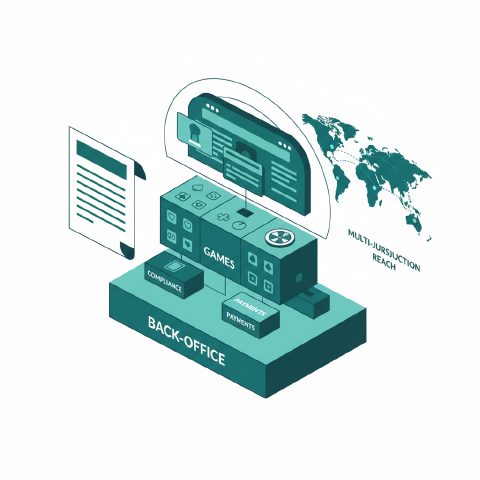
A white label casino is a pre-built gambling platform you brand as your own — the provider hosts the software, holds (or sub-licenses) the gambling licence, and handles core compliance. A turnkey solution is similar but typically transfers more operational control, and sometimes the licence itself, directly to you. The distinction matters because it changes your liability, your margin and your exit options.
In practice, the industry uses 'white label' and 'turnkey' almost interchangeably in vendor marketing, which creates real confusion at the contract stage. The cleaner way to think about it: a white label arrangement keeps the master licence with the platform provider, who sub-licenses operating rights to you under their regulatory umbrella. You get a branded front end, a back office with player management tools, and access to their aggregated game catalogue. The provider takes a revenue share — typically 15–40% of GGR depending on deal size and market — in exchange for infrastructure, compliance and support.
A turnkey setup, by contrast, usually means you acquire your own licence (or the provider assists you in obtaining one) and the platform is delivered to you as a configured, ready-to-operate system. You own more of the stack, you carry more of the regulatory burden, and your long-term unit economics are materially better once volume justifies the overhead. SoftSwiss's turnkey product and EveryMatrix's CardsChat-era deployments are good examples of the model at scale.
The practical implication for a first-time operator: white label is faster and cheaper to start, but you are building brand equity on someone else's infrastructure. If the master licence gets suspended — which happened to several Curaçao sub-licensees in 2023–2024 when eGaming Curaçao tightened its framework — your operation pauses regardless of anything you did. That's a risk worth pricing in before signing a three-year revenue share agreement.
Which white label casino providers are worth reviewing in 2026?
The platforms operators most frequently shortlist in 2026 are SoftSwiss, EveryMatrix, Softgamings, BetConstruct, Turnkey Casino, Income Access (now part of Paysafe's affiliate infrastructure), and a handful of newer entrants like Slotegrator and GamingSoft. Each has a distinct sweet spot — market focus, game depth, pricing model — and none is universally 'best'.
SoftSwiss remains the benchmark for crypto-friendly white label deployments. Their platform supports Bitcoin, Ethereum and a wide range of altcoins natively, their game aggregator pulls from 200+ studios, and their in-house Jackpot Aggregator is genuinely differentiating for operators targeting high-volatility player segments. Setup fees as of late 2024 were in the $25,000–$50,000 range for a standard white label package, with revenue share negotiated per deal. They also offer Curaçao licensing support, which shortens time-to-market significantly for offshore operators.
EveryMatrix is the platform of choice for operators who need serious API depth and want to integrate third-party tools without fighting the back office. Their CasinoEngine aggregator connects to 10,000+ game titles, their PlayerIQ CRM is among the more sophisticated in the white label space, and they hold MGA and several other EU-compatible certifications — which matters if you're planning a regulated European rollout. The trade-off is that EveryMatrix's onboarding is slower and their minimum commercial thresholds are higher; this is not the platform for a bootstrapped first launch.
Softgamings and Slotegrator serve the mid-market — operators with $50,000–$150,000 in launch capital who need a functional product fast without enterprise-level minimums. Softgamings in particular has strong LATAM payment localisation, which is a meaningful edge if Brazil or Peru is your primary market. BetConstruct is worth mentioning for operators who want sports betting bundled with casino under one contract; their combined sportsbook-casino white label is one of the cleaner integrations available. Turnkey Casino (the brand, not the product category) is a smaller outfit that punches above its weight on customer service responsiveness — something operators only appreciate after they've been burned by a slow-response tier-one provider during a payment outage.
| Provider | Best Fit | Game Titles (approx.) | Crypto Native? | Licensing Support | Est. Setup Fee |
|---|---|---|---|---|---|
| SoftSwiss | Crypto-first offshore | 10,000+ | Yes | Curaçao, Anjouan | $25k–$50k |
| EveryMatrix | Regulated EU markets | 10,000+ | Partial | MGA, UKGC-ready | $50k–$100k+ |
| Softgamings | Mid-market, LATAM | 7,000+ | Partial | Curaçao | $15k–$40k |
| BetConstruct | Casino + Sportsbook combo | 6,000+ | Partial | Curaçao, MGA | $30k–$70k |
| Slotegrator | Entry-level, flexible API | 8,000+ | Partial | Curaçao | $10k–$30k |
| Turnkey Casino | Small operators, fast launch | 5,000+ | No | Curaçao | $10k–$25k |
| GamingSoft | Asia-Pacific focus | 5,000+ | Yes | Curaçao, Anjouan | $15k–$35k |
How long does it realistically take to launch with a white label provider?
A white label launch under an existing master licence — Curaçao being the most common — takes 4–12 weeks from contract signing to a live site, assuming you have brand assets, payment accounts and KYC documentation ready. Add 4–8 weeks if you need a new sub-licence issued. MGA or UKGC-regulated launches are a different category entirely: 6–18 months minimum.
The 4–12 week range assumes the operator is organised. What actually kills timelines is the payment side, not the platform. Getting a merchant account or PSP integration approved for gambling is the single most common delay I see. Providers like Nuvei, PaySafe and Praxis Cashier have gambling-specific onboarding tracks, but even they can take 3–6 weeks to underwrite a new brand. If you're targeting markets like Brazil or Mexico where local payment methods (PIX, OXXO Pay, SPEI) are essential for conversion, add another 2–4 weeks for those integrations to go live and test properly.
Crypto-native launches are genuinely faster. If your player acquisition strategy leans on crypto deposits — Bitcoin, USDT, ETH — you can bypass traditional merchant underwriting almost entirely. SoftSwiss and GamingSoft both have crypto payment rails built into their white label packages. A crypto-first offshore launch can realistically go live in 3–5 weeks. The caveat is that crypto-only operations have a structurally narrower addressable market, and as more jurisdictions start treating crypto gambling the same as fiat, that compliance gap is closing.
One thing providers rarely advertise: their 'live in 4 weeks' claim assumes you use their default template front end. Custom design work — even moderate customisation of colour schemes, lobby layout and bonus UI — adds 2–6 weeks depending on the provider's dev queue. If you're launching into a competitive market where brand differentiation matters, budget for that time and cost upfront rather than discovering it mid-project.
What does a white label casino actually cost — setup, ongoing and hidden fees?
Total first-year cost for a white label casino launch typically falls between $50,000 and $250,000, depending on market, provider tier and payment setup. Setup fees are the smallest line item. Revenue share, licensing fees, payment processing costs and player acquisition are where the real money goes — and where operators consistently underestimate burn.
Here's a realistic first-year cost breakdown for a mid-market offshore white label launch. Platform setup: $15,000–$50,000 (one-time). Sub-licence fee under a Curaçao or Anjouan master: $5,000–$15,000 per year. Revenue share to the platform: 15–35% of GGR — this is the number that compounds painfully once you're doing meaningful volume. Payment processing: 2–6% per transaction depending on method and PSP. Responsible gambling and AML compliance tooling (often sold as add-ons): $500–$2,000/month. Customer support (if outsourced): $3,000–$8,000/month. And then there's player acquisition, which in competitive markets routinely runs $200–$600 per depositing player in paid channels.
The revenue share structure is where I see operators make the most consequential mistake. A 30% GGR share sounds manageable at $10,000/month gross revenue. At $200,000/month — which is not an unrealistic figure for a well-run brand in 18–24 months — you're handing $60,000 monthly to the platform provider. At that point, migrating to a licensed standalone operation or a turnkey setup with a lower fee structure almost always makes financial sense, but migration is painful and providers know it. Read the contract exit clauses before you sign, not after.
Hidden fees worth flagging specifically: game provider minimum guarantees (some studios require $1,000–$5,000/month minimum even through an aggregator), chargeback handling fees, CRM module costs if the base package uses a stripped-down version, and 'compliance update' fees when regulators change technical standards. None of these are dealbreakers individually, but together they can add $5,000–$15,000/month to your operating cost that wasn't in the initial pitch deck.
| Cost Category | Low Estimate | High Estimate | Notes |
|---|---|---|---|
| Platform setup fee | $10,000 | $50,000 | One-time; varies by provider tier |
| Sub-licence (Curaçao/Anjouan) | $5,000 | $15,000 | Annual; master licence holder takes cut |
| Revenue share to platform | 15% GGR | 40% GGR | Ongoing; biggest long-term cost |
| PSP / payment processing | 2% per txn | 6% per txn | Higher for high-risk card processing |
| Compliance tooling (AML, RG) | $6,000/yr | $24,000/yr | Often sold as add-ons |
| Customer support (outsourced) | $36,000/yr | $96,000/yr | Depends on language coverage |
| Player acquisition (paid) | $200/FTD | $600/FTD | Highly market-dependent |
Which licences do white label providers support, and which markets can you actually target?
Most white label providers operate under a Curaçao eGaming or Anjouan (COMOROS) master licence and sub-license to operators. This covers offshore markets — large swaths of LATAM, Southeast Asia, parts of Africa — but explicitly excludes the US, UK, Germany, Sweden and most regulated EU states. MGA and UKGC-compatible white label setups exist but are expensive and rare.
Curaçao eGaming overhauled its framework in 2023 under the new National Ordinance on Offshore Games of Hazard, replacing the old master/sub-licence model with direct operator licences issued by the Curaçao Gaming Control Board. As of 2024–2025, operators launching under Curaçao need their own licence application rather than simply riding a platform provider's master. The process takes 3–6 months and costs roughly $15,000–$30,000 in fees and legal support. Providers like SoftSwiss and Softgamings have adapted their onboarding to accommodate this, but it adds time and cost that the old model didn't require. Anjouan (Comoros) has partially filled the gap as a faster, cheaper alternative for operators who need to move quickly — licence fees there are in the $10,000–$15,000 range and approval can come in 4–8 weeks.
For LATAM specifically: Colombia (Coljuegos) and Peru (MINCETUR) have their own licensing regimes that require local entity establishment and are not covered by offshore sub-licences. Brazil's regulated market officially launched in January 2025 under SECAP/Ministry of Finance oversight, and the licence application process is substantial — not a white label shortcut. Mexico (SEGOB) is technically accessible offshore but increasingly scrutinised. Operators targeting these markets seriously need jurisdiction-specific legal counsel, not just a platform provider's boilerplate compliance claim.
US iGaming is a completely separate conversation. New Jersey (DGE), Pennsylvania (PGCB), Michigan (MGCB) and other regulated states require direct licensing, local server requirements, geofencing, and integration with state-approved gaming systems. No offshore white label platform legally covers US regulated states. Any provider claiming otherwise is either talking about grey-market offshore play — which carries serious federal risk under UIGEA — or misrepresenting their product. I've seen operators lose six-figure deposits to providers who glossed over this distinction.
How do you evaluate game content depth on a white label platform?
Raw game count is a vanity metric. What matters is which studios are integrated, whether live dealer content from Evolution or Pragmatic Live is included, how frequently the catalogue updates, and whether you get revenue share on jackpot games or pay a separate fee. A platform with 5,000 well-curated titles will outperform one with 12,000 titles half of which are dead inventory.
The major aggregators powering white label game catalogues — SoftSwiss Game Aggregator, EveryMatrix CasinoEngine, Slotegrator's APIgrator — all claim 10,000+ titles, but the meaningful question is studio quality and exclusivity. Evolution Gaming's live dealer content (Live Blackjack, Crazy Time, Lightning Roulette) drives a disproportionate share of GGR on most casino brands. If the platform you're evaluating doesn't have Evolution integrated, or charges a premium add-on fee for it, that's a material gap. Same goes for Pragmatic Play slots — Book of Dead-style titles from Play'n GO, Sweet Bonanza from Pragmatic, and Big Bass Bonanza are genuine traffic drivers in most markets.
Ask the provider specifically: which studios require separate commercial agreements beyond the platform fee? Some aggregators pass through studio minimums directly to operators — meaning you might owe Pragmatic Play a $2,000/month minimum guarantee regardless of your actual game revenue from their titles. This is common with tier-one studios and rarely flagged in the initial sales conversation. Get a complete list of studios with their commercial terms before signing.
Live dealer content deserves separate scrutiny. Evolution is the dominant supplier but also the most expensive. Pragmatic Live and Ezugi (now part of Evolution Group) offer competitive live tables at lower cost thresholds. For operators targeting Asian markets specifically, platforms with SA Gaming or Asia Gaming live content have a meaningful localisation advantage. Finally, check whether the platform's back office gives you game-level revenue reporting — studio by studio, title by title. If it doesn't, you're flying blind on your content strategy.
What payment infrastructure should a white label platform provide for your target market?
Payment localisation is where most white label platforms underdeliver relative to their sales pitch. A platform needs to support the specific local payment methods your players actually use — PIX in Brazil, OXXO in Mexico, PSE in Colombia, iDEAL in the Netherlands — not just Visa/Mastercard and a generic crypto option. Conversion rates drop 30–60% when local methods are missing.
I've reviewed operator analytics from LATAM launches where Visa/Mastercard acceptance rates were under 40% because issuing banks in the region decline gambling transactions at high rates. The operators who hit those markets with PIX (Brazil) or local bank transfer options immediately saw deposit conversion jump to 65–75%. This is not a nice-to-have — it's the difference between a viable business and a cash-burning experiment. Before signing with any white label provider, get a specific list of PSP integrations for your target market and verify those integrations are live, not 'coming soon'.
Praxis Cashier, Skrill, Neteller and PaySafe are standard across most platforms. The differentiator is whether the platform has direct integrations with regional processors: Mercadopago for Argentina and parts of LATAM, PayRetailers for broader South America, AstroPay for multi-market LATAM, or Interswitch for West Africa. Crypto payment rails (BitPay, CoinsPaid, B2BinPay) are increasingly standard and genuinely useful for markets where fiat banking is hostile to gambling.
Withdrawal speed is the player retention metric operators overlook most. In competitive markets, players benchmark withdrawal times obsessively — a 24-hour withdrawal on a competitor versus a 72-hour withdrawal on your brand is a churn driver. Ask the provider what the average withdrawal processing time is on their platform, and specifically whether manual review queues are handled by the platform or pushed back to you. Some white label packages give you a back office with withdrawal approval workflows but no dedicated fraud/compliance team behind it — meaning you're doing manual AML reviews yourself at 2am when volume spikes.
White label versus turnkey versus custom build: which model fits which operator?
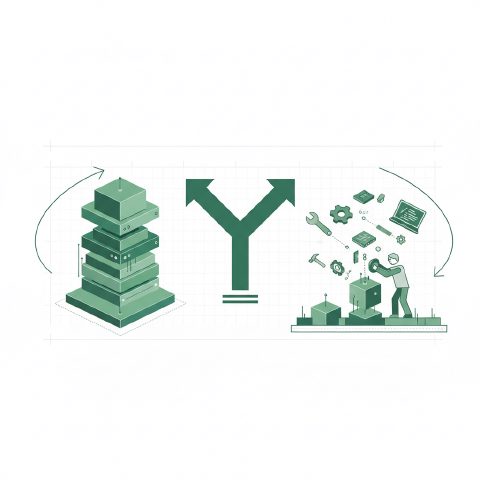
White label suits first-time operators with under $200,000 in launch capital who need market validation before committing to full infrastructure. Turnkey fits operators with proven player acquisition channels who want better margin and more control. Custom builds are for funded operators with a genuine technical differentiator — and a 12–24 month runway before revenue.
The decision framework I use with clients comes down to three questions: How much do you know about your target player base? How much capital do you have for the first 18 months? And what is your realistic exit or scale scenario? If you're validating a market — say, testing a new brand concept in a LATAM grey market — white label is the rational choice. You're paying a premium in revenue share, but you're buying speed and optionality. If it doesn't work, your sunk cost is $50,000–$100,000, not $500,000.
Turnkey makes sense once you have data. If you've run a white label brand for 12–18 months, you know your player LTV, your acquisition cost by channel, your top game categories, and your payment method mix. At that point, the revenue share you're paying to the platform provider is a known number — and you can model whether owning your own licence and infrastructure pays back within 24 months. For most operators doing over $150,000 GGR monthly, it does. SoftSwiss, EveryMatrix and BetConstruct all offer pathways from white label to a more independent turnkey setup, which is worth asking about during initial negotiations.
Custom builds are genuinely rare and usually misunderstood. The operators who benefit from a custom build are those with a specific technical moat — a proprietary bonus engine, a unique game mechanic, a data infrastructure that feeds a sophisticated CRM. Building a standard online casino from scratch in 2026 makes no economic sense; the aggregators and platforms are too mature and too cheap relative to development cost. I've seen founders spend $800,000 on custom development to replicate functionality that SoftSwiss delivers for $40,000. Don't do that.
What compliance and responsible gambling features should a white label platform include?
At minimum, a white label platform needs KYC/AML tooling, self-exclusion, deposit limits, session time limits, and integration with national self-exclusion registers where applicable (GAMSTOP in the UK, OASIS in Germany). Platforms targeting regulated EU markets need these as standard; offshore platforms vary wildly in compliance depth.
Curaçao's 2023–2025 regulatory reform explicitly raised the bar on responsible gambling requirements for licensed operators. The new framework requires documented AML policies, source-of-funds checks above defined thresholds, and mandatory RG features. This is a meaningful change from the old sub-licence era where compliance was largely self-regulated. Operators launching under the new Curaçao GCB licence need to verify that their white label provider's back office actually supports these requirements — not just claims to in a sales deck.
The practical RG features to verify: deposit limit controls (daily/weekly/monthly, adjustable by player), cooling-off and self-exclusion with enforced lockout periods, reality check pop-ups during sessions, and the ability to flag and manually review high-frequency depositors. Some platforms offer AI-driven responsible gambling scoring (Mindway AI and BetBlocker are third-party tools that integrate with several platforms) — this is increasingly expected in regulated markets and a genuine differentiator for operators who want to future-proof their compliance posture.
KYC is the other area where platforms diverge sharply. Tier-one platforms integrate with identity verification providers like Jumio, Onfido or Sum&Substance directly in the back office, with automated document verification and PEP/sanctions screening. Cheaper platforms push KYC to a manual process — your ops team reviewing passport scans in a shared folder. That's not just a compliance risk; it's an operational bottleneck that slows player activation and increases drop-off at the verification stage. Verify the KYC workflow in a live demo before committing.
How do you negotiate a better deal with a white label casino provider?
Revenue share is negotiable, especially if you can demonstrate a credible player acquisition plan. Providers price risk, not goodwill — show them projected volume, your traffic source and your target market, and you have leverage. The operators who pay 35% GGR share are usually the ones who walked in with no data and signed the default contract.
The first lever is projected volume. If you can show a provider a realistic 12-month GGR projection backed by an affiliate deal, an existing player database from a previous brand, or a documented paid acquisition strategy, you're a lower-risk counterparty. Providers routinely drop revenue share by 5–10 percentage points for operators who demonstrate acquisition credibility. Get competing term sheets from at least two providers before entering serious negotiation — even if you prefer one platform, the competing offer gives you a concrete anchor.
The second lever is term length. Providers offer better rates for longer commitments, but this cuts both ways — a 3-year revenue share agreement at 25% looks great until your brand is doing $300,000 GGR monthly and you realise you're locked in. Push for 12-month initial terms with renewal options, or negotiate an explicit rate reduction at defined GGR milestones (e.g., revenue share drops from 30% to 22% once monthly GGR exceeds $100,000). Some providers will accept this; it's more common than operators realise.
Setup fees are often the easiest thing to negotiate down or eliminate — providers treat them partly as commitment signals, not pure cost recovery. If you're signing a multi-year agreement or committing to a minimum monthly fee, the setup fee is frequently waived or deferred. What's harder to negotiate is the exit clause. Most contracts have 90–180 day notice periods and data portability restrictions that effectively make player migration expensive. Push hard on data export rights — you want a contractual right to export full player data (registration, transaction history, game history) in a standard format. Without this, you're building your business on a foundation you don't own.
- SoftSwiss — The benchmark for crypto-native white label deployments. Strong game aggregator (10,000+ titles), native crypto payment rails, Curaçao and Anjouan licensing support, and a well-documented back office. Best fit for crypto-first offshore operators. Setup fees circa $25,000–$50,000; revenue share negotiated per deal.
- EveryMatrix — Enterprise-grade platform with CasinoEngine aggregator (10,000+ titles), PlayerIQ CRM, and MGA/UKGC-compatible certification. The right choice for operators planning a regulated EU market entry. Higher commercial thresholds and slower onboarding than mid-market competitors — not the platform for a bootstrapped first launch.
- Softgamings — Mid-market provider with strong LATAM payment localisation and a clean back office. Supports 7,000+ game titles, Curaçao licensing, and regional payment methods including AstroPay and PayRetailers. Setup fees in the $15,000–$40,000 range. Good fit for operators targeting Brazil, Peru or broader South America.
- BetConstruct — One of the cleanest casino-plus-sportsbook white label integrations available. Supports 6,000+ casino titles alongside a full sportsbook product, Curaçao and MGA licensing, and partial crypto support. Setup fees $30,000–$70,000. Best for operators who want both verticals under one contract.
- Slotegrator — Entry-level platform with flexible API integration and 8,000+ game titles via their APIgrator aggregator. Lower commercial thresholds make it accessible for first-time operators. Curaçao licensing support included. Setup fees from $10,000–$30,000. Trade-off: less CRM depth and fewer premium PSP integrations than tier-one providers.
- Turnkey Casino — A smaller provider that consistently gets cited for responsive customer support — a genuine differentiator during payment outages or compliance issues. Supports 5,000+ titles, Curaçao licensing, and a straightforward back office. Setup fees $10,000–$25,000. Best for operators who prioritise hands-on support over feature depth.
- GamingSoft — Asia-Pacific focused white label platform with native crypto support and strong live dealer content from Asian studios (SA Gaming, Asia Gaming). Curaçao and Anjouan licensing support. Setup fees $15,000–$35,000. Best fit for operators targeting Southeast Asia or crypto-first markets where Asian game content is a conversion driver.




Comments
No comments yet, be the first.