How to Start an Online Casino in the US in 2026: A State-by-State Operator Roadmap
Is it legal to start an online casino in the US right now?
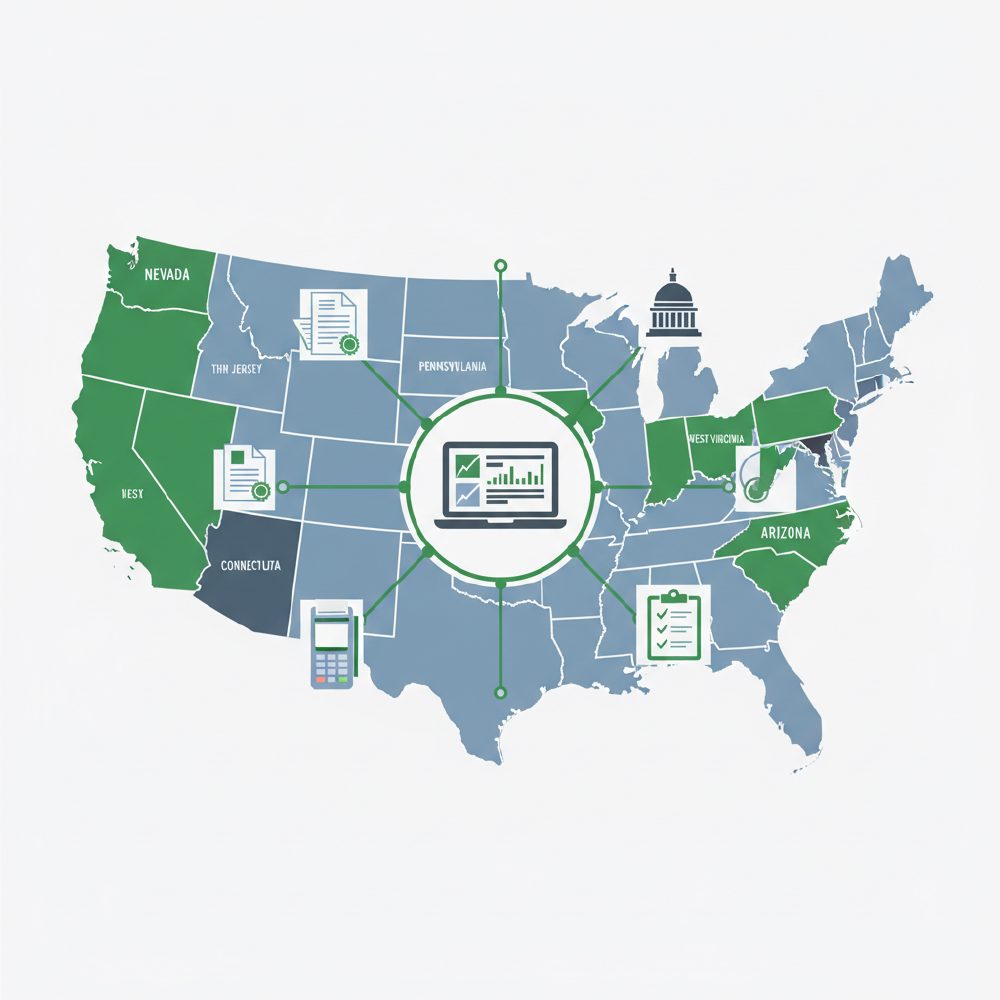
Yes — but only in states that have explicitly passed iGaming legislation. As of 2026, real-money online casino gaming is legal in New Jersey, Pennsylvania, Michigan, West Virginia, Connecticut, Delaware, and Rhode Island. Every other state is off-limits for real-money casino products regardless of where your company is incorporated.
The federal Wire Act of 1961 and the Unlawful Internet Gambling Enforcement Act (UIGEA) of 2006 create the outer fence, but they do not make online gambling universally illegal — they leave the door open for states to legislate their own frameworks. The DOJ's 2019 opinion that the Wire Act applies only to sports betting (later challenged and re-affirmed in various circuit courts) gave states additional confidence to move forward with casino iGaming bills. The result is a legally fragmented market that looks nothing like, say, the UK's single-regulator model.
What this means practically: if you want to serve players in Illinois, you cannot do it legally with a casino product in 2026, even if you hold a valid Michigan Interactive Gaming Operator License. Each state is a separate market, a separate licensing process, and a separate compliance burden. Operators who try to work around this with VPN-blind platforms or offshore shells routed through US payment processors get caught — and the enforcement actions (see PA's 2022–2023 cease-and-desist wave against unlicensed operators) result in permanent market exclusion, not just fines.
Several states — New York, Illinois, Indiana, Maryland — have active iGaming legalization bills moving through their legislatures as of early 2026. New York in particular would be transformative given its population, but the timeline remains uncertain and I would not build a business plan around a state that hasn't passed legislation yet. Build for the seven live markets; model the others as upside scenarios.
Which US state should you launch in first?
Michigan is the strongest first-market choice for new operators in 2026. The Michigan Gaming Control Board runs a transparent licensing process with published timelines, the state has a mature affiliate and payment ecosystem, and the gross gaming revenue figures — MI generated over $2.1B in online casino GGR in 2023 — justify the investment. New Jersey is larger but more saturated; Pennsylvania has higher tax rates.
Let me walk through the real trade-offs state by state. New Jersey was the pioneer (live since 2013) and still carries brand prestige, but the market is dominated by entrenched operators like BetMGM, DraftKings, and Caesars who have deep marketing budgets and established player databases. Breaking in as a new brand in NJ without a massive acquisition budget is genuinely hard. The Division of Gaming Enforcement (DGE) is also one of the more demanding regulators in terms of technical submission requirements — expect 12–18 months from application to go-live.
Pennsylvania launched in 2019 and has the second-largest player pool, but its tax structure is punishing: slot revenue is taxed at 54%, table games at 16%. That math compresses margins significantly compared to Michigan (slots taxed at 20–28% depending on AGR tier, table games at 8–16%). West Virginia and Delaware are live but small — combined they represent perhaps 3–4% of total US iGaming GGR. Connecticut and Rhode Island are state-controlled monopoly or duopoly markets where third-party operator entry is structurally blocked.
Michigan hits the sweet spot: large addressable market, reasonable tax rates, a regulator (MGCB) that has processed enough applications to have a predictable cadence, and a technology submission process (the MGCB Technical Standards published in 2021 and updated in 2024) that is detailed but workable. The market access requirement — you must partner with a licensed Detroit casino or tribal gaming operation — is a real cost, but there are now several operators actively seeking revenue-share arrangements with new entrants, which makes deal-making faster than it was in 2020–2021.
| State | Regulator | Casino Tax Rate (Slots) | Est. Licensing Timeline | Market Saturation | New Entrant Viability |
|---|---|---|---|---|---|
| Michigan | MGCB | 20–28% | 9–14 months | Medium | High |
| New Jersey | DGE | 15% | 12–18 months | High | Low–Medium |
| Pennsylvania | PGCB | 54% | 12–18 months | Medium–High | Low |
| West Virginia | WVLCB | 15% | 8–12 months | Low | Medium (small market) |
| Delaware | DLC | ~43.5% (state-run model) | Restricted | Low | Very Low |
| Connecticut | CTHC / Tribal | Varies (tribal compact) | Restricted | Duopoly | Effectively closed |
| Rhode Island | RILOT | State-run | Restricted | Monopoly | Effectively closed |
What is a market access agreement and why can't you launch without one?
A market access agreement is a contractual arrangement between your online casino operation and a state-licensed land-based casino entity that 'skins' your platform under their license. Every US iGaming state requires it — there is no standalone online-only casino license. Without a signed market access deal, your license application cannot even be filed.
This is the piece of the US market structure that catches offshore operators completely off guard. In the UK or Malta, you apply for a license as an independent online operator. In the US, the legal framework was deliberately designed to anchor online gaming to existing brick-and-mortar licensees — partly for political reasons (protecting casino tax revenue streams) and partly because regulators wanted established entities with known compliance histories to backstop the online product. The result is that your brand is technically a 'skin' operating under the land-based partner's broader license umbrella, even if you have your own Interactive Gaming Operator License.
The commercial terms of market access deals vary widely. Typically you're paying the land-based partner a revenue share — I've seen arrangements ranging from 15% to 35% of net gaming revenue, depending on the market, the partner's leverage, and how many skins they're already running. Some tribal operators in Michigan, for instance, are more flexible on revenue share because they have fewer existing skin commitments. Detroit's three commercial casinos (MGM Grand Detroit, MotorCity, Greektown) tend to command higher rates because of their regulatory standing and the volume of operators who want access through them.
Negotiate the exclusivity clauses carefully. Some market access agreements include provisions that prevent the land-based partner from signing competing operators in the same product vertical for a defined period — that can be valuable. Also watch the termination provisions: if your partner loses their license for unrelated compliance reasons, your online operation goes dark overnight. I've seen this happen. Build contract language that gives you cure periods and transition rights.
What are the real costs to launch a licensed US online casino?
Budget $500K to $2M+ for Year 1 in a single US state, depending on whether you build on a white-label platform or a custom stack. Licensing fees alone run $100K–$400K across application, investigation, and annual fees. The bigger costs are compliance infrastructure, geofencing, responsible gambling tooling, and the ongoing market access revenue share — none of which vendors put in their pitch decks.
Let me break this down by category rather than give you a single misleading number. State licensing fees: Michigan's MGCB charges a $50,000 application fee plus a $100,000 annual operator license fee; Pennsylvania's PGCB application fee is $10 million (yes, ten million dollars) for a Category 1 license, which is why PA is not a first-market for most new entrants. New Jersey's DGE application fees are lower (~$400K total across all filings) but the legal and technical submission costs inflate the real number. West Virginia sits around $50K–$100K in state fees, making it the lowest-cost licensed entry point by fee structure alone.
Platform and technology: a US-compliant white-label build via a provider like GAN (which powers several US skins), Kambi's casino product, or a custom integration through EveryMatrix's US-facing stack will run $150K–$500K in setup fees plus ongoing revenue share or SaaS fees. The 'US-compliant' qualifier matters enormously — geofencing to the state border (not just IP-level, but GPS and device-level verification), identity verification integrated with state exclusion databases like Michigan's MSEGR, and real-time responsible gambling tools (session limits, self-exclusion, reality checks) are non-negotiable and add meaningful engineering cost on top of any base platform price.
Payment infrastructure deserves its own line item. US iGaming payment processing is genuinely difficult — most global PSPs won't touch it, and the ones that do charge premium rates. You'll need ACH/e-check (typically through a processor like Paysafe or VIP Preferred), a branded Play+ prepaid card solution, and increasingly real-time payment rails. Budget $75K–$150K in integration and setup costs, plus 1.5–3.5% transaction fees depending on method and volume. Marketing and player acquisition in a competitive US state market is where budgets balloon fastest — a realistic CAC in Michigan or NJ runs $300–$600 per depositing player, and you need volume to hit breakeven on your fixed cost base.
| Cost Category | Low Estimate | High Estimate | Notes |
|---|---|---|---|
| State licensing fees | $50,000 | $400,000 | Varies enormously by state; PA is an outlier at $10M |
| Legal & compliance counsel | $75,000 | $200,000 | US iGaming specialists command premium rates |
| Platform setup (white-label) | $150,000 | $500,000 | Custom builds add $500K–$1.5M on top |
| Payment processing setup | $75,000 | $150,000 | Ongoing transaction fees not included |
| Responsible gambling tooling | $20,000 | $80,000 | State-mandated; not optional |
| Geofencing & KYC integration | $30,000 | $100,000 | Must integrate with state exclusion lists |
| Market access deal (ongoing) | 15% NGR | 35% NGR | Paid to land-based partner; perpetual cost |
| Marketing & player acquisition | $200,000 | $750,000+ | Highly variable; competitive markets require more |
| Total Year 1 (excl. market access) | $600,000 | $2,180,000 | Market access is an ongoing % on top |
What platform should you build your US online casino on?
For a first US launch, a purpose-built white-label or turnkey platform with existing US regulatory certifications is almost always faster and cheaper than a custom build. GAN, EveryMatrix, and Kambi's casino product are the most referenced US-certified options. Building custom makes sense only if you have $3M+ to spend and a 24-month runway before revenue.
The US certification requirement is what makes this decision different from launching in, say, Curaçao. Every platform component — the RNG, the game math, the back-office reporting — must be certified by a state-approved testing laboratory (GLI, BMM, or Gaming Laboratories International are the main players). A platform that's certified in New Jersey is not automatically certified in Michigan; each state's technical standards differ, and certification is state-specific. This is why using a vendor who already has certifications across multiple US states is a genuine time and cost advantage, not just a sales talking point.
GAN (Gaming Arts Network) has the most US skin deployments and has been through the certification process in NJ, PA, MI, and WV. Their platform is not the most modern UX, but the regulatory track record is real. EveryMatrix launched a US-facing product and has been working through state certifications since 2022 — they're further along in some states than others, so verify current certification status directly. Scientific Games (now Light & Wonder) and IGT both have US-certified platform products but are primarily aimed at large commercial casino operators with existing land-based relationships, not new entrants.
If you're seriously considering a custom build, understand what you're signing up for: 18–24 months of development, a dedicated compliance engineering team, and the cost of running your own GLI certification process from scratch. I've seen operators underestimate this by a factor of three. The custom route makes sense if you're building a differentiated product that existing platforms can't replicate — a crypto-adjacent product structure, a unique loyalty mechanic, or a specific vertical focus. For a standard real-money casino, the custom build premium is rarely justified in the US market.
What games can a US online casino legally offer?
Licensed US online casinos can offer slots, table games (blackjack, roulette, baccarat), video poker, and live dealer games — all from state-approved game libraries. Every individual game title must be certified by a state-approved lab before it goes live. You cannot simply pull in a global game feed; each title requires separate state approval.
This is where the US market diverges most sharply from offshore operations. On a Curaçao-licensed platform, you can integrate an aggregator like Relax Gaming or Softswiss and go live with 3,000+ titles in weeks. In Michigan, each game title must be submitted to the MGCB and certified by a GLI-approved lab before it can be offered to players. The practical result is that US-licensed casinos launch with 200–500 titles and expand their library over 12–24 months as certifications come through. This is not a bug you can engineer around — it's a regulatory feature.
The major game studios — IGT, Scientific Games/Light & Wonder, Aristocrat, Everi — have robust US certification pipelines and are the backbone of most licensed US casino game libraries. NetEnt (now Evolution-owned), Play'n GO, and Pragmatic Play have also invested heavily in US certification and are now well-represented in Michigan and New Jersey libraries. The live dealer vertical is dominated by Evolution Gaming, which operates dedicated US studios (including a Michigan-specific studio that opened in 2023 to satisfy in-state content requirements).
Sports betting and online casino are treated as separate products under separate licenses in every US state. If you want to offer both, you need both licenses — and in most states, a separate market access arrangement or at minimum an amended agreement with your land-based partner. Some operators launch casino-only first and add sports betting later; others do the reverse. There's no universally right answer, but casino-only is a simpler initial compliance footprint.
How do you handle payments for a US online casino?
US iGaming payment processing requires a purpose-built stack: ACH/e-check for bank transfers, a Play+ prepaid card for unbanked players, and increasingly real-time payment options via FedNow-connected processors. Credit cards are banned for gambling deposits in several states and face high decline rates everywhere. Crypto is not a compliant payment method in any licensed US state.
The payment problem is the operational reality that kills operator profitability faster than almost anything else. US banks are deeply skittish about gambling transactions — UIGEA compliance obligations make most retail banks decline gambling-coded transactions at the card level, and even debit card approval rates for iGaming merchants typically run 40–60%, compared to 80–90%+ in European markets. This is not something you solve by finding a 'better' payment processor; it's structural. Your payment stack needs to be designed around this reality from day one.
ACH/e-check is the workhorse of US iGaming deposits — it's slower (typically 3–5 business days for standard ACH, same-day for same-day ACH) but has high approval rates and low transaction costs. VIP Preferred (now part of Everi) and Paysafe's iGaming division are the dominant ACH processors in the licensed US market; both have existing integrations with the major platforms and pre-negotiated rates with several state regulators. Play+ prepaid cards (branded to your casino) solve the instant-access problem for players who want to deposit and play immediately — they're FDIC-insured, state-compliant, and work for withdrawals too. The setup cost is real ($50K–$100K) but the player experience improvement justifies it.
FedNow, the Federal Reserve's instant payment rail launched in 2023, is starting to appear in iGaming payment stacks in 2025–2026. Several processors are building iGaming-specific FedNow integrations that would enable genuinely instant bank transfers with high approval rates. This is worth tracking closely — it could materially change the US payment landscape within 24 months. PayPal is available in NJ and MI as a deposit method and converts well, but their iGaming merchant agreements are restrictive and they have a history of suddenly restricting accounts. Build it into your stack as a secondary option, not a primary one.
What are the AML and responsible gambling requirements for US online casinos?
US licensed online casinos are subject to Bank Secrecy Act obligations including CTR filing for cash equivalents over $10,000 and SAR filing for suspicious activity. Every state also mandates integration with its self-exclusion registry, session limit tools, deposit limit tools, and responsible gambling messaging. These are not optional features — failure to implement them correctly is the most common cause of regulatory fines.
AML compliance in US iGaming is more rigorous than most offshore operators expect. You're classified as a 'financial institution' under the Bank Secrecy Act, which means a full AML program: written policies, a designated compliance officer, independent audits, employee training, and transaction monitoring. Currency Transaction Reports (CTRs) must be filed for transactions over $10,000; Suspicious Activity Reports (SARs) for anything that looks like structuring or unusual patterns. FinCEN has issued specific guidance for online gambling operators, and state regulators expect to see your AML program as part of the licensing application.
The responsible gambling requirements vary by state but are universally non-negotiable. Michigan's MGCB requires integration with the Michigan Self-Exclusion Program (MSEP) — players on the exclusion list must be blocked from creating accounts and from logging into existing ones. Real-time deposit limits, loss limits, and session time limits must be player-configurable and enforced at the platform level, not just displayed as suggestions. Connecticut requires a 'cooling off' period before a self-exclusion can be reversed. These are technical requirements that must be built into your platform, certified, and audited — they're not marketing copy.
Problem gambling levies are also becoming more common. Pennsylvania requires operators to contribute to the Pennsylvania Council on Problem Gambling. Michigan has similar provisions. Budget for these as an ongoing operational cost — they're typically calculated as a percentage of GGR or a fixed annual contribution, and while individually modest, they add to the total cost of compliance that erodes margins in high-tax states.
How long does it actually take to launch a licensed US online casino?
Realistically, 12–24 months from the decision to launch to first player deposit in a licensed US state. Michigan is at the faster end (9–14 months if your application is clean and your platform is pre-certified). New Jersey and Pennsylvania routinely run 18 months or longer. Anyone promising you a 6-month US iGaming launch is either selling you something or hasn't done it.
The timeline breaks down roughly as follows: 1–3 months to secure your market access agreement (this can be the longest step if you're negotiating with a reluctant land-based partner); 2–4 months to prepare and file your licensing application, including background investigation materials for all key principals, corporate structure documentation, and your AML program; 4–8 months for the regulator's review and investigation process (MGCB runs faster than DGE historically); 2–4 months for technical certification of your platform and game library; 1–2 months for soft launch preparation and final regulatory sign-off. These phases overlap partially but not entirely — you can't start technical certification until you have a provisional license, and you can't get a provisional license until the background investigation clears.
The background investigation is the most unpredictable variable. Every principal with 5%+ ownership must submit to a full investigation: financial history, criminal background, prior gambling industry involvement, international business relationships. If any principal has complex offshore structures, prior regulatory issues in another jurisdiction, or foreign national status, add 3–6 months. Regulators are not slow because they're inefficient — they're thorough because the consequences of licensing a bad actor are severe for them politically and legally.
Platform certification timelines depend heavily on how much US-specific work your vendor has already done. A platform that's already certified in Michigan can move to a new operator skin in 60–90 days; a platform seeking its first Michigan certification is looking at 6–9 months of lab testing and MGCB review. This is the single strongest argument for choosing a platform with existing US certifications over building custom or using a vendor new to the US market.
What tax obligations does a licensed US online casino face?
US online casinos pay state gaming taxes on Adjusted Gross Revenue (AGR), federal corporate income tax, and in some states additional local or municipal levies. State gaming tax rates range from 8% (WV table games) to 54% (PA slots). Federal corporate tax adds another 21% on top of net income. Tax planning at the entity structure level, before you file for a license, is not optional.
The state gaming tax is calculated on AGR — gross gaming revenue minus promotional credits and bonuses (the deductibility of promotional credits varies by state and is a significant planning variable). Michigan's tiered structure means you pay 20% on the first $4M of monthly AGR, scaling up to 28% above $12M — manageable for a new operator. Pennsylvania's 54% slot tax is the reason most operators who do the math decide to enter Michigan or NJ before PA, despite PA's large player pool. The tax is on gross, not net, so your operational costs don't reduce the tax base.
Federal taxes apply to your net income after state taxes and operating expenses, at the standard 21% corporate rate (as of 2026). The entity structure matters: most US iGaming operators use a US-incorporated entity (Delaware C-Corp is standard) as the licensed entity, with a parent holding company that may be domiciled elsewhere for broader corporate tax planning. However, be careful — the IRS and state tax authorities scrutinize iGaming company structures carefully, and aggressive transfer pricing arrangements between a US operating entity and an offshore parent have attracted audit attention. Get proper US tax counsel before you finalize your corporate structure.
Player withholding is a separate obligation. Winnings above $1,200 on slots (and certain other thresholds for table games) trigger W-2G reporting requirements. Your platform must generate these automatically and file them with the IRS. This is a technical requirement that must be built into your back-office — it's not something you handle manually at scale. Most US-certified platforms include W-2G generation as a standard feature, but verify this explicitly with your vendor before signing any platform agreement.
What does a realistic Michigan online casino launch look like step by step?
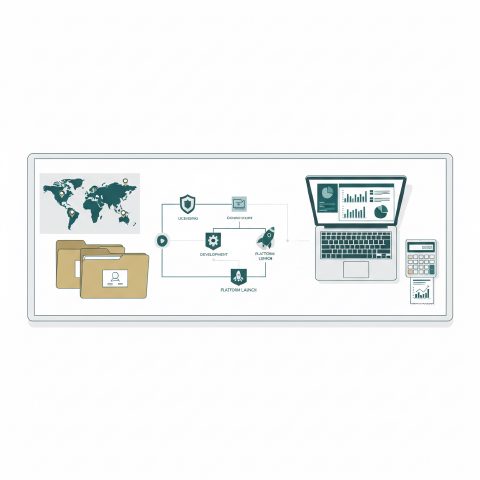
A Michigan launch follows a defined sequence: secure a market access agreement with a Detroit commercial casino or Michigan tribal operator, form a Michigan-registered entity, file an Interactive Gaming Operator License application with the MGCB, complete the background investigation, select and certify a platform, certify your game library, and complete a technical compliance review before go-live. Each step has hard dependencies on the previous one.
Step one is the market access deal, and I can't stress enough how much this shapes everything downstream. The three Detroit commercial casinos — MGM Grand Detroit, MotorCity Casino, and Hollywood Casino at Greektown — are the most straightforward access points for new operators, as they're already familiar with the skin model and have dedicated iGaming teams. Tribal operators like Sault Ste. Marie Tribe of Chippewa Indians (which operates several Michigan skins) are also active in the market access space. Expect 60–120 days of negotiation and legal review to finalize a market access agreement, and budget $50K–$100K in legal fees for this phase alone.
The MGCB application package is substantial: corporate formation documents, ownership structure charts, personal disclosure forms for all principals (the MGCB's form is detailed — think 40+ pages per principal), your AML compliance program, your responsible gambling plan, your platform architecture documentation, and your financial projections. The application fee is $50,000 non-refundable. The MGCB has been transparent about its review timelines — typically 6–9 months from a complete application filing to provisional approval, assuming no significant issues arise during the background investigation.
Platform certification in Michigan runs through the MGCB's technical standards (most recently updated in 2024) and requires testing by a certified lab — GLI and BMM both operate in Michigan. If your platform vendor already has Michigan certification, you're adding a new skin to an existing certified system, which is a 60–90 day process. If they don't, you're looking at 6–9 months of lab testing. Game certification follows a similar structure: each title must be submitted and approved before it goes live. Most operators launch with 150–300 certified titles and expand from there. Budget for ongoing certification costs as you add new games — it's a recurring operational expense, not a one-time fee.


Comments
No comments yet, be the first.