What Is a White Label Casino? The Operator's Real Definition for 2026

What is a white label casino, exactly?
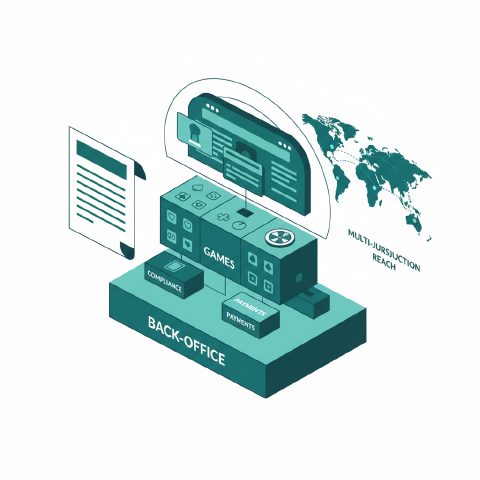
A white label casino is a ready-made online gambling platform built and maintained by a B2B provider, which an operator licenses, rebrands and presents to players as its own product. The operator controls the brand identity, player acquisition and promotions. The provider controls the underlying software, game aggregation, payment rails and — in many offshore setups — the regulatory licence itself.
Think of it the way a supermarket thinks about own-label products: the factory (the platform provider) manufactures everything, the retailer (you, the operator) puts its name on the tin. In iGaming, that factory might be SoftSwiss, EveryMatrix, Slotegrator, BetConstruct or any of a dozen other B2B houses. They've already integrated hundreds of game studios, wired up PSPs, built the CRM and KYC layers, and obtained or maintained the licence. You pay for access to all of that under your own domain and colour scheme.
The arrangement is fundamentally a revenue-share or fixed-fee lease, not a purchase. You never own the code. If you exit the agreement or the provider shuts down, you lose the platform — and usually the player database too, depending on how the contract is written. That's not a horror story, it's just the trade-off you're accepting in exchange for speed and lower upfront capital. Most operators entering a new market for the first time make exactly this trade consciously.
Practically speaking, the operator's deliverables are the brand, the marketing strategy, the player acquisition spend and any localisation decisions (language, currency, bonus structure). Everything below that layer — game RNG certification, payment reconciliation, fraud monitoring, responsible gambling tools — sits with the provider. This is why white label is attractive to entrepreneurs who understand customer acquisition but don't want to hire a 30-person tech team before they've validated a market.
How does a white label casino actually work, step by step?
The mechanics are straightforward: you sign a platform agreement, choose your game content and payment methods from the provider's catalogue, configure your brand assets and bonus rules in the back office, point your domain at their infrastructure, and go live. The provider handles hosting, uptime, game feeds, player wallet and regulatory reporting. You handle traffic, customer support (often outsourced) and marketing compliance.
Step one is the commercial agreement, which defines the revenue share percentage, the minimum monthly fee (if any), the contract term (commonly 12–36 months with auto-renewal), and data ownership clauses. Read the data ownership section twice — some providers claim joint ownership of the player database, which becomes a serious problem if you ever want to migrate to your own platform. Step two is the KYB (Know Your Business) process the provider runs on you, which mirrors what a bank would do: corporate structure, UBOs, source of funds, business plan.
Once onboarded, you access a white-label back office — SoftSwiss calls theirs the Casino Management System, EveryMatrix uses EGS (EvenBet Gaming Suite has its own flavour) — where you configure game lobbies, set bonus wagering requirements, define payment limits and manage player tiers. You don't touch the code. You're operating inside a permissions framework the provider defines. That's fine for most operators; it becomes frustrating when you want to build a feature the provider hasn't prioritised.
On the player side, the experience is indistinguishable from a proprietary casino. Your domain, your logo, your colour scheme. Games load from the provider's CDN. Deposits hit the provider's payment gateway and are credited to the player's wallet in your back office. Withdrawals go through the provider's compliance checks before hitting the player's bank or e-wallet. The provider files the regulatory reports; you receive a revenue statement, usually weekly or monthly.
Support is a hybrid: some providers include first-line live chat support as part of the package (SoftSwiss does this for some tiers); others expect you to staff your own support team using credentials they supply. Either way, escalations for payment disputes or account closures go through the provider's compliance team, not yours. Plan your SLA expectations accordingly.
What does a white label casino cost in 2026?
Expect a setup fee of $10,000–$50,000, a monthly platform fee of $2,000–$10,000, and a GGR revenue share of 15–50% going back to the provider. The revenue share is the number that quietly kills margins at scale. A casino generating $500,000 GGR monthly at 35% revenue share is sending $175,000 to the provider every single month — more than most operators budget for when they're looking at a polished sales deck.
Setup fees vary widely by provider tier and what's included. Budget providers (Slotegrator white label, some Malta-based houses) quote $15,000–$25,000 all-in for setup. Premium providers with MGA or UKGC-compliant infrastructure quote $30,000–$80,000 before you've spent a dollar on marketing. These fees typically cover licence sub-licensing (if the provider holds the master licence), initial game library configuration, payment gateway setup and a basic CMS skin. Custom design work — if you want something beyond their template — is usually billed separately at $5,000–$20,000.
The monthly fee structure differs between providers. Some charge a flat platform fee regardless of revenue. Others waive the monthly fee entirely and take a higher revenue share percentage. Neither model is inherently better; it depends on your projected volume. If you're confident in fast growth, a higher flat fee with lower revenue share saves you money. If you're uncertain, the flat-fee-free model reduces your downside risk but caps your upside.
Game content fees are a separate layer many operators miss. The platform aggregator fee — paid to whoever aggregates Pragmatic Play, Evolution, NetEnt et al. — is usually bundled into the provider's revenue share, but not always. Ask explicitly whether the revenue share percentage is net of game costs or gross. Some providers quote 20% revenue share but that's after they've already taken their aggregation margin, which can be another 10–15% of GGR. Payment processing fees (typically 1.5–4% of transaction volume for cards, lower for crypto) are usually passed through to the operator at cost or with a small markup.
| Cost Component | Low End | High End | Notes |
|---|---|---|---|
| Setup / Onboarding Fee | $10,000 | $80,000 | Includes licence sub-licence in many offshore deals |
| Monthly Platform Fee | $2,000 | $10,000 | Some providers waive in exchange for higher rev-share |
| GGR Revenue Share to Provider | 15% | 50% | The dominant long-term cost — negotiate hard here |
| Game Aggregation (if separate) | 5% of GGR | 15% of GGR | Ask if this is inside or outside the rev-share quote |
| Payment Processing Fees | 1.5% per txn | 4% per txn | Crypto rails typically lower; card acquiring higher |
| Custom Design / Branding | $5,000 | $20,000 | One-time; beyond standard template skins |
| Licence (own, if required) | $15,000/yr | $35,000/yr | Curaçao Gaming Authority reformed licence circa 2023–24 |
What is the difference between a white label casino and a turnkey iGaming software solution?
The critical distinction is ownership. A white label keeps you permanently on the provider's infrastructure — you rent access. A turnkey solution delivers the full software stack to you: you install it, you own it, you maintain it. Turnkey costs more upfront and demands a technical team, but you pay no ongoing revenue share and control every feature. White label is faster and cheaper to start; turnkey is cheaper and more powerful at scale.
Operators confuse these terms constantly, partly because vendors use them interchangeably in their marketing. Here's the clean definition: white label = SaaS model, turnkey = software licence or purchase. With a turnkey platform from, say, SoftSwiss's SOFTSWISS Casino Platform (sold as a licensable product), GR8 Tech or Digitain, you receive the codebase (or a hosted instance you fully control), the integrations and the documentation. You're responsible for hosting, updates, compliance tooling and game integrations going forward. The provider relationship shifts from landlord to vendor.
The revenue share question is where the economics diverge most sharply. A white label operator at $1M monthly GGR paying 30% revenue share sends $300,000 to the provider every month — $3.6M annually. A turnkey operator at the same volume pays a licence fee that might be $150,000–$300,000 per year total, plus hosting and maintenance. The crossover point where turnkey becomes cheaper than white label is usually somewhere between $200,000–$500,000 monthly GGR, depending on the specific deal terms. I've seen operators hit that crossover in month 18 and wish they'd planned for the migration earlier.
There's also a middle ground: some providers offer a 'managed turnkey' or 'white label plus' model where you eventually buy out the infrastructure or convert your contract to a lower revenue share after hitting volume thresholds. EveryMatrix, for example, structures some enterprise deals this way. If you're serious about building a long-term business rather than testing a market, ask about conversion clauses before you sign the white label agreement — not after you've grown.
| Factor | White Label Casino | Turnkey iGaming Solution |
|---|---|---|
| Ownership of Platform | Provider owns; operator rents | Operator owns or fully controls |
| Time to Launch | 4–12 weeks | 3–9 months (custom integration) |
| Upfront Cost | $10K–$80K | $80K–$500K+ |
| Ongoing Cost Model | Revenue share (15–50% GGR) + monthly fee | Licence fee + hosting + maintenance |
| Technical Team Required | No (provider handles) | Yes — dev, DevOps, QA |
| Customisation Depth | Limited to back-office config | Full stack — any feature buildable |
| Data Ownership | Often shared or provider-held | Operator owns fully |
| Regulatory Licence | Often sub-licensed from provider | Operator must hold own licence |
| Best For | Market testing, first launch, lean teams | Established operators, proprietary products, scale |
Which licences do white label casino operators actually use?
Offshore white label operators most commonly operate under Curaçao (now under the reformed Curaçao Gaming Authority framework post-2023) or Anjouan. EU-facing operators need MGA or a local licence. US operators need a state-level licence — there is no federal online casino licence. The provider's master licence covers you in many white label deals, but that's a legal fig leaf, not real regulatory protection in most regulated markets.
The classic offshore white label setup works like this: the provider holds a Curaçao master licence and issues you a sub-licence as part of the platform agreement. This is fast (weeks, not months), costs relatively little (often bundled into the setup fee), and lets you accept players from most of the world — with notable exceptions including the US, UK, France, Netherlands and a growing list of countries tightening enforcement. The Curaçao Gaming Authority overhauled its framework between 2023 and 2024, moving toward direct operator licences rather than the master/sub model, so check the current state of your provider's licence structure before assuming the old sub-licence route is still available.
Anjouan (Comoros Islands) emerged as an alternative offshore jurisdiction around 2022–2023, offering lower costs than Curaçao and faster issuance. The regulatory credibility is minimal — Anjouan has no meaningful enforcement apparatus — but for operators targeting markets where players aren't checking licence badges, it's a cost-effective starting point. I'm not endorsing it as a long-term strategy; I'm flagging it because it's real and widely used.
For operators targeting EU players seriously, the Malta Gaming Authority licence is the credible standard. MGA licences cost €25,000 in application fees plus compliance infrastructure, typically take 4–6 months, and require you to hold your own licence rather than operating under a provider's sub-licence. Some white label providers are MGA-licensed themselves and can operate you as a skin under their licence — legal in Malta's framework but with constraints on how independently you can operate. UKGC is even more demanding and essentially requires a fully independent operational structure.
US operators face a completely different map. Online casino is legal in six states as of early 2026 (New Jersey, Pennsylvania, Michigan, West Virginia, Connecticut, Delaware) with more expected. Each state requires a separate licence application, a physical presence or partnership with a land-based licensee, and compliance with that state's specific technical standards. No white label provider offers a bundled US state licence — you must hold it yourself. This is why most white label activity in the US is actually in the sports betting skin space rather than full casino.
Who are the main white label casino platform providers?
The established names are SoftSwiss, EveryMatrix, Slotegrator, BetConstruct, Digitain and Hub88. Each has a different sweet spot: SoftSwiss is strong on crypto-native setups; EveryMatrix excels at modular enterprise builds; Slotegrator targets budget-conscious new entrants. Choosing the wrong provider for your market is an expensive mistake that takes 12–18 months to unwind.
SoftSwiss (now operating as SOFTSWISS) built its reputation on crypto casino infrastructure and remains the dominant choice for operators targeting crypto-first audiences. Their Casino Management System is mature, their game aggregator (SOFTSWISS Game Aggregator) covers 200+ studios, and they have genuine experience with Curaçao-licensed crypto setups. Their revenue share terms are negotiable at volume and their back office is operator-friendly. The downside: their template skins look similar across many brands, and customisation beyond the CMS layer requires a separate commercial conversation.
EveryMatrix takes a modular approach — their stack is componentised into CasinoEngine (game aggregation), MoneyMatrix (payments), PlayerMatrix (CRM) and OddsMatrix (sportsbook). You can theoretically buy only the modules you need. In practice, most white label operators take the full bundle, but the architecture means you can swap components later. EveryMatrix holds an MGA licence and several others, making them a credible choice for EU-facing operators. Their minimum viable deal is priced above budget providers — expect setup fees at the higher end of the range.
Slotegrator positions itself as the entry-level option, with lower setup costs and a faster onboarding process. They're a reasonable starting point for operators testing a market with limited capital, but the game library depth and payment method coverage are thinner than the premium providers. BetConstruct and Digitain are strong in LATAM and CIS markets respectively, with local payment method integrations that the European-focused providers often lack. If you're targeting Brazil, Colombia or Mexico, those regional integrations matter more than brand prestige.
Hub88 is worth mentioning separately as a pure aggregator that some white label providers use as their game layer — it's not a full platform itself. Knowing this matters because it affects who you call when a game integration breaks. Always map the full vendor chain before you sign: platform provider → game aggregator → individual studio. Each link has its own SLA and its own revenue share bite.
What are the real risks and hidden costs of white label casinos?
The three risks operators consistently underestimate are: revenue share erosion at scale, data lock-in when you want to migrate, and compliance exposure when the provider's licence gets suspended or revoked. Vendor sales decks never lead with these. They should.
Revenue share erosion is the slow bleed. At launch, 30–40% GGR to the provider feels acceptable because your volume is low and you're paying for infrastructure you couldn't afford to build. At $300,000 monthly GGR, that same percentage is a $90,000–$120,000 monthly payment for software you still don't own. The providers know this — it's why their standard contracts have 12–36 month minimum terms with significant penalties for early exit. Negotiate a step-down clause: revenue share should decrease as your GGR crosses defined thresholds. Most providers will agree to this; they just won't offer it unprompted.
Data lock-in is underappreciated until you try to migrate. Player data — KYC documents, transaction history, responsible gambling flags — is often stored on the provider's infrastructure. Exporting it in a usable format for migration to a new platform requires the provider's cooperation, which they have no commercial incentive to give you. Some contracts explicitly restrict data portability. Before signing, get a written clause specifying that you can export a full player data dump in a standard format (CSV, JSON) within 30 days of contract termination. If the provider refuses, treat that as a red flag.
Licence risk is the most acute for operators running under a provider's sub-licence rather than their own. If the provider's master licence is suspended — which has happened with Curaçao operators caught operating in restricted markets — your casino goes dark immediately. You have no independent licence to fall back on. This isn't hypothetical: several Curaçao-licensed platforms faced enforcement actions between 2021 and 2024 as the jurisdiction tightened oversight. Running under your own licence, even if it's just a Curaçao direct licence under the new framework, gives you one layer of insulation.
Payment processing is another hidden cost vector. Providers often mark up PSP fees, or they route transactions through their own payment entity and pocket the spread. Request a transparent fee schedule showing the raw PSP rate and the provider's markup separately. Some providers make more margin on payments than on the revenue share itself, particularly on card acquiring where spreads can be 1–2 percentage points above cost. Crypto payment rails are generally cleaner on fees and easier to audit.
How long does it take to launch a white label casino?
A realistic white label launch timeline is 4–12 weeks from signed contract to live site, assuming you have your brand assets ready and the provider's KYB process goes smoothly. The most common delays are KYB documentation (corporate structure, UBO verification), custom design work, and payment gateway approval — none of which the provider controls entirely.
Week one through two is typically consumed by KYB and commercial paperwork. The provider's compliance team will want certified corporate documents, UBO declarations, source of funds evidence and a business plan. If your corporate structure involves multiple holding layers or jurisdictions, budget extra time — I've seen KYB processes drag to six weeks when the operator had a three-tier holding structure with a BVI entity at the top. Have your documents apostilled and translated before you start the conversation.
Weeks two through four cover technical configuration: game lobby setup, payment method activation, bonus engine configuration, responsible gambling tool setup and domain/SSL provisioning. Most providers give you a staging environment first. Use it properly — test every payment method end-to-end before go-live, not just the deposit flow. Withdrawal testing is where most operators find gaps, and fixing them post-launch while real players are waiting is a bad situation.
Custom design work, if you're going beyond the provider's standard template, adds two to four weeks. Some operators try to save money by launching with the template and redesigning post-launch. That's a reasonable strategy if the template is clean, but be aware that player first impressions are hard to reset. If brand differentiation matters to your acquisition strategy — and in a crowded market it should — invest in the design upfront.
Payment gateway approvals are the wildcard. Card acquiring for gambling merchants is notoriously slow: banks run their own due diligence on the operator, the licence and the market. Budget 3–6 weeks for card acquiring approval and have a crypto payment option or e-wallet (Skrill, Neteller, MiFinity) ready as a fallback for launch day. Launching with only one payment method is a conversion disaster.
Is a white label casino profitable, and what does the business model look like?
Yes, white label casinos can be profitable — but the margin structure is tight and depends heavily on the revenue share percentage, player acquisition cost and market. The operators who struggle are those who underestimate CAC (customer acquisition cost) in competitive markets and overestimate how much GGR their player base will generate against the provider's revenue share.
The basic unit economics: if your casino generates $100 in GGR from a player, the provider takes $30–$40 (at 30–40% revenue share), game studios take their cut (already embedded in the GGR calculation by the provider), and payment processing takes another $3–$5. You're left with $55–$65 before you pay for customer support, marketing and any staff. In highly competitive markets like Northern Europe or Canada, CAC for a depositing player can run $200–$500. At those numbers, a player needs to generate significant LTV before you break even on acquisition — which means your retention and bonus strategy has to be sharp.
The operators who do well with white label typically have one of three advantages: a proprietary traffic source (SEO, affiliate network they own, social following), a specific market niche where CAC is lower (emerging markets, a specific language community, crypto-native players), or a genuinely differentiated product within the constraints of the platform (unique bonus mechanics, loyalty programme, specific game selection). Competing on generic terms in a saturated market with a template white label casino is a difficult business.
Crypto-focused white label casinos have shown stronger margins in some cases because payment processing fees are lower, chargebacks are non-existent, and the player demographic tends to have higher average bet sizes. SoftSwiss has published aggregate data suggesting crypto casino operators on their platform outperform fiat-only operators on average deposit size, though I'd treat vendor-published benchmarks with appropriate scepticism — they have an interest in painting the picture positively.
What should operators check before signing a white label casino agreement?
Five clauses determine whether a white label deal is reasonable or a trap: the revenue share step-down schedule, the data portability clause, the exclusivity terms, the termination notice period and the liability cap. Most providers send a standard contract and expect operators to sign it. Don't. Every clause is negotiable for operators who ask.
Revenue share step-down: your agreement should specify that the percentage decreases as monthly GGR crosses thresholds — for example, 35% below $100K GGR, 28% from $100K–$500K, 22% above $500K. Providers won't offer this automatically, but most will accept it because they want the volume too. Without a step-down, you're subsidising the provider's margin growth as you scale.
Data portability: as discussed above, get a written commitment that you can export the full player database — KYC data, transaction history, responsible gambling markers — in a machine-readable format within 30 days of contract end. Some providers will push back on KYC document portability for GDPR reasons; that's a legitimate concern, but there's a workable middle ground (anonymised transaction data + player consent flow for document transfer). A provider who refuses all data portability is one you should walk away from.
Exclusivity and market restrictions: some providers restrict which markets you can target under their licence sub-licence. Read the restricted markets list carefully — it may include countries you're planning to target. Separately, check whether the provider has other white label operators in your target market that they'll continue to support. You're competing with other operators on the same infrastructure; ask directly whether the provider will onboard direct competitors in your primary market during your contract term.
Termination notice and exit penalties: standard contracts often require 90–180 days notice to terminate, with revenue share obligations continuing through the notice period. Some include minimum GGR guarantees with penalties for falling short. These clauses are designed to make leaving expensive. Negotiate the notice period down to 30–60 days and eliminate minimum GGR guarantees entirely if you can. If the provider insists on a minimum, make sure it's set at a level you're confident of reaching based on conservative projections.





Comments
No comments yet, be the first.