White Label Casino Solutions: The Operator's Full Guide for 2026
What exactly is a white label casino solution and how does it work?
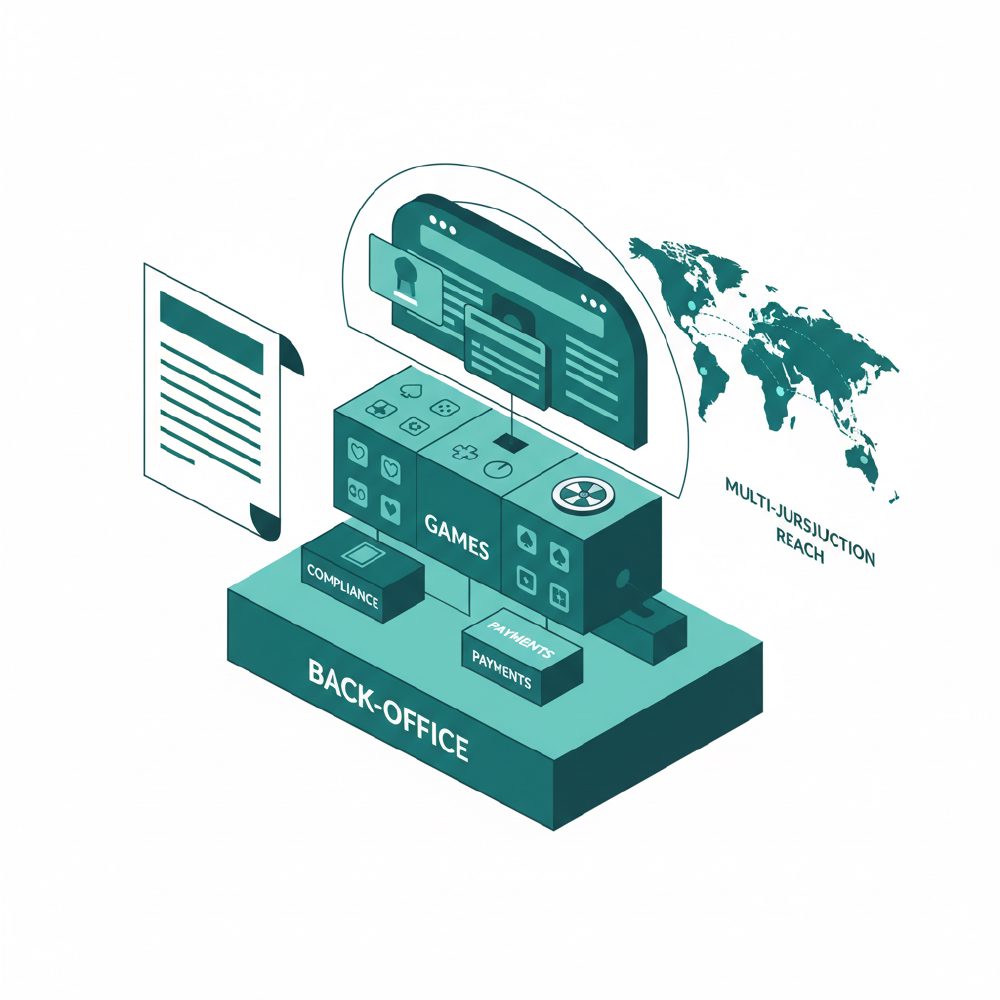
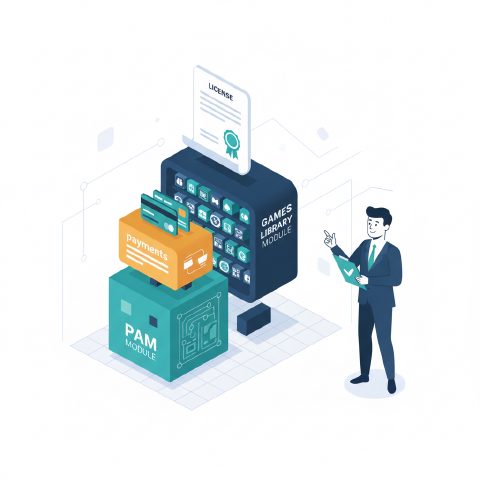
A white label casino is a fully built online gambling platform — software, games, payments and often a license — that a B2B provider operates on your behalf while you market the brand. You get a customized front-end under your own name; the provider handles the infrastructure, compliance and technical maintenance in exchange for setup fees and an ongoing revenue share.
The mechanics are straightforward. A master license holder — say, a company operating under a Curaçao sub-license framework or an MGA B2B supplier — deploys a copy of their platform environment for your brand. You get a CMS to manage promotions, a back-office for player management, and access to their aggregated game library, which typically runs 3,000–8,000 titles from studios like Play'n GO, Pragmatic Play and Evolution. The provider's tech team handles uptime, security patches and regulator reporting. Your team handles acquisition and CRM.
The distinction from a turnkey solution matters and gets blurred constantly in vendor decks. A white label keeps the operator dependent on the provider's infrastructure indefinitely — you can't easily migrate your player database or swap the core platform without rebuilding. A turnkey gives you a licensed, deployable codebase you eventually own or control more fully. White label is faster and cheaper upfront; turnkey gives you more leverage later. Most providers selling 'white label' in 2026 actually offer a spectrum between the two, so read the contract language carefully, specifically around data ownership and exit clauses.
Providers like SoftSwiss, EveryMatrix, Digitain, BetConstruct and Slotegrator all operate white-label programs with different strengths. SoftSwiss, for instance, bundles its Casino Engine with a Curaçao sub-license and aggregator access through BGSGAMING. EveryMatrix's CardsChat-era white label tends to attract operators who want modular flexibility. None of them is a bad choice categorically — the right fit depends on your target market, your GGR projections and how much control you want over the player experience two years from now.
What does a white label casino actually cost in 2026?
Expect a setup fee of $15,000–$80,000 and an ongoing cost structure of either a flat monthly platform fee ($3,000–$15,000/month) or a GGR revenue share of 15–35%. Some providers combine both. These figures exclude payment processing, affiliate software, and any market-specific compliance costs — budget separately for those.
The setup fee covers brand configuration, front-end skinning, payment integration and onboarding. Budget $15,000–$25,000 for a lean offshore launch on a provider like Slotegrator or Digitain; $40,000–$80,000 if you're going through a provider with a stronger compliance posture or building out a more customized UX. That range is based on contracts I've reviewed directly — not vendor website pricing, which is almost always aspirational.
The revenue share is where operators consistently underestimate long-term cost. A 25% GGR share sounds manageable at $50K monthly GGR, but at $500K it becomes a $125K monthly obligation — money that would otherwise fund your own tech or player acquisition. Some providers will negotiate down to 15–18% for operators who commit to volume targets or bring their own payment processing. Always negotiate the share before you sign, not after you've grown dependent on their infrastructure.
Payment processing is a separate line item most white-label vendors deliberately exclude from their headline pricing. Expect 2–5% transaction fees depending on method and geography, plus chargebacks and rolling reserves from card acquirers. Crypto-native providers like SoftSwiss handle this differently — their crypto payment rails have lower processing costs but introduce FX volatility risk you need to hedge or price in. PSP integration costs (setup, monthly minimums) add another $500–$3,000/month per provider depending on volume commitments.
One cost operators consistently miss: KYC and AML tooling. If the white-label provider doesn't bundle a KYC vendor like Sumsub or Onfido, you're sourcing and paying for that separately. Budget $0.50–$3.00 per verification depending on document type and jurisdiction. At scale, that's a real number.
| Cost Item | Low End | High End | Notes |
|---|---|---|---|
| Setup / onboarding fee | $15,000 | $80,000 | Higher for regulated EU markets or heavy customization |
| Monthly platform fee | $3,000/mo | $15,000/mo | Flat-fee models; some providers use GGR share instead |
| GGR revenue share | 15% | 35% | Negotiable at volume; watch compounding effect |
| Payment processing | 2% | 5% per txn | Excludes rolling reserves; crypto rails typically lower |
| KYC / AML tooling | $0.50/verification | $3.00/verification | Often not bundled; negotiate with Sumsub, Onfido, etc. |
| Affiliate software | $500/mo | $3,000/mo | MyAffiliates, Income Access — usually separate |
| Sub-license fee (offshore) | $5,000/yr | $15,000/yr | Curaçao or Anjouan sub-license under master holder |
Which jurisdictions support white label casino licensing in 2026?
Curaçao remains the most common white-label jurisdiction, with Anjouan growing fast as an alternative. MGA (Malta) white labels exist but are expensive and rare. UKGC white labels are almost non-existent — the regulator scrutinizes beneficial ownership too closely for the model to work cleanly. Offshore markets like Panama and Isle of Man offer niche options.
Curaçao's licensing reform, which moved from the old master-license sub-license model to the new Gaming Control Board (GCB) framework in 2023–2024, changed the landscape. As of 2026, operators launching under a Curaçao white label are typically operating under a provider's master license while that provider holds a GCB-issued license. The compliance requirements are stricter than the old regime — AML policies, responsible gambling tools and technical standards are now formally audited. That's actually good news for operators who want banking relationships, because correspondent banks are more comfortable with GCB-licensed entities than the old regime's paper licenses.
Anjouan (Comoros) emerged as a credible alternative starting around 2022 and has gained traction among crypto-first operators. The licensing authority is the Anjouan Offshore Finance Authority (AOFA). Licensing costs are lower than Curaçao — typically $10,000–$20,000 for a full license — and the process is faster, often 4–8 weeks. The trade-off is lower brand recognition with payment processors and affiliates. If your acquisition strategy is SEO-heavy or relies on mainstream affiliate networks, Anjouan may cause friction.
MGA white labels are a different animal. The Malta Gaming Authority's B2C license requires the operator to hold the license directly — you can't simply sit under a master license the way you can offshore. What does exist is MGA-licensed B2B providers (platform suppliers) who power your operation while you hold your own MGA license. That's a hybrid model, not a true white label in the offshore sense. The MGA license itself costs roughly €25,000 in application fees plus ongoing compliance costs that easily run €100,000+ annually. For most white-label operators, that's not where you start.
For LATAM, the picture is fragmented. Colombia (Coljuegos) and Peru (MINCETUR) require local entity registration and direct licensing — white labels from offshore providers can power the tech, but you still need to hold the local license. Mexico's SEGOB regime is similar. These aren't white-label-friendly in the offshore sense, but a provider like SoftSwiss or EveryMatrix can still supply the platform while you handle local compliance. Factor in 6–18 months for LATAM licensing timelines regardless of your platform choice.
| Jurisdiction | Model | Approx. Cost | Timeline | Best For |
|---|---|---|---|---|
| Curaçao (GCB) | Sub-license under provider's master | $5K–$15K/yr sub-license | 4–10 weeks | Offshore global launch, crypto-friendly |
| Anjouan (AOFA) | Direct or sub-license | $10K–$20K license | 4–8 weeks | Crypto-first, low-cost offshore entry |
| Malta (MGA) | Operator holds own license; provider is B2B supplier | €25K+ application + ongoing | 6–18 months | EU-facing, serious brand positioning |
| Colombia (Coljuegos) | Local license required; WL provider powers tech | $50K+ local setup | 12–18 months | LATAM regulated market entry |
| Isle of Man (GSC) | Operator license; provider as supplier | £5K application + compliance | 6–12 months | Mid-tier regulated, good banking access |
How long does it take to launch a white label online casino?
A realistic timeline for an offshore white label casino — Curaçao or Anjouan, standard game library, no heavy customization — is 6–12 weeks from contract signing to soft launch. MGA or other regulated-market builds take 3–18 months depending on the licensing timeline. The bottleneck is almost never the platform; it's payments and compliance documentation.
Here's how the 6–12 week offshore timeline actually breaks down. Weeks 1–2: contract execution, brand asset delivery (logo, color palette, domain), and KYC documentation submission for the sub-license application. Weeks 3–5: platform configuration, front-end skinning, game library selection and initial payment gateway integration. Weeks 6–8: QA testing, responsible gambling tool configuration, bonus engine setup and soft-launch prep. Weeks 9–12: buffer for payment processor approval delays, which is where most launches slip.
Payment processor approval is the single most common launch delay I see. Card acquirers for gambling merchants run their own underwriting process that can take 4–8 weeks independently of your platform readiness. If you're launching crypto-only, you sidestep this entirely, but you also limit your addressable market. The smart play is to start the payment processor application in parallel with platform onboarding on day one — not after the platform is ready.
Regulated market launches are a different conversation. An MGA application filed today will likely take 9–18 months to approve, assuming your corporate structure is clean and your technical standards documentation is complete. Colombia's Coljuegos process has historically run 12–18 months. These timelines aren't within your control once the application is filed, so operators targeting regulated markets should plan to operate under an offshore license in the interim or build a pipeline of other markets while they wait.
What games and software come with a white label casino solution?
Most white-label providers aggregate 3,000–10,000 game titles through their own aggregation layer, covering slots, live dealer, table games and sports betting. Direct studio integrations (Pragmatic Play, Evolution, Play'n GO) are standard. The game library is usually the strongest part of the white-label package — it's where providers genuinely compete.
The aggregation model means you're accessing studios through the provider's API rather than negotiating directly with each studio. That's a real operational advantage at launch — direct deals with studios like Evolution Gaming or Playtech require significant volume commitments and can take months to negotiate. Through a white-label provider's aggregation layer, you get access to those studios on day one, with the provider absorbing the integration and commercial risk.
The trade-off is margin. Studios typically charge operators 15–20% of GGR in licensing fees. When you access them through an aggregator embedded in your white-label platform, the provider takes a cut of that too — often 2–5% additional on top of the studio's share. At low volume this is invisible; at $1M monthly GGR it becomes a meaningful drag. Some providers (SoftSwiss's BGSGAMING, EveryMatrix's GameMatrix) are transparent about their aggregation fees; others bury them in the overall revenue share. Ask explicitly.
Live dealer is the category where white-label operators feel the constraint most acutely. Evolution Gaming's live tables are available through most aggregators, but exclusive tables, dedicated tables and branded live environments require direct commercial agreements that white-label operators typically can't access. If live casino is central to your brand — and in most markets it should be, given its higher player value — understand upfront that you'll be sharing standard Evolution tables with dozens of other white-label brands. Differentiation there is limited to your UX and promotions, not the product itself.
Sports betting integration varies significantly by provider. BetConstruct and Digitain have strong proprietary sportsbook products that integrate cleanly into their white-label ecosystems. SoftSwiss partners with external sportsbook providers. If sports betting is a meaningful revenue line for your target market (it's essential in LATAM and Africa), evaluate the sportsbook depth — odds coverage, in-play markets, settlement speed — as rigorously as you evaluate the casino library.
White label vs turnkey vs proprietary: which build is right for your stage?
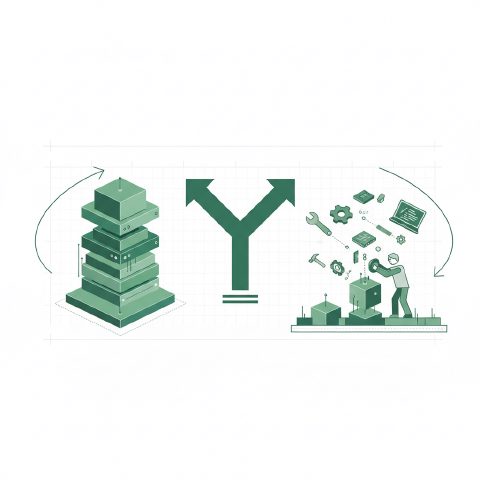
White label wins on speed and upfront cost; turnkey wins on long-term economics and control; proprietary is only justified at significant scale ($5M+ monthly GGR) where platform differentiation directly drives retention. Most operators should start white label, model the revenue-share drag at projected scale, and plan the migration point before they sign.
The revenue-share math is the clearest way to frame this decision. Assume a white-label provider takes 25% GGR. At $100K monthly GGR, that's $25K/month — tolerable. At $500K monthly GGR, that's $125K/month, or $1.5M annually. A turnkey platform from a provider like SoftSwiss (their full turnkey product, not white label) or a custom build on an open-source framework might cost $300K–$800K to build and $50K–$150K annually to maintain. The crossover point where turnkey economics beat white label typically falls somewhere between $200K and $500K monthly GGR, depending on the specific revenue share rate and build cost. Model this for your specific numbers before you sign a white-label contract.
Turnkey solutions give you a deployable codebase — you own it or have a perpetual license to it. Providers like Softgamings, GamingSoft and some configurations of EveryMatrix offer this model. You still need to source your own gaming license and payment stack, but you're not paying a perpetual revenue share. The upfront cost is higher ($100K–$500K depending on scope), and you carry more operational responsibility, but your unit economics improve dramatically as you scale.
Proprietary builds — building your own platform from scratch — are only rational at significant GGR scale or when your product differentiation genuinely requires it. The major regulated operators (bet365, DraftKings, FanDuel) built proprietary because their scale justified it and their regulatory environments required specific technical controls. For a new operator entering a market in 2026, a proprietary build is almost always premature. The opportunity cost of 18–24 months of engineering before you have a live product is enormous.
| Factor | White Label | Turnkey | Proprietary |
|---|---|---|---|
| Time to launch | 6–12 weeks | 3–6 months | 12–24+ months |
| Upfront cost | $15K–$80K | $100K–$500K | $500K–$3M+ |
| Ongoing cost | 15–35% GGR share | Maintenance + hosting | Full engineering team |
| Data ownership | Provider holds data | Operator owns data | Operator owns data |
| Customization depth | Limited (skin-level) | Moderate to high | Full |
| License included | Often yes (sub-license) | No — operator sources own | No |
| Best for GGR stage | < $300K/month | $200K–$2M/month | > $2M/month |
| Migration risk | High — platform lock-in | Low | None |
What are the biggest risks and hidden pitfalls of white label casino solutions?
Platform lock-in is the most serious structural risk — your player data, bonus history and payment integrations live inside someone else's system. Beyond that, watch for revenue-share escalation clauses, game content restrictions in specific markets, and compliance gaps where the provider's sub-license doesn't actually cover your target player geography.
Platform lock-in deserves more attention than it gets in vendor conversations. When you launch on a white-label platform, your player database — registration data, deposit history, bonus redemptions, session logs — is stored in the provider's infrastructure. If you decide to migrate to a turnkey or proprietary platform later, you need that data exported in a usable format. Some providers contractually restrict data portability or charge significant fees for export. I've seen migration projects stall for 6–12 months because of data access disputes. Before you sign, get explicit contractual language guaranteeing full data portability in standard formats (CSV, JSON) upon contract termination, at no additional cost.
Revenue-share escalation clauses are the second thing I check in every white-label contract. Some providers include clauses that adjust the GGR share based on market conditions, regulatory changes or their own cost structure — essentially giving them the right to increase your share with 30–90 days notice. That's a material financial risk once you've built a player base on their platform and migration is expensive. Push for fixed revenue-share terms for a minimum of 24–36 months.
Geographic compliance gaps are a risk that surfaces after launch, not before. A Curaçao sub-license technically permits you to accept players from many jurisdictions, but that doesn't mean it's legally safe in every market. Germany's GlüStV 2021 framework, for instance, requires specific licensing for German players regardless of where the operator is based. France, Spain and the Netherlands have similarly strict geo-blocking requirements. If your white-label provider's compliance team isn't actively monitoring and advising on market-specific restrictions, you can find yourself accepting players from markets where you're technically operating illegally — with the liability falling on you, not the provider.
Finally, watch for game content restrictions. Some studios have market-specific licensing that limits where their games can be offered. A game available in your white-label library might be licensed only for certain territories. If your provider's aggregation layer doesn't enforce these restrictions automatically, you're exposed. Ask specifically how the provider handles studio-level geo-restrictions and whether they indemnify you for any compliance failures on their aggregation layer.
How do payments and banking work for white label casino operators?
Most white-label providers offer bundled payment solutions, but the best operators build their own payment stack on top. You'll need at least one card acquirer, a crypto rail and local payment methods for your target market. Expect rolling reserves of 5–10% held for 180 days by card processors — this is a real cash-flow constraint that catches operators off guard.
The bundled payment solution your white-label provider offers is convenient but not always optimal. Providers like SoftSwiss integrate with a curated set of PSPs and crypto processors — you get access quickly, but you're often paying the provider's negotiated rates rather than rates you could achieve independently at volume. As you grow, renegotiating or adding your own payment relationships on top of the white-label layer is usually possible contractually, but confirm this before you sign. Some providers restrict which PSPs you can use to maintain their own payment revenue.
Card acquiring for gambling merchants remains difficult in 2026. Mainstream acquirers like Stripe and Adyen don't touch gambling. You're working with specialist acquirers — Payvision, Credorax, Genome, Safecharge (now Nuvei) — who charge 3–5% per transaction and require rolling reserves. A rolling reserve means the acquirer withholds 5–10% of your gross card volume for 180 days as a chargeback buffer. If you're processing $500K/month in cards, that's $25K–$50K/month locked up for six months. Model this in your working capital requirements from day one; it's a cash-flow shock operators consistently underestimate.
Crypto payments are increasingly important, particularly for offshore operators. Bitcoin, Ethereum, USDT and LTC are standard; providers like CoinsPaid (now rebranded as CryptoProcessing) and B2BinPay integrate cleanly with most white-label platforms. The processing fees are lower (0.4–1.5%) and there are no rolling reserves, but you carry FX risk if you're holding crypto rather than converting to fiat immediately. Most serious operators convert to fiat at settlement — the processing provider handles this automatically for a small spread.
For LATAM markets, local payment methods are non-negotiable. PIX in Brazil, PSE in Colombia, OXXO in Mexico, PagoEfectivo in Peru — these aren't optional for meaningful conversion rates. Your white-label provider's payment stack may or may not include these. If it doesn't, you need to integrate them yourself, which adds complexity and cost. This is one area where providers with genuine LATAM experience (Digitain has decent LATAM coverage; some others don't) have a real operational advantage.
How do you evaluate and choose a white label casino provider?
Evaluate providers on five criteria: game library depth and aggregation fees, jurisdiction and compliance posture, payment stack flexibility, data ownership terms, and exit clause clarity. Request a live demo of the back-office, not just a front-end walkthrough. Talk to two or three existing operators on the platform before you sign — providers who resist this are telling you something.
The sales process for white-label providers is well-rehearsed. You'll see polished demos of the player-facing front-end, impressive game count numbers and a licensing overview that makes compliance sound frictionless. What you need to see instead: the back-office CMS (is it actually usable for your team?), the bonus engine configuration depth, the reporting suite and the API documentation for any custom integrations you plan. Ask to see a live operator instance, not a sandbox. If the provider won't show you that, ask why.
References from existing operators are the most valuable due-diligence step and the one most operators skip. A provider who is confident in their product will connect you with two or three operators on their platform without hesitation. Ask those operators specifically about: uptime and incident response times, how quickly payment issues get resolved, whether the revenue-share reporting is transparent and auditable, and whether the provider has ever tried to renegotiate terms unilaterally. The answers will tell you more than any sales deck.
Contract review is not optional and not something to do yourself unless you have specific iGaming legal experience. The key clauses to scrutinize: data portability and ownership on termination, revenue-share calculation methodology (gross vs net GGR, how bonuses are deducted), exclusivity restrictions (some providers prohibit you from operating competing brands), and liability allocation for regulatory fines arising from the provider's compliance failures. Budget $5,000–$15,000 for a specialist iGaming lawyer to review the contract. It's the best money you'll spend in the process.
What compliance and responsible gambling requirements apply to white label casino operators?
Even operating under a provider's sub-license, you carry direct compliance obligations for KYC, AML and responsible gambling. The license holder is responsible to the regulator, but in practice, enforcement actions and reputational damage land on the brand — your brand. Treat compliance as an operational function, not a provider's problem.
KYC (Know Your Customer) requirements under Curaçao's GCB framework now mandate identity verification before withdrawal and, increasingly, before significant deposits. The standard is document verification (passport or national ID) plus proof of address, with enhanced due diligence for high-value players. Your white-label provider may bundle a KYC solution, but you need to understand the workflow — is it automated, what's the rejection rate, how are edge cases handled? A clunky KYC flow kills conversion; a lax one creates regulatory exposure.
AML (Anti-Money Laundering) obligations require you to have a documented AML policy, a designated MLRO (Money Laundering Reporting Officer), transaction monitoring and a suspicious activity reporting process. Under the new Curaçao GCB framework, these aren't optional formalities — they're audited. If your provider handles AML monitoring on your behalf, get that in writing and understand exactly what they monitor and what they don't. The liability for an AML failure is yours as the brand operator.
Responsible gambling tools — deposit limits, loss limits, session time limits, self-exclusion — are required by virtually every licensing jurisdiction in 2026, including offshore. Most white-label platforms include these as standard features. The operational question is whether they're actually surfaced to players effectively or buried in account settings where no one finds them. Regulators increasingly audit the UX of responsible gambling tools, not just their existence. Build this into your QA process before launch.
Is a white label casino profitable, and how long until you break even?
Profitability is achievable within 12–18 months for a well-executed offshore white label, but the majority of operators don't reach it because they underestimate customer acquisition cost and overestimate organic traffic. The business model works when CAC is below $200 per depositing player and monthly GGR exceeds $100K within six months of launch.
The unit economics of a white-label casino are straightforward to model but easy to get wrong. Your revenue is GGR (gross gaming revenue — the house edge realized across all bets). From that, subtract the platform's revenue share (25%, for example), payment processing costs (roughly 3–4% of deposits), game licensing fees (already embedded in the provider's share typically, but confirm), bonus costs (10–20% of GGR depending on your promotional strategy), and customer acquisition costs. What's left is your operating margin before overhead.
Customer acquisition cost is where most new operators blow their model. Organic SEO takes 12–24 months to generate meaningful traffic. Paid acquisition on Google and Meta is restricted for gambling in most markets. That leaves affiliate marketing as the primary channel — and affiliate CPA rates for casino players run $100–$400 per first-time depositor depending on market and player quality. If your average player LTV is $300 over 12 months and you're paying $250 CPA, your margin per player is thin before you account for platform costs. Operators who launch without a clear, costed acquisition strategy almost always run out of runway before they reach profitability.
The operators I've seen break even fastest share two characteristics: they launch in a market where they have an existing audience or affiliate relationship (so CAC is lower from day one), and they negotiate a revenue-share rate below 20% by committing to volume targets upfront. Neither of those is available to a first-time operator with no track record, which is why the realistic break-even for a cold-start white label is 12–24 months, not the 3–6 months some vendor materials imply.




Comments
No comments yet, be the first.