How to Open an Online Casino in 2026: The Operator's Step-by-Step Launch Playbook
What does it actually take to open an online casino — and where do you start?
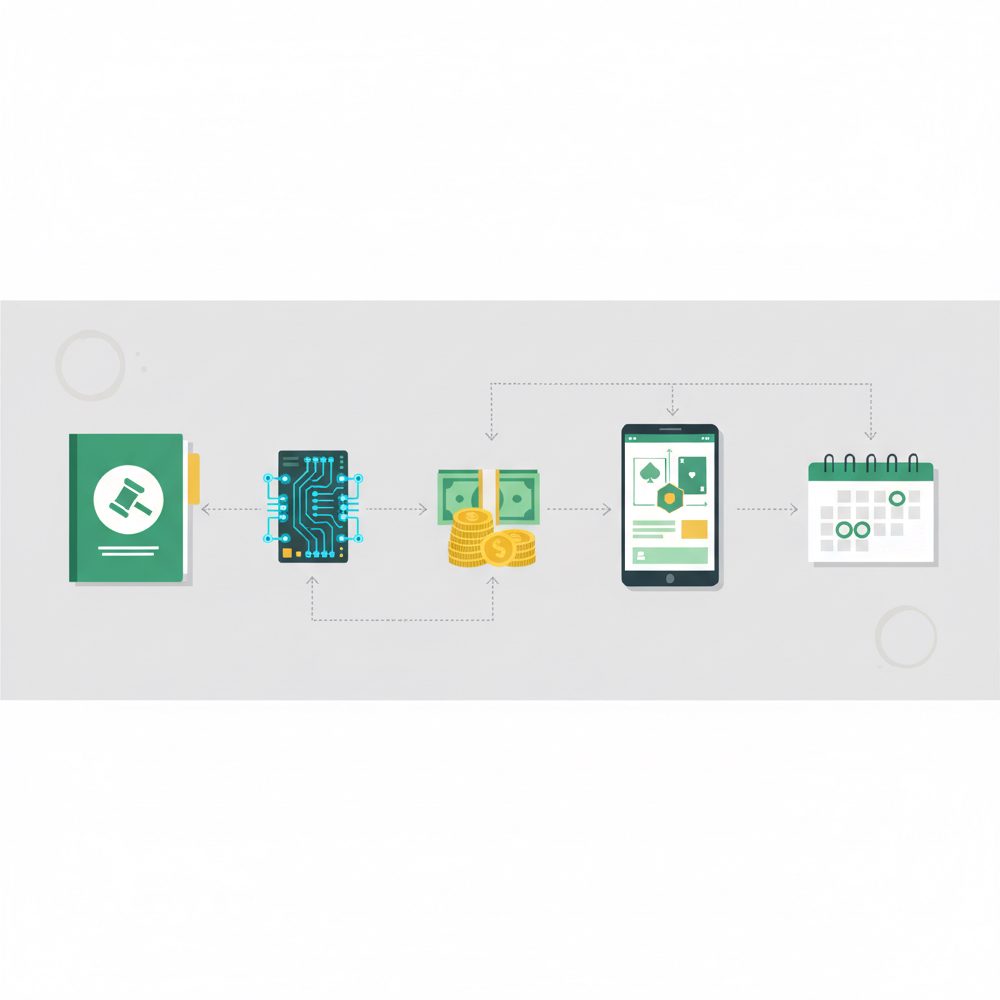
Opening an online casino requires four things in the right order: a legal entity and jurisdiction decision, a gaming license, a platform with certified software, and a payment stack. Most first-timers reverse this sequence — they pick games first, then discover the license takes six months and their chosen PSP won't touch unlicensed operators. Start with jurisdiction. Everything else follows.
I've watched operators burn three to six months of runway because they treated licensing as an administrative afterthought. It isn't. The jurisdiction you choose dictates which software providers will contract with you, which payment processors will onboard you, and which player markets you can legally target. Those three constraints shape your entire business model before you've written a single line of marketing copy.
The practical starting point is a two-page business plan that answers: which player market do I want, what is my realistic 18-month budget, and do I need a brand-name license (MGA, UKGC) or will an offshore license (Curaçao, Anjouan) serve my target geography? Once you can answer those three questions, the rest of the decision tree becomes manageable. Skip them and you'll be redesigning your corporate structure six months in — which I've seen happen more than once.
After jurisdiction comes entity formation. Most offshore operators incorporate in a holding-friendly jurisdiction — British Virgin Islands, Malta, or the Isle of Man are common — while the gaming license sits in a separate operating entity. This isn't tax evasion; it's standard corporate hygiene that your payment processors and B2B suppliers will expect. Get a lawyer who specializes in iGaming corporate structures, not a general commercial solicitor. The $3,000–$8,000 you spend here saves you from restructuring costs later that can run ten times that.
Which online casino license should you get first — Curaçao, MGA, Anjouan or a local regulated market?
For a first-time operator targeting international or grey markets, a Curaçao gaming license (now issued under the new National Ordinance framework that replaced the old sub-license model in 2023) or an Anjouan license offers the fastest and cheapest entry — typically $15k–$30k and two to four months. MGA and UKGC are premium licenses that unlock better banking and EU markets but cost $25k–$50k in fees alone and take six to twelve months.
Curaçao overhauled its licensing regime in 2023. The old master-license sublicense model is gone; operators now apply directly to the Curaçao Gaming Control Board (GCB) for a B2B or B2C license. The new framework is stricter — you need AML policies, certified RNG, and a local representative — but the license still costs roughly $15k–$25k in government fees and takes two to four months if your application is clean. It remains the most accessible entry point for operators targeting markets in LATAM, Southeast Asia and parts of Africa where no local license is required.
Anjouan (Comoros Islands) has gained traction since 2022 as a lower-cost alternative at around $10k–$15k in fees, with a faster turnaround of four to eight weeks. The trade-off is that fewer tier-one payment processors recognize it, so you'll lean harder on crypto and alternative payment methods. It works, but understand the banking limitation going in.
The MGA (Malta Gaming Authority) is a different animal. It's a genuine regulated market license — player fund protection, mandatory responsible gambling tools, quarterly compliance reporting. Fees start around €25,000 for the application plus an annual €25,000 compliance contribution, and you'll spend another €50k–€150k on compliance infrastructure (AML officer, technical audits, certified software). The payoff is that MGA-licensed operators get better acquiring relationships with Visa/Mastercard, can access EU markets legally, and are taken more seriously by premium game studios. If your target is Western Europe, budget for MGA from day one.
US state licenses (New Jersey DGE, Pennsylvania PGCB, Michigan MGCB) are a separate category entirely — each state is its own regulatory universe, costs run $500k–$2M+ in capitalization requirements and compliance infrastructure, and you'll need a local land-based partner in most states. I won't tell you it's impossible for a first-timer, but it's a multi-year project. LATAM regulated markets like Colombia (Coljuegos) and Peru (MINCETUR) are more accessible but still require local entity incorporation and Spanish-language compliance documentation.
| Jurisdiction | Approx. Gov. Fees | Timeline | Banking Access | Best For |
|---|---|---|---|---|
| Curaçao (GCB) | $15k–$25k | 2–4 months | Moderate (crypto-friendly) | Offshore/LATAM/SEA operators |
| Anjouan | $10k–$15k | 4–8 weeks | Limited (alt-pay focused) | Budget offshore, crypto-heavy models |
| MGA (Malta) | €25k+ app + €25k/yr | 6–12 months | Strong (Visa/MC accessible) | EU-facing, regulated market entry |
| UKGC | £5k–£50k (tiered) | 4–9 months | Strong | UK market only — very strict |
| Colombia (Coljuegos) | Varies by model | 6–12 months | Good locally | LATAM regulated market |
| US State (e.g. NJ) | $500k+ total | 12–24+ months | Full domestic | Long-term US market strategy |
White-label, turnkey or custom build — which casino platform is right for a first launch?
White-label is the fastest and cheapest route to market — you're essentially renting a pre-built casino under your brand. Turnkey gives you your own platform instance with more flexibility and better long-term margins. Custom builds are for operators with deep pockets and a specific product vision. For a first launch with under $200k in capital, white-label is almost always the right call.
A white-label casino solution from a provider like SoftSwiss, EveryMatrix, or Turnkey Casino means you get a pre-integrated game lobby, payment layer, CRM, bonus engine and back office — all running on the provider's infrastructure. You supply the brand, the marketing budget and the license (or use theirs, in some white-label models). Time to market is typically four to twelve weeks. The catch: you pay a revenue share of 15–35% of GGR to the platform provider, which compresses your margins significantly at scale. You also have limited control over the roadmap — if the provider doesn't support a feature you need, you wait.
A turnkey casino platform means you're licensing the software and running it on your own (or a dedicated) infrastructure. Providers like Softgamings, Slotegrator, or GamingSoft offer turnkey packages that include game aggregation, payment integration and back-office tools. Setup costs run $30k–$100k upfront plus monthly licensing fees, and you'll need a technical team or a managed-services agreement to operate it. Timeline to launch is typically three to six months. The revenue share to the platform drops to zero or near-zero, so margins improve dramatically once you hit volume — but you carry more operational responsibility.
Custom builds — building your own platform from scratch — make sense for operators who have already proven a market, have $500k+ in development budget, and have a specific product differentiation that no existing platform can deliver. I've seen operators try this on a first launch and it's almost always a mistake. You spend 18–24 months in development while the market moves, your competitors are already acquiring players, and you discover that the 'simple' payment integration you planned is actually six months of work on its own. Unless you have a genuinely novel product concept and the runway to match, use existing infrastructure for your first launch and build proprietary technology once you have revenue.
| Model | Upfront Cost | Time to Market | Revenue Share | Control Level | Best For |
|---|---|---|---|---|---|
| White-Label | $10k–$50k setup | 4–12 weeks | 15–35% GGR | Low | First launch, limited capital |
| Turnkey | $30k–$100k setup | 3–6 months | 0–5% (licensing fee) | Medium-High | Operators wanting ownership |
| Custom Build | $300k–$1M+ | 12–24 months | 0% | Full | Funded operators, unique product |
How do you choose online casino software providers and which games should you launch with?
Your game content strategy comes down to two options: a game aggregator that gives you access to hundreds of studios through one contract, or direct deals with individual studios. For a first launch, go with an aggregator — providers like Relax Gaming Hub, SoftSwiss Game Aggregator, or Slotegrator give you 5,000–10,000+ titles under one integration. Direct deals make sense later when you have volume to negotiate with.
The aggregator model solves a real problem: getting certified to distribute content from Pragmatic Play, Evolution, NetEnt, Play'n GO and fifty other studios individually would take 12–18 months of contract negotiations and technical integrations. An aggregator has already done that work. You sign one contract, complete one technical integration, and get access to their entire portfolio. The cost is a content fee — typically 2–5% of GGR on top of whatever the studio charges — but for a first launch, that overhead is worth the time savings.
Game selection matters more than operators expect. Slots drive the majority of GGR at most online casinos — typically 60–75% — but live casino (Evolution, Pragmatic Play Live, Ezugi) has become a table-stakes offering. Players in 2026 expect a live dealer lobby. If your aggregator doesn't include Evolution or a comparable live casino provider, you have a competitive gap on day one. Sports betting is a separate integration entirely; if you want it, factor in a sportsbook provider like Kambi, SBTech or Altenar and add two to four months to your timeline.
Certification is a requirement, not a formality. Every game you offer must hold a certificate from an approved testing lab — BMM, eCOGRA, Gaming Labs International (GLI) or iTech Labs are the main ones. Your license jurisdiction will specify which labs are accepted. If you're using an aggregator, the studios' existing certificates typically satisfy this requirement, but verify this with your compliance counsel before launch. Offering uncertified games is a license breach that can result in suspension.
One practical note on content strategy: launch with quality over quantity. A lobby of 500 well-chosen titles from recognized studios converts better than a 3,000-game dump with obscure providers players don't recognize. Curate a launch lobby with the top 50–100 slots by player popularity, a live casino section, and a small table games selection. You can expand from there once you understand your player base.
How do you set up casino payment processing — and why does it keep killing launches?
Payment processing is where more casino launches fail than any other single point. The problem is that acquiring banks and PSPs treat online gambling as high-risk, meaning longer onboarding, higher fees and frequent account terminations. You need at minimum three payment channels live before you open: a primary card processor, a crypto gateway, and at least one alternative payment method. One channel is not a payment stack — it's a single point of failure.
Card processing for online gambling runs at 3–6% merchant discount rate, compared to 1.5–2% for standard e-commerce. That's before chargeback fees, rolling reserves (typically 5–10% of volume held for 90–180 days), and setup fees that can run $2k–$10k per acquiring relationship. Providers like Payvision, Safecharge (now Nuvei), Paymentwall, and DECTA have historically worked with licensed gambling operators, but onboarding timelines are four to twelve weeks and approval is not guaranteed. Never assume your acquiring relationship is solid until the first transaction processes successfully.
Crypto is no longer optional for most offshore operators — it's a core payment channel. Bitcoin, Ethereum, USDT and increasingly stablecoins on Tron are standard. Crypto payment processors like CoinsPaid, BitPay for Business, or NOWPayments integrate in days rather than weeks, carry no chargeback risk, and are particularly important in markets where card processing is restricted. The compliance implication: you still need to KYC crypto deposits above your jurisdiction's threshold and run blockchain analytics (Chainalysis, Elliptic) to screen for illicit funds. Don't treat crypto as a compliance-free zone — regulators are increasingly scrutinizing it.
Alternative payment methods — e-wallets like Skrill and Neteller, local bank transfer solutions like Trustly in Europe, SPEI in Mexico, PIX in Brazil, or GCash in the Philippines — are essential for conversion in specific markets. A player in Brazil who can't pay via PIX will simply leave. Map your target geography and ensure you have the local payment methods covered before you start acquiring traffic in that market. This sounds obvious, but I've seen operators spend $50k on SEO before realizing their payment page shows zero options for 60% of their traffic's country.
Build a payment redundancy plan from day one. Acquiring relationships in gambling get terminated — sometimes with 30 days notice, sometimes less. When that happens, you need a backup processor ready to flip to within 48 hours. Maintain at least two acquiring relationships active simultaneously, even if one is handling low volume. The cost of redundancy is trivial compared to the revenue loss from a payment outage during a promotional campaign.
What does iGaming compliance actually require — KYC, AML and responsible gambling?
Compliance is not a one-time setup — it's an ongoing operational function. At minimum, you need a documented KYC process that verifies identity before withdrawal (and increasingly before deposit), an AML program with transaction monitoring and suspicious activity reporting, and responsible gambling tools including deposit limits, self-exclusion and reality checks. These must be live on day one, not added after launch.
KYC in iGaming means collecting and verifying government-issued ID, proof of address, and — above certain thresholds — source of funds documentation. The threshold varies by jurisdiction: Curaçao's new framework requires KYC before a player can withdraw; MGA requires it at €2,000 cumulative deposits or earlier if risk indicators are present. Your platform needs an identity verification integration — Jumio, Onfido, Sum&Substance, and Veriff are the main providers in this space — that can handle document checks and liveness detection automatically. Manual KYC doesn't scale and creates compliance gaps.
AML compliance requires a written AML policy, a designated Money Laundering Reporting Officer (MLRO), transaction monitoring rules (flagging unusual deposit patterns, rapid cycling, structuring), and a process for filing Suspicious Activity Reports (SARs) with the relevant financial intelligence unit. This isn't optional bureaucracy — it's what regulators audit first when they investigate an operator. The cost of an AML compliance framework — software, officer salary or outsourced MLRO, and annual audit — runs $30k–$80k per year for a mid-size operation.
Responsible gambling tools are a license condition in every reputable jurisdiction. The minimum set includes: deposit limits (daily/weekly/monthly), loss limits, session time limits, reality checks (pop-up reminders of time/money spent), self-exclusion (temporary and permanent), and a cool-off period option. Your platform should have these built in — if it doesn't, that's a red flag about the provider. MGA and UKGC also require integration with third-party self-exclusion registers (GAMSTOP in the UK, for example). Budget for a responsible gambling audit as part of your pre-launch checklist.
What are the realistic startup costs to open an online casino in 2026?
A lean offshore white-label launch on a Curaçao or Anjouan license can be done for $50k–$120k all-in if you're disciplined. An MGA-licensed turnkey operation realistically costs $300k–$600k before you acquire a meaningful player base. These figures include licensing, platform setup, compliance infrastructure, initial content fees and working capital — not marketing, which is a separate and ongoing budget line.
Here's how the cost stack breaks down for a typical offshore white-label launch: license fees ($15k–$25k), corporate setup and legal ($5k–$15k), platform setup fee ($10k–$30k), KYC/AML software and initial compliance setup ($5k–$15k), payment processor setup and reserve funding ($10k–$30k), game content integration (often bundled in the platform fee but budget $5k–$10k if not), website design and localization ($5k–$20k), and working capital to cover the first three months of operations ($20k–$50k). Add those up and you're at $75k–$165k before a single marketing dollar is spent. The $50k floor is achievable only if you use a white-label that includes the license, handle some setup work yourself, and launch in a single language/currency.
The MGA-licensed turnkey scenario is a different order of magnitude. MGA application and annual fees alone run €50k in year one. Add a turnkey platform setup ($50k–$100k), a technical audit and software certification ($20k–$40k), an MLRO and compliance officer (either in-house at €60k–€90k salary or outsourced at €30k–€60k/year), legal fees for the license application ($30k–$60k), and payment processor setup with reserve funding ($30k–$80k). You're at €220k–€430k before marketing. That's the real number — not the $50k figure some vendors quote in their sales decks, which mysteriously excludes compliance infrastructure and working capital.
Marketing is where operators consistently underestimate. Affiliate marketing — the dominant acquisition channel in iGaming — requires paying affiliates on a revenue share (25–45% of NGR) or CPA ($100–$400 per depositing player depending on market). To build a meaningful player base, budget at least $50k–$150k in affiliate commissions and paid acquisition in your first six months. Operators who launch with $100k total and expect $50k to cover both setup and marketing almost always run out of runway before the casino reaches breakeven.
How do you build an affiliate marketing program to acquire casino players?
Affiliate marketing is the primary acquisition channel for online casinos — it's how most operators get their first 1,000 depositing players. You need an affiliate tracking platform, a competitive commission structure, and relationships with established casino affiliate sites before you launch, not after. Launching without affiliates lined up is like opening a restaurant with no way for people to find the address.
The mechanics: affiliate sites (review portals, bonus comparison sites, casino streamers) send traffic to your casino via tracked links. When a referred player deposits, the affiliate earns either a revenue share (typically 25–40% of net gaming revenue) or a fixed CPA. You track this through affiliate software — Income Access, MyAffiliates, and Affilka (by SoftSwiss) are the main platforms in iGaming. Most white-label and turnkey providers include an affiliate module, but verify it supports both RevShare and CPA models before you sign.
Building affiliate relationships takes time, and the top-tier affiliates (AskGamblers, Casino.org, Bojoko, Casinomeister) won't promote a brand-new unlicensed operator with no player reviews. The realistic path for a first-time operator is to start with mid-tier and niche affiliates — country-specific review sites, bonus hunters, Twitch/YouTube casino streamers — who are willing to work with newer brands in exchange for higher commission rates or exclusive bonuses. Offer 40–45% RevShare for the first three months to get coverage, then renegotiate once you have proof of conversion data.
SEO-driven affiliate sites work on a 3–6 month content lag, so affiliate traffic won't be significant in your first 60 days regardless of how many deals you sign. Plan for this. In the first two months, paid social (where permitted), influencer partnerships and direct outreach to your target player community will drive early traffic while affiliate SEO builds. Don't expect affiliate revenue share to be your only acquisition cost — it's the long-term channel, not the launch channel.
One thing I always tell operators: set your affiliate terms before you go live and put them in writing with a proper affiliate agreement. Disputes over revenue share calculations, negative carryover (whether a losing affiliate month resets to zero or carries forward), and brand bidding rights on Google Ads are the most common sources of affiliate conflict. Decide your policy on negative carryover upfront — most operators in 2026 offer no negative carryover to attract affiliates, but it means a single high-roller win can cost you a month of affiliate commissions on that sub-affiliate's account.
What is the realistic timeline to open an online casino from decision to first player?
The fastest realistic path — offshore white-label on an Anjouan or Curaçao license — takes three to five months from decision to first depositing player if you move efficiently. An MGA-licensed turnkey operation is more like nine to fifteen months. A US state license takes two to four years minimum. Timeline is almost always determined by licensing, not by platform or content setup.
Month one is almost entirely legal and corporate: entity formation, license application preparation, and platform vendor selection. These three workstreams can run in parallel. The license application is the critical path item — everything else can be set up while it's pending. Use this time to finalize your brand, domain, and target market strategy, and to begin conversations with payment processors (who will want to see your license application in progress before they start their own onboarding).
Months two and three (for offshore licenses): platform integration, game content setup, KYC/AML software integration, and payment processor onboarding. If you're on a white-label, much of this is handled by the provider — your job is QA, content curation, and compliance documentation. Your license should arrive during this window for Anjouan; Curaçao under the new framework may take until month four. Do not go live without a license in hand, regardless of what your platform provider suggests.
Month four onward: soft launch. Start with a limited player base — friends, family, affiliate test accounts — to stress-test payment flows, KYC processes and bonus mechanics before you open marketing channels. I've seen operators skip the soft launch and discover on day one of full marketing that their withdrawal process has a bug that prevents players from cashing out. That's a reputation-destroying event. Two weeks of soft launch testing is not optional.
For an MGA operation, add six to nine months to the above for the license approval process, plus one to two months for the mandatory technical audit and software certification. The MGA will not issue a license until your platform has passed a technical audit by an approved testing lab. Factor this into your project plan from day one — the audit itself takes four to eight weeks and requires your platform to be substantially complete before it begins.
What are the biggest mistakes first-time casino operators make before launch?
The most expensive mistakes I see are: choosing a jurisdiction based on cost alone without checking payment processor compatibility; underbudgeting for compliance; launching without a payment backup; and spending on player acquisition before the platform is stable. Each of these is avoidable with proper planning — and each has killed real operations I've watched from the sidelines.
Jurisdiction mismatch with payment processing is the most common and most expensive mistake. An operator picks Anjouan because it's the cheapest license, then discovers that their target market's preferred payment methods require a processor that doesn't accept Anjouan-licensed operators. They're now stuck either relaunching under a different license (losing three months and $20k) or operating with a payment stack that converts poorly. The fix: before you commit to a jurisdiction, call three payment processors you plan to use and ask explicitly whether they onboard operators under that license. Get it in writing.
Underbudgeting for compliance is endemic among first-time operators who treat it as a cost to minimize rather than a foundation to build on. I've seen operators launch with a KYC process that consists of manually checking ID scans in a shared inbox. That works for 50 players. At 500 players, it breaks. At 5,000 players, it's a regulatory violation waiting to happen. Budget for automated KYC, transaction monitoring software, and either an in-house or outsourced MLRO before you launch, not after your first compliance audit flags the gaps.
Launching without a marketing strategy is surprisingly common. Operators spend six months and $150k building the casino, then realize they have no affiliate relationships, no SEO content, and no acquisition plan. The casino goes live and gets zero traffic. Marketing preparation — affiliate outreach, SEO content creation, social media presence, bonus structure design — should start at month two, not month six. Your launch date and your marketing readiness date need to be synchronized.
Finally: ignoring the bonus mechanics until late in the build. Bonus abuse (bonus hunting, multi-accounting, gnoming) is a real and significant cost for online casinos. Your bonus terms — wagering requirements, game restrictions, max bet rules, withdrawal caps — need to be designed by someone who understands how players exploit them, not written by a lawyer who has never run a promotion. Get your bonus terms reviewed by an experienced casino operator or consultant before you go live. The cost of a poorly designed welcome bonus can exceed your entire compliance budget in the first month.



Comments
No comments yet, be the first.