How to Start an Online Casino in 2026: A First-Timer's Step-by-Step Launch Playbook
What does it actually take to start an online casino — and where do most first-timers go wrong?
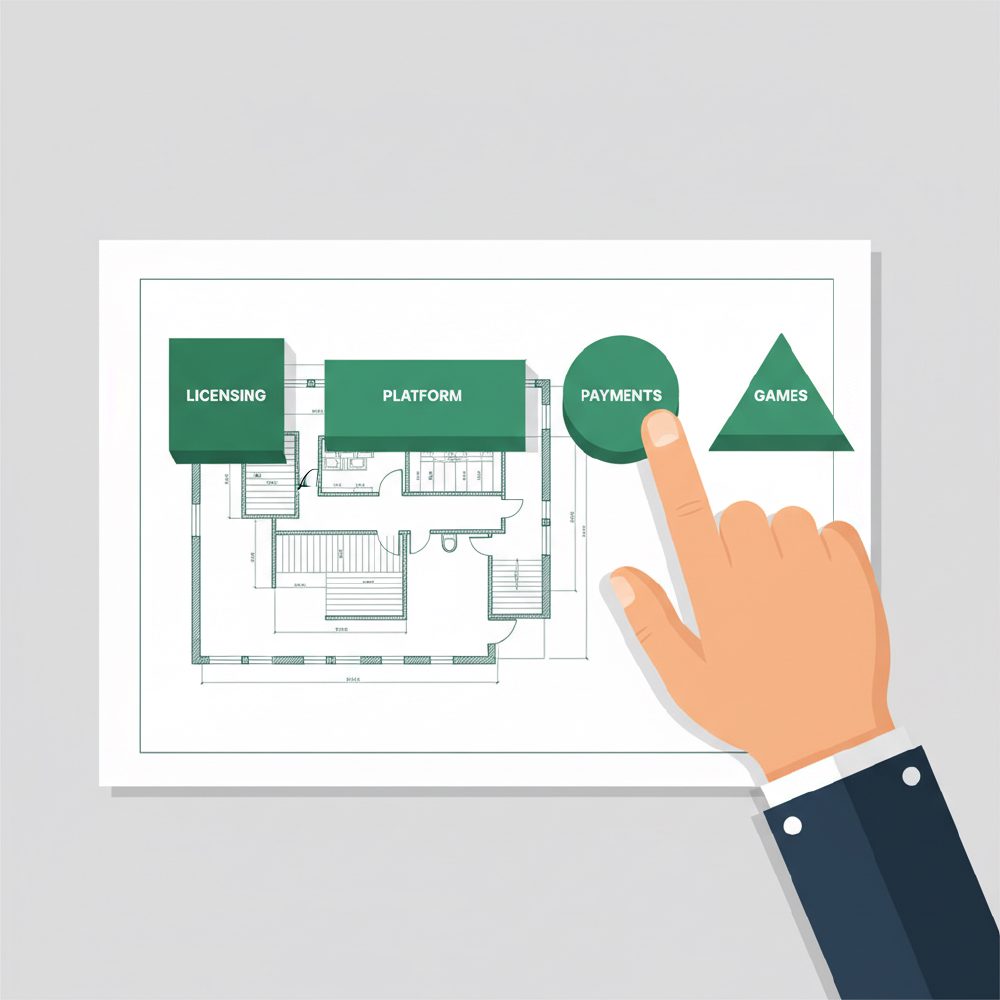
Starting an online casino requires a licensed entity, a compliant platform, a game library, a working payment stack, and a player acquisition strategy — in roughly that order. Most first-timers get the sequence wrong: they pick games before they have a license, or sign a platform contract before knowing their target market. That mismatch causes costly restarts.
I've watched operators spend $40,000 on a platform integration only to discover the platform wasn't certified for their target jurisdiction. The license-first principle isn't bureaucratic caution — it's because your jurisdiction dictates which platform providers you can use, which payment methods are available, and what your KYC/AML obligations look like. Get that wrong and everything downstream has to be rebuilt.
The second common mistake is underestimating the payment layer. A casino without reliable deposits is just a website. First-timers routinely budget for a single card processor and discover within weeks that their approval rate is 40–55% because they haven't set up 3DS2 correctly, or their MCC code is wrong. You need redundancy — at minimum a primary card processor, a crypto gateway, and one local alternative payment method for your core market — before you soft-launch.
Third: the game aggregator deal. New operators often approach studios directly and get ignored or quoted minimum guarantees they can't meet. The practical path is through an aggregator like Relax Gaming, Pariplay, or EveryMatrix's EGT aggregation layer, which gives you 5,000–10,000 titles under one API contract and one revenue-share arrangement. Direct studio deals make sense once you're doing volume. Not on day one.
The operators who launch cleanly treat the whole thing as a product build: define the market, secure the license, select the platform, integrate games and payments in parallel, run compliance checks, then soft-launch to a small cohort before opening the taps on marketing. That sequence is what this playbook follows.
Which gambling license should you get first — and how do you choose between Curaçao, MGA, and other jurisdictions?
For a first-time offshore operator, Curaçao is the pragmatic starting point: it's the fastest to obtain (8–14 weeks under the new Curaçao Gaming Authority framework), costs $20K–$35K all-in for the first year, and is accepted by most B2B platform providers. MGA is the gold standard for EU markets but takes 6–12 months and requires significantly deeper compliance infrastructure.
Curaçao overhauled its licensing regime in 2023 under the National Ordinance on Offshore Games of Hazard (NOOGH), replacing the old master-license sub-license model with direct B2C licenses issued by the Curaçao Gaming Authority (CGA). The new structure is more rigorous than the old system — you need a local representative, a proper AML policy, and source-of-funds procedures — but it's still the fastest credible offshore path available in 2026. Budget $20K–$35K for the license fee, corporate setup, and local registered office for year one, plus ongoing annual fees around $15K–$20K.
The Malta Gaming Authority (MGA) is a different animal. An MGA B2C license opens doors to EU payment processors, mainstream advertising networks, and tier-one game studios that won't deal with offshore-only operators. But the application process is exhaustive: detailed business plan, source of funds for all shareholders above 10%, a qualified person for compliance, and a technical audit of your platform. Fees start at €25,000 for the application and €25,000 annually, before you factor in legal costs that routinely add another €50K–€100K. Timeline: realistically 9–12 months if your application is clean.
Other jurisdictions worth knowing: Anjouan (Union of Comoros) has emerged as an ultra-fast, low-cost offshore option (4–8 weeks, ~$15K) and is accepted by several white-label providers, though its banking relationships are thinner than Curaçao's. Isle of Man and Gibraltar are respected mid-tier options with strong banking access but slower timelines and higher costs than MGA. For US operators, you're looking at state-by-state licensing — New Jersey, Pennsylvania, Michigan, and Connecticut are the live iGaming states — with fees and requirements that vary dramatically; NJ's transactional waiver process alone can take 18+ months.
My recommendation for most first-timers: start with Curaçao to get live and generating revenue, then apply for MGA in parallel once you have 6 months of operational history. That history actually strengthens your MGA application and gives you real financials to present. Don't wait for MGA before launching — you'll burn runway.
| Jurisdiction | Timeline | Year-1 Cost (est.) | Banking Access | Best For |
|---|---|---|---|---|
| Curaçao (CGA) | 8–14 weeks | $20K–$35K | Moderate — crypto-friendly | First-time offshore operators, fast launch |
| Anjouan (Comoros) | 4–8 weeks | $12K–$18K | Limited — mostly crypto | Ultra-lean budget launches, crypto-focused |
| Malta (MGA) | 9–12 months | €80K–€150K (incl. legal) | Excellent — EU banks | EU market entry, tier-one studio access |
| Isle of Man | 6–9 months | £50K–£100K | Good — UK/EU banks | UK-adjacent operators, established businesses |
| US States (NJ, PA, MI) | 12–24 months | $500K–$2M+ | Full US banking | US market, must partner with land-based licensee |
White-label, turnkey, or custom build — which casino platform model is right for your launch?
White-label gets you live in 4–8 weeks under a shared license with minimal upfront cost, but you're renting someone else's infrastructure and paying 15–35% of GGR indefinitely. Turnkey gives you your own licensed platform in 3–6 months for $150K–$400K upfront. Custom builds are for operators who've already proven the model and have $1M+ to spend. Most first-timers should start white-label.
White-label platforms — SoftSwiss's Casino Engine, EveryMatrix's WhiteLabelCasino product, and Turnkey Casino are the names I see most often in operator contracts — bundle the platform software, game aggregation, payment processing, and often a Curaçao sub-license into one monthly fee plus a revenue-share cut. The economics look attractive at launch: you might pay $30K–$50K setup plus 15–25% of GGR. But at $200K GGR/month, you're handing $30K–$50K per month to the white-label provider forever. That's the conversation vendors don't lead with.
Turnkey platforms give you ownership of the software license and your own regulatory standing. SoftSwiss's SOFTSWISS Casino Platform, EveryMatrix's CasinoEngine, and Digitain are all solid turnkey options I've seen operators use successfully. You pay a larger upfront fee ($150K–$400K depending on scope), a monthly platform fee ($10K–$30K), and a smaller or zero revenue-share. The integration timeline is 3–6 months. This model makes sense if you have the capital and a clear market thesis — you're not experimenting, you're executing.
Custom builds are almost always a mistake for first-timers. Building your own RGS, back-office, and wallet from scratch takes 18–36 months and $1M+, and you'll still need to integrate third-party game studios and payment processors anyway. The operators I've seen go custom successfully were already running profitable white-label operations and had a specific technical reason — usually a proprietary product feature — that existing platforms couldn't accommodate.
One nuance: some white-label providers let you 'graduate' to a standalone license arrangement after 12–18 months of operation. If you're evaluating white-label options, ask explicitly whether the contract allows you to port your player database to an independent platform. Some don't. That clause is worth more than a 2% difference in revenue-share.
| Model | Time to Launch | Upfront Cost | Ongoing Cost | Who Controls the License | Best Fit |
|---|---|---|---|---|---|
| White-Label | 4–8 weeks | $20K–$60K setup | 15–35% GGR + monthly fee | White-label provider | First-timers, budget launches, market testing |
| Turnkey | 3–6 months | $150K–$400K | $10K–$30K/month platform fee | Operator (own license) | Operators with capital and clear market focus |
| Custom Build | 18–36 months | $1M+ | Ongoing dev team ($50K–$150K/month) | Operator | Scaled operators with proprietary product needs |
How do you build a game library — aggregator deal or direct studio contracts?
Start with a game aggregator. Providers like Pariplay, Relax Gaming, EveryMatrix EGT, or SoftSwiss's Game Aggregator give you 5,000–15,000 titles under one API integration and one commercial agreement. Direct studio deals with Pragmatic Play, NetEnt, or Evolution make sense after you have volume — studios typically want $5K–$15K monthly minimum guarantees that new operators can't justify.
The aggregator model exists precisely because no operator wants to sign 50 separate studio contracts, manage 50 separate APIs, and negotiate 50 separate revenue-share arrangements. A single aggregator contract gives you access to content from Pragmatic Play, Play'n GO, Hacksaw Gaming, Nolimit City, and dozens of others. You pay the aggregator a percentage of GGR — typically 2–5% on top of the studio's cut — but that overhead is worth it at launch when your engineering bandwidth is limited.
The studios you absolutely need from day one: Pragmatic Play (slots and live dealer), Evolution Gaming (live casino — they're essentially a monopoly in live dealer and you have no real alternative), and Play'n GO or NetEnt for slot depth. If you're targeting a crypto-focused audience, add BGaming and Spinomenal. If Latin America is your market, Vibra Gaming and Caleta Gaming have strong regional content that the European aggregators sometimes underweight.
One thing operators miss: not all aggregators are certified in all jurisdictions. If you have an MGA license, your aggregator needs MGA certification too, and not every aggregator has it for every studio in their catalog. Always request a jurisdiction-specific content list before signing. I've seen operators discover post-contract that 30% of the titles they planned to offer weren't available in their licensed market.
Live casino is a separate conversation. Evolution Gaming dominates, but their commercial terms for new operators are aggressive — expect a higher revenue-share rate and potentially a minimum guarantee. Pragmatic Play Live and Ezugi (part of Evolution group, ironically) are alternatives worth negotiating as leverage. For a first-time operator, I'd recommend launching with Pragmatic Play Live initially if Evolution's terms are prohibitive, then renegotiating once you have player volume to show.
How do you set up online casino payment processing — and what do operators always get wrong?
You need at minimum three payment channels before going live: a card processor (Visa/Mastercard), a crypto gateway, and one local alternative payment method for your primary market. Single-processor setups fail within weeks — approval rates collapse, processors terminate accounts, and you have no fallback. Payment redundancy isn't optional; it's operational survival.
Card processing for online gambling is genuinely hard to set up. Most tier-one acquiring banks won't touch gambling MCC codes (7995 for gambling transactions). You're working with specialist acquirers: Payvision, Safecharge (now Nuvei), Ecommpay, and a handful of others who understand the vertical. Expect approval rates of 55–75% initially — not because your players' cards are being declined for insufficient funds, but because issuing banks block gambling transactions by default in many markets. 3DS2 implementation, correct MCC coding, and a clean BIN strategy can push that to 80–90% over time.
Crypto is no longer optional, especially for offshore operators. A significant portion of serious online casino players prefer crypto for privacy and speed. CoinsPaid and BitPay are the most common B2B crypto payment processors in iGaming — CoinsPaid in particular has deep integrations with SoftSwiss and EveryMatrix platforms. Crypto also solves the banking problem for markets where card processing is difficult: Brazil, Southeast Asia, parts of Eastern Europe.
Local alternative payment methods (APMs) are where operators leave serious money on the table. If you're targeting Brazil, PIX is mandatory — it's the dominant instant payment method and players expect it. Germany: Klarna and Sofort. Mexico: OXXO and SPEI. Scandinavia: Trustly (which also handles bank-level KYC, a nice compliance bonus). The conversion lift from adding the right local APM in your target market is typically 15–30% on deposit conversion rates. That's not a rounding error.
One practical warning: payment processor relationships are fragile in this industry. Processors terminate gambling accounts with minimal notice, sometimes because their own acquiring bank changes policy. Always have a secondary card processor integrated and tested, even if it's not your primary routing. The operators I've seen go dark for 48–72 hours because their sole processor terminated — that's an avoidable catastrophe.
What are the real startup costs to open an online casino in 2026?
A white-label offshore launch costs $80K–$150K in year one including license, platform setup, initial marketing, and working capital. A turnkey licensed build targeting an EU market runs $400K–$800K. US state licensing is a different category entirely — budget $1M–$3M before your first player. Most operators underestimate working capital requirements by 40–60%.
Let me break down a realistic white-label Curaçao launch budget, because the numbers vendors quote and the numbers you actually spend are different. License and corporate setup: $25K–$35K. Platform setup fee: $30K–$50K. Initial game content (aggregator onboarding, some studios require advance payments): $10K–$20K. Payment processor setup and deposits: $15K–$30K (some processors require security deposits). Legal and compliance (KYC vendor, AML policy drafting, terms and conditions): $15K–$25K. Website design and localization: $10K–$20K. That's $105K–$180K before you spend a dollar on player acquisition.
Working capital is the category that kills underfunded launches. You need to cover player withdrawals, bonus liabilities, and operational costs for 3–6 months before your GGR covers expenses. Most operators underestimate this by half. If your month-one marketing budget is $30K and you're running a 100% welcome bonus, your bonus liability alone could be $15K–$25K depending on conversion. Budget 3 months of operating costs as a reserve minimum.
For a turnkey build targeting MGA or another EU jurisdiction, the cost structure shifts dramatically. Add the MGA application process ($80K–$150K including legal), a proper compliance team (Qualified Person salary: €60K–€90K/year), technical audit costs ($15K–$30K), and a platform fee that's typically higher for licensed turnkey setups. Total year-one cost: $500K–$900K is realistic. That's not a scare number — it's what operators who've done it actually report.
US state iGaming is a separate category. You need a land-based casino partner in most states (New Jersey, Pennsylvania, Michigan all require it), your own state license (fees vary: NJ charges $400K for a 5-year Internet Gaming Permit), and compliance infrastructure that dwarfs anything offshore. Realistically, $2M–$5M to get to launch in a US state, and that assumes you have the right partner. This is not a first-timer's market — it's for operators who've already built and sold an offshore business or have significant institutional backing.
What responsible gambling and compliance tools do you need before going live?
Before accepting your first deposit, you need functional self-exclusion, deposit limits, session time limits, and a reality check mechanism — these aren't optional extras, they're license conditions under every credible jurisdiction. You also need a certified KYC/AML workflow with identity verification. Launching without these isn't just a regulatory risk; it's an existential one.
Every jurisdiction with a credible license — Curaçao post-2023, MGA, Isle of Man, all US states — mandates responsible gambling (RG) tools as a condition of the license, not a nice-to-have. The minimum set: deposit limits (daily, weekly, monthly), loss limits, session time limits, reality checks (pop-up reminders), cooling-off periods, and self-exclusion with a minimum 6-month lockout. MGA requires integration with GAMSTOP (UK) or equivalent national self-exclusion databases if you're serving those markets.
KYC/AML is where compliance gets operationally complex. You need an identity verification vendor integrated before launch. Jumio, Onfido, and Sumsub are the names I see most in iGaming integrations — Sumsub in particular has strong iGaming-specific workflows and is pre-integrated with several white-label platforms. Your AML policy needs to define Enhanced Due Diligence (EDD) thresholds — typically triggered at €2,000–€10,000 cumulative deposits depending on jurisdiction — and your team needs to know what to do when a player hits those thresholds.
Don't treat compliance as a checkbox. Regulators are increasingly sophisticated, and the reputational damage from a compliance failure — whether it's a data breach or a money laundering incident — is harder to recover from than the cost of doing it right. Budget $1,500–$3,000 per month for a KYC vendor at modest volume, and plan for a compliance officer (internal or outsourced) from day one. Outsourced compliance consultancies that specialize in iGaming — there are several in Malta and Gibraltar — typically charge €3,000–€8,000 per month for a retainer that covers your Qualified Person requirement.
One thing operators skip that they shouldn't: a pre-launch technical compliance audit. Before you go live, have an independent auditor (BMM Testlabs, GLI, or eCOGRA for RNG certification) review your platform's RNG implementation and game math. This isn't just about regulation — it's about catching configuration errors that could result in incorrect payouts, which is a much worse problem to discover post-launch with real player money on the line.
What's the realistic timeline to launch an online casino from zero?
A white-label offshore casino can go from zero to live in 10–16 weeks if you move fast and don't hit regulatory delays. A turnkey licensed build takes 6–12 months. The single biggest timeline killer isn't the technology — it's waiting on license approvals, bank account openings, and payment processor onboarding, all of which run in parallel and all of which can stall independently.
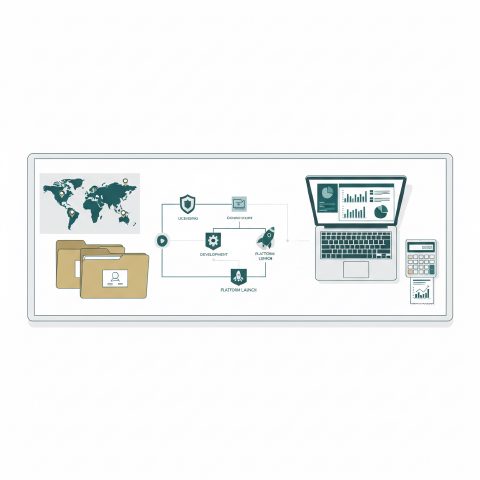
Here's an honest timeline for a white-label Curaçao launch. Weeks 1–2: corporate entity formation in Curaçao or a holding jurisdiction (BVI, Seychelles), simultaneous submission of license application. Weeks 2–6: license processing (CGA currently runs 6–10 weeks for straightforward applications). Weeks 3–8: platform contract negotiation and setup, game aggregator onboarding — these can run in parallel with the license process. Weeks 4–10: payment processor applications submitted; expect 4–8 weeks for approval. Weeks 8–12: website build, content localization, KYC vendor integration, RG tool configuration. Weeks 12–14: internal QA, compliance review, soft-launch to a small test cohort. Week 14–16: full launch.
The critical path item is almost always banking and payment processing. Platform setup can be done in 3–4 weeks. Game aggregator onboarding takes 2–4 weeks. But getting a card processor approved for a new gambling entity with no operating history can take 6–10 weeks, and some processors will decline you entirely and you have to start over. Apply to multiple processors simultaneously — don't wait for one approval before applying to the next.
For a turnkey MGA launch, the timeline stretches to 9–15 months, dominated by the MGA application process. The MGA has made progress on processing times, but a complete, complex application still takes 6–9 months from submission to approval. Use that time productively: build the platform, integrate games, set up your compliance infrastructure, and have everything ready to flip the switch the day the license arrives. Operators who treat the license waiting period as downtime end up adding 3–4 months to their actual launch date.
How do you acquire players for a new online casino — and what does it actually cost?
New online casinos primarily acquire players through affiliate marketing, SEO, and paid social — in that order of long-term ROI. Affiliate networks (Income Access, Affiliate Edge, MyAffiliates) are the fastest route to qualified traffic but come with CPA or revenue-share costs that can be $100–$400 per depositing player. SEO takes 6–18 months to pay off but delivers the lowest long-term CAC.
Affiliate marketing is the backbone of online casino player acquisition, and for good reason: affiliates send pre-qualified traffic with intent to play, and you only pay on performance (CPA or revenue-share). The standard affiliate deal for a new casino is either a CPA of $100–$400 per first-time depositor (depending on market) or a revenue-share of 25–40% of the player's net gaming revenue for life. Revenue-share is cheaper upfront but creates long-term liability — a whale player acquired on revenue-share costs you 35% of their losses indefinitely. Most new operators should start with CPA deals to control costs while they figure out their player LTV.
Paid social is complicated by advertising restrictions. Meta (Facebook/Instagram) prohibits gambling ads in most jurisdictions without prior written approval, which is difficult to obtain for new operators. Google Ads allows gambling advertising in approved jurisdictions but requires certification — the Google Gambling Ads certification process takes 4–6 weeks and requires a valid local license. Native advertising networks (Taboola, Outbrain) and programmatic display are more accessible but deliver lower intent traffic. Budget $20K–$50K/month minimum for paid channels to see meaningful volume.
SEO is the long game but the highest-ROI channel at maturity. A well-structured casino site targeting long-tail keywords — 'best online slots for US players,' 'Pragmatic Play casino bonus' — can generate significant organic traffic within 12–18 months. The catch: casino SEO is one of the most competitive verticals in search. You need a serious content operation, strong backlink profile, and technical SEO fundamentals. Don't expect organic traffic to carry your launch — build it as a 12-month investment alongside paid channels.
One channel operators underuse: email and CRM from day one. Your welcome bonus is expensive to fund. The players who take it and churn immediately are your worst acquisition outcome. A solid CRM sequence — triggered emails, personalized bonus offers based on game preference, reactivation campaigns — can increase player LTV by 20–40%. Platforms like Optimove and Fast Track CRM are built specifically for iGaming and integrate with most casino platforms. Set this up before launch, not after you've already burned through your bonus budget.
What are the biggest mistakes first-time casino operators make — and how do you avoid them?
The top mistakes: launching without payment redundancy, underestimating working capital, signing a white-label contract without an exit clause, targeting too many markets at once, and treating compliance as an afterthought. Each of these is fixable before launch. Most operators discover them after launch, when fixing them is expensive and sometimes impossible.
Payment redundancy is the most operationally dangerous gap. I've spoken to operators who went dark for 72 hours because their sole card processor terminated their account with 24 hours' notice. That's three days of zero revenue, player churn, and reputational damage in forums and review sites. The fix is simple: integrate and test two card processors before launch, even if you route 90% of traffic through your primary. The secondary processor sitting idle costs you almost nothing. Not having it costs you everything when the primary fails.
The white-label exit clause issue is subtler but equally damaging. Some white-label providers — and I won't name names, but review your contract carefully — include clauses that prohibit you from contacting your own players after termination, or that give the provider ownership of the player database. You built that database. You paid for every acquisition. Read clause 14 of whatever contract you're signing. If it doesn't explicitly state that the player data belongs to you and is portable, negotiate it before signing, not after you've spent $200K building a player base you can't take with you.
Targeting too many markets simultaneously is a classic first-timer mistake driven by the fear of leaving revenue on the table. A casino trying to serve Germany, Brazil, Canada, and Southeast Asia simultaneously will have mediocre localization, split compliance obligations, a payment stack that satisfies nobody, and customer support that can't cover all time zones. Pick one or two core markets, dominate them, then expand. The operators I've seen scale successfully all started focused.
Finally: bonus abuse. New casinos are targeted by bonus hunters and fraud rings within days of launch. If you don't have velocity checks, device fingerprinting, and bonus terms with reasonable wagering requirements (30–40x is standard; anything below 20x is an invitation for abuse) in place from day one, you will fund a significant number of bonus abusers before you notice the pattern. Platforms like SEON and Sardine specialize in iGaming fraud detection and are worth the integration cost.




Comments
No comments yet, be the first.