How to Start an Online Casino in 2026: A Step-by-Step Launch Playbook for First-Time Operators
What's the right order of operations before you spend anything?
Licensing comes first — full stop. Your jurisdiction choice determines which platform providers will work with you, which payment processors will onboard you, and which markets you can legally target. Operators who buy software before locking a license often have to rebuild their compliance stack from scratch. Get the license application moving, then sign platform and payment contracts in parallel.
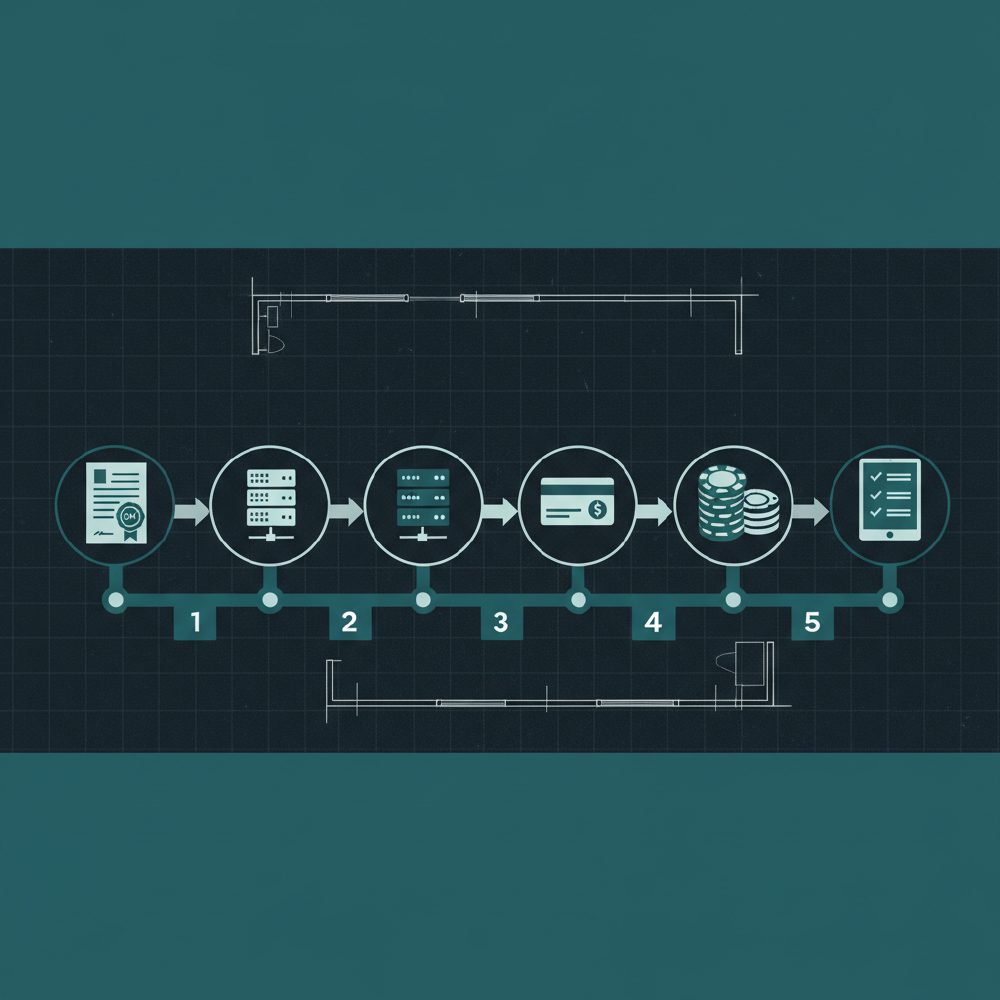
I've watched operators burn $80,000 on a white-label setup before realizing their chosen platform wasn't certified under the jurisdiction they'd applied to. The correct sequence is: (1) define your target market and pick a jurisdiction, (2) engage a licensing agent or lawyer and submit the application, (3) select a platform that is already certified or certifiable under that license, (4) negotiate your game aggregator contract, (5) build your payment stack, (6) run compliance and QA, (7) soft-launch. Everything else — brand, design, CRM, affiliates — runs alongside steps 3–6, not before them.
The reason sequencing matters so much in 2026 is that regulators have tightened technical standards. Curaçao's updated framework (effective 2024) now requires operators to use a licensed gaming system — meaning your platform vendor itself needs to hold or be covered by a B2B sublicense. If you sign with a platform that isn't compliant with the new Curaçao Gaming Authority (CGA) rules, you're restarting. MGA's Game Certification process adds another layer: every game you offer must be certified by an approved testing lab (BMM, GLI, eCOGRA). These aren't bureaucratic footnotes; they're hard gates that add weeks to your timeline if you discover them late.
Budget planning also depends on sequence. You cannot get a realistic acquirer quote without a license number or at least a letter of intent from a regulator, because payment processors use it to assess risk. Trying to pre-negotiate merchant accounts without it wastes everyone's time and occasionally gets you flagged as a high-risk applicant before you've even launched.
Which licensing jurisdiction should a first-time operator choose?
For most first-time operators launching offshore in 2026, Curaçao is still the pragmatic starting point — application fees around $5,000–$10,000, an 8–16 week timeline under the new CGA framework, and broad game-type coverage. MGA (Malta) is the premium EU option at €25,000 application fee plus €25,000 compliance contribution, but expect 4–9 months and a much heavier compliance burden. Match the jurisdiction to your target player geography, not to what sounds prestigious.
Curaçao went through a significant regulatory overhaul in 2023–2024. The old master-license sublicense model is being phased out; operators now apply directly to the Curaçao Gaming Authority for an operator license. Annual fees are in the $20,000–$35,000 range (figures from CGA's published schedule — confirm current rates directly). The upside: Curaçao still accepts crypto-native businesses, has no restriction on accepting players from most non-regulated markets, and the technical audit requirements are lighter than MGA or UKGC. It's the right choice if you're targeting LATAM, Southeast Asia, or tier-2 markets where players aren't demanding an EU-licensed badge.
MGA (Malta Gaming Authority) is a different animal. The €25,000 application fee is just the entry ticket. You'll also pay a compliance contribution (€25,000 for a B2C casino license in year one, scaling with GGR), a systems audit by an approved test house, and ongoing monthly fees. The payoff is access to EU payment rails — Visa and Mastercard are far more comfortable processing for MGA-licensed operators — and the credibility to recruit top-tier affiliates who won't touch unlicensed brands. If your business plan targets Germany, Finland, or other EU markets, MGA is worth the pain. Budget 6–12 months from application to first player.
Other jurisdictions worth knowing: Anjouan (Comoros) has emerged as a fast, low-cost alternative to old Curaçao sublicenses — fees around $15,000–$25,000/year, 4–8 week timeline, but limited payment processor acceptance. Isle of Man and Gibraltar are credible but expensive and slow. US state licenses (New Jersey DGE, Pennsylvania PGCB, Michigan MGCB) are in a category of their own — each costs $100,000–$500,000+ in fees and investigations, takes 12–24 months, and requires a physical presence. Don't go there for your first launch unless you have deep pockets and a US-specific business case.
| Jurisdiction | Application Fee | Timeline | Annual Fee (approx.) | Best For |
|---|---|---|---|---|
| Curaçao (CGA) | $5K–$10K | 8–16 weeks | $20K–$35K | Offshore, LATAM, crypto, fast launch |
| MGA (Malta) | €25K | 4–9 months | €25K+ compliance contribution | EU markets, premium affiliates |
| Anjouan (Comoros) | $5K–$8K | 4–8 weeks | $15K–$25K | Low-cost offshore alternative |
| Isle of Man | £5K | 4–6 months | £5K–£35K (GGR-based) | Credible EU/UK-adjacent brand |
| US State (e.g. NJ, PA) | $100K–$500K+ | 12–24 months | Varies by state | US-regulated market entry |
White-label, turnkey, or custom build — which platform model is right for you?
White-label is the right choice for 90% of first-time operators. You get a pre-built, licensed, game-integrated platform in 4–12 weeks for $20,000–$60,000 upfront plus revenue share. Turnkey gives you more control and ownership but costs $80,000–$200,000 and takes 3–6 months. A custom build from scratch is a $300,000–$1M+ project that takes 12–24 months — it only makes sense if you have proprietary technology as a competitive moat.
White-label platforms like SoftSwiss Casino Platform, EveryMatrix's CasinoEngine, and Turnkey Casino's solution bundle the back-office, CMS, player account management, and a pre-negotiated game library under one roof. The platform provider holds the technical certification; you operate under your own brand and license. Revenue share is typically 10–15% of GGR on top of a monthly platform fee ($3,000–$10,000). The trade-off is limited differentiation — your casino will look and behave similarly to dozens of others on the same infrastructure. That's fine when you're proving the business model; it becomes a problem when you're trying to compete on product.
Turnkey solutions (also called standalone platforms) give you the source code or at least a dedicated instance you fully control. Providers like SoftGamings, Digitain, and BetConstruct operate in this space. You own the player database, you can customize the front-end deeply, and you're not sharing infrastructure with competitors. The catch: you're responsible for your own technical compliance audits, and integrating new game providers or payment methods requires your own development resources. Budget for a small in-house tech team from day one.
Custom builds are almost always a mistake for first-timers. I've seen two operators spend 18 months and $600,000 building proprietary platforms, only to discover that payment processors still required the same certifications a white-label would have had out of the box. The one legitimate reason to build custom is if you have a genuinely novel product mechanic — a proprietary game format, a unique live betting integration — that no existing platform can accommodate. Otherwise, ship on white-label, validate your market, then migrate.
| Model | Upfront Cost | Time to Live | Revenue Share | Customization | Who It's For |
|---|---|---|---|---|---|
| White-Label | $20K–$60K | 4–12 weeks | 10–15% GGR | Low | First-timers, fast market entry |
| Turnkey / Standalone | $80K–$200K | 3–6 months | None (license fee) | High | Operators with tech team |
| Custom Build | $300K–$1M+ | 12–24 months | None | Full | Funded operators with unique IP |
How do you source casino games and what does a game aggregator actually cost?
A game aggregator connects you to hundreds of studios — NetEnt, Pragmatic Play, Evolution, Hacksaw — through a single API and contract. Aggregators like Relax Gaming, Slotegrator, GameHub, and SoftSwiss Game Aggregator charge a revenue share of 10–20% of GGR from games, plus a setup fee of $5,000–$20,000. That's your fastest path to a competitive library of 3,000–10,000 titles on day one.
The aggregator model exists because signing direct studio deals requires volume guarantees most new operators can't meet. Pragmatic Play, for instance, typically wants a minimum monthly guarantee of $5,000–$10,000 before they'll negotiate a direct contract. Evolution Gaming (live casino) is even more selective — they'll work with new operators through an aggregator but rarely direct until you're generating meaningful live casino GGR. An aggregator absorbs that risk and gives you access to premium content from launch day.
When evaluating aggregators, look beyond the game count. The critical questions are: which jurisdictions is the aggregator certified in (must match your license), what's the RGS (Remote Gaming Server) uptime SLA, and how does their back-office reporting integrate with your platform? SoftSwiss Game Aggregator integrates natively if you're on SoftSwiss platform — convenient but creates vendor lock-in. Slotegrator and GameHub are platform-agnostic and have strong LATAM and Asian content mixes. Relax Gaming has a curated library with some of the best-performing slots in the EU market.
One cost operators consistently underestimate: live casino content. A live dealer studio feed from Evolution or Pragmatic Play Live carries a separate revenue share (often 10–12% of live GGR) on top of your aggregator fee. If you're running a live casino vertical, model this separately in your P&L. Some white-label platforms include a live casino feed in their bundle; others don't. Confirm this in writing before you sign.
Direct studio deals become financially attractive once you're past roughly $500,000 GGR per month — at that point you can negotiate below-aggregator rates and get preferred content access. Until then, the aggregator's convenience and breadth outweigh the margin cost. Don't let a vendor pitch you on the prestige of direct deals before you have the volume to justify them.
What payment processing setup do you actually need at launch?
At minimum, launch with three payment rails: a card acquirer (Visa/Mastercard), one major e-wallet (Skrill or Neteller), and a crypto gateway (CoinsPaid or BitPay). This isn't optional redundancy — it's baseline coverage. Card approval rates for iGaming merchants run 60–75% on a good day; without e-wallet and crypto fallbacks, you're leaving 25–40% of deposit attempts on the table from day one.
iGaming payment processing is where more launches quietly fail than anywhere else. The problem isn't finding a processor — there are dozens of high-risk acquirers happy to take your business. The problem is finding one that (a) processes in your target currencies, (b) has acceptable chargeback thresholds, (c) doesn't hold 10–20% of your rolling reserve for 180 days, and (d) actually approves at a rate that makes your marketing economics work. Providers like Payvision, Safecharge (Nuvei), and Worldpay iGaming are established in the EU/offshore space. For LATAM, look at local processors — EBANX for Brazil, PayRetailers for broader LatAm coverage.
Crypto is no longer a niche add-on. In 2026, a meaningful share of offshore casino deposits — industry estimates vary, but 20–40% on some offshore brands — come via crypto. CoinsPaid is the dominant B2B crypto payment processor for iGaming, handling BTC, ETH, USDT and a dozen altcoins with instant settlement. Alternatively, if your platform is SoftSwiss-based, their integrated crypto processing is seamless. The compliance angle: you still need AML/KYC procedures for crypto deposits above your threshold, and your license terms will specify requirements. Don't assume crypto means no compliance obligations.
Rolling reserves are the cash-flow killer nobody warns you about clearly enough. Most high-risk acquirers will hold 5–10% of your gross processing volume in a rolling reserve for 90–180 days. On $500,000/month in card deposits, that's $25,000–$50,000 sitting inaccessible. Factor this into your working capital requirements — I've seen operators hit a liquidity crunch in month three because they modeled revenue but not the reserve drag. Negotiate the reserve percentage and release schedule before you sign the merchant agreement, not after.
What compliance and responsible gambling systems do you need before going live?
Before your first player deposits, you need four non-negotiable compliance systems in place: KYC/AML identity verification, responsible gambling tools (deposit limits, self-exclusion, reality checks), anti-fraud transaction monitoring, and a data protection framework (GDPR if you touch EU players). Regulators audit these at license renewal; payment processors check them at onboarding. Missing any one will cost you more to retrofit than to build right the first time.
KYC is the operational backbone of compliance. You need an automated identity verification provider integrated into your registration flow — Jumio, Onfido, and Sumsub are the three most commonly used in iGaming. Expect to pay $1.50–$4.00 per verification, depending on volume and document type. Your license will specify at what point KYC must be completed (Curaçao CGA now requires verification before first withdrawal at minimum; MGA requires it before the player can deposit above a threshold). Build your KYC flow to be frictionless for legitimate players while still catching synthetic identities — a bad KYC UX kills conversion.
Responsible gambling (RG) tools aren't just a regulatory checkbox — they're increasingly a condition of payment processor agreements. Visa and Mastercard's updated gambling merchant guidelines require operators to offer deposit limits and self-exclusion. Practically, this means your platform needs: deposit/loss/session limits that players can set themselves, a cooling-off period function, a self-exclusion mechanism that blocks the player across all channels, and integration with national self-exclusion registers where applicable (GamStop in the UK, OASIS in Germany, ACIJEU in Spain). If your white-label platform doesn't have these built in, that's a red flag.
AML transaction monitoring is often underbuilt at launch. A basic rules engine that flags transactions above €10,000 isn't sufficient anymore. You need risk-scoring that looks at deposit velocity, payment method switching, and withdrawal patterns relative to gameplay. Providers like Featurespace and Seon offer iGaming-specific fraud and AML tooling. Your compliance officer (a real human, not just a title on a form) needs to review flagged cases and maintain a Suspicious Activity Report (SAR) log. Regulators will ask for this documentation at audit.
How much does it actually cost to launch an online casino in 2026?
A realistic offshore white-label launch — Curaçao license, white-label platform, aggregated game content, three payment rails, basic compliance stack — costs $150,000–$400,000 to get live and sustain through the first six months. That range isn't vague; it reflects genuine variation in jurisdiction choice, platform tier, and how much marketing you're willing to fund before you see revenue. Budget below $100,000 and you're cutting corners that will hurt you.
Here's how a mid-range offshore launch budget breaks down in practice: Curaçao license (application, legal, first-year fees) — $30,000–$60,000. White-label platform setup and first-year fees — $30,000–$80,000. Game aggregator setup and integration — $10,000–$20,000. Payment processing setup (acquirer, e-wallet, crypto) — $15,000–$30,000 in fees plus rolling reserve capital. KYC/compliance tooling — $5,000–$15,000 setup. Brand design, website, content — $20,000–$50,000. That's $110,000–$255,000 before you've acquired a single player.
Marketing is where operators chronically underbudget. Affiliate commissions in iGaming run 25–45% revenue share or $100–$300 CPA per depositing player. If your first-year target is 2,000 depositing players at a $150 CPA, that's $300,000 in affiliate spend alone. Add SEO content, PPC (where permitted), and bonus budget — a standard welcome bonus of 100% up to $200 costs you real money on every redemption — and your first-year marketing spend easily hits $200,000–$500,000 for a brand trying to get traction. Operators who launch with $50,000 left for marketing after platform setup are the ones who write off the investment 18 months later.
Working capital for player payouts and bonuses is another line item that surprises people. You need a liquidity buffer to cover jackpot hits, bonus redemptions, and the lag between player deposits and when your processor releases funds. A conservative rule of thumb: hold three months of projected GGR in accessible operating capital. If you're projecting $100,000/month GGR by month six, have $300,000 in reserve. This is separate from your rolling reserve held by the acquirer.
What does the technical launch checklist look like in the final 30 days before go-live?
The 30 days before soft launch should be entirely consumed by integration testing, compliance audits, and payment processor certification — not brand decisions. By this point your platform is built and your license is in hand or imminent. What's left is proving everything works under load, proving your RNG and game feeds are certified, and confirming your payment rails process end-to-end without manual intervention.
Start with a full end-to-end transaction test across every payment method you plan to offer at launch. This means real test deposits and withdrawals — not sandbox simulations — through your actual merchant accounts. Card processing in iGaming has a nasty habit of working perfectly in sandbox and failing in production due to MCC code mismatches or bank-side declines. Run 50–100 test transactions across different card types (Visa, Mastercard, Amex if applicable), geographies, and amounts. Document every failure and resolve it before you open to players.
Game certification confirmation is non-negotiable. Every game in your lobby needs a valid certificate from an approved testing lab (GLI, BMM, eCOGRA, iTech Labs). If you're on an aggregator, the aggregator typically holds these certificates — get written confirmation that your specific game list is covered under their certification and that it's valid in your license jurisdiction. A game that's certified for MGA but not for Curaçao CGA cannot legally be offered on your Curaçao-licensed site. This sounds obvious; it bites operators constantly.
Load test your platform at 3–5x your expected peak concurrent user count. White-label platforms are generally pre-tested, but your specific configuration — custom front-end, third-party integrations, CDN setup — can introduce bottlenecks. A slow lobby or failed login during your launch marketing push is the kind of first impression that kills retention before it starts. Also test your self-exclusion and deposit limit flows end-to-end with real user accounts — regulators have been known to test these themselves at audit, and a broken RG tool is a license violation, not just a bug.
How do you build a player acquisition strategy that doesn't burn your budget in month one?
Start with affiliates and SEO, not paid media. Affiliate marketing is the primary acquisition channel for 80% of online casinos because it's performance-based — you pay on depositing players, not clicks. Negotiate revenue share deals (30–40% GGR) with 5–10 specialist casino affiliates before launch, not after. Paid search for gambling terms is expensive ($8–$25 CPC in competitive markets) and often restricted by ad platforms without a verified license.
Affiliate recruitment should start 60–90 days before launch. The top casino affiliate networks — Income Access, MyAffiliates, and TUNE (formerly HasOffers) — are the infrastructure; the relationships are what matter. Identify 10–15 affiliate sites that rank for your target keywords and reach out directly with a launch offer: elevated CPA for the first 90 days, or a hybrid deal (CPA + reduced revenue share). Affiliates have seen hundreds of new casino pitches; what gets their attention is a competitive commission structure, a credible license, and evidence that your platform converts (i.e., a strong bonus offer and a clean UX).
SEO is a long game but the only channel with compounding returns. Commission content targeting informational and commercial keywords in your niche — game reviews, jurisdiction guides, payment method pages — and start building links before you launch. A new domain will take 6–12 months to rank competitively for head terms like 'online casino' in any language, but long-tail terms ('best crypto casino for LATAM players', 'Curaçao licensed casino fast withdrawal') can drive qualified traffic within 3–4 months. Don't wait until you're live to start this; the clock starts when Google first indexes your domain.
Bonuses are your conversion tool, not your acquisition tool. A 100% match bonus up to $200 with a 35x wagering requirement is table stakes in 2026 — it will get players to register but not necessarily to trust you with large deposits. What actually builds early retention is fast withdrawal processing (under 24 hours for verified players), responsive live support, and a game lobby that loads without lag. I've seen operators with mediocre bonuses outperform competitors with generous ones purely on operational reliability. Fix your ops before you compete on bonus size.
What are the most common mistakes that kill online casino launches before they gain traction?
The three killers I see most often: launching in a market the license doesn't actually cover (and getting payment accounts terminated), underbudgeting working capital so you can't sustain bonuses through month three, and skipping a compliance officer hire to save $60,000 — then spending $200,000 on a regulatory response six months later. None of these are exotic risks. They're predictable and avoidable.
The market-license mismatch is endemic. Operators get a Curaçao license assuming it covers 'everywhere except the US and a few restricted countries.' It doesn't work that way. Several EU member states — Germany, the Netherlands, Sweden, Denmark — require local licenses regardless of your offshore license. If you're actively marketing to German players without a DSWV-compliant German license, your payment processor will eventually get a complaint, flag the merchant, and terminate your account. This has happened to dozens of operators. Know your restricted market list and enforce it at the IP and payment level from day one.
Compliance officer is the hire operators skip most often. I understand the instinct — it's $60,000–$120,000 annually for a qualified MLRo (Money Laundering Reporting Officer) who seems to produce nothing visible. What they actually produce is the AML policy, SAR filings, KYC review decisions, and the audit trail that keeps your license alive. When Curaçao CGA or MGA requests a compliance audit — and they do, increasingly — the absence of a documented compliance function is grounds for license suspension. You can outsource this to a compliance consultancy initially ($3,000–$8,000/month), but don't leave it unfilled.
Technical debt from a rushed launch compounds fast. Operators who cut corners on their KYC integration, skip the load test, or launch with a payment method that doesn't support chargebacks properly spend the next six months firefighting instead of growing. The platforms and providers are good enough in 2026 that there's no excuse for a technically broken launch — the issue is always time pressure from an arbitrary go-live date. Push the date two weeks if your transaction tests aren't clean. The cost of a bad launch week — negative affiliate reviews, player complaints, payment failures — is higher than the cost of the delay.


Comments
No comments yet, be the first.