How to Start a White Label Casino in 7 Steps (2026 Operator Guide)
What exactly is a white label casino and how does it differ from a turnkey solution?
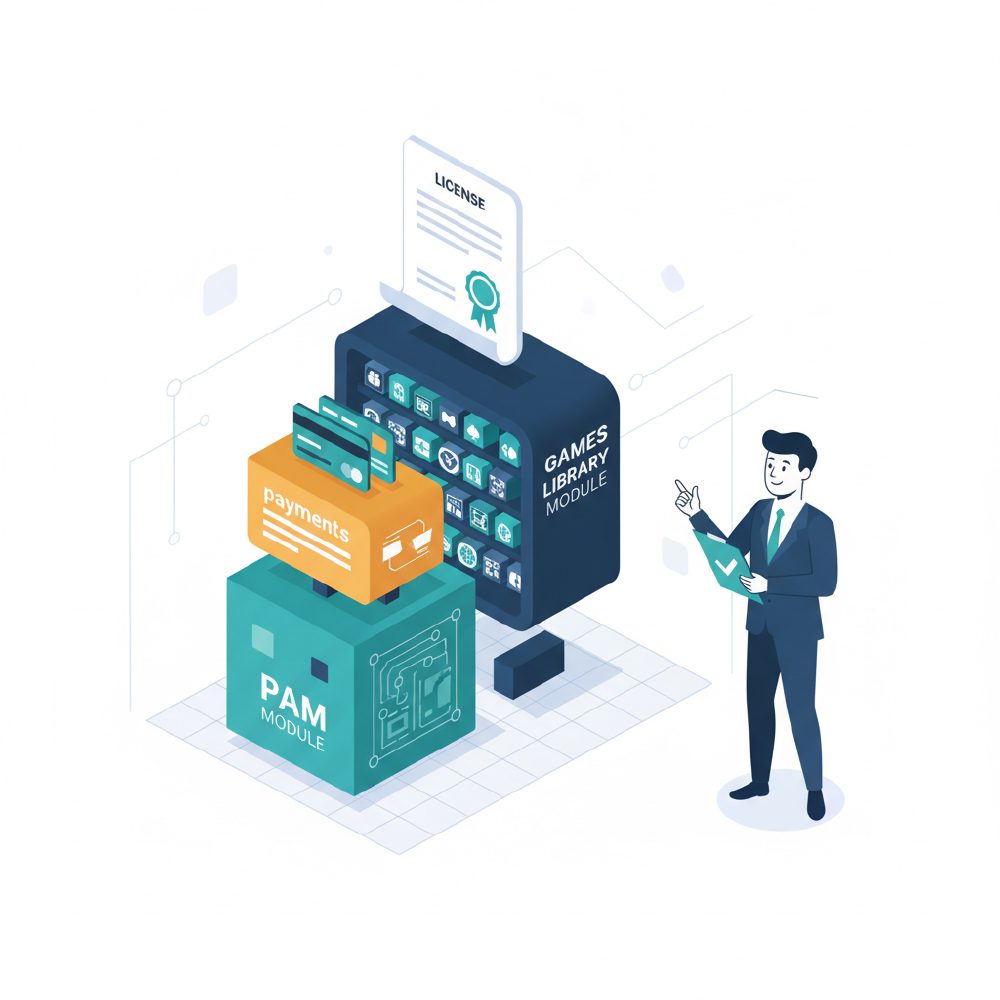
A white label casino is a pre-built gambling platform — games, PAM, payments, support — that you brand and market under your own name while the provider handles the underlying infrastructure and, usually, the master license. A turnkey solution is similar but typically transfers more operational control and sometimes the license itself to the operator. The line between them blurs in vendor marketing, so read contracts carefully.
The practical difference matters enormously for your P&L. With a true white label, the provider holds the master Curaçao or MGA license and sub-licenses to you. You pay a revenue share — typically 15–35% of GGR depending on the provider — and in exchange you get a faster launch, no direct regulatory relationship, and no need to hire a compliance officer on day one. The trade-off is that you never fully own the operation. If the provider loses their license, your casino goes dark overnight.
A turnkey solution, as offered by companies like SoftSwiss's SOFTSWISS Turnkey or EveryMatrix's white-label stack, typically means you apply for your own license (they assist) and you own the PAM data. Revenue share is lower — often 10–20% — but setup costs are higher and timelines stretch to 3–6 months. For operators planning to scale past $500K GGR monthly, the economics almost always favor turnkey or a direct license over a pure white label.
There's also a third model that vendors rarely lead with: the platform-as-a-service (PaaS) arrangement where you license the software, pay a flat monthly fee, and hold your own gambling license independently. Operators like this structure because it removes the revenue-share drag entirely, but it requires more capital upfront and a more sophisticated compliance function. Know which model you're actually buying before you sign anything.
| Factor | White Label | Turnkey | PaaS / Licensed Software |
|---|---|---|---|
| License holder | Provider (master license) | Operator (own license) | Operator (own license) |
| Time to launch | 4–8 weeks | 8–20 weeks | 12–30 weeks |
| Revenue share to provider | 15–35% GGR | 10–20% GGR | 0% (flat fee) |
| Setup cost (est.) | $5K–$30K | $20K–$80K | $50K–$200K+ |
| Operator data ownership | Partial / shared | Full | Full |
| Regulatory risk if provider fails | High | Low | Low |
| Best for | First-time operators, MVP testing | Scaling operators | Established groups |
Which jurisdiction should you license under before launching a white label casino?
For most operators launching in 2026, Curaçao eGaming (now under the new National Ordinance framework enforced since 2023) or Anjouan are the fastest offshore paths — 6–12 weeks and $15,000–$35,000 in licensing costs. MGA (Malta) and UKGC unlock better payment processing but add 4–9 months and $50,000–$150,000 in compliance overhead. Match the jurisdiction to your target markets, not just to cost.
Curaçao completed a major regulatory overhaul in 2023, replacing the old master-license sublicense model with direct licensing through the Curaçao Gaming Control Board (GCB). Every operator now needs their own license, which costs around $17,000–$25,000 in government fees plus local substance requirements. The process typically takes 8–14 weeks if your documents are clean. It's still the most accessible offshore option and works for most LATAM, Asian, and African markets — but tier-1 EU payment processors and Google Ads remain largely off-limits.
Anjouan (Union of the Comoros) emerged as a genuine alternative after 2022. Fees are lower — roughly $15,000–$20,000 — and processing is faster, sometimes under 6 weeks. The jurisdiction is less recognized by banks, so payment processing relies heavily on crypto and offshore processors. If your player acquisition strategy is crypto-native or you're targeting markets where Curaçao-licensed operators already face scrutiny, Anjouan is worth considering.
If you're targeting Europe seriously, MGA is the benchmark. The license costs €25,000 in application fees, requires a €100,000 player fund deposit, and takes 4–9 months. UKGC is even more demanding — £25,000+ in fees, extensive AML/KYC infrastructure, and an ongoing compliance cost that most operators underestimate at £100,000+ per year. These licenses open Visa/Mastercard acquiring, Google Ads, and affiliate networks that simply won't work with offshore licenses. The cost is real, but so is the addressable market.
One critical point: if you're using a white label provider who holds the master license, you don't get to choose the jurisdiction independently — you inherit their regulatory exposure. That's a risk many first-time operators don't price in until something goes wrong.
How do you choose the right white label casino platform provider?
Evaluate providers on five axes: game library breadth, PAM flexibility, payment integrations, revenue-share structure, and — most importantly — whether they'll still exist in two years. SoftSwiss, EveryMatrix, Slotegrator, and Turnkey Casino are the names that come up most often in operator shortlists for good reason, but each has a different commercial model and ideal operator profile.
SoftSwiss is probably the most operator-friendly for a full white label with their own license. Their SOFTSWISS Casino Platform includes a PAM, a game aggregator with 10,000+ titles, and a sportsbook option. Revenue share starts around 15% GGR for smaller operators and can be negotiated down at volume. The setup fee is typically $20,000–$40,000. Their Curaçao sub-licensing path is well-worn, and their back-office tooling is genuinely strong — I've reviewed their CRM and bonus engine firsthand, and it's production-grade.
EveryMatrix offers a more modular approach through their CasinoEngine, WalletEngine, and GamesHub products. You can buy the stack piecemeal, which is attractive if you already have one component (say, a sportsbook) and want to add casino. Their Malta-based operation means they can support MGA-licensed operators more naturally than some competitors. Expect similar revenue-share ranges but higher minimum monthly fees — roughly $5,000–$10,000/month platform fee before revenue share kicks in.
Slotegrator is a popular choice for operators in LATAM and Asia specifically because of their local payment integrations and their Turnkey Casino product, which bundles everything including a Curaçao license option. Their game aggregator pulls from 100+ studios. The trade-off is that their PAM is less sophisticated than SoftSwiss's — bonus tooling and segmentation are more limited, which matters as you try to grow LTV.
Whatever provider you shortlist, demand a demo of the back-office, not just the player-facing UI. Ask specifically: how do you handle payment provider failures? What's the SLA for game downtime? Who owns player data if we terminate the contract? Vendors who hedge on the last question are telling you something important.
| Provider | Best For | Revenue Share Range | Setup Fee (est.) | License Options | Notable Strength |
|---|---|---|---|---|---|
| SoftSwiss | Full-stack WL / turnkey | 15–25% GGR | $20K–$40K | Curaçao, own license support | PAM depth, bonus engine |
| EveryMatrix | Modular / MGA operators | 12–22% GGR | $15K–$35K + monthly fee | MGA, Curaçao | Modularity, EU compliance |
| Slotegrator | LATAM, Asia, crypto-native | 15–30% GGR | $10K–$25K | Curaçao, Anjouan | Local payment integrations |
| Turnkey Casino | Budget-conscious first launch | 20–35% GGR | $5K–$15K | Curaçao sub-license | Fast launch, low entry cost |
| BetConstruct | Sports + casino combo | Negotiable | $30K–$60K | MGA, Curaçao, others | Sportsbook integration |
What game content do you need and how does a white label casino integration work for game libraries?
Most white label platforms come pre-integrated with a game aggregator — SoftSwiss's aggregator, EveryMatrix's GamesHub, or Slotegrator's own network — giving you access to thousands of titles from studios like Pragmatic Play, Evolution, Play'n GO, and NetEnt on day one. You don't negotiate direct studio deals; you inherit the aggregator's contracts. That's the speed benefit, but it also means you pay aggregator margins on top of platform revenue share.
The aggregator model works like this: studios license their games to aggregators at a royalty rate (typically 10–15% of GGR per game). The aggregator bundles those games and licenses access to platforms like SoftSwiss or EveryMatrix, who then pass them to you as part of the white label package. By the time GGR flows through the chain, you might be paying 15–25% to the platform plus 10–15% implicit game cost — meaning 25–40% of gross revenue is gone before you pay for traffic. Model this out before you sign.
For live casino, Evolution Gaming is essentially non-negotiable for tier-1 markets — they hold roughly 70% of the live casino market and their tables are what players expect. However, Evolution requires operators to meet minimum GGR thresholds (often $10,000–$20,000/month) before they'll provision a dedicated table. In the early months, you'll be on shared tables, which is fine operationally. Pragmatic Play Live is a credible alternative with lower minimums and strong LATAM penetration.
One practical decision: how many games to launch with. The instinct is to open with 3,000+ titles to look comprehensive. In practice, 80% of player sessions go to the top 50–100 games. A curated lobby of 500–800 titles with strong slot, live casino, and crash game representation outperforms a bloated catalog with poor UX. Work with your platform's lobby management tools to feature games strategically — new releases, jackpots, and live casino front and center.
How do you build a payment stack that actually converts for an online casino white label solution?
Your payment stack is where most white label casinos leak revenue without realizing it. Plan for at least one card processor (even a high-risk one), one or two crypto options, and market-specific local payment methods. A single payment provider failing — which happens regularly in high-risk processing — can kill your deposit conversion overnight. Redundancy is not optional.
Card processing for online gambling is notoriously difficult. Visa and Mastercard's high-risk MCC codes (7995) mean most mainstream acquirers won't touch you without an MGA or UKGC license. With a Curaçao or Anjouan license, you're working with offshore or high-risk processors: companies like Payvision (now ING), Genome, Decta, or smaller boutique processors. Expect processing fees of 3–6% on deposits versus 1.5–2.5% for standard e-commerce. Chargeback rates above 1% will get your account terminated, so invest in fraud tooling early.
Crypto is no longer optional for offshore operators — it's often the primary deposit method. Integrate at least Bitcoin and Ethereum directly, and consider USDT (TRC-20 and ERC-20) given its stability and popularity in LATAM and Eastern Europe. Providers like CoinsPaid (which integrates natively with SoftSwiss) or B2BinPay handle crypto processing cleanly and can auto-convert to fiat for your treasury. Crypto deposits also have zero chargeback risk, which your payment processors will appreciate.
For LATAM specifically, local payment methods are the difference between a functional business and a ghost town. In Brazil, PIX is mandatory — it processes 40% of all digital transactions in the country. In Mexico, OXXO Pay and SPEI matter. In Colombia, PSE is standard. EveryMatrix and Slotegrator both have reasonable LATAM payment coverage, but verify specific methods for your target country before signing — don't assume 'LATAM coverage' means what you need.
Finally, set up a payment waterfall: if your primary card processor declines a transaction, route it automatically to a backup. Most platforms support this natively, but it requires configuration. Operators who skip this step see 15–25% of otherwise-successful deposits fail silently. That's revenue walking out the door.
What does the actual 7-step launch process look like for a white label casino?
The seven steps are: (1) define your market and business model, (2) select and engage a licensing jurisdiction, (3) sign a platform provider contract, (4) configure your brand, lobby, and bonuses, (5) integrate and test your payment stack, (6) complete compliance and responsible gambling setup, and (7) go live with a controlled soft launch. Realistically, steps 2–3 run in parallel and the whole process takes 6–16 weeks.
Step 1 — Market and model definition: Before you talk to a single vendor, answer three questions: who is your target player (geography, device, game preference), what is your acquisition channel (SEO, affiliates, paid social, crypto communities), and what is your 12-month GGR target? These answers determine your jurisdiction, platform, and payment stack. Operators who skip this end up with a Curaçao license targeting German players — a mismatch that costs them dearly.
Steps 2–3 — Licensing and platform selection (run in parallel): Engage a licensing agent for your chosen jurisdiction while simultaneously shortlisting 2–3 platform providers. Most licensing agents charge $3,000–$8,000 for Curaçao or Anjouan and handle document preparation, company formation in the jurisdiction, and government fee submission. At the same time, request commercial proposals from SoftSwiss, Slotegrator, or your shortlisted providers. Negotiate revenue share and setup fees — there is always room to move, especially if you can demonstrate a credible acquisition plan.
Steps 4–5 — Configuration and payment integration: Once contracts are signed, you're in the platform's onboarding queue. Expect 2–4 weeks to configure your brand (logo, color scheme, domain, email templates), build your game lobby, and set up your bonus and promotion structure. Payment integration runs simultaneously — your platform provider will have a list of pre-integrated PSPs; pick 2–3 and complete their KYB onboarding. This is the step that most commonly causes delays because PSP onboarding for gambling merchants can take 2–6 weeks on its own.
Steps 6–7 — Compliance and soft launch: Before going live, implement your AML/KYC workflow (most platforms include a KYC module; integrate Sumsub or Jumio if you need more robust identity verification), set up responsible gambling tools (deposit limits, self-exclusion, reality checks — required even under Curaçao's new framework), and run a QA pass across deposit, gameplay, and withdrawal flows. Soft-launch to a small traffic cohort — affiliates or a closed beta — before opening marketing spend. You will find payment issues in the first 48 hours. Better to find them with 100 players than 10,000.
What does a white label casino actually cost to launch and operate in year one?
Realistic all-in year-one costs for a white label casino sit between $30,000 and $150,000 depending on jurisdiction, platform choice, and marketing spend. The $10,000 figures in some vendor decks are technically possible but exclude licensing deposits, payment processing reserves, and any meaningful player acquisition budget — the three things that actually determine whether you survive year one.
Here's a realistic cost breakdown for a Curaçao-licensed white label launch targeting LATAM or emerging markets in 2026. Licensing and company formation: $15,000–$30,000 (government fees, legal, registered agent). Platform setup fee: $10,000–$40,000. Monthly platform fees (revenue share or flat): $3,000–$15,000/month. Payment processing reserves: $10,000–$25,000 (PSPs typically require a rolling reserve of 5–10% of processed volume, held for 90–180 days). KYC/AML tooling: $500–$2,000/month for Sumsub or similar. Customer support (outsourced): $2,000–$5,000/month. Marketing and affiliate budget: $5,000–$50,000/month depending on ambition.
The payment reserve requirement catches almost every first-time operator off guard. When you process $100,000 in deposits in month one, your PSP holds back $5,000–$10,000 as a rolling reserve. That capital is tied up for months. Budget for it explicitly or you'll hit a cash flow wall at exactly the moment you're trying to scale.
On the revenue side, a realistic white label casino in a competitive market might generate $50,000–$200,000 GGR in months 3–6 if acquisition is working. After platform revenue share (20%), game costs (implicit, ~12%), payment processing fees (4%), and bonusing (15–20% of GGR is typical), your net margin on GGR might be 45–55%. That sounds healthy until you subtract fixed costs. The math only works if you're generating enough volume — below roughly $80,000–$100,000 GGR/month, most white label operations are break-even at best.
| Cost Item | Low Estimate | High Estimate | Notes |
|---|---|---|---|
| Licensing & company setup | $15,000 | $35,000 | Includes government fees, legal, registered agent |
| Platform setup fee | $5,000 | $40,000 | Varies widely by provider |
| Monthly platform fees (12 months) | $36,000 | $120,000 | Revenue share or flat fee model |
| Payment processing reserves | $10,000 | $25,000 | Rolling reserve held by PSPs |
| KYC / AML tooling | $6,000 | $24,000 | Sumsub, Jumio, or similar |
| Customer support (outsourced) | $24,000 | $60,000 | 24/7 multilingual adds cost |
| Marketing / affiliate budget | $30,000 | $200,000+ | Biggest variable; determines growth |
| Total Year 1 (est.) | $126,000 | $504,000+ | Marketing budget dominates at scale |
How do responsible gambling and AML compliance work under a white label setup?
Under a white label arrangement, the platform provider typically supplies the technical tools — deposit limits, self-exclusion, session timers — but the operator is responsible for implementing and enforcing them. Curaçao's 2023 reforms explicitly require operators to have documented AML policies, a compliance officer (even a part-time one), and functional KYC before accepting real-money wagers. Ignoring this is how licenses get revoked.
The Curaçao Gaming Control Board's National Ordinance on Offshore Games of Hazard (NOOGH), which came into full effect in 2023, is meaningfully stricter than the old sublicense regime. Operators must now demonstrate: a documented AML/CFT policy, source of funds checks for high-value players, a self-exclusion mechanism linked to national exclusion lists where they exist, and a named compliance officer. The GCB has started conducting audits and has revoked licenses — this is no longer a rubber-stamp jurisdiction.
Most white label platforms include a KYC module that handles document upload and basic verification. For anything beyond light verification, integrate a dedicated identity verification provider. Sumsub is the most commonly used in the iGaming space — their API integrates with most major platforms and their pricing is per-verification (roughly $1.50–$3.00 per check at volume). Jumio and Onfido are alternatives with stronger EU compliance tooling if you're heading toward MGA.
AML transaction monitoring is the piece operators most often skip. Your platform will flag obvious patterns, but you need a documented process for what happens when a flag fires: who reviews it, what evidence is collected, when you file a Suspicious Activity Report (SAR) with your jurisdiction's FIU. Even offshore, failing to have this process documented is a license condition violation. Hire a part-time compliance consultant to build the policy framework — it's a $3,000–$8,000 one-time cost that protects your license.
What are the most common mistakes operators make when starting a white label casino?
The most expensive mistakes I see repeatedly: underestimating payment processing complexity, launching without a retention strategy, choosing a jurisdiction that doesn't match target markets, and signing a white label contract without understanding the exit clause. Each of these can cost more to fix than the entire initial setup budget.
Payment processing is where most launches quietly die. Operators get one PSP approved, go live, and then the PSP terminates the account at month three because chargeback rates crept above their threshold. Suddenly there's no deposit method and players can't fund their accounts. The fix — finding and onboarding a replacement PSP — takes 4–8 weeks. Always have at least two active payment providers and one crypto option live before you launch, not as a backup plan.
Launching without a retention strategy is the other silent killer. White label operators typically pour their budget into acquisition — affiliates, paid search, bonuses — and then watch players deposit once and never return. CRM tooling on most white label platforms is functional but requires configuration: set up triggered emails for first deposit, day-3 inactivity, and week-two re-engagement before you go live. Retention campaigns cost a fraction of acquisition and dramatically change your LTV math.
The exit clause issue is something I see operators discover too late. Many white label contracts include clauses that prevent you from taking your player database if you terminate — the provider owns the data. Some include non-compete provisions. If you ever want to migrate to your own license or a different platform, you could be starting from zero on your player base. Read the data ownership and termination clauses before signing. If the provider won't negotiate on these, treat it as a red flag.
Finally: don't launch in a regulated market on an offshore license and assume you're invisible. Germany's GlüNeuRStV, the Netherlands' KSA, and Sweden's Spelinspektionen actively pursue unlicensed operators targeting their residents. A Curaçao license does not provide legal cover for marketing to German players. Know which markets your license permits and enforce geo-blocking for the rest — both technically and in your affiliate agreements.
How does a white label casino compare to a turnkey solution for operators planning to scale?
For operators projecting over $200,000 GGR per month within 18 months, a turnkey solution with your own license almost always makes more financial sense than staying on a white label. The revenue-share differential — often 10–15 percentage points — compounds significantly at volume. The white label wins on speed and lower upfront capital; the turnkey wins on economics and operational independence at scale.
Run the numbers on a simple scenario: $300,000 GGR/month. On a white label at 20% revenue share, you're paying $60,000/month to the provider — $720,000/year. On a turnkey with your own license at 10% platform fee, that's $30,000/month — $360,000/year. The $360,000 annual difference funds your MGA license application, a full compliance function, and a development team with money left over. The math isn't subtle.
The counterargument for sticking with white label longer is operational risk. Running your own licensed operation means owning your compliance failures, your payment failures, and your player disputes. The platform provider absorbs a lot of that risk in a white label arrangement. For operators without an experienced compliance or operations hire, that risk transfer has real value — until it doesn't, because the provider's problems become your problems too.
My practical recommendation: use a white label to validate your market and acquisition strategy in months 1–12. If you're hitting $100,000+ GGR/month consistently by month 9, start the turnkey or direct license process in parallel. The two processes can run simultaneously — you don't have to shut down the white label to apply for your own license. Migrate players when the new platform is ready. Most operators who planned this transition from the start execute it cleanly; those who didn't plan for it scramble.



Comments
No comments yet, be the first.