White Label Casino App in 2026: Build vs Buy — The Operator's Real Decision
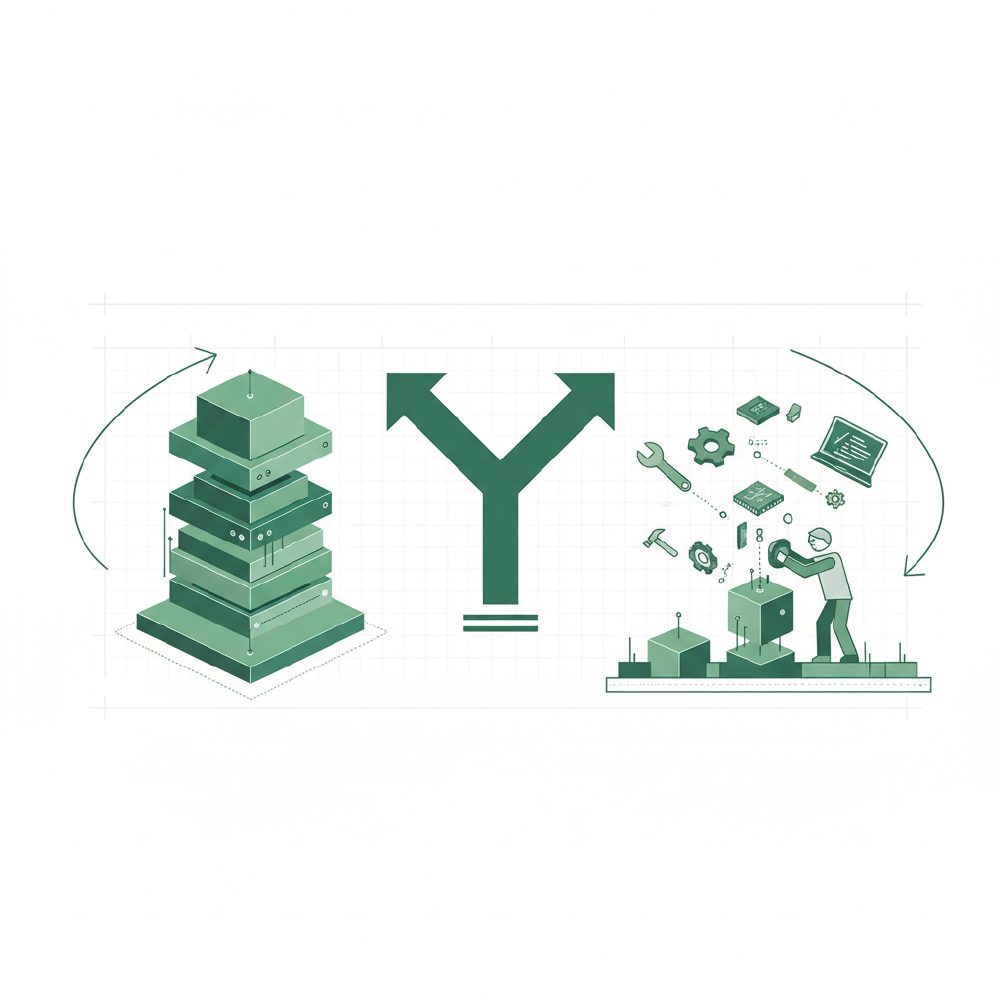
What exactly is a white label casino app, and how does it differ from a turnkey or custom build?
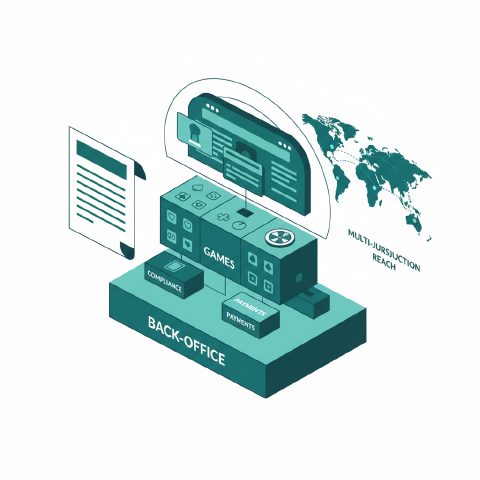
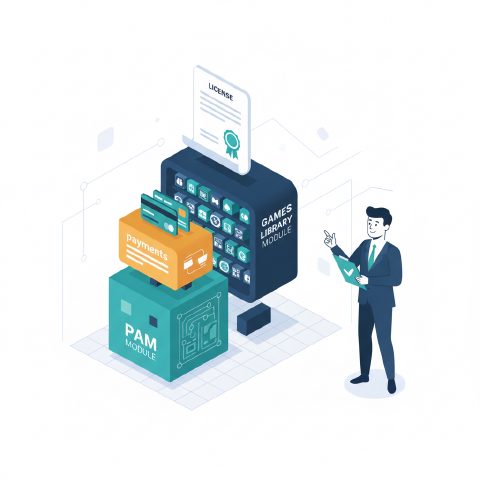
A white label casino app is a pre-built mobile gambling platform — games, payment rails, back-office, and compliance tools already integrated — that you license, brand, and deploy under your own name. You skip the engineering; the provider runs the infrastructure. A turnkey solution adds a licensed legal entity on top. A custom build means you own every line of code and every vendor relationship.
The terminology gets blurred constantly in vendor pitches, so let me be precise. A white label platform (think SoftSwiss, EveryMatrix's EGT Digital, or Tain) gives you a branded front-end sitting on shared infrastructure. You pick a skin, configure your game lobby, set bonus rules, and go live. The provider handles hosting, game aggregation, and often KYC tooling. You are essentially a tenant in their ecosystem.
A turnkey solution — offered by companies like SoftSwiss's full-service arm or BetConstruct — goes further by wrapping a sub-license under their Curaçao or MGA master license into the package. That removes one of the hardest problems for a new operator: getting regulated. The trade-off is that you are doubly dependent on a single vendor for both the tech and the legal standing to operate.
A custom build means commissioning your own platform from a software house or assembling an in-house engineering team. You integrate game aggregators (Relax Gaming, Pariplay, Softgamings) directly, negotiate your own payment processor contracts, and deploy on your own cloud infrastructure. The upside is full ownership and margin control. The downside is that you are looking at 12–24 months of development, a CTO-level hire, and a burn rate that can easily exceed $500,000 before you take a single bet.
The mobile dimension adds a wrinkle most operators miss until they're already in contract negotiations. When a white label vendor says 'mobile casino app,' they almost always mean a Progressive Web App — a mobile-optimized website that can be added to a home screen. True native iOS and Android apps require Apple App Store and Google Play approval, which is notoriously difficult for real-money gambling apps outside of licensed US states. Ask any vendor explicitly whether their 'app' is a PWA or a native binary. The answer changes your compliance posture and your user acquisition strategy significantly.
What are the real costs of a white label casino app versus building your own?
White label setup fees run $15,000–$80,000 depending on the provider, with ongoing revenue shares of 15–35% of GGR. Custom builds require $300,000–$1,000,000+ upfront in development, plus ongoing infrastructure and licensing costs. The crossover point where building becomes cheaper is typically $3M–$5M in annual GGR — and most operators never reach it.
Let me give you a realistic cost stack for both paths. On the white label side, a mid-tier provider like Softgamings or BetSoft's platform arm will charge a setup fee in the $20,000–$50,000 range, a monthly minimum (often $2,000–$5,000), and a revenue share that starts around 20–25% of GGR. Some providers structure it as a flat SaaS fee plus a lower rev-share — that model is easier to forecast but usually more expensive at low volume. Add your Curaçao or Anjouan license (roughly $15,000–$30,000 in the first year including agent fees), a payment processing setup, and your marketing budget, and you're realistically at $100,000–$200,000 to get to a live, compliant product.
The custom build math is harsher upfront but more favorable long-term. A serious platform build — back-office, wallet, bonus engine, CMS, mobile front-end — from a reputable software house in Eastern Europe or Southeast Asia will cost $300,000–$700,000 and take 12–18 months. If you hire in-house engineers in the US or Western Europe, double those figures. You still need to integrate a game aggregator (Pariplay and Relax Gaming charge integration fees plus rev-share on top of studio deals), a certified RNG, and a payment gateway. By the time you're live, you've likely spent $600,000–$1,200,000.
The revenue share math is where white label really bites operators who succeed. At $500,000 GGR per month, a 25% revenue share costs you $125,000 monthly — $1.5M annually — just in platform fees. A custom platform at that volume would cost a fraction of that in infrastructure and maintenance. The problem is that most operators never reach $500,000/month GGR, so the white label model is actually the rational economic choice for the majority of launches. Build only if you have a credible path to scale and the capital to survive the development runway.
| Factor | White Label Casino App | Custom Build |
|---|---|---|
| Setup / Development Cost | $15,000–$80,000 | $300,000–$1,200,000+ |
| Time to Market | 8–16 weeks | 12–24 months |
| Ongoing Platform Fee | 15–35% GGR rev-share | Infrastructure + staff ($20K–$80K/mo) |
| Licensing | Sub-license or own license needed | Own license required |
| Mobile App Type | PWA (usually); native rare | Native or PWA — your choice |
| Customization | Limited (skin/lobby config) | Full — every feature is yours |
| Break-even vs WL | N/A — baseline | ~$3M–$5M annual GGR |
| Vendor Lock-in Risk | High | Low |
Which jurisdictions actually support a white label casino app launch, and which ones block it?
Curaçao and Anjouan are the most white-label-friendly jurisdictions — fast, affordable, and compatible with most platform providers. MGA and UKGC impose technical standards (certified RNG, approved software, specific data residency) that eliminate many white label options. US state licenses are almost entirely incompatible with offshore white label platforms.
Curaçao's 2023 regulatory overhaul under the new National Ordinance on Offshore Games of Hazard (NOOGH) changed the sub-licensing model that made white label so attractive there. As of 2024–2025, operators need their own Curaçao Gaming Authority (CGA) license rather than sheltering under a master licensee. That adds time and cost but is still far more accessible than EU licensing — expect 3–6 months and $25,000–$40,000 all-in for a new CGA license. Most white label providers have already adapted their offering to this structure.
Anjouan (Comoros) has emerged as a fast alternative — licenses can be issued in 4–8 weeks for around $15,000–$25,000. The jurisdiction is less recognized by payment processors and banks, which creates friction in your payment stack. For operators targeting markets where players don't scrutinize the license seal, it works. For any market with sophisticated players or banking relationships that require a recognized license, it's a liability.
MGA (Malta Gaming Authority) is the gold standard for EU-facing operators, but the technical compliance requirements are serious. Your platform must use MGA-approved software, certified game content, and meet specific data protection standards. Most white label providers offering Curaçao-grade platforms are not MGA-compliant out of the box. EveryMatrix's platform is MGA-certified; so is SoftSwiss's. But you're looking at a 6–12 month licensing process and €25,000+ in application fees alone, before annual fees and compliance costs.
US state licensing is a separate universe. New Jersey's DGE, Pennsylvania's PGCB, and Michigan's MGCB all require platform certification, server location within the state (or a certified hub), and vendor approval. No offshore white label platform is approved for real-money operation in any regulated US state. If your target is the US market, you need a state-specific build or a partnership with an approved platform provider like IGT, Scientific Games, or GAN — and those relationships come with their own commercial terms that make offshore white label fees look modest.
| Jurisdiction | WL Compatible? | Typical Timeline | Approx. First-Year Cost | Key Constraint |
|---|---|---|---|---|
| Curaçao (CGA) | Yes | 3–6 months | $25,000–$50,000 | New own-license requirement since 2024 |
| Anjouan | Yes | 4–8 weeks | $15,000–$30,000 | Limited payment processor acceptance |
| MGA (Malta) | Selective | 6–12 months | $50,000–$150,000+ | Platform must be MGA-certified |
| UKGC | Selective | 6–12 months | $60,000–$200,000+ | Strict AML, RG, technical standards |
| US States (NJ/PA/MI) | No | 12–24 months | $500,000–$2,000,000+ | State-certified platform required |
| Colombia (Coljuegos) | Partial | 12–18 months | $300,000+ | Local entity, certified software required |
| Mexico (SEGOB) | Partial | 18–36 months | Varies widely | Complex, slow, enforcement inconsistent |
Is a white label casino app actually a native mobile app, or is it a PWA?
In 99% of cases, what white label vendors call a 'mobile casino app' is a Progressive Web App — a browser-based experience designed to behave like a native app. True native iOS and Android apps are almost never included in standard white label packages, and distributing real-money gambling apps through the Apple App Store or Google Play is heavily restricted outside approved US states.
This distinction matters operationally, not just semantically. A PWA runs in the browser, can be pinned to the home screen, and supports push notifications on Android (iOS PWA push support improved with iOS 16.4 but remains less reliable). It requires no app store approval, which is why every offshore white label platform defaults to this model. The user experience on a well-built PWA is genuinely close to native — HTML5 games render at 60fps on modern devices, and providers like SoftSwiss and EveryMatrix have invested heavily in their mobile UI frameworks.
The limitation shows up in user acquisition. You cannot run Apple Search Ads or Google App Campaigns for a PWA. App store presence drives organic discovery and trust signals that a web app cannot replicate. For markets where mobile app download behavior is strong — Southeast Asia, parts of LATAM — this is a real conversion gap. Some operators work around it by distributing an APK (Android Package) directly from their site, bypassing the Play Store. That works for Android but is impossible on iOS without jailbreaking, and the friction of enabling unknown app sources on Android does cost you installs.
A handful of white label providers have started offering native app wrappers — essentially a thin native shell around a WebView — that can be submitted to app stores in jurisdictions where gambling apps are permitted (UK, select EU countries, certain US states). This is different from a truly native app with platform-specific code, but it does get you an App Store listing. If mobile app store presence matters to your acquisition strategy, ask vendors specifically about native wrapper availability and which stores they've successfully submitted to. Get references from operators who've done it — not just a promise in the sales deck.
My honest take: for most offshore or Curaçao-licensed launches, the PWA model is perfectly adequate and removes significant distribution complexity. The operators who genuinely need native apps are those targeting regulated EU markets with app store presence or US state-licensed operations. If that's you, the white label route probably isn't the right fit anyway — you'll need a platform that meets the technical bar those markets require.
How long does it actually take to launch a white label casino app?
A realistic white label casino app launch takes 8–16 weeks from contract signing to a live, compliant product — assuming your license is already in hand. Add 3–6 months for Curaçao licensing if you're starting from scratch. Vendors who promise 2–4 weeks are glossing over KYC setup, payment processor onboarding, and game content configuration, which always take longer than the sales team admits.
Here's the actual sequence. Week 1–2: contract signing, initial setup fee payment, and access to the back-office configuration environment. Weeks 2–6: brand customization (logo, color scheme, domain configuration, SSL), lobby configuration (selecting game providers, setting up categories, configuring RTP display), and bonus engine setup. This phase consistently runs longer than vendors quote because operators change their minds about game selection and bonus structures — sometimes multiple times. Build in buffer.
Weeks 4–10 run in parallel with the above: payment processor onboarding. This is almost always the longest pole in the tent. Getting a payment gateway approved for a gambling merchant account requires your license documentation, business registration, a website that's substantially complete, and often a personal guaranty from the director. Processors like Payvision, Nuvei, or Worldpay for Gaming typically take 4–8 weeks for underwriting. Crypto payment processors (CoinsPaid, B2BinPay) are faster — sometimes 1–2 weeks — which is why so many new operators launch crypto-first.
KYC and AML tool integration adds another layer. Most white label platforms have Sumsub or Onfido built in, but you still need to configure your verification tiers, set your deposit limits, and test the workflow end-to-end. Responsible gambling tools (self-exclusion, deposit limits, reality checks) need to be live before you accept real money in most jurisdictions — and testing them properly takes time. Operators who rush this phase end up with compliance gaps that surface at the worst possible moment.
The licensing timeline is separate and should be running in parallel from day one. If you're applying for a new Curaçao CGA license, start the application the same week you sign your platform contract. Don't wait until the platform is ready — the license won't be. The net result: 8–16 weeks for the platform build-out, 3–6 months for licensing, with the two tracks overlapping. Your realistic go-live date from a standing start is 4–6 months, not the 6–8 weeks some vendors imply.
What should operators look for when evaluating white label mobile casino platforms?
Prioritize game aggregation breadth, payment method coverage in your target market, back-office reporting depth, and the provider's track record in your target jurisdiction. Secondary but critical: mobile UI quality (test it yourself on actual devices), bonus engine flexibility, and the contract terms around data ownership and exit rights.
Game aggregation is table stakes but the details matter. Most white label platforms offer access to 3,000–10,000+ titles through aggregators like Softgamings, Pariplay, or their own proprietary hubs. What you need to verify is which studios are available in your target market — game content is licensed by territory, and a provider might have 8,000 games globally but only 2,000 cleared for your jurisdiction. Ask for a territory-specific game list, not the global catalog number they use in the pitch.
Payment method coverage is where operators get burned most often. A white label platform might support 50 payment methods globally, but in your specific target market — say, Brazil or Mexico — the methods that actually convert might be Pix, OXXO, or SPEI. Verify that these are live integrations with real transaction history, not 'coming soon' items on a roadmap. Call the provider's existing operators in that market if you can get references. Payment conversion rates vary enormously by method and region, and a platform that doesn't support local preferred methods will kill your deposit funnel.
Back-office reporting is underrated by operators who haven't run a casino before. You need player-level data, cohort analysis, bonus cost tracking, and payment reconciliation — not just top-line GGR figures. SoftSwiss's back-office is genuinely strong here; some smaller providers give you a basic dashboard that makes it impossible to diagnose player value or marketing ROI. Ask for a live demo of the reporting suite, not a screenshot. If they won't show you a live environment, that's a signal.
Read the contract exit clauses before you sign anything. Some white label providers retain your player data when you leave — or make migration so expensive that you're effectively locked in forever. You want contractual guarantees that your player database (email addresses, deposit history, KYC records) is exportable in a standard format. Data portability is the difference between a business you own and one you're renting indefinitely.
How do white label casino apps handle payments, and what are the biggest friction points?
White label platforms integrate payment gateways either through their own aggregated payment hub or via direct integrations you configure. The friction points are merchant account approval (gambling is high-risk, so expect scrutiny), currency conversion fees, and chargeback management. Crypto payment rails have become the path of least resistance for offshore operators in 2025–2026.
Most established white label providers — SoftSwiss, EveryMatrix, BetConstruct — operate their own payment aggregation layer that sits between you and the underlying processors. This simplifies your integration but adds a margin layer. The platform takes a cut of payment processing fees on top of their GGR revenue share. For high-volume operators, negotiating a pass-through payment model (where you deal directly with processors and the platform just provides the integration) is worth the conversation, though smaller operators rarely have the leverage to get it.
Fiat payment processing for gambling remains genuinely difficult in 2026. Visa and Mastercard have tightened their gambling merchant category codes (MCC 7995) policies repeatedly since 2020. Many issuing banks block gambling transactions at the card level, which means your players' cards get declined even when you have a legitimate acquiring relationship. Effective operators build redundancy into their payment stack — two or three acquiring relationships, local payment methods, and a crypto option. A white label platform that only offers one or two payment integrations is a liability.
Cryptocurrency payments have become standard for offshore operators, not a niche add-on. CoinsPaid processes billions in crypto gambling volume annually and integrates with most major white label platforms. The operational advantages are real: no chargebacks, faster settlement, lower processing fees, and easier merchant account approval. The compliance requirement is a crypto AML policy and wallet screening (Chainalysis or Elliptic integrations are common). If your platform provider doesn't have a solid crypto integration, that's a gap worth factoring into your vendor selection.
Chargebacks are the silent killer for new operators. A chargeback rate above 1% triggers processor warnings; above 2% gets your merchant account terminated. White label platforms vary significantly in their chargeback management tooling — some have built-in velocity checks, device fingerprinting, and 3DS2 enforcement; others leave you exposed. Ask specifically about chargeback rates across their existing operator base, and what tools they provide to manage it. This is not a question vendors love, which is exactly why you should ask it.
What are the hidden costs operators discover after signing a white label casino platform contract?
The costs vendors don't lead with include game content licensing fees billed separately from the platform fee, bonus abuse losses from inadequate fraud tooling, payment processing margins baked into the aggregation layer, customer support setup costs, and the expense of building marketing infrastructure that the platform doesn't provide.
Game content is the most common surprise. The platform fee covers access to the aggregation hub, but individual studios often charge separately — either a flat monthly fee or a rev-share on top of the aggregator's margin. Premium studios like Evolution Gaming (live dealer) charge operators directly based on table usage, and those fees can run $10,000–$50,000+ per month at meaningful volume. When you're building your P&L model, don't assume the platform's game catalog is fully included in the quoted price. Ask for a complete fee schedule including all third-party content costs.
Bonus abuse is a cost that doesn't show up in the vendor pitch at all. A poorly configured bonus engine — or one without adequate fraud detection — can be exploited by bonus hunters who drain your promotional budget without generating real player value. The white label platform provides the bonus engine; the configuration and fraud rule-setting is largely your responsibility. Operators who don't have experience building bonus structures often learn this lesson expensively in their first three months. Budget for a bonus strategy consultant or hire someone with actual operator experience to configure this correctly from day one.
Customer support is another gap. White label platforms provide the technology; they don't staff your support queue. You need live chat agents, email support, and ideally phone support for VIP players. Outsourcing to a BPO with iGaming experience costs $8–$20 per agent hour. For a 24/7 operation with 3–4 agents, that's $20,000–$40,000 per month before you've acquired a single player. Some operators underestimate this and launch with inadequate support, which destroys player retention in the first 30 days.
Marketing infrastructure is entirely outside the platform scope. Affiliate management software (Income Access, MyAffiliates, or TUNE), email marketing tools, CRM configuration, and the actual cost of acquiring players — none of this is in the white label package. Player acquisition in competitive markets costs $200–$800 per depositing player depending on channel and geography. Build this into your 12-month runway calculation, not as an afterthought once you're live.
When does building a custom casino platform make more sense than buying a white label solution?
Build your own platform when you have a clear path to $5M+ annual GGR, a proprietary game or content angle that requires custom integration, a target market with technical compliance requirements that white label platforms can't meet, or a long-term strategy where vendor dependency is an existential risk. For everyone else, white label is the rational starting point.
The operators who genuinely benefit from a custom build share a few characteristics. First, they have capital — not just enough to build, but enough to sustain 12–18 months of development without revenue. Second, they have a specific technical requirement that no white label platform satisfies: a unique game mechanic, a proprietary player account management system, or integration with a partner ecosystem (a sports betting platform, a land-based casino system, a loyalty program) that requires custom API work. Third, they're targeting a regulated market — US states, MGA, UKGC — where the platform must be certified and no off-the-shelf white label option qualifies.
There's also a strategic argument for building when you're entering a market where differentiation is the only path to survival. If you're the fifteenth operator targeting German-speaking Europe with a standard white label skin and the same Evolution live tables as everyone else, you're competing on marketing spend alone. A custom platform lets you build features — unique game mechanics, a loyalty system that actually works, a mobile UX that's meaningfully better — that create retention advantages your competitors can't copy by switching their skin color.
The honest counterargument: most operators who think they need a custom build are overestimating the importance of platform differentiation and underestimating how hard it is to ship software. A white label platform with excellent game selection, a well-configured bonus engine, and superior player support will outperform a half-finished custom build every time. If you're seriously considering the build path, talk to operators who have done it — not the software houses who want to sell you the project. The survivors will tell you it took twice as long and cost twice as much as quoted.
How do white label casino platforms compare on key technical and commercial criteria?
SoftSwiss, EveryMatrix, and BetConstruct are the three most commonly evaluated white label casino platforms for new operators in 2026. Each has distinct strengths in game aggregation, payment tooling, licensing support, and mobile experience. The right choice depends on your target market, budget, and how much operational control you want to retain.
SoftSwiss is the platform I see most often in new operator launches targeting Curaçao and emerging markets. Their Casino Engine product has a genuinely strong back-office, solid crypto payment integration via CoinsPaid (which they own), and a game aggregator with 10,000+ titles. Setup fees are in the $30,000–$60,000 range with a rev-share model. The weakness is that their mobile front-end, while functional, is less polished than some newer entrants. They've been investing in UX improvements, but if mobile-first player experience is your primary differentiator, push them hard on this in demos.
EveryMatrix is the platform of choice for operators who need MGA or UKGC compliance alongside their white label solution. Their CasinoEngine and PlayerEngine products are certified for regulated EU markets, and their game aggregation (GameHub) is among the broadest in the industry. Commercial terms tend to be less flexible than SoftSwiss — they're more enterprise-oriented and less interested in small operators. If you're planning a serious EU-licensed operation with $1M+ in initial capitalization, EveryMatrix is worth the conversation. For a lean offshore launch, they may be more platform than you need.
BetConstruct appeals to operators who want sports betting and casino in a single platform, which is increasingly the expectation in LATAM and parts of Asia. Their mobile product is strong and they have a turnkey offering that includes licensing support. The trade-off is that their casino game aggregation is narrower than SoftSwiss or EveryMatrix, and operators who want access to specific studios sometimes find gaps. Their customer success team gets mixed reviews — strong in some regions, thin in others.
| Criteria | SoftSwiss | EveryMatrix | BetConstruct |
|---|---|---|---|
| Setup Fee (est.) | $30,000–$60,000 | $50,000–$100,000+ | $20,000–$50,000 |
| Revenue Share | 15–25% GGR | 15–30% GGR | 15–25% GGR |
| Game Catalog | 10,000+ titles | 12,000+ titles | 7,000+ titles |
| Crypto Payments | Strong (CoinsPaid native) | Available | Available |
| MGA/UKGC Compatible | Partial | Yes | Partial |
| Curaçao Compatible | Yes | Yes | Yes |
| Sports Betting Included | No (casino-focused) | Yes (add-on) | Yes (core product) |
| Mobile App Type | PWA | PWA + native wrapper option | PWA |
| Best For | Offshore / crypto-first | Regulated EU markets | Sportsbook + casino combo |




Comments
No comments yet, be the first.