How to Start an Online Casino in Europe: The Operator's Real-World Guide for 2026
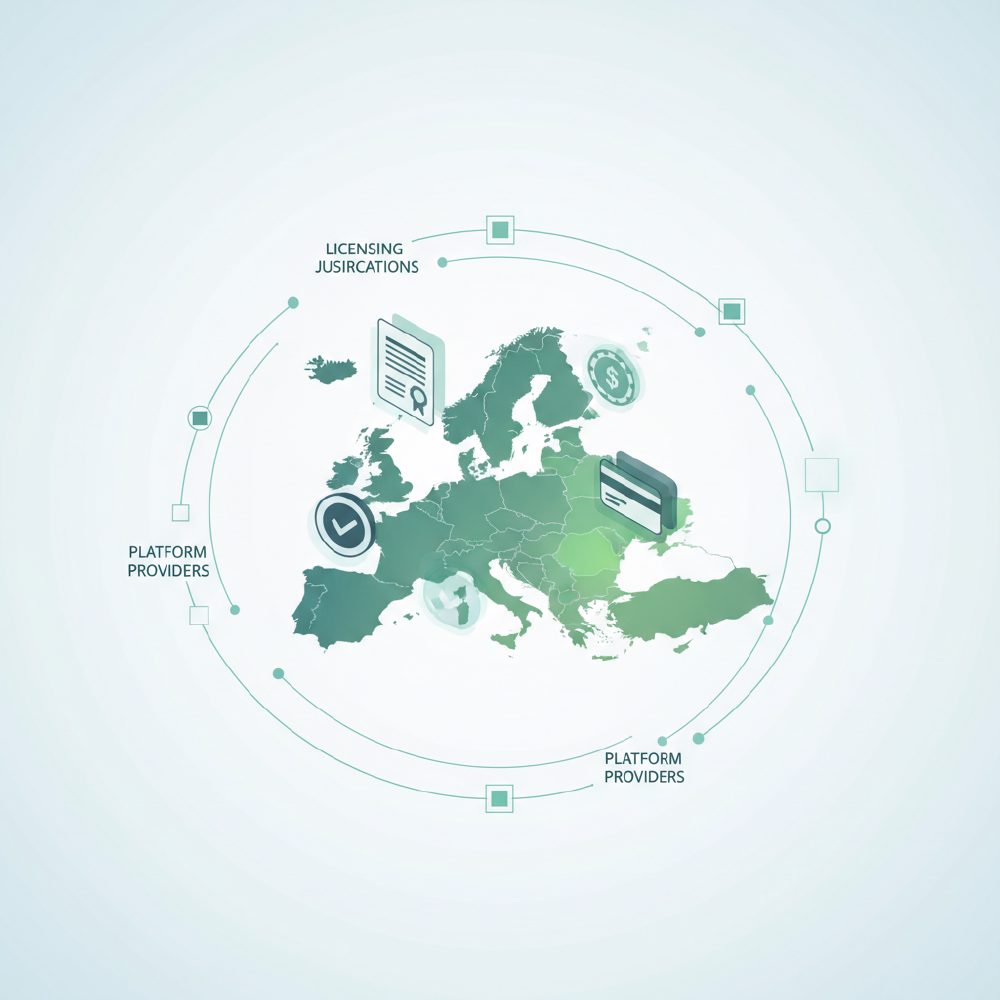
Why is Europe still the most attractive market to start an online casino?
Europe accounts for roughly 50% of global online gambling gross gaming revenue, with mature player bases, high average deposit values and a dense network of licensed payment providers. The regulatory complexity is real, but it creates a moat: operators who get licensed and compliant keep out the fly-by-night competition that plagues grey markets.
The European online gambling market generated an estimated €29 billion in GGR in 2023, according to the European Gaming and Betting Association. That figure keeps growing, driven by mobile penetration and the migration of sports bettors into casino verticals. For an operator willing to do the compliance work, the addressable market is enormous and the average player lifetime value is multiples of what you see in, say, a LatAm grey-market operation.
The other underrated advantage is infrastructure. Europe has deep liquidity of B2B suppliers: game aggregators like Relax Gaming, Pariplay and GameART are headquartered here; payment processors like Trustly, Nuvei and Paysafe have their strongest product coverage in European markets; and platform providers like EveryMatrix, SoftSwiss and Pragmatic Solutions all have MGA-compliant deployments they can spin up quickly. You are not building in a vacuum.
That said, 'Europe' is not one market. A Swedish player expects BankID verification at registration. A German player is legally capped at €1 per spin under the Interstate Treaty on Gambling (GlüStV 2021). A Dutch player must be verified through iDIN before they can deposit. Treat these as separate products, not one product with a language switch. Operators who ignore this distinction burn marketing budget fast.
Which European gambling licence should you get first?
For most new operators targeting multiple European markets, the Malta Gaming Authority (MGA) B2C licence is the pragmatic first choice. It is EU-passportable in some contexts, widely accepted by B2B suppliers, and signals legitimacy to payment processors. If your primary market is the UK, you need a UKGC licence and nothing else will substitute for it.
The MGA issues a single unified B2C Gaming Service Licence covering casino, sports and poker. The application fee is €5,000 non-refundable, and the annual compliance contribution starts at €25,000 for the first year, scaling with GGR. Total first-year costs including legal fees, company setup in Malta, and the mandatory player fund protection (segregated account or insurance) typically land between €50,000 and €120,000 depending on how much you outsource to a local corporate services firm. Timeline from application to approval is currently running 4 to 6 months for well-prepared submissions.
The UK Gambling Commission licence is the gold standard for credibility but also the most demanding. The UKGC requires a UK-based entity (or a remote operating licence for overseas companies), detailed source-of-funds procedures, and a demonstrated track record of responsible gambling controls. Application fees range from £5,000 to £35,000+ depending on projected GGR bands, and the process takes 4 to 6 months on average. If you do not have significant UK player acquisition lined up, the compliance overhead is hard to justify at launch.
Curaçao eGaming (now under the new Curaçao Gaming Control Board framework that came into force in 2023) is still used by operators targeting markets without a local licence requirement, but it is no longer the rubber-stamp it once was. The new regime requires local substance, a fit-and-proper assessment of directors, and AML procedures. Critically, most Tier-1 European payment processors will not onboard a Curaçao-only operation targeting German or Dutch IPs. Use it as a stepping stone, not a destination.
Other licences worth knowing: Gibraltar Regulatory Authority (good for sports-heavy operations, strong payment processor relationships), Isle of Man Gambling Supervision Commission (respected, smaller market), and Sweden's Spelinspektionen (mandatory if you want to market to Swedish players legally, requires a local AML officer). The Netherlands KSA opened to remote operators in 2021 and has issued fines exceeding €400,000 for unlicensed marketing, the Dutch market rewards compliance and punishes shortcuts.
| Jurisdiction | Regulator | Approx. First-Year Cost | Timeline | Best For |
|---|---|---|---|---|
| Malta | MGA | €50k-€120k | 4-6 months | Multi-market EU launch, supplier relationships |
| UK | UKGC | £30k-£80k+ | 4-6 months | UK player acquisition, premium brand positioning |
| Gibraltar | GRA | £30k-£60k | 3-5 months | Sports-heavy ops, strong payment processor access |
| Sweden | Spelinspektionen | SEK 400k-700k | 3-6 months | Swedish market specifically, high-value player base |
| Netherlands | KSA | €45k-€100k | 6-9 months | Dutch market, post-2021 regulated access |
| Curaçao | GCB | €15k-€35k | 2-4 months | Offshore/grey market stepping stone, not EU Tier-1 |
What platform model should you choose: white-label, turnkey or custom build?
White-label gets you live in 4 to 8 weeks and costs the least upfront, but you share revenue with the platform provider and own nothing. A turnkey build (licensed software you operate independently) takes 3 to 6 months and costs more, but you keep the margin. Custom development is for operators with an existing tech team and a 12-month runway, it is rarely the right first move in Europe.
White-label platforms like those offered by SoftSwiss, EveryMatrix's white-label division, or BtoBet give you a pre-integrated game lobby, payment gateway, CRM and back-office under a master licence. The speed is real: I have seen operators go from signed contract to soft launch in six weeks. The trade-off is a revenue share that typically runs 15% to 35% of GGR on top of your game provider costs, plus you are building on someone else's player database and brand equity. If you sell the business, you are selling a contract, not a platform asset.
Turnkey solutions from providers like Softgamings, ProgressPlay or Digitain sit in the middle. You license the software, run it under your own regulatory entity, and pay a flat monthly fee (often €5,000 to €20,000/month) plus integration fees. You own the player relationships and the brand. The catch is that you need your own MGA or equivalent licence, which adds 4 to 6 months to your timeline before you can accept a single deposit.
Custom builds are almost always oversold by agencies and undersold in terms of timeline. Building a compliant casino platform from scratch, game aggregator API, wallet, KYC/AML stack, responsible gambling tools, reporting for regulators, takes a competent team 12 to 18 months minimum and costs €500,000 to €2 million+ before you have a live product. The operators who do this successfully are usually spinning out from an existing B2B supplier or have a proprietary technology angle. For a first European launch, it is the wrong bet unless you have deep pockets and a very specific product thesis.
| Model | Time to Launch | Upfront Cost | Ongoing Cost | Licence Needed | Revenue Ownership |
|---|---|---|---|---|---|
| White-Label | 4-8 weeks | €10k-€50k setup | 15-35% GGR share | No (sub-licence) | Partial |
| Turnkey | 3-6 months | €50k-€150k | €5k-€20k/month + fees | Yes (own licence) | Full |
| Custom Build | 12-18 months | €500k-€2M+ | Ongoing dev team | Yes (own licence) | Full |
How do you build a game library that converts European players?
European players are slot-first, but the mix varies sharply by country. Nordics over-index on high-volatility slots and live dealer. DACH players spend heavily on poker and live casino. You need a game aggregator that covers 5,000+ titles, has direct deals with Pragmatic Play and Evolution, and can geo-filter content by jurisdiction without manual work.
The fastest way to build a credible game library is through a game aggregator like Pariplay (part of Aspire Global), Relax Gaming's Silver Bullet programme, or EveryMatrix's CasinoEngine. A single aggregator integration gives you access to hundreds of studios under one contract and one revenue share. Expect to pay 12% to 18% of GGR to the aggregator on top of the studio's take, the all-in content cost for a typical European operator is 20% to 30% of slots GGR, which is why margin management matters from day one.
Direct deals with studios only make sense once you are doing meaningful volume. Pragmatic Play, the dominant European slots supplier, requires a minimum GGR commitment before they will discuss a direct licence. Evolution Gaming (live dealer) is similarly structured, their exclusivity clauses and minimum fee arrangements are not operator-friendly at small scale. Use the aggregator to launch, build your numbers, then renegotiate direct deals at 12 to 18 months in.
Geo-filtering is not optional. Germany's GlüStV 2021 bans live casino, limits slots to €1 per spin with a mandatory 5-second spin delay, and prohibits autoplay. If your platform cannot enforce these rules at the game level, you are not legally operable in Germany. Make sure your platform provider has a certified German game compliance layer, or budget for a separate compliance integration. Sweden's Spelinspektionen has similar requirements around deposit limits and session time displays. These are not suggestions, they are licence conditions.
What payment stack do European casino operators actually need?
Cards (Visa/Mastercard) plus one Open Banking solution (Trustly, Volt or Tink) covers 60% to 70% of European deposits. But 'coverage' is not 'conversion', you need market-specific methods to hit acceptable deposit success rates. Trustly alone can lift Nordic conversion by 15 to 20 percentage points versus card-only.
Payment localisation is the single most underestimated lever in European casino operations. I have reviewed launch post-mortems where operators spent €200,000 on player acquisition and lost 40% of depositing intent at the cashier because they did not support Sofort in Germany or iDEAL in the Netherlands. The fix costs a fraction of the lost revenue, but only if you build the payment stack before launch, not after.
Here is the practical breakdown by region. Nordics (Sweden, Finland, Norway, Denmark): Trustly is mandatory, Zimpler for Sweden specifically, BankID-linked verification flows. DACH (Germany, Austria, Switzerland): Sofort (now Klarna), Paysafecard for privacy-conscious players, Klarna Pay Later is growing. Netherlands: iDEAL dominates, Bancontact for Belgian crossover. UK: faster payments via open banking (Volt, Nuvei's PayDirect), Apple Pay and Google Pay are high-conversion mobile methods. Southern Europe: PayPal penetration is high in Italy and Spain, local card schemes matter less.
Crypto is a legitimate payment channel for European operators, particularly on Curaçao-licensed or Gibraltar-licensed operations. SoftSwiss has a crypto casino product that handles BTC, ETH and stablecoin wallets natively. However, MGA and UKGC-licensed operations face stricter scrutiny on crypto deposits, the AML traceability requirements are demanding, and some processors will not touch crypto-to-fiat conversion for licensed EU operators. Know your regulator's position before you add crypto to the cashier.
Payment processing fees in Europe typically run 1.5% to 3.5% for card transactions and 0.5% to 1.5% for Open Banking. Chargebacks are the silent killer: European gambling chargebacks average 0.8% to 1.5% of card GGR in my experience, and Visa/Mastercard will terminate your merchant account above a 1% chargeback ratio. Build fraud scoring (Kount, Sift, or your platform's native tool) into the payment flow from day one.
What does AML and KYC compliance actually look like for a European operator?
European AML compliance for online casinos is governed by the EU's Fourth and Fifth Anti-Money Laundering Directives, plus national transpositions. In practice, this means automated identity verification at registration, source-of-funds checks triggered at defined thresholds (typically €2,000 cumulative deposits), and a documented risk-based approach reviewed annually by your regulator.
KYC at onboarding is table stakes. Every licensed European operator must verify name, date of birth and address before a player can withdraw, and most regulators now require verification before the first deposit above a low threshold. The technology is mature: Jumio, Onfido, Veriff and Sum&Substance all integrate with major casino platforms and can return a verification decision in under 60 seconds. Budget €0.50 to €2.00 per verification attempt depending on the provider and volume tier. Friction at KYC kills conversion, so choose a provider with a high auto-approval rate for your target geographies.
Source-of-funds (SoF) checks are where operators get caught out. The MGA requires operators to have a documented SoF policy and to actually apply it, not just have it in a PDF. When a player hits your trigger threshold (which you define in your AML policy, but regulators expect it to be risk-proportionate), you must request payslips, bank statements or equivalent documentation. If the player cannot provide them, you must restrict play. Operators who treat SoF as a checkbox exercise get fined. The MGA issued €2.3 million in penalties in 2022 alone, largely for AML failures.
Politically Exposed Persons (PEPs) and sanctions screening must be continuous, not just at registration. Tools like ComplyAdvantage or Refinitiv World-Check integrate via API and flag new matches in real time. This is not optional under EU AML law. Your compliance officer (a real person, not a job title on a shelf company) needs to review flagged cases and document decisions. Regulators ask to see this audit trail during inspections.
How much does it cost to start an online casino in Europe?
A realistic first-year budget for a white-label European launch under an MGA licence runs €150,000 to €300,000, covering licence, platform setup, legal, compliance, payment integration and initial marketing. A turnkey build with your own licence and a proper player acquisition budget is more like €400,000 to €800,000 in year one. These are not vendor estimates, they are what I see operators actually spend.
The cost breakdown matters more than the headline number. Licence and legal fees (MGA application, local corporate structure, compliance documentation) typically consume €60,000 to €120,000 of year-one spend. Platform and technology (white-label setup fee, game aggregator integration, payment gateway setup) adds another €30,000 to €80,000. Staffing a minimum compliant team, compliance officer, customer support, payments manager, runs €80,000 to €150,000 annually in Malta or a comparable EU jurisdiction. Then there is marketing, which is where operators consistently under-budget.
Player acquisition in competitive European markets is expensive. Paid search CPCs for casino keywords in the UK and Germany run €5 to €20+. Affiliate CPA deals for casino players in Tier-1 European markets are typically €150 to €350 per depositing player, with some affiliates demanding €500+ for high-value player segments. A realistic first-year marketing budget for a new entrant trying to build a meaningful player base is €100,000 to €300,000, and that buys you a modest start, not dominance.
Hidden costs operators discover too late: responsible gambling tooling (self-exclusion integration with GAMSTOP in the UK, Spelpaus in Sweden, OASIS in Germany, each requiring separate API integration), regulatory reporting infrastructure (automated GGR and player activity reports to the MGA cost money to build), and payment processor reserve requirements (some acquirers hold 5% to 10% of monthly GGR in a rolling reserve for the first 6 to 12 months, which is a real cash flow constraint at launch).
What responsible gambling requirements will European regulators enforce on you?
Responsible gambling compliance in Europe has moved from a marketing talking point to a hard regulatory requirement with teeth. The UKGC, MGA, Spelinspektionen and KSA all mandate specific technical controls: deposit limits, loss limits, session time limits, reality checks, and mandatory self-exclusion integration with national schemes. Failures result in fines, not warnings.
At minimum, every MGA-licensed operator must offer players the ability to set daily, weekly and monthly deposit limits, loss limits and session time limits, and these must take effect immediately when a player requests a reduction. Increases must have a cooling-off period (typically 24 hours). Your platform must enforce these at the wallet level, not just display them in a settings menu. If you are on a white-label platform, verify that the RG tooling is genuinely enforced in the back-end, some cheaper platforms have the UI but not the enforcement logic.
National self-exclusion schemes are non-negotiable in the markets that have them. GAMSTOP in the UK covers all UKGC licensees and is mandatory. Spelpaus in Sweden covers all Spelinspektionen licensees. OASIS in Germany is mandatory for GlüStV-licensed operators. These schemes require API integration so that excluded players are blocked in real time, not just flagged. Budget for integration time (typically 2 to 4 weeks of development) and ongoing maintenance.
The MGA introduced its Player Protection Directive in 2023, which added requirements for operators to monitor player behaviour patterns and intervene proactively, not just reactively. This means your CRM or a dedicated RG tool (BetBlocker, Gamban API, or platform-native tools from SoftSwiss and EveryMatrix) must flag at-risk behaviour based on defined indicators: rapid deposit sequences, reversal of withdrawals, late-night play patterns. Document every intervention. Regulators want to see the decision trail, not just the tool.
How long does it take to launch an online casino in Europe?
A white-label launch under a sub-licence can go live in 6 to 10 weeks from contract signing. A full independent launch under your own MGA licence takes 8 to 12 months from the decision to proceed, accounting for company formation, licence application, platform build, payment integration and compliance setup. Most operators underestimate this by 3 to 4 months.
The MGA application itself is the longest single-thread dependency. Assuming you have your Maltese company incorporated (4 to 6 weeks), your business plan and technical documentation ready, and a clean fit-and-proper profile for all key personnel, the MGA is currently processing applications in 4 to 6 months. Any request for additional information (RFI) from the regulator adds 4 to 8 weeks to the clock. I have seen well-prepared applications sail through in 14 weeks and poorly prepared ones drag past 9 months.
Parallel workstreams that operators should run during the licence application: platform selection and contract negotiation (6 to 8 weeks), game aggregator due diligence and integration scoping (4 to 6 weeks), payment processor applications (Tier-1 acquirers take 6 to 12 weeks to onboard a new gambling merchant, and some will not start the process until you have a licence number), and responsible gambling tool integration (2 to 4 weeks). If you run these sequentially instead of in parallel, add 3 to 4 months to your timeline.
Staff hiring is the other timeline killer. A qualified compliance officer with MGA experience commands €60,000 to €90,000 per year in Malta and takes 6 to 10 weeks to recruit. The MGA requires you to name your compliance officer in the application. If you hire the wrong person and have to replace them post-licence, you file a material change notification and the regulator reviews the replacement, another 4 to 8 weeks of delay. Get this hire right early.
What are the biggest mistakes operators make when entering the European casino market?
The three most common and expensive mistakes I see: choosing the wrong licence for their actual target market (Curaçao for German players, for example), under-budgeting for payment localisation, and treating responsible gambling compliance as a launch-day afterthought. Each of these can cost more to fix than it would have cost to get right the first time.
Licence mismatch is the most costly error. An operator who spends 6 months getting a Curaçao licence to target Dutch players will find that the KSA blocks their domain, Dutch payment processors refuse to onboard them, and Google Netherlands will not serve their ads. The Curaçao licence is not a European market access tool, it is an offshore permit. If your player acquisition strategy is Netherlands, Germany or Sweden, you need the national licence or the MGA plus a local agent arrangement. Do not let a low upfront licence cost mislead you about total market access cost.
Payment stack under-investment shows up in the metrics fast. I reviewed a launch in 2023 where the operator had a beautiful product, solid game library and aggressive bonusing, but only supported Visa, Mastercard and PayPal. Their target market was Sweden. Trustly and Swish together account for over 60% of Swedish online gambling deposits. The operator's deposit conversion rate was 34%, industry average for a well-configured Swedish cashier is 65% to 75%. They burned through their marketing budget before fixing the payment stack. The fix took 6 weeks and cost €15,000 in integration work. The 6 weeks of lost conversion cost multiples of that.
Responsible gambling as an afterthought is both a compliance risk and a business risk. The UKGC's enforcement actions in 2022 and 2023 included operators fined £6 million+ for failing to identify and interact with customers showing signs of problem gambling. Beyond the fines, the reputational damage and licence review process can shut down player acquisition for months. Build the RG stack before launch, not after your first regulator inquiry. The cost of getting it right upfront is a fraction of the cost of remediation under regulatory scrutiny.


Comments
No comments yet, be the first.