iGaming Alternative Payment Solutions in 2026: The Operator's Real-World Guide
Why do iGaming operators need alternative payment solutions in the first place?
Card decline rates for online gambling transactions routinely run between 30% and 50% depending on the issuing bank and jurisdiction. That means roughly one in three depositing players hits a wall before they ever fund their account. Alternative payment solutions exist to route around issuing-bank blocks, serve unbanked players, reduce chargeback exposure and — increasingly — satisfy regulators who want traceable, AML-clean payment flows.
The core problem is that Visa and Mastercard issue merchant category codes (MCC 7995 for gambling), and individual issuing banks can — and do — block that MCC entirely. In the UK, several major banks including Lloyds and Barclays blocked credit card gambling transactions after the UKGC credit-card ban in April 2020. That ban didn't go away; it hardened. In the US, Chase and Bank of America have their own internal policies that quietly decline gambling-coded transactions even where the activity is licensed. Operators who built their entire payment stack on card rails discovered this the hard way in their first month of live traffic.
Beyond decline rates, chargebacks are an existential threat to a casino's acquiring relationship. The card schemes' chargeback threshold for high-risk merchants sits around 1% of transaction volume. Exceed it and you lose your merchant account — sometimes permanently. Alternative payment solutions like e-wallets and crypto are largely chargeback-proof by design: once a Skrill transfer or a Bitcoin transaction is confirmed, there is no reversal mechanism available to the player. That single fact makes APS strategically valuable even in markets where card approval rates are reasonable.
Regulators are also increasingly mandating specific payment rails. The MGA in Malta requires licensed operators to support at least one locally relevant payment method. Coljuegos in Colombia has pushed operators toward PSP integrations that can report transaction data in real time to the regulator's SINBAD system. Curaçao's updated framework under the new Gaming Control Board (GCB) that came into force in 2024 requires operators to demonstrate that their payment stack meets AML/CFT standards. Choosing APS is no longer just a conversion decision — it is a compliance decision.
What types of alternative payment solutions are available to casino operators?
The APS landscape for iGaming breaks into five practical categories: cryptocurrency wallets and processors, e-wallets (digital wallets with stored value), prepaid vouchers and cards, open banking/instant bank transfer solutions, and mobile payment methods including carrier billing. Each category has different fee structures, player demographics, regulatory acceptance and integration complexity.
Cryptocurrency processors — CoinsPaid, TripleA, NOWPayments, BitPay — convert crypto deposits into fiat at the point of transaction, which eliminates exchange-rate risk on the operator's balance sheet while still giving players the speed and pseudonymity they want. CoinsPaid processed over $700 million in monthly volume for gambling clients at its 2023 peak and is integrated natively into SoftSwiss's casino platform, which is why you see it everywhere in the offshore space. The trade-off: crypto APS fees typically run 0.5-1.5% per transaction, and KYC requirements are tightening — FATF's Travel Rule now applies to crypto transfers above €1,000 in the EU.
E-wallets are the most familiar APS category. Skrill and NETELLER (both owned by Paysafe) have historically been the dominant iGaming wallets, but their own MCC restrictions mean not every operator qualifies for a direct merchant account. Paysafe's iGaming-specific accounts require proof of licensing and undergo enhanced due diligence. MiFinity, ecoPayz and AstroPay have emerged as alternatives with more flexible onboarding for operators holding Curaçao or Anjouan licenses. Fees typically run 1.5-3% per transaction, and wallet providers charge a monthly service fee on top.
Prepaid vouchers — Paysafecard, Flexepin, Neosurf — serve a specific and loyal player segment: people who are either unbanked, privacy-conscious or simply prefer not to connect their bank account to a gambling site. Paysafecard is available in 50+ countries and has deep retail distribution. The ceiling is the problem: most vouchers cap at €100-€150 per pin, which limits high-value player deposits. Operators in the UK and Germany see meaningful voucher volume; operators targeting high-net-worth players in the Middle East will find vouchers largely irrelevant.
Open banking via Volt, TrueLayer, Trustly or Zimpler connects directly to a player's bank account using PSD2 rails (in Europe) or equivalent frameworks. The fee structure is genuinely disruptive — Trustly quotes 0.1-0.5% for regulated gambling operators, compared to 1.5-2.5% for card processing. The catch is player familiarity: in the UK, Trustly's Pay N Play product has achieved real traction because it combines identity verification with the deposit in a single flow, which also speeds up KYC. Outside the UK, Nordics and Germany, open banking adoption among casino players is still nascent.
| APS Type | Example Providers | Typical Fee Range | Chargeback Risk | Regulatory Acceptance | Best For |
|---|---|---|---|---|---|
| Crypto Processors | CoinsPaid, TripleA, NOWPayments | 0.5–1.5% | None | Offshore, select EU | Crypto-native players, offshore ops |
| E-Wallets | Skrill, NETELLER, MiFinity, ecoPayz | 1.5–3.0% | Low | MGA, UKGC, Curaçao | Broad EU, LATAM, APAC |
| Prepaid Vouchers | Paysafecard, Flexepin, Neosurf | 2.0–5.0% | None | Wide, retail-dependent | Unbanked, privacy-focused players |
| Open Banking | Trustly, TrueLayer, Volt, Zimpler | 0.1–0.5% | None | EU (PSD2), UK, Nordics | KYC-integrated deposits, low-cost ops |
| Mobile / Carrier Billing | Boku, Fortumo, DIMOCO | 10–15% | Medium | Limited, mostly EM | Mobile-first emerging markets |
How do crypto payment processors specifically work for online casinos?
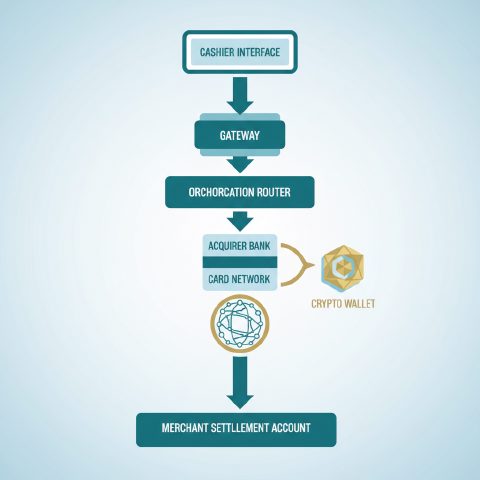
A crypto payment processor sits between the player's wallet and the operator's cashier. The player sends BTC, ETH or USDT; the processor confirms the transaction on-chain, converts to the operator's settlement currency (usually EUR or USD) at a locked rate, and credits the player's casino balance — typically within one to three minutes. The operator never holds crypto directly unless they choose to.
CoinsPaid is the most widely deployed crypto processor in iGaming. Its integration with SoftSwiss's platform means that any operator running on that stack gets crypto deposits essentially out of the box. For operators on EveryMatrix, Softgamings or a custom build, CoinsPaid offers a standalone API and a hosted cashier widget. Settlement happens daily in EUR or USD, and CoinsPaid's fee structure is volume-tiered — operators processing over $500k/month can negotiate rates below 1%. TripleA is a Singapore-based alternative with MAS licensing that is better suited for operators targeting Southeast Asia or who need a processor with a cleaner regulatory pedigree for EU applications.
The Travel Rule complication deserves more attention than most vendors give it. FATF's Recommendation 16 — the Travel Rule — requires VASPs (Virtual Asset Service Providers) to pass originator and beneficiary information with transfers above a threshold (€1,000 in the EU under TFR, $3,000 in the US). CoinsPaid and TripleA are both registered VASPs and handle Travel Rule compliance internally, but operators need to ensure their KYC data is available to the processor when a withdrawal triggers the threshold. If your casino's KYC system doesn't pass verified player data to the crypto processor's API at withdrawal time, you have a compliance gap.
Stablecoin deposits — primarily USDT on TRC-20 or ERC-20 — have grown significantly because they eliminate the volatility problem for players. A player depositing 100 USDT knows they're depositing $100 equivalent, not a fluctuating BTC amount. From an operator perspective, USDT also simplifies reconciliation. The downside: TRC-20 (Tron network) is extremely cheap and fast but has attracted regulatory scrutiny because it's also used in sanctioned jurisdictions. Some banking partners get nervous when they see Tron-network transaction volumes in an operator's AML reports. USDT on ERC-20 (Ethereum) is slower and more expensive per transaction but carries less reputational friction with banks.
Which e-wallet providers actually approve iGaming merchants?
Skrill and NETELLER approve licensed iGaming operators but require an active gambling license from a recognized regulator — Curaçao GCB, MGA, UKGC, or equivalent. MiFinity, ecoPayz and AstroPay have lower barriers to entry for offshore operators. PayPal explicitly excludes online gambling merchants in most markets. Revolut and Wise are not merchant-facing solutions and will terminate accounts that route gambling transactions.
Paysafe's iGaming division handles Skrill and NETELLER merchant accounts separately from their general e-commerce business. The application process requires: a valid gambling license, proof of responsible gambling tools (self-exclusion, deposit limits), AML/KYC policy documentation, and a website that passes Paysafe's own compliance review. Onboarding typically takes four to eight weeks. The reward for clearing that bar is access to a massive existing wallet user base — Skrill claims over 40 million account holders globally, with heavy concentration in the UK, Germany and Eastern Europe. For operators targeting those markets, Skrill is not optional.
MiFinity has positioned itself explicitly as the e-wallet for operators who can't yet qualify for Skrill. They accept operators with Curaçao and Anjouan licenses and have a faster onboarding process — sometimes as short as two weeks. The trade-off is lower player familiarity and a smaller user base. ecoPayz (now rebranded as ecoVoucher/ecoAccount under the ecoPayz umbrella) has strong traction in Eastern Europe and parts of Africa. AstroPay is dominant in LATAM — if you're launching in Brazil, Colombia or Mexico, AstroPay is worth treating as a primary method rather than an alternative.
A practical note on PayPal: I get asked about this constantly. PayPal's gambling policy is market-by-market, and in the handful of markets where it does work (some US states, UK under specific conditions), the approval process is lengthy and the restrictions are tight. For most operators I work with, the effort-to-reward ratio on PayPal is poor. Focus that integration bandwidth on Trustly or MiFinity instead.
How does open banking compare to traditional card processing for casino deposits?
Open banking via PSD2-licensed providers like Trustly, TrueLayer or Volt eliminates the issuing-bank block problem entirely — the transaction goes directly from the player's bank account via the bank's own API, bypassing card networks. Fees are dramatically lower (0.1-0.5% versus 1.5-3.5% for cards), and there are no chargebacks. The limitation is geographic: it works well in the UK, Nordics and Germany but has thin coverage elsewhere.
Trustly's Pay N Play product is the most operator-friendly open banking implementation I've seen in iGaming. It combines bank-authenticated login, identity verification and deposit in a single flow — meaning a new player can deposit and start playing without completing a separate KYC form, because their bank's verified identity data substitutes for it. Several MGA-licensed operators have reported 15-25% improvements in new player conversion after adding Pay N Play, because it removes the friction of document upload at the deposit stage. Trustly charges operators a per-transaction fee plus a monthly minimum; exact rates are negotiated based on volume, but the 0.1-0.5% range is realistic for operators doing meaningful volume.
TrueLayer is the open banking infrastructure layer that many operators use indirectly — it powers the bank transfer option inside several PSP aggregators including Nuvei and Checkout.com. For operators who want open banking without a direct integration, adding it through their existing PSP is the lowest-friction path. The downside of going through a PSP aggregator is that the fee gets marked up — you might pay 0.8-1.2% through an aggregator versus 0.3% direct with TrueLayer.
The geographic limitation is real and operators underestimate it. Open banking in the US is a different animal — there's no PSD2 equivalent, so providers like Plaid connect to bank accounts via credential-based access rather than bank APIs. Plaid works for ACH-funded deposits but the user experience is clunkier and the regulatory status is murkier. In LATAM, PIX in Brazil is effectively open banking by another name — instant bank transfer, zero chargeback, very low fees — and any operator serious about Brazil needs PIX integrated. Colombia's PSE system plays a similar role. These are not afterthoughts; in those markets they are the primary payment method.
| Factor | Card Processing (Visa/MC) | Open Banking (Trustly/TrueLayer/PIX) |
|---|---|---|
| Typical Fee | 1.5–3.5% + interchange | 0.1–0.5% (direct) |
| Chargeback Risk | High (MCC 7995 flagged) | None — irrevocable |
| Decline Rate | 30–50% (issuer-dependent) | Near zero (bank-authenticated) |
| KYC Integration | Separate process required | Can be embedded (Pay N Play) |
| Geographic Coverage | Global | UK, EU, Nordics, BR (PIX), CO (PSE) |
| Player Familiarity | Very high | High in UK/Nordics; low elsewhere |
| Integration Complexity | Medium (via PSP) | Medium-High (direct) / Low (via PSP) |
What does a PSP aggregator like Nuvei or Payvision actually offer iGaming operators?
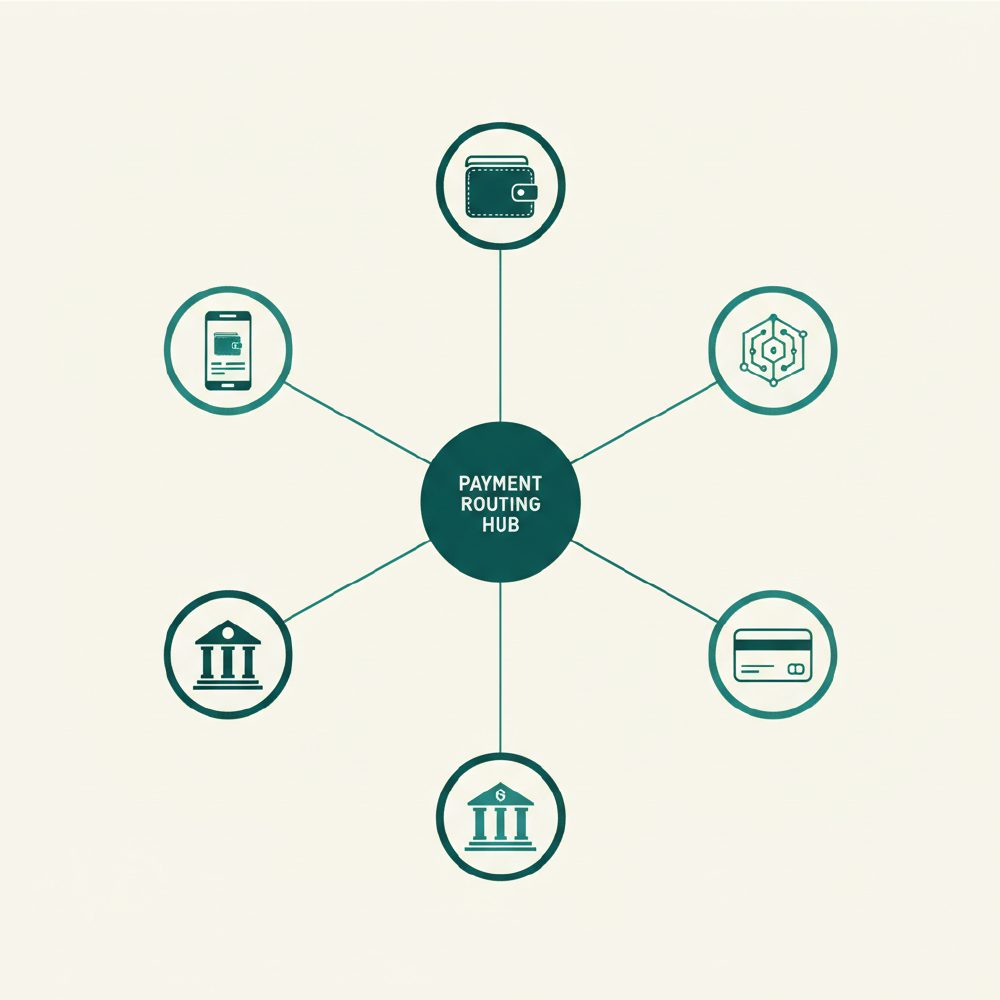
A PSP aggregator gives you a single API that connects to multiple payment methods — cards, wallets, crypto, open banking, vouchers — across multiple geographies, with a single merchant agreement and a single settlement account. For an operator launching across multiple markets, this is often the fastest path to a functional payment stack. The cost is a markup on every transaction and less control over individual method routing.
Nuvei is probably the most iGaming-focused PSP aggregator in the market right now. They acquired SafeCharge specifically to build iGaming capabilities and have direct relationships with card acquirers who specialize in high-risk merchants. Their platform supports 600+ payment methods across 200+ markets, and they have specific iGaming routing logic that tries to optimize approval rates by issuing bank and geography. For an operator launching in multiple EU markets simultaneously, Nuvei can compress what would otherwise be a six-month payment integration project into six to eight weeks. Their pricing is not cheap — expect 2-3% blended across methods — but the speed and coverage justify it for many operators.
Payvision (now part of ING) and Checkout.com are alternatives with strong EU coverage. Checkout.com has invested heavily in iGaming compliance and has a dedicated iGaming team that understands the regulatory nuances. Their dashboard and reporting tools are genuinely good, which matters when you're trying to reconcile payments across a dozen methods and currencies. For US-licensed operators, Everi and Sightline Payments are the names to know — they specialize in land-based and iGaming payment infrastructure within regulated US state frameworks.
The hidden cost of PSP aggregators is the markup on alternative methods. If Trustly charges 0.3% direct and your PSP aggregator charges 0.9% for the same Trustly transaction, that 0.6% difference compounds fast at scale. A casino doing $10M/month in open banking deposits pays $60,000/month extra for the convenience of the aggregator. At some volume threshold — typically $5-10M/month in total payment volume — it makes economic sense to start negotiating direct relationships with your highest-volume individual providers while keeping the aggregator for long-tail methods. Most operators I advise don't do this analysis until year two, and they leave real money on the table.
How do alternative payment solutions affect KYC and AML compliance?
Every APS adds a new data stream to your AML framework. Crypto transactions require VASP-to-VASP Travel Rule compliance above threshold amounts. E-wallets introduce third-party-verified identity data that may or may not satisfy your regulator's source-of-funds requirements. Open banking simplifies KYC by using bank-verified identity, but you still need to conduct enhanced due diligence on high-value players regardless of payment method.
The biggest compliance trap I see operators fall into is treating e-wallet deposits as lower-risk than card deposits from an AML perspective. They are not. A player can fund a Skrill account with cash via a voucher, then deposit to your casino — creating a two-hop transaction that obscures the original cash source. Regulators are aware of this. The UKGC has fined operators specifically for failing to conduct adequate source-of-funds checks on players who deposited via e-wallets at high velocity. Your AML system needs to flag unusual e-wallet deposit patterns just as it would flag unusual card patterns.
Crypto is more complex. CoinsPaid and TripleA both run blockchain analytics on incoming transactions — they use tools like Chainalysis or Elliptic to screen for high-risk wallet addresses (darknet markets, sanctioned entities, mixing services). If a deposit is flagged, the processor will typically hold the funds and notify you. Your operator agreement with the crypto processor should specify what happens in that scenario — who holds the funds, what the remediation process is, and what your reporting obligations are to your licensing regulator. If your crypto processor agreement doesn't address this, negotiate it before you go live.
Open banking actually simplifies the identity layer of KYC because the bank has already verified the customer's identity. Trustly's Pay N Play can pass verified name, date of birth and address data to your platform at the point of deposit, which satisfies the identity verification requirement under most EU AML directives. What it doesn't do is satisfy source-of-funds requirements for high-value players — that still requires your team to request documentation when a player crosses your internal thresholds. The payment method changes the friction of identity verification; it doesn't eliminate enhanced due diligence obligations.
Which alternative payment solutions work in US-regulated iGaming markets?
US-regulated iGaming (currently New Jersey, Pennsylvania, Michigan, Connecticut, West Virginia and a handful of others) operates under strict state-level payment frameworks. PayNearMe, VIP Preferred ACH, Sightline's Play+ prepaid card and online banking transfers are the dominant APS in these markets. Crypto is not approved as a deposit method in any currently regulated US state iGaming market.
The US market is its own universe from a payments perspective, and operators coming from offshore or EU backgrounds consistently underestimate this. Each state's Division of Gaming Enforcement (or equivalent) must approve your payment methods as part of the licensing process. New Jersey's DGE, for example, requires operators to demonstrate that every payment method has adequate fraud controls and can be linked to a verified player identity. This effectively rules out anonymous or pseudonymous methods — which is why crypto doesn't appear in any licensed US casino's cashier today.
PayNearMe is the dominant cash-at-retail APS for US iGaming. It lets players fund their casino account with cash at CVS, 7-Eleven or other retail locations — the player gets a barcode, pays cash at the counter, and their casino balance is credited instantly. This solves the unbanked player problem in the US context without requiring a bank account or card. PayNearMe charges operators a per-transaction fee (exact rates are negotiated and not publicly disclosed) and requires a direct integration. VIP Preferred handles ACH bank transfers and is integrated with most major US iGaming platforms including GAN, SG Digital and Kambi's sportsbook/casino stack.
Play+ (Sightline Payments) is a branded prepaid card that operators issue to players — it functions as a reloadable Visa or Mastercard that can receive casino withdrawals and be used for deposits. It's popular because it solves the withdrawal problem: getting money back to players quickly is actually harder than taking deposits in the US, and Play+ gives players immediate access to winnings on a card they can use anywhere. Several major operators including BetMGM and Caesars use Play+ as their primary withdrawal method. For any operator entering a regulated US state, the payment stack conversation starts with PayNearMe, VIP Preferred ACH and Play+ — not with the methods that work in Europe.
How should operators structure their APS stack for a new casino launch?
Start with a PSP aggregator for speed, then layer in direct relationships with your top two or three APS providers once you have six months of volume data. Your launch stack should cover at minimum: one card acquirer, one e-wallet, one crypto processor (if offshore), and one local method for your primary target market. Do not try to integrate 15 payment methods at launch — you will delay your go-live and dilute your QA resources.
The sequencing matters more than most operators realize. At launch, your priority is getting live with a stable, compliant payment stack — not an exhaustive one. I typically recommend a three-phase approach: Phase 1 (launch) covers the two or three methods that will handle 80% of your expected deposit volume. Phase 2 (months two to four) adds the next tier of methods based on actual player demand data from your cashier. Phase 3 (months six to twelve) is when you start negotiating direct relationships with high-volume providers and cutting out aggregator markup.
For an offshore operator targeting European players with a Curaçao license, a sensible launch stack looks like: Nuvei or Checkout.com as the PSP aggregator (covering cards and basic e-wallets), CoinsPaid for crypto, and MiFinity or ecoPayz as a dedicated e-wallet. Total integration time via a platform like SoftSwiss or EveryMatrix: four to six weeks. For a LATAM-focused operator targeting Brazil and Colombia, you'd swap crypto for PIX (Brazil) and PSE (Colombia) as the primary local methods, and add AstroPay as the e-wallet layer. The underlying principle is the same: cover the dominant local payment behavior first, add global alternatives second.
One thing I push back on hard is the instinct to add every payment method a platform supports. EveryMatrix's PayDo cashier, for example, lists 300+ payment methods. Showing players 300 options in a cashier is a conversion killer — analysis paralysis is real. The best-converting cashiers I've reviewed show four to six methods prominently, sorted by relevance to the player's detected location, with a 'more options' expansion. The payment stack decision is as much a UX decision as a technical one.
| Operator Profile | Primary Market | Core APS Stack | Notes |
|---|---|---|---|
| Offshore / Crypto-native | Global, Curaçao licensed | CoinsPaid + MiFinity + Nuvei (cards) | Prioritize USDT; add Paysafecard for EU |
| EU-regulated (MGA) | UK, DE, FI, SE | Trustly + Skrill/NETELLER + card acquirer | Pay N Play for KYC-integrated deposits |
| LATAM-focused | BR, CO, MX | PIX + AstroPay + PSE (CO) + Nuvei | PIX is non-negotiable for Brazil |
| US regulated state | NJ, PA, MI | PayNearMe + VIP Preferred ACH + Play+ | Crypto not approved; state DGE sign-off required |
| Mobile-first emerging market | NG, KE, PH | Mobile money (M-Pesa, GCash) + crypto + cards | Carrier billing viable but expensive at 10-15% |
What are the real costs operators miss when budgeting for alternative payment solutions?
The fee on the transaction is the visible cost. The hidden costs are: monthly minimums and setup fees from each provider, chargeback management tooling, currency conversion spreads on multi-currency settlement, fraud and AML screening fees layered on top of processing fees, and the engineering time to maintain integrations when providers push API updates.
Let me be specific about what gets missed. Skrill charges a monthly account maintenance fee in addition to per-transaction fees. Paysafecard charges a per-pin redemption fee plus a monthly integration fee. CoinsPaid charges a setup fee (typically $500-$2,000 depending on negotiation) plus the per-transaction percentage. When you add up setup fees across six payment methods, you're looking at $5,000-$15,000 in one-time costs before a single transaction clears. Budget for this explicitly.
Currency conversion is a silent margin killer. If your primary settlement currency is EUR but a significant portion of your players deposit in GBP, NOK or BRL, every PSP will apply a conversion spread — typically 1-2% on top of the mid-market rate. On high-volume operations this compounds into tens of thousands of dollars per month. The fix is to open multi-currency settlement accounts and match settlement currency to deposit currency where possible. This requires more treasury management overhead but pays for itself quickly at scale.
Engineering maintenance is the cost that platform vendors never mention in their sales decks. Payment APIs change. Providers deprecate endpoints, update authentication requirements, change webhook formats. If you're on a white-label platform, your platform vendor handles this — it's one of the things you're paying for. If you're on a custom build or a turnkey where you own the integrations, budget for at least 0.5 FTE of developer time dedicated to payment integration maintenance. I've seen operators on custom builds spend more on payment maintenance in year two than they spent on the original integration.

Comments
No comments yet, be the first.