Best iGaming Payment Solutions for Online Casino Operators in 2026
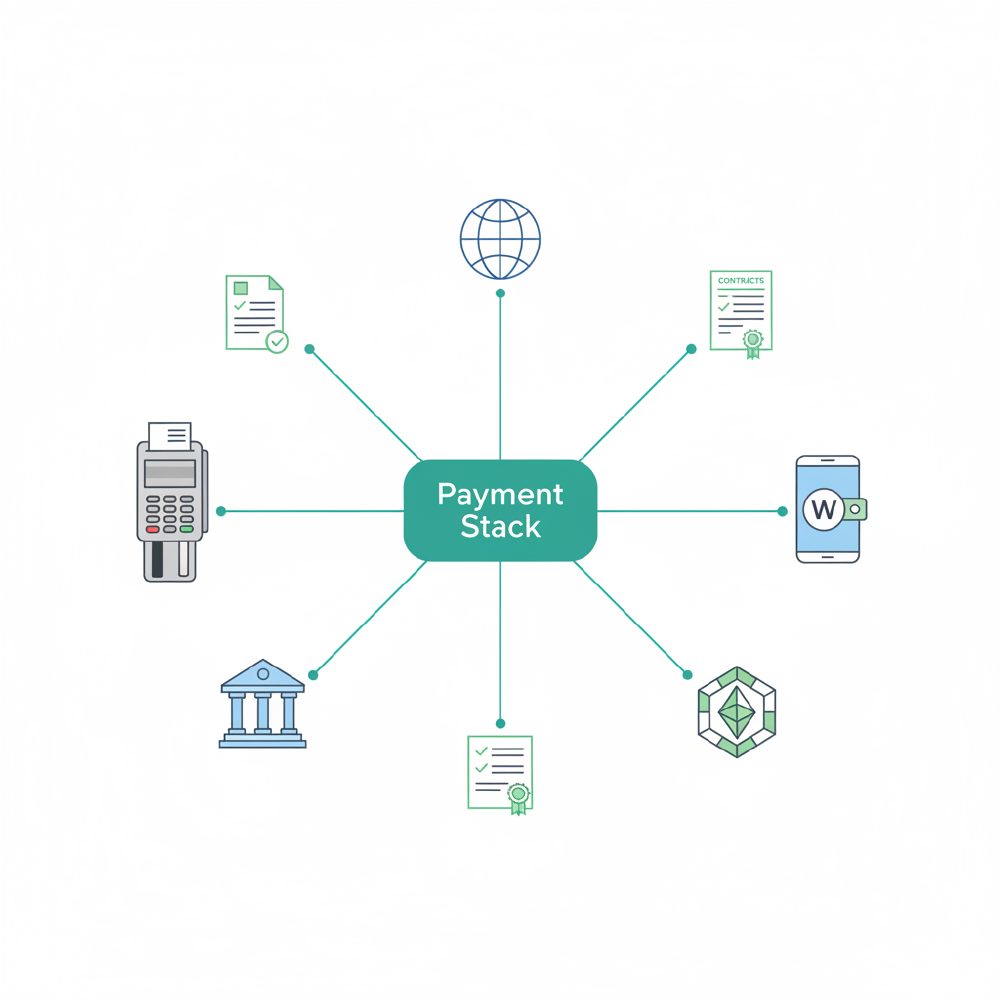
What makes an iGaming payment solution different from a standard payment gateway?
Standard payment gateways are built for e-commerce merchants with low chargeback risk and predictable transaction sizes. iGaming operators face a completely different risk profile: high-velocity micro-transactions, elevated chargeback exposure, AML scrutiny, and jurisdiction-specific restrictions that most generic gateways are simply not underwritten to handle.
The core difference is underwriting. A Stripe or Square account will terminate the moment they identify gambling activity — and they will identify it. A proper casino payment service provider has dedicated iGaming MIDs (Merchant IDs) with acquiring banks that understand the sector's chargeback curve and have priced it into the MDR (Merchant Discount Rate). That MDR premium is real — expect 3.5–6% for card processing versus 1.5–2.5% in e-commerce — but it buys you a relationship that won't vanish on a Tuesday morning.
Beyond underwriting, iGaming-specific PSPs offer features that generic gateways don't: real-time velocity controls that block a player depositing $500 across five rapid transactions, RG (Responsible Gambling) spend-limit enforcement at the payment layer, and direct integration hooks into platform back-offices from SoftSwiss, EveryMatrix, and Softgamings. These integrations matter because your compliance team needs a single audit trail linking a payment event to a player session — something you cannot retrofit onto a generic gateway after launch.
There's also the licensing dimension. Regulators like the MGA, UKGC, and even Curaçao's new GCB framework (post-2023 reform) now require operators to demonstrate that their payment provider is itself compliant with AML/CFT obligations. That means your PSP needs to be either licensed in the same jurisdiction or operating under a recognized equivalent. Providers like Nuvei, PaySafe, and Worldpay have built those regulatory relationships over years. A generic gateway has not.
Which iGaming payment providers should operators seriously evaluate in 2026?
The shortlist that serious operators actually use in 2026 comes down to about eight providers across three categories: full-stack PSPs, crypto processors, and local APM aggregators. The right mix depends on your licensed jurisdiction, target player geography, and monthly GGR — but these are the names that consistently appear in operator contracts I review.
Nuvei has become the dominant full-stack iGaming PSP in regulated markets. Their iGaming-specific acquiring covers 200+ payment methods, they have direct licensing relationships in the US (Pennsylvania, New Jersey, Michigan), and their platform integrates natively with most major casino back-offices. MDRs run 3.8–5.5% for card processing depending on volume tier, and their chargeback management tooling is genuinely good. The downside: onboarding takes 6–10 weeks and their compliance questionnaire is exhaustive.
PaySafe (formerly Skrill/Neteller parent) remains the go-to for EU-facing operators, particularly for the wallet products that European players still prefer. Their Paysafecard prepaid product is uniquely valuable for operators who need to serve players without bank accounts. Safecharge (now PaySafe's gateway arm) handles the acquiring side. Expect MDRs in the 4–5% range for cards and lower fees on wallet-to-wallet transfers.
For crypto, CoinsPaid is the clear market leader by iGaming volume — they process for over 700 operators and support 50+ cryptocurrencies with instant settlement. NOWPayments is a leaner alternative with lower monthly fees, better for smaller operators. Both integrate via REST API and connect to most major platforms. Neither replaces a card PSP, but ignoring crypto in 2026 means leaving significant deposit volume on the table, especially on Curaçao and Anjouan books.
On the local APM side, Trustly dominates Open Banking in the UK and Nordics, Zimpler handles Scandinavia, and SPEI/OXXO is essential for Mexico. Aggregators like PaymentIQ (owned by Devcode) and Praxis Cashier let you manage 100+ APMs through a single integration — that's the architecture most operators running on EveryMatrix or SoftSwiss should use rather than direct APM deals.
| Provider | Type | Best For | Card MDR (approx) | Crypto Support | US-Licensed |
|---|---|---|---|---|---|
| Nuvei | Full-stack PSP | Regulated EU/US markets | 3.8–5.5% | Yes (via partner) | Yes (PA, NJ, MI) |
| PaySafe / Safecharge | PSP + Wallets | EU operators, wallet-heavy markets | 4.0–5.0% | Limited | No |
| CoinsPaid | Crypto processor | Offshore / crypto-first operators | N/A | Yes (50+ coins) | No |
| Trustly | Open Banking APM | UK, Nordics, EU instant bank | 0.5–1.5% (bank) | No | No |
| PaymentIQ (Devcode) | APM Aggregator | Multi-method single integration | Pass-through + fee | Via partners | No |
| Praxis Cashier | APM Aggregator | LatAm, MENA, SEA operators | Pass-through + fee | Via partners | No |
| Worldpay (FIS) | Enterprise PSP | Large-scale regulated operators | Negotiated | No | Yes (select states) |
| NOWPayments | Crypto processor | Smaller offshore operators | N/A | Yes (300+ coins) | No |
How do casino payment provider fees actually work — and where do operators overpay?
Most operators overpay because they accept blended flat-rate pricing without understanding the interchange-plus model underneath it. At scale, the difference between a 4.5% blended rate and a well-negotiated interchange-plus structure can be 80–120 basis points — which on $1M monthly card volume is $8,000–$12,000 per month walking out the door unnecessarily.
The fee structure has three layers most vendors bundle into a single headline number. First is interchange — the fee the card-issuing bank charges, which you cannot negotiate. For iGaming it runs roughly 1.5–2.2% on Visa/Mastercard consumer cards in the EU, and higher in the US. Second is the scheme fee — Visa and Mastercard's own assessment, typically 0.1–0.3%. Third is the processor margin — what Nuvei, PaySafe, or whoever you're using actually keeps. That margin is the only negotiable part.
The mistake I see most often is operators signing a flat 4.5% blended deal because it looks simple. At low volumes (under $100K/month GGR), fine — the simplicity is worth it. Above $200K/month, push for interchange-plus. Your processor margin should be in the 1.2–2.0% range on top of interchange. If a provider won't show you the interchange-plus breakdown, that's a red flag — they're hiding margin in the blending.
Beyond MDR, watch for three hidden cost centers: (1) Chargeback fees — typically $25–$45 per dispute, plus potential fine exposure if your ratio exceeds Visa's 1% threshold. (2) Rolling reserves — most iGaming acquirers hold 5–10% of monthly volume in reserve for 90–180 days. On a $500K/month operation that's $25–50K of your working capital tied up. Factor this into your launch cash requirements. (3) Currency conversion fees — if you're settling in USD but processing in EUR or GBP, spread costs of 1–2% can quietly compound. Negotiate same-currency settlement wherever possible.
| Fee Component | Typical Range | Negotiable? | Notes |
|---|---|---|---|
| Interchange (card issuer) | 1.5–2.2% (EU), 1.8–2.5% (US) | No | Set by Visa/Mastercard |
| Scheme assessment | 0.10–0.30% | No | Visa/MC charge |
| Processor margin | 1.2–2.5% | Yes — push hard above $200K/mo | Main negotiation lever |
| Chargeback fee | $25–$45 per dispute | Partially | Volume discounts possible |
| Rolling reserve | 5–10% held 90–180 days | Partially | Cash flow impact — model it |
| Crypto processing fee | 0.5–1.5% per transaction | Yes at volume | CoinsPaid, NOWPayments |
| APM pass-through fee | 0.3–1.5% depending on method | Via aggregator deal | Trustly, iDEAL, SPEI etc. |
What payment methods do players actually use in 2026, and how does that shape your stack?
Player payment behavior has fragmented sharply by geography. Cards still dominate in North America and parts of LatAm, but Open Banking has eaten 25–35% of EU deposit share, crypto handles 30–50% of offshore volume, and local wallets or cash-in networks are mandatory in markets like Mexico, Brazil, and Southeast Asia. Your payment stack needs to reflect where your players actually are.
In the UK and Nordics, Trustly's Open Banking product has become the default first-deposit method for a large segment of players — it's faster than card, has no chargeback exposure, and the instant bank verification doubles as a soft KYC check. UKGC operators who don't offer it are leaving conversion on the table. In Germany, post-GlüStV 2021 regulation actually mandates monthly deposit limits enforced at the payment layer, which makes bank-transfer methods like Sofort (now part of Klarna) and Giropay structurally important.
In the US, the picture is messier. In regulated states (NJ, PA, MI, WV, CT), ACH/eCheck is the primary non-card method because PayPal's iGaming footprint is limited and crypto is not permitted in most state frameworks. Operators in New Jersey should have VIP Preferred (ACH) and Play+ (prepaid) in their stack — those two methods alone account for a significant share of NJ deposit volume. In states that haven't yet regulated, there's no legal online casino market, full stop.
For LATAM, PIX in Brazil is non-negotiable if you're targeting Brazilian players — it handles over 60% of digital payment volume in the country and is available 24/7 with instant settlement. Mexico needs SPEI for bank transfers and OXXO for cash-in. Colombia (Coljuegos-licensed operators) requires PSE integration. Operators who try to run LATAM on cards alone will see 40–60% of checkout attempts fail.
Crypto deserves its own strategic decision. On Curaçao and Anjouan books, I've seen operators where BTC, ETH, and USDT collectively exceed card volume. CoinsPaid's iGaming-specific dashboard gives you transaction-level reporting that satisfies most offshore compliance requirements. The operational risk is volatility on non-stablecoin deposits — most operators convert to USDT or USD at point of deposit to eliminate that exposure.
How does your licensing jurisdiction determine which casino payment service providers you can use?
Your license jurisdiction is the single biggest constraint on your payment stack. MGA and UKGC require PSPs to meet their own compliance standards. Curaçao's post-2023 GCB framework added new PSP vetting requirements. US state licenses effectively mandate specific approved providers. Choosing a jurisdiction without mapping your payment options first is a mistake I see founders make repeatedly.
MGA (Malta) is the most PSP-friendly regulated jurisdiction — most major iGaming PSPs already hold MGA compliance status, and the regulator's AML framework is well-understood by acquirers. If you're targeting EU players and want the broadest payment optionality, MGA is still the benchmark. That said, MGA licensing costs have risen — expect €25,000+ in application fees and 9–14 months to approval, plus ongoing compliance overhead.
UKGC is the most restrictive. Post-2020 rules ban credit card deposits entirely. Your stack must be built around debit cards, bank transfers, and e-wallets. PayPal, Trustly, and Paysafecard dominate. Any PSP you use must be able to demonstrate UKGC-compliant affordability check integration — that's a technical requirement, not just a policy checkbox.
Curaçao's 2023 reform under the new GCB (Gaming Control Board) framework changed things meaningfully. Operators must now demonstrate that their PSPs have proper AML procedures — the old sub-license model that let operators use almost any payment method is gone. This has pushed several smaller PSPs out of the Curaçao market. CoinsPaid and Nuvei both have GCB-compliant setups; some smaller providers do not yet.
In the US, each state has its own approved vendor list or technical standards. New Jersey's DGE publishes approved payment processors — as of recent years, that includes Nuvei, Worldpay, and a handful of others. Pennsylvania (PGCB) and Michigan (MGCB) have similar frameworks. If a provider isn't on the state's approved list, you cannot use them, period. That's why US-facing operators often end up with a completely different payment stack than their offshore counterparts.
What is the integration process for a casino payment provider, and how long does it actually take?
Realistic integration timelines run 4–12 weeks for a primary PSP, depending on your platform, the provider's onboarding queue, and how clean your compliance documentation is. Operators who treat payment integration as a last-mile task — rather than a parallel workstream — routinely push their go-live date by 6–8 weeks. I've seen it happen on nearly every first launch.
The process has three distinct phases. First is commercial and compliance onboarding: submitting your license copy, AML policy, business plan, shareholder structure, and processing history. This is the phase that takes longest and is most unpredictable. A Nuvei or PaySafe onboarding can take 6–10 weeks just for KYB (Know Your Business) approval. Start this the day you receive your gaming license — or even in parallel if the provider allows conditional applications.
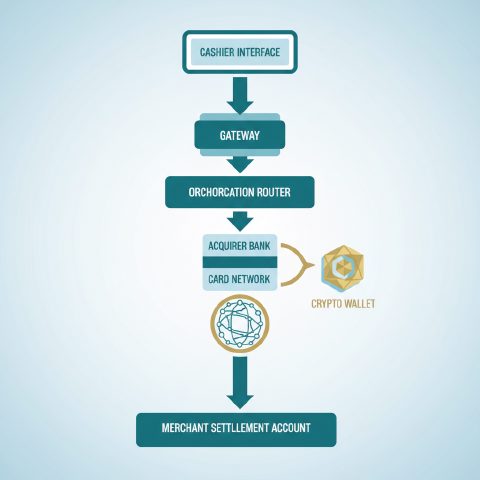
Second is technical integration. If you're on a major platform like SoftSwiss or EveryMatrix, most Tier 1 PSPs already have a certified integration — you're essentially flipping a switch and configuring your MID credentials. If you're on a custom build, you're doing a full API integration, which is 2–4 weeks of developer time minimum. Payment aggregators like PaymentIQ or Praxis Cashier reduce this dramatically — one integration to their hub gives you access to 100+ methods, which is why most operators should use them rather than direct PSP integrations for APMs.
Third is testing and go-live. You need to run end-to-end transaction tests in sandbox, then in production with small live amounts. Build in time for the PSP's own QA sign-off — some providers (Trustly in particular) require formal certification before you can go live. Budget 1–2 weeks for this phase. Also: your rolling reserve calculation starts from your first live transaction, so understand when that clock begins and what it means for your cash flow.
How should operators handle chargebacks and fraud in their iGaming payment stack?
Chargebacks above 1% of transaction volume will get your MID terminated by Visa or Mastercard — no warnings, no appeals. In iGaming, the most common chargeback trigger isn't fraud; it's player remorse after a losing session. Your payment stack needs velocity controls, 3DS2 enforcement, and a dispute management workflow before you process your first live transaction.
3DS2 (3D Secure 2.0) is mandatory in the EU under PSD2 and is the single most effective chargeback reduction tool available. It shifts liability to the issuing bank on authenticated transactions — meaning if a player authenticates via 3DS2 and then files a chargeback claiming fraud, the bank (not you) absorbs the loss. Enforce 3DS2 on all card deposits above your risk threshold. Yes, it adds friction and will cost you some conversion; the alternative is losing your MID entirely.
Velocity controls at the payment layer — not just in your platform back-office — are the next layer. Set rules that flag or block a player making 5+ deposit attempts within 30 minutes, or attempting multiple cards in a single session. Nuvei's fraud tooling and PaySafe's Risk Management Suite both offer configurable velocity rules. If your PSP doesn't offer this natively, integrate a dedicated fraud tool like Seon or Kount.
For dispute management, the operational reality is that you need a dedicated person or process handling chargebacks within 72 hours of receipt. Evidence packages for iGaming disputes should include: session logs with timestamps, IP and device fingerprint data, KYC confirmation, and deposit/withdrawal history. Operators who submit weak evidence packages lose disputes they should win. Some PSPs (Nuvei included) offer chargeback management as a managed service — worth evaluating if you don't have in-house capacity.
What are the real costs of building a full iGaming payment stack from scratch?
Operators routinely underestimate payment infrastructure costs by 40–60% because they only model MDR and ignore setup fees, rolling reserves, integration development, and ongoing compliance overhead. A realistic first-year payment stack cost for a mid-size operator targeting EU and crypto markets runs $80,000–$200,000 in direct costs, excluding the capital tied up in rolling reserves.
Setup costs vary significantly by provider. Nuvei charges a setup fee in the range of $5,000–$15,000 depending on your tier and the complexity of your integration. PaymentIQ charges a monthly SaaS fee (roughly $1,500–$4,000/month depending on volume) plus a per-transaction fee. CoinsPaid has no setup fee but charges 0.8–1.5% per transaction. These numbers are directionally accurate but change based on your negotiating position and volume commitments — treat them as planning inputs, not quotes.
Rolling reserves are the hidden cash flow killer. If your PSP holds 7.5% of monthly card volume for 180 days, and your card volume is $300K/month, you have $22,500 per month going into reserve. After six months, you have $135,000 locked up that you cannot access. This is real working capital that needs to be funded at launch. Model it explicitly in your financial plan — I have seen operators run out of operating cash because they forgot to account for reserve accumulation in months 2–4.
Development costs depend heavily on your platform. On SoftSwiss or EveryMatrix with PaymentIQ as your aggregator, a competent back-end developer can complete the integration in 2–3 weeks — call it $8,000–$15,000 in development time. On a custom build, multiply that by three to five. Ongoing compliance costs — AML transaction monitoring, PCI DSS Level 1 certification (if you're storing card data, which you should avoid), and payment-related regulatory reporting — add another $20,000–$50,000 annually for a mid-size operator.
How do crypto payment solutions fit into a modern iGaming payment strategy?
Crypto is no longer a niche add-on for offshore operators — it's a primary deposit channel that handles 30–50% of volume on many Curaçao and Anjouan books. The strategic question in 2026 isn't whether to offer crypto, but how to manage volatility exposure, satisfy your regulator's AML requirements, and pick the right processor for your volume.
CoinsPaid dominates the iGaming crypto processing market for good reason: they've built iGaming-specific features that generic crypto processors haven't. Their back-office gives you player-level transaction history, automatic conversion to stablecoins at point of deposit (eliminating BTC price volatility from your P&L), and AML screening against known flagged wallets. They integrate natively with SoftSwiss (the two companies share ownership heritage) and have documented integrations with most other major platforms.
NOWPayments is the lean alternative — lower monthly fees, support for 300+ cryptocurrencies, and faster onboarding. The trade-off is less iGaming-specific tooling and thinner compliance documentation. For a smaller operator doing under $50K/month in crypto volume, NOWPayments is a reasonable starting point. Above that, the compliance and reporting capabilities of CoinsPaid justify the higher cost.
The AML dimension of crypto payments is increasingly scrutinized by regulators. Curaçao's GCB framework and Anjouan's licensing authority both expect operators to demonstrate blockchain transaction screening — tools like Chainalysis or Elliptic integrated at the payment layer. CoinsPaid has Chainalysis integration built in. If you're using a smaller processor, you need to implement this separately. Skipping it is not a risk worth taking — it's the kind of gap that surfaces during a license renewal audit and creates real problems.
What should operators look for in a payment aggregator versus direct PSP relationships?
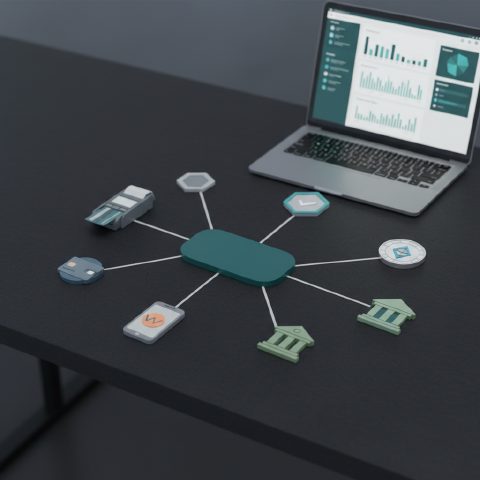
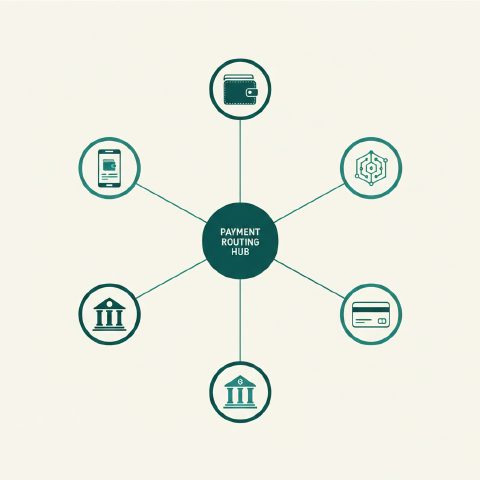
A payment aggregator like PaymentIQ or Praxis Cashier gives you 100+ payment methods through one integration and one contract — at the cost of an extra fee layer and slightly less negotiating leverage with individual providers. Direct PSP relationships give you better pricing at volume and deeper integration control, but require separate contracts, integrations, and compliance relationships for each provider.
For operators launching their first property, a payment aggregator is almost always the right call. The alternative — managing direct relationships with a card PSP, a crypto processor, three APMs, and an Open Banking provider simultaneously — is operationally brutal during a launch when your team is already stretched. PaymentIQ's hub model means you configure once and activate methods as you need them. Praxis Cashier has particularly strong LATAM and MENA coverage, which makes it the better choice if those are your primary markets.
The aggregator fee layer is real but often overstated. PaymentIQ charges roughly $0.10–$0.25 per transaction on top of pass-through provider costs. On 10,000 monthly transactions that's $1,000–$2,500/month — meaningful but not prohibitive when weighed against the development and operational cost of managing direct integrations. The more important cost is the reduced negotiating leverage: when you're routing $500K/month through an aggregator, the individual PSP sees you as a smaller merchant than if you had a direct relationship.
The right architecture for a mature operator (12+ months post-launch, $500K+ monthly GGR) is usually a hybrid: direct relationship with your primary card PSP (Nuvei or PaySafe) for the volume and pricing leverage, plus PaymentIQ or Praxis as the aggregator layer for APMs and crypto. This gives you the best of both models. Negotiate the aggregator contract to allow direct bypass for your primary PSP — most will accommodate this.
- Nuvei — Best full-stack iGaming PSP for regulated EU and US markets. Strong compliance infrastructure, 200+ payment methods, US state licensing in PA/NJ/MI. MDR 3.8–5.5%. Onboarding takes 6–10 weeks but the MID stability is worth it.
- PaySafe / Safecharge — Dominant in EU wallet payments (Skrill, Neteller, Paysafecard). Best choice for operators targeting European players who prefer e-wallets and prepaid methods. Lower fees on wallet-to-wallet transfers than card MDR.
- CoinsPaid — Market-leading crypto payment processor for iGaming with 700+ operator clients. Supports 50+ cryptocurrencies, instant USDT conversion, Chainalysis AML screening, and native SoftSwiss integration. Essential for Curaçao and Anjouan operators.
- Trustly — Best Open Banking payment solution for UK and Nordic operators. No chargeback exposure, instant settlement, and built-in bank account verification that supports KYC. Now handles 25–35% of EU deposit share on properties where it's offered.
- PaymentIQ (Devcode) — Best payment aggregator for operators who want 100+ methods through a single integration. Strong platform certifications with SoftSwiss, EveryMatrix, and Softgamings. Monthly SaaS fee model; ideal for launch-phase operators before direct PSP volumes justify renegotiation.
- Praxis Cashier — Best aggregator for LatAm, MENA, and SEA-focused operators. Strongest regional APM coverage of any aggregator I've reviewed, including PIX, SPEI, PSE, and local wallet networks. Faster onboarding than PaymentIQ for non-EU markets.
- Worldpay (FIS) — Enterprise-grade PSP for large-scale regulated operators. Best pricing leverage at high volumes, strong US state relationships. Not practical for operators under $1M monthly card volume — the onboarding complexity and minimum requirements make it unsuitable for early-stage launches.
Comments
No comments yet, be the first.