iGaming Payment Solutions for Operators: The 2026 Operator's Playbook

What exactly is an iGaming payment solution and how does it differ from a standard payment gateway?
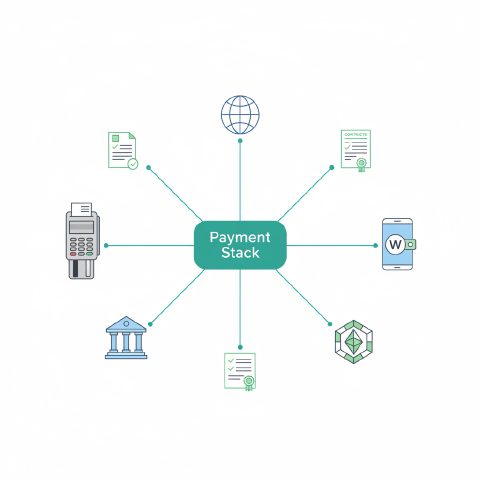
An iGaming payment solution is a purpose-built stack of acquiring, processing, and payout infrastructure designed for the specific risk profile, regulatory obligations, and user-experience demands of online gambling operators. Standard e-commerce gateways refuse gambling MCC codes outright; iGaming-specific solutions are underwritten for that risk and built with the compliance tooling operators actually need.
The core difference is underwriting. A generic Stripe or Adyen account will terminate the moment your MCC code (7995 for gambling) surfaces. iGaming-specialist PSPs — think Maxpay, Genome, Payvision, or Fonix for carrier billing — are underwritten specifically for gambling risk, which means they accept the chargeback exposure, the fraud vectors, and the regulatory complexity that come with the vertical. You pay for that tolerance through higher MDRs, typically 3–6% on card transactions versus 1.5–2.5% in e-commerce.
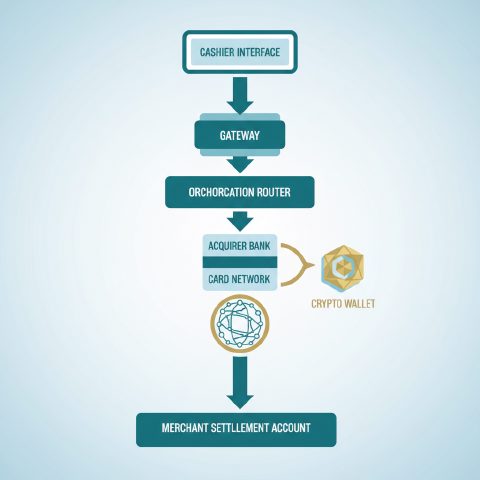
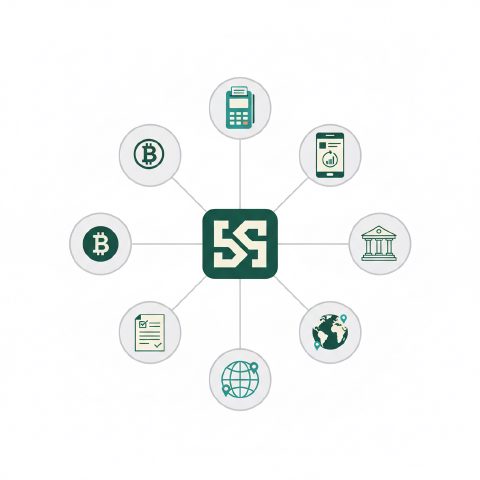
Beyond acquiring, a real iGaming payments platform has to handle instant payouts (players expect withdrawals in under 30 minutes), multi-currency wallets, bonus-balance segregation, and a transaction ledger that satisfies AML reporting requirements. That's a materially different product from a checkout widget. Platforms like PaymentIQ (Devcode/Everi) and Praxis Cashier were built ground-up for this — they connect to 400+ payment methods through a single API and include rule engines for routing, limits, and fraud scoring.
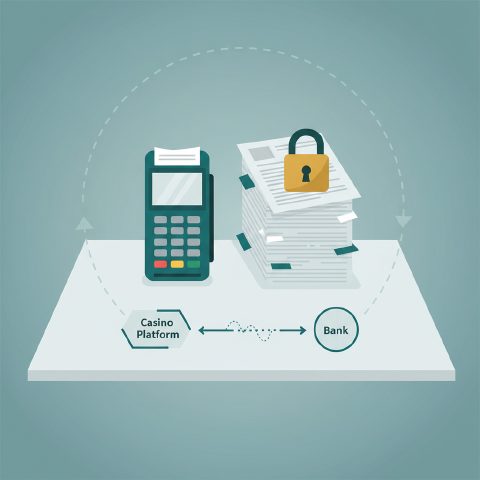
The regulatory layer compounds the complexity. An MGA-licensed operator must hold player funds in a segregated account and produce transaction reports on demand. A UKGC operator has to run source-of-funds checks that feed directly into the payment flow. A Curaçao operator has fewer statutory requirements but faces correspondent banking hostility — meaning the practical payment architecture looks completely different. Your payment solution has to flex around those constraints, not the other way around.
Which payment methods should every operator include in their 2026 stack?
At minimum, a 2026 operator needs card acquiring (Visa/Mastercard), at least one major e-wallet (Skrill, Neteller, or MiFinity), local bank transfer or instant payment rails for your target market, and a crypto gateway. Anything less and you're leaving 20–40% of potential deposits on the table before a player even reaches your lobby.
Cards remain the volume leader in most regulated EU markets, but their share is declining. Visa and Mastercard both introduced gambling-specific transaction controls in 2019–2020, and UK banks in particular allow customers to block gambling transactions. Your card approval rate on a new MID typically starts around 60–70% and improves as you build processing history — experienced operators run 80–88% approval on established MIDs. Expect a 6–12 month seasoning period before you hit those numbers.
E-wallets solve two problems simultaneously: they buffer you from direct card-to-operator exposure (reducing chargebacks) and they're preferred by high-frequency players. Skrill and Neteller (both Paysafe Group) are the default choices for EU-facing operators, but MiFinity has carved out a strong position in markets where Skrill/Neteller have restricted gambling use. PayPal re-entered regulated gambling markets in several US states and select EU jurisdictions — if you're licensed where it's available, it's worth the integration effort purely for conversion lift.
For LATAM operators, local rails are non-negotiable. PIX in Brazil, PSE in Colombia, and SPEI in Mexico each require local entity relationships or a local payment aggregator like Kushki or PayRetailers. Ignoring these and relying solely on cards means sub-40% deposit success rates in those markets. For crypto, CoinsPaid processes the majority of offshore gambling crypto volume; NOWPayments and BitPay are solid alternatives. Stablecoins (USDT, USDC) have become the de facto settlement currency for Curaçao and Anjouan operators who can't get euro banking.
| Payment Type | Key Providers | Best For | Typical MDR / Fee |
|---|---|---|---|
| Card Acquiring | Maxpay, Genome, Payvision, Fonix | EU, US regulated states | 3–6% MDR + rolling reserve |
| E-wallets | Skrill, Neteller, MiFinity, PayPal | EU, UK, AU | 1–2.5% per transaction |
| Crypto Gateway | CoinsPaid, NOWPayments, BitPay | Offshore, Curaçao, Anjouan | 0.5–1.5% per transaction |
| Local Bank/Instant | PIX, PSE, SPEI, iDEAL, Sofort | LATAM, DACH, NL | Flat fee or 0.5–1.5% |
| Prepaid / Voucher | Paysafecard, Neosurf, AstroPay | Privacy-focused, unbanked | 3–5% face value fee |
| Open Banking | TrueLayer, Tink, Volt | UK, EU regulated | 0.2–0.8% per transaction |
Should you integrate a payment aggregator or connect PSPs directly?
For most operators launching in 2026, a payment aggregator is the right starting point. Direct PSP integrations give you marginally better economics at scale, but they require significant engineering time per connection and slow your go-to-market. Aggregators like Praxis Cashier, PaymentIQ, and Hub88 let you activate new payment methods in days rather than months — that flexibility is worth the extra fee layer early on.
The math changes as you scale. Aggregators typically charge a per-transaction fee on top of the underlying PSP's MDR — somewhere in the range of 0.1–0.5% depending on volume. At $500K monthly GGR that's a rounding error. At $5M monthly GGR it's a meaningful cost line, and at that point a dedicated payments engineer connecting PSPs directly starts to pay for themselves. Most operators I've advised stay on aggregators through their first two to three years and only start pulling out direct connections for their top two or three payment methods by volume.
The aggregator market has consolidated around a handful of serious platforms. PaymentIQ (now part of Everi after the Devcode acquisition) is the most widely deployed in the EU — it has pre-built connectors for over 450 payment methods and a mature risk/routing rule engine. Praxis Cashier is strong for operators who want a white-label cashier UI with deep customization. Hub88 and Finteqhub are worth looking at if you also want game aggregation in the same contract, since they bundle both. SoftSwiss's payment module is deeply integrated into their casino platform, which is convenient if you're already on their stack but creates lock-in if you ever want to migrate.
One thing aggregators don't solve: merchant account relationships. You still need to get underwritten by the acquiring bank behind the scenes, and that process takes four to eight weeks regardless of which aggregator sits in front of it. Some aggregators operate shared MIDs, which gets you live faster but means you share chargeback exposure with other operators on the same MID — a risk that bites harder than most operators expect when a fraudulent campaign hits another site on the same account.
| Platform | Payment Methods | Casino Platform Integration | Best Fit | Pricing Model |
|---|---|---|---|---|
| PaymentIQ (Everi) | 450+ | Agnostic / API | Mid-to-large EU operators | Per-transaction fee + setup |
| Praxis Cashier | 500+ | Agnostic / API | Operators needing custom cashier UX | Per-transaction fee |
| Hub88 | 200+ | Bundled with games aggregation | Turnkey / white-label operators | Revenue share or flat fee |
| SoftSwiss Payment | 300+ | Native to SoftSwiss platform | SoftSwiss casino clients | Bundled in platform fee |
| Finteqhub | 250+ | Agnostic / API | Emerging market focus | Per-transaction fee |
How do chargebacks and rolling reserves actually work in iGaming acquiring?
iGaming acquirers manage their risk by holding a rolling reserve — typically 5–10% of your monthly processing volume — for 90–180 days as a chargeback buffer. Your MDR also reflects that risk. If your chargeback ratio exceeds 1% (Visa's threshold) or 1.5% (Mastercard's), your MID gets flagged and eventually terminated. This isn't theoretical — it's the most common reason operators lose card processing.
Rolling reserves are the part of iGaming acquiring that operators consistently underestimate at launch. If you're processing $200K/month in card deposits and your acquirer holds a 10% rolling reserve on a 180-day cycle, you have $20K/month tied up that you can't touch for six months. That's a real working capital constraint, especially in the first year when you're also funding bonuses and marketing. Some acquirers offer reducing reserves as you build a clean processing history — negotiate for that clause in your contract upfront rather than trying to renegotiate later.
Chargebacks in gambling have a specific character. The most common triggers are 'transaction not recognized' (player forgot or used a joint account), 'services not rendered' (player lost and wants money back), and outright friendly fraud. Robust KYC at deposit — requiring card verification, matching the name on the account to the cardholder — reduces friendly fraud significantly. Tools like Ethoca and Verifi (both Mastercard/Visa programs) let you resolve disputes before they become formal chargebacks; any serious iGaming PSP should have these integrations live.
The practical advice: keep a close eye on your chargeback ratio weekly, not monthly. If you see a spike, trace it to a specific acquisition channel or promotion immediately. I've seen operators lose a perfectly good MID because an affiliate was running a misleading campaign that drove high-intent-to-chargeback traffic. Your payment solution needs to surface that data in real time, not in a monthly report from your acquirer.
What does a crypto payment gateway add to an offshore operator's stack?
For Curaçao and Anjouan-licensed operators, crypto isn't a niche add-on — it's often the primary deposit rail. Correspondent banking restrictions make it genuinely difficult to maintain stable fiat banking in those jurisdictions, and crypto gateways like CoinsPaid fill that gap while also serving players who prefer pseudonymous transactions. In 2025–2026 I'm seeing 30–50% of deposits on offshore sites come through crypto.
CoinsPaid is the market leader for iGaming crypto processing — they've processed over $10 billion in crypto transactions (their own published figure) and have direct integrations with most major casino platforms. Their fee structure is typically 0.5–1% per transaction, which is substantially cheaper than card MDRs, and settlement can happen in hours. They support Bitcoin, Ethereum, Litecoin, and most importantly USDT and USDC — the stablecoins that operators actually want for treasury management because they're not exposed to BTC price volatility between deposit and settlement.
NOWPayments and BitPay are credible alternatives, particularly if you want non-custodial options or broader altcoin support. For operators building a crypto-native casino (think provably fair, on-chain gaming), Coinbase Commerce and custom smart contract integrations are worth exploring, though they require more technical lift. The key operational consideration is AML: FATF guidance and most regulators now expect crypto transactions to be screened through blockchain analytics tools like Chainalysis or Elliptic. CoinsPaid has this built in; if you're building a custom crypto integration, budget for a Chainalysis API subscription separately.
One thing I'd flag: the regulatory environment for crypto gambling is tightening. The EU's MiCA regulation, fully in force from late 2024, affects how crypto assets are handled by licensed operators in the EU. Curaçao's new Gaming Control Board framework (rolling out through 2024–2025) also includes crypto-specific AML provisions. Offshore operators who built their stack on crypto rails in 2021 and haven't updated their compliance layer are running real risk right now.
How does your licensing jurisdiction shape your entire payment architecture?
Your license doesn't just determine what games you can offer — it dictates which PSPs will work with you, what AML transaction monitoring you must run, whether you need segregated player fund accounts, and how quickly you can access your own revenue. MGA and UKGC impose the strictest requirements; Curaçao and Anjouan give you more flexibility but cost you banking access.
MGA (Malta Gaming Authority) operators must hold player funds in a segregated bank account, maintain a compliance management system with real-time transaction monitoring, and report suspicious transactions to the FIAU. That means your payment solution needs native integration with an AML transaction monitoring tool — Napier, Featurespace, or at minimum a rules-based system that flags velocity anomalies and structuring patterns. Most serious iGaming payment platforms have this built in, but verify the depth of the ruleset before signing. A checkbox AML module that only flags transactions over €10,000 won't satisfy an MGA audit.
UKGC-licensed operators face the most demanding payment compliance environment in the world. Affordability checks introduced in 2024 mean players hitting certain deposit thresholds trigger enhanced due diligence that feeds directly into the payment flow — you need to be able to pause a deposit pending a source-of-funds check. Your payment solution has to support that workflow natively or you'll be building custom middleware. The UKGC also banned credit card gambling deposits in 2020; any operator serving UK players must have hard blocks on credit card MCC codes at the acquiring level.
Curaçao and Anjouan operators have lighter statutory payment requirements but face a different practical problem: correspondent banking. Most Tier-1 European banks won't process transactions for Curaçao-licensed gambling operations. That pushes operators toward EMI accounts (Electronic Money Institutions) — providers like Genome, Payz, or Mistertango — which are more gambling-tolerant but have lower transaction limits and higher fees. It also explains why crypto rails dominate the offshore operator stack. The new Curaçao Gaming Control Board (CGCB) framework, which replaced the old sublicense structure, requires operators to demonstrate viable payment arrangements as part of licensing — so this isn't just an operational issue, it's a licensing compliance issue.
What does a realistic iGaming payment stack cost to set up?
Budget $15,000–$50,000 in upfront setup fees, integration costs, and initial rolling reserve funding to stand up a functional payment stack for a new operator. Ongoing, expect to spend 4–8% of GGR on payment processing costs across all methods. These are ranges, not guarantees — your specific mix of markets, volumes, and methods will shift the numbers significantly.
The biggest upfront cost most operators miss is the rolling reserve funding requirement. If your acquirer demands a 10% rolling reserve and you're projecting $100K in card volume in month one, you need $10K sitting in an escrow account before you process your first transaction. That number grows with your volume, so model it into your working capital plan. Beyond the reserve, expect application and setup fees from each PSP ($500–$5,000 per provider), integration fees if you're using a payment aggregator ($5,000–$20,000 for initial setup), and KYC/AML tool licensing ($500–$3,000/month depending on volume).
Ongoing transaction costs are where the real money goes. Card processing at 4% MDR on $500K monthly card volume is $20,000/month in processing fees alone. E-wallet fees at 2% on another $200K is $4,000. Crypto at 1% on $100K is $1,000. Add payment aggregator per-transaction fees, chargeback management costs, and fraud tool subscriptions, and you're realistically at 5–7% of total deposit volume in payment costs. That's a material line item in your P&L — model it at 6% as a conservative planning assumption and work to drive it down as you build processing history and negotiate better rates.
There are ways to reduce costs at scale. Direct PSP connections (bypassing the aggregator fee layer) save 0.1–0.5% per transaction. Negotiating MDR reductions after 6–12 months of clean processing history is standard — most acquirers will move 0.5–1 percentage point if you ask and have the volume to justify it. Routing logic that sends high-value players to lower-cost payment methods (open banking at 0.3% versus cards at 4%) can meaningfully shift your blended rate. This is where a good payments manager earns their salary.
How should operators approach payout solutions to meet player withdrawal expectations?
Players in 2026 expect withdrawals in under 30 minutes for e-wallets and crypto, and same-day for bank transfers. Failing to meet those expectations is a direct driver of chargebacks, negative reviews, and player churn. Your payout solution needs automated approval workflows, pre-funded settlement accounts, and clear escalation paths for manual review — not a queue that empties once a day.
The operational architecture of payouts is different from deposits. Deposits are pull transactions — the player initiates and your PSP processes. Payouts are push transactions — you're sending money out, which requires pre-funded accounts with your payment providers and automated disbursement logic. Many operators launch with a manual payout process ('the finance team reviews withdrawals daily') and then wonder why they have chargeback problems and angry players. The answer is almost always: automate your payout approvals for verified players up to a threshold, and reserve manual review for large amounts or flagged accounts.
For e-wallet payouts (Skrill, Neteller, MiFinity), most providers offer near-instant automated payout APIs. CoinsPaid crypto payouts settle in minutes. The problem is usually bank transfers and card refunds — these are inherently slower due to interbank clearing times, and some acquirers restrict card refunds to original deposit amounts, which creates complications for players who want to withdraw more than they deposited. Open banking payout rails (TrueLayer Pay, Volt) are solving this in EU/UK markets with account-to-account transfers that settle in seconds under the Faster Payments Scheme or SEPA Instant.
Fraud on the payout side is underappreciated. Money laundering attempts often target the withdrawal flow — deposit via card, play through minimally, withdraw to a different account. Your payout solution needs withdrawal rules that enforce same-method-first payouts (return to the deposit card before allowing alternative methods), withdrawal velocity limits, and flags for accounts where deposit and withdrawal patterns don't match normal player behavior. These rules should live in your payment platform's rule engine, not in a spreadsheet someone checks once a week.
What are the biggest payment integration mistakes operators make at launch?
The three most expensive launch mistakes I see repeatedly: going live with a single payment method, underestimating the time to get a merchant account approved, and skipping fraud tooling to save money. Any one of these can kill your launch momentum; all three together and you're looking at a very expensive first quarter.
Single-method launches are more common than you'd think, especially with bootstrapped operators who want to minimize upfront integration costs. The logic seems sound — 'we'll add more methods once we're live' — but in practice, if your one card MID gets terminated (and new MIDs are vulnerable in the first 90 days), you have zero deposit capacity while you scramble to get a backup live. Minimum viable payment stack at launch: one card acquirer, one e-wallet, and a crypto gateway. That's three integrations, not one, but it's the floor.
Merchant account timelines consistently surprise operators. A standard iGaming merchant account application takes 4–8 weeks from submission to approval — longer if your documentation is incomplete or if the acquirer's risk team has questions. I've seen operators plan a launch date, sign a platform deal, and then realize they haven't started the acquiring application. That's a 6–8 week delay minimum. Start your acquiring applications the same week you start your licensing application, not after you receive your license.
Fraud tooling is the line item that gets cut when budgets are tight, and it's almost always a mistake. A basic fraud prevention layer — device fingerprinting, velocity rules, IP geolocation blocking — costs $500–$2,000/month from providers like Kount, Seon, or Sumsub. The cost of not having it, in terms of chargebacks, bonus abuse, and potential MID termination, is orders of magnitude higher. I've watched operators lose a perfectly good merchant account in their second month because a fraud ring found them before their fraud tooling was live. Don't learn that lesson the expensive way.
How do US-regulated iGaming operators handle payment processing differently?
US iGaming payment processing is state-by-state and fundamentally different from any other market. Federal law (UIGEA 2006) prohibits unlicensed gambling payments, which means you need state-licensed status before any US bank will touch you. Licensed operators in New Jersey, Michigan, Pennsylvania, or other regulated states work with a small set of state-approved payment processors and must use geofencing to restrict transactions to in-state players.
The UIGEA (Unlawful Internet Gambling Enforcement Act) created a compliance layer that doesn't exist anywhere else. Every payment processor serving a US iGaming operator must have a written policy for identifying and blocking restricted gambling transactions, and the operator must have state-level licensing in each state where they accept players. This is why you see operators like BetMGM and DraftKings running entirely separate payment stacks for their US operations versus their international businesses — the regulatory architecture is incompatible.
In practice, US-licensed operators work with a narrow set of processors who have invested in UIGEA compliance infrastructure. PayNearMe is the dominant cash deposit solution for US iGaming — it lets players deposit cash at retail locations and have funds credited to their online account, which is critical for the unbanked population and for players whose banks block gambling transactions. VIP Preferred (ACH/e-check) and Trustly (open banking) handle the bulk of bank transfer volume. PayPal is available in New Jersey and a handful of other states. Cards work but approval rates are lower than EU markets because many US banks have gambling MCC blocks enabled by default.
Geofencing is a payment compliance requirement, not just a technical nicety. Every transaction must be verified as originating from within the licensed state's borders. Your payment solution needs to integrate with a geolocation provider (GeoComply is the de facto standard, used by virtually every US operator) and block transactions from out-of-state IPs. GeoComply's pricing is volume-based; budget for it as a fixed operating cost from day one. Some states also require that player funds be held in a state-chartered bank — New Jersey has had this requirement since its 2013 launch.

Comments
No comments yet, be the first.