Online Gambling Merchant Account: The Complete Operator Guide for 2026

What exactly is an online gambling merchant account and why is it different from a standard account?
An online gambling merchant account is a specialized payment processing agreement that allows a casino or sportsbook operator to accept credit and debit card transactions. It differs from a standard merchant account because acquiring banks classify gambling as high-risk, applying stricter underwriting, higher fees, and mandatory reserve requirements that ordinary e-commerce accounts simply don't face.
When a bank underwrites a merchant account, it is essentially taking on liability for every transaction that gets disputed. For gambling, the dispute rate is structurally higher than almost any other vertical — players lose money, regret deposits, and file chargebacks at a rate that makes acquirers nervous. Add cross-border transactions, regulatory complexity, and the reputational risk of being associated with problem gambling, and you understand why most mainstream processors — Stripe, Square, PayPal's standard merchant product — flatly refuse gambling businesses or terminate them on discovery.
A dedicated gambling merchant account comes with a different risk model baked in. The acquirer charges a higher discount rate (the percentage taken per transaction), holds a rolling reserve against future chargebacks, and typically requires the operator to maintain a minimum processing volume or face account closure. Some acquirers also impose transaction caps per card per day, which can frustrate high-value players if you haven't negotiated sensible limits upfront.
The practical distinction operators miss is that a gambling merchant account is not just a payment feature — it is a legal and compliance relationship. The acquirer will review your license, your KYC/AML procedures, your responsible gambling tools, and your chargeback history before approving you, and they can terminate the relationship if any of those elements deteriorate. That makes your payment stack a living compliance obligation, not a one-time integration.
Which gambling licenses actually help you get a merchant account approved?
Your license jurisdiction is the single biggest underwriting factor after your chargeback history. MGA (Malta) and UKGC licenses give you access to the widest pool of acquirers, including some tier-one European banks. Curaçao eGaming and Anjouan licenses are accepted by specialist offshore acquirers but largely ignored by mainstream processors. US state licenses (NJ, PA, MI) open domestic US acquiring relationships unavailable to offshore operators.
I've watched operators burn three months trying to get a decent acquiring rate on a Curaçao license because their vendor told them it was 'widely accepted.' It is accepted — by a narrow band of offshore-friendly acquirers who charge for that acceptance. If your business model targets European card players and you want rates below 5%, you almost certainly need an MGA or Gibraltar license. The MGA's reputation with European acquiring banks is materially better than any offshore alternative, and that translates directly into fee negotiations.
UKGC is the gold standard for UK card traffic, but the license itself is expensive and operationally demanding — expect £25,000–£50,000+ in annual fees plus significant compliance overhead. For operators targeting the UK market seriously, it's worth it. For everyone else, the MGA is the pragmatic choice that balances cost, acquirer access, and compliance burden. Curaçao's 2023 regulatory overhaul (the new Curaçao Gaming Control Board framework) has improved its standing slightly, but it hasn't moved the needle with major European banks yet.
In the US, the acquiring landscape is entirely separate. If you hold a New Jersey Division of Gaming Enforcement license, you can work with processors like Paysafe's iGaming division, NRT Technology, or bank-direct relationships that are simply unavailable to offshore operators. Michigan, Pennsylvania, and Connecticut have similarly structured domestic acquiring ecosystems. The fee structures are different too — regulated US markets often see lower card rates because the legal framework reduces chargeback risk, but the compliance cost of maintaining the license offsets that saving.
| License | Acquirer Pool | Typical Card Rate | Rolling Reserve | Notes |
|---|---|---|---|---|
| MGA (Malta) | Wide — EU and some global acquirers | 3–5% | 5–10% / 90 days | Best EU balance of cost and access |
| UKGC | Wide — UK-focused acquirers | 2.5–4.5% | 5–8% / 90 days | Required for UK card players; high compliance cost |
| Curaçao (new GCB) | Specialist offshore acquirers | 5–8% | 8–10% / 120–180 days | Improving but still limited with EU banks |
| Anjouan | Narrow offshore acquirers | 6–9% | 10% / 180 days | Entry-level; limited processor options |
| US State (NJ/PA/MI) | Domestic US processors only | 2–4% | Varies by processor | No offshore card traffic; domestic players only |
What are the real costs of a high-risk gambling merchant account?
The headline processing rate (3–8% for cards) is just one line item. You also pay setup fees, monthly minimums, chargeback fees, rolling reserve lockups, and sometimes annual renewal fees. The rolling reserve — typically 5–10% of gross processing volume held for 90–180 days — is the cost that catches operators off guard because it's a real cash-flow hit, not just a percentage on paper.
Let me break down what a realistic cost stack looks like for a mid-tier operator processing $500,000 per month in card volume on an MGA license. At a 4.5% discount rate, you're paying $22,500 per month in processing fees. The rolling reserve at 8% means $40,000 of that month's gross is held for 90 days before release — meaning for the first three months of operation, you're effectively funding a reserve pool that can reach $120,000 before it starts cycling back. Setup fees with a specialist acquirer typically run $500–$3,000. Chargeback fees are usually $20–$50 per dispute, and if your ratio climbs above 1%, you may face additional penalties or monitoring program fees from the card networks (Visa's VDMP and Mastercard's MATCH list are the ones you really want to avoid).
There are also indirect costs operators underestimate. 3DS2 authentication reduces chargebacks but adds friction that can drop conversion by 5–15% if not implemented carefully. Fraud prevention tools — Kount, Sardine, or built-in acquirer fraud scoring — add another $0.05–$0.15 per transaction. And if you're using a payment orchestration layer like Spreedly, Gr4vy, or a platform-native router, add their fees on top. None of these are optional if you want to keep your merchant account healthy.
One cost that almost nobody budgets for upfront: the cost of losing a merchant account. When an acquirer terminates you — and it happens, often with 30 days' notice or less — you face a gap in card processing, a reserve that won't release for 90–180 days, and the scramble to onboard a replacement acquirer while your conversion rate craters. Building a second, backup acquiring relationship from day one costs a small amount in monthly minimums; not having one can cost you the business.
| Cost Component | Typical Range | Monthly Impact at $500K Volume | Notes |
|---|---|---|---|
| Discount rate (card processing) | 3–8% | $15,000–$40,000 | Negotiable based on license, volume, chargeback history |
| Rolling reserve | 5–10% held 90–180 days | $25,000–$50,000 locked per month (cycles back) | Real cash-flow constraint in first 6 months |
| Setup / onboarding fee | $500–$3,000 one-time | One-time | Higher for offshore or complex structures |
| Chargeback fee | $20–$50 per dispute | Depends on dispute volume | Network penalties kick in above 1% ratio |
| Monthly minimum fee | $500–$2,000/month | $500–$2,000 | Charged if you don't hit volume threshold |
| 3DS2 / fraud tooling | $0.05–$0.20 per transaction | $2,500–$10,000 | Non-negotiable for chargeback management |
Which payment processors and acquirers actually work with online gambling operators?
The specialist acquirers and payment service providers that consistently work with licensed gambling operators include Paysafe (iGaming division), Payvision (now part of ING), Nuvei, Worldpay's gaming vertical, Safecharge (now Nuvei), Payneteasy, and a range of smaller offshore-focused acquirers. Your options narrow or widen dramatically depending on your license and target market.
Nuvei is probably the name I hear most often from operators entering the EU market — they acquired Safecharge specifically to build a gaming-focused payments stack, and their acquiring coverage across European card schemes is solid. Their onboarding is more structured than a pure offshore acquirer, which means more documentation upfront but better rates and stability long-term. For operators on MGA or UKGC licenses processing serious volume, Nuvei and Worldpay Gaming are the two names worth pursuing first.
Paysafe's iGaming division is worth a separate mention because they bring both acquiring and their own wallet product (Skrill and NETELLER) under one commercial relationship. That bundling can simplify your payment stack, but watch the contract carefully — there are volume commitments and exclusivity clauses in some Paysafe deals that operators have found restrictive when they wanted to add competing wallets. Payvision historically served the offshore market well, though its ING acquisition has made onboarding more conservative.
For operators on Curaçao or Anjouan licenses, the realistic acquirer pool shifts toward names like Paymentz, Payneteasy, Interkassa, and a number of smaller EU-licensed payment institutions that specialize in high-risk verticals. Rates will be higher and reserves tighter, but these processors understand the offshore market. Some white-label platform providers — SoftSwiss, EveryMatrix, Softgamings — bundle acquiring relationships into their platform offering, which can accelerate your go-to-market but means you're sharing processing with other operators on the platform, which has its own risk dynamics.
One category I'd flag separately: crypto payment processors. Operators running crypto-native casinos or adding crypto as an alternative method use providers like CoinsPaid, B2BinPay, or BitPay. These aren't merchant accounts in the traditional sense — there's no card network, no chargeback mechanism, and no reserve requirement. That sounds attractive until you realize the lack of chargeback protection cuts both ways, and crypto's price volatility requires active treasury management. Still, for operators where a significant portion of players prefer crypto, having a dedicated crypto payment processor alongside your card acquiring is the right call.
What documents and requirements do acquirers ask for during underwriting?
Acquirers underwriting a gambling merchant account want to verify that your business is legally licensed, financially stable, and operationally capable of managing chargebacks. Expect to provide your gambling license, certificate of incorporation, UBO documentation, AML/KYC policy, responsible gambling policy, processing history (if any), and a business plan with projected volumes.
The documentation list sounds straightforward, but the devil is in the detail. Your AML and KYC policies need to be operational documents, not boilerplate PDFs — acquirers who specialize in gambling have seen every template policy and will ask follow-up questions. They want to see that you have a named MLRO (Money Laundering Reporting Officer), that your KYC process has defined thresholds for enhanced due diligence, and that your responsible gambling tools (deposit limits, self-exclusion, reality checks) are actually live on the platform, not just described in a policy document.
For new operators with no processing history, acquirers will ask for financial projections and sometimes a personal guarantee from the UBO. This is standard practice, not a red flag. What does raise flags: complex corporate structures with multiple layers of offshore holding companies, UBOs from jurisdictions on FATF grey or black lists, and any prior merchant account terminations. If you have a termination in your history, disclose it proactively and explain the remediation steps — acquirers run background checks and discovering an undisclosed termination is an automatic decline.
Processing history from a previous operation is genuinely valuable. If you're migrating from one platform to another, get a statement of your chargeback ratio, refund rate, and monthly volume from your previous acquirer. A 12-month history showing a sub-0.8% chargeback ratio is worth more in fee negotiations than any amount of projected volume promises. Conversely, if your previous operation had a chargeback problem, expect the new acquirer to price that risk into their offer or decline outright.
How do rolling reserves work and how do you manage the cash-flow impact?
A rolling reserve is a percentage of your gross card processing volume that the acquirer holds back for a defined period — typically 90 to 180 days — as a buffer against future chargebacks and disputes. It's not a fee; the money is released after the holding period. But for a growing operator, the reserve pool builds faster than it releases, creating a real cash-flow gap in the first six to nine months.
Here's the math that trips up new operators. If your acquirer holds 8% for 90 days and you process $200,000 in month one, $240,000 in month two, and $280,000 in month three, your reserve pool at the end of month three is $57,600 — and nothing has been released yet because the 90-day clock hasn't expired on month one's reserve. In month four, month one's $16,000 reserve releases, but you've added another $24,000 to the pool from month four's volume. For a fast-growing operation, the reserve pool can stay at a significant working capital deficit for the entire first year.
The practical response is to model the reserve impact into your cash-flow projections before you sign the acquiring agreement, not after. I've seen operators budget for processing fees but completely ignore the reserve, then run into a liquidity crunch at month four when their marketing spend is ramping up and $80,000 of their revenue is sitting in a reserve account. If your reserve terms are negotiable — and sometimes they are, especially if you have processing history — push for a lower reserve percentage rather than a shorter holding period, because the percentage has a bigger compounding impact on cash flow.
Some operators use the reserve period productively by treating it as forced savings that funds their next quarter's marketing budget. That's a reasonable mental model, but it only works if your operating costs are funded from a separate capital reserve. The worst outcome is treating the rolling reserve as inaccessible and then being surprised when it releases — that's a cash injection you should plan around, not stumble into.
Why do gambling merchant accounts get terminated, and how do you protect yourself?
The three most common termination triggers are: chargeback ratio exceeding the card network threshold (typically 1% for Visa, 1.5% for Mastercard), a change in your licensing status or regulatory action, and processing transactions in restricted jurisdictions the acquirer didn't approve. Most terminations are preventable with active monitoring and honest communication with your acquirer.
Chargeback ratio is the number one killer. Visa's VDMP (Visa Dispute Monitoring Program) kicks in at 0.9% ratio and 100 disputes per month; Mastercard's MATCH program is similarly structured. Once you're in a monitoring program, you have a limited window to remediate before the card network itself forces the acquirer to terminate you — and a MATCH listing makes it extremely difficult to get a new merchant account for years. The fix is boring but non-negotiable: real-time fraud scoring on every transaction, 3DS2 authentication, clear transaction descriptors so players recognize the charge on their statement, and a responsive customer support team that resolves disputes before they become chargebacks.
Licensing changes are the second major termination trigger, and they catch operators off guard because the connection isn't obvious. If your Curaçao license lapses, is suspended, or your operator entity changes, your acquirer's compliance team will pick it up — they run periodic checks on all their gambling merchants. The same applies if a key person in your UBO structure becomes politically exposed or faces legal action in their home jurisdiction. Keep your acquirer informed of any material corporate changes before they find out through their own monitoring.
Geographic scope is the third issue. When you onboard with an acquirer, you declare the jurisdictions you'll process from. If you start accepting players from a country that's on your acquirer's restricted list — the US, for example, if your acquirer isn't set up for US gambling — and they detect it through BIN analysis or player IP data, that's a termination-level breach. Always get explicit written confirmation of your approved processing jurisdictions and build geo-blocking into your platform to enforce it.
How should you structure your payment stack beyond just a single merchant account?
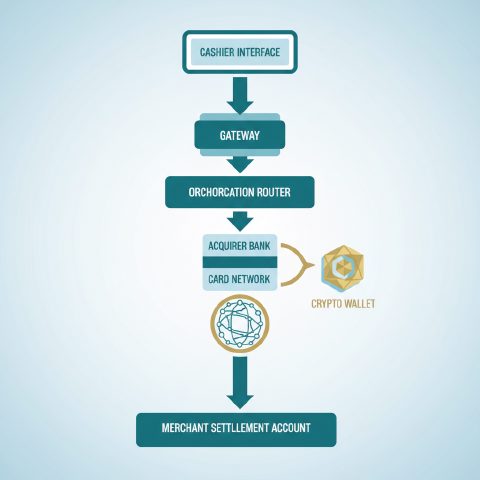
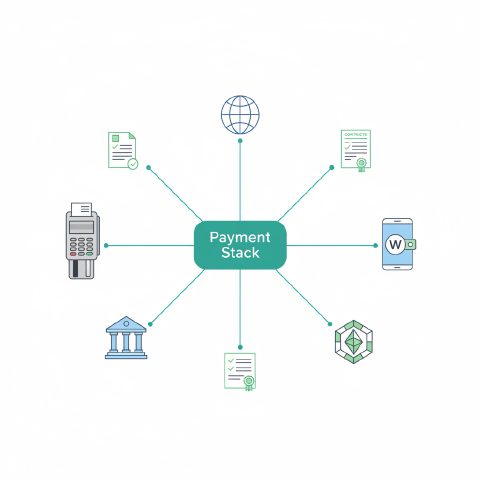
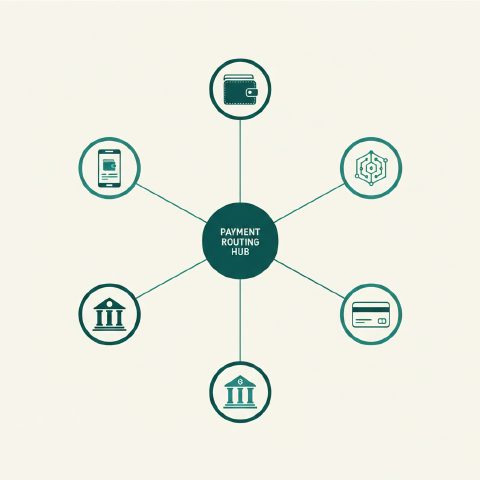
A single card merchant account is a single point of failure. A resilient payment stack for a gambling operator combines at least two card acquiring relationships, one or two e-wallet integrations, a local bank transfer method for key markets, and crypto processing if your player base demands it. Payment orchestration tools let you route transactions intelligently across these options.
The practical architecture I recommend for operators launching in the EU looks like this: a primary card acquirer (Nuvei or Worldpay Gaming) handling the majority of card volume, a secondary acquirer (one of the specialist offshore processors) as a failover, Skrill and NETELLER via Paysafe for wallet players, and a local payment method integration for your top two or three markets — iDEAL for the Netherlands, Trustly for Sweden and Germany, Sofort for German-speaking markets. That's five payment methods, and it covers the vast majority of deposit preferences without overwhelming your integration team.
Payment orchestration platforms — Spreedly, Gr4vy, or the routing engine built into platforms like SoftSwiss Pay or EveryMatrix's CashierEngine — let you define routing rules that automatically send transactions to the acquirer most likely to approve them. A German card might route to your EU acquirer; a card from a market where your primary acquirer has low approval rates routes to your secondary. This kind of intelligent routing can lift your overall card approval rate by 5–15 percentage points, which at scale is a material revenue difference.
Crypto deserves a dedicated mention. CoinsPaid processes a significant share of crypto gambling volume in the EU and has built compliance tooling specifically for licensed operators. If you're running a crypto-forward casino, integrating CoinsPaid or B2BinPay alongside your card acquirer gives you a payment channel with no chargebacks, instant settlement, and — depending on your jurisdiction — potentially lower regulatory friction. The trade-off is volatility management and the need for a clear crypto accounting policy, but for the right operator profile, it's worth the operational overhead.
What's the difference between a payment facilitator, a PSP, and a direct acquiring relationship for gambling?
A payment facilitator (PayFac) aggregates merchants under its own master merchant account — gambling operators are almost never eligible. A payment service provider (PSP) connects you to one or more acquirers and handles the technical integration layer. A direct acquiring relationship cuts out the PSP and gives you a direct contract with the bank, typically unlocking better rates and more control but requiring more volume and compliance maturity.
Most operators launching their first casino will start with a PSP relationship because the PSP handles the acquirer relationship, the technical integration, and some of the compliance burden. The cost is a margin on top of the acquirer's interchange — the PSP needs to make money somewhere. For operators processing under $1 million per month, the PSP model is usually the right call because the operational overhead of managing a direct acquiring relationship isn't worth the fee savings at that volume level.
As you scale past $1–2 million per month in card volume, the economics shift. A direct relationship with an acquirer like Worldpay Gaming or Nuvei typically saves 0.5–1.5 percentage points on processing fees compared to going through a PSP intermediary. On $2 million per month, that's $10,000–$30,000 in monthly savings. The catch is that direct acquiring requires you to have your own PCI DSS compliance infrastructure, a dedicated payments team or consultant managing the relationship, and the volume track record to make the acquirer want to deal with you directly.
Some platforms blur this distinction. SoftSwiss, for example, offers a managed payments product where they act as a quasi-PSP for operators on their platform, aggregating acquiring relationships and handling the technical layer. This is convenient for white-label operators who want to launch fast, but it means your payment stack is tied to the platform's acquiring relationships — if SoftSwiss's acquirer has an issue, every operator on that stack is affected simultaneously. It's a trade-off between speed and independence that every operator needs to make consciously.
How do US-regulated gambling operators handle merchant accounts differently from offshore operators?
US-regulated operators in states like New Jersey, Pennsylvania, and Michigan work with domestic processors specifically cleared for intrastate gambling — Paysafe, NRT Technology, and bank-direct relationships with state-approved financial institutions. Offshore card processing for US players is effectively blocked at the bank level by UIGEA, making the domestic acquiring ecosystem entirely separate from the offshore one.
The Unlawful Internet Gambling Enforcement Act of 2006 (UIGEA) didn't make online gambling illegal, but it made it illegal for financial institutions to process payments for unlawful internet gambling. The practical effect was that US banks built blocking filters for gambling merchant category codes, and offshore operators lost access to US card traffic almost overnight. That blocking infrastructure is still in place, which is why offshore operators consistently struggle with US card approval rates — even when a player is in a jurisdiction where their gambling is technically legal, the card issuer may block the transaction.
For operators with a New Jersey DGE license or a Pennsylvania Gaming Control Board license, the acquiring landscape is different. Processors like Paysafe's US iGaming division have built direct relationships with state regulators and operate within the legal framework that allows intrastate gambling transactions. The approval rates for US domestic cards on these platforms are materially higher than anything an offshore operator can achieve, which directly impacts conversion and player LTV.
The compliance requirements for US acquiring are also more demanding in some ways. Processors will require proof of geolocation compliance — operators must demonstrate that their platform uses approved geolocation technology (GeoComply is the de facto standard) to confirm players are physically within the state at the time of the transaction. This isn't optional and it's not just a platform feature — the acquirer needs to see it in your compliance documentation before they'll process a single transaction.



Comments
No comments yet, be the first.