Crypto Payment Gateway for Online Casino: The Operator's Real-Cost Guide for 2026

What exactly does a crypto payment gateway for online casino do — and how is it different from a generic crypto processor?
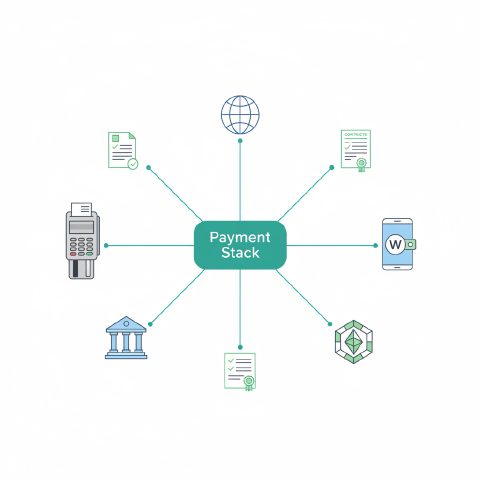
A casino-grade crypto gateway does wallet management, deposit crediting, withdrawal automation, AML transaction screening, and fiat settlement in one stack. A generic processor like Coinbase Commerce handles payment confirmation but stops there — it won't generate per-player deposit addresses, monitor for mixer-tainted funds, or integrate with your back-office balance sheet. That gap is where operators get burned.
The distinction matters more than most founders realize until their compliance officer flags it six months post-launch. Generic crypto processors were built for e-commerce merchants who receive occasional payments. An online casino processes thousands of micro-transactions daily, needs a unique deposit address per player per session, and must reconcile every satoshi against a player account balance in real time. That's a fundamentally different engineering problem.
Casino-specific gateways — CoinsPaid, SoftSwiss Pay, and TripleA's iGaming tier are the clearest examples — expose APIs that map directly to the concepts your platform already uses: player_id, deposit_address, withdrawal_request, balance_update. They also bundle Chainalysis or Elliptic-powered transaction screening, so every incoming deposit gets a risk score before it credits to a player wallet. A generic processor hands you a webhook saying 'payment received' and leaves the AML work to you.
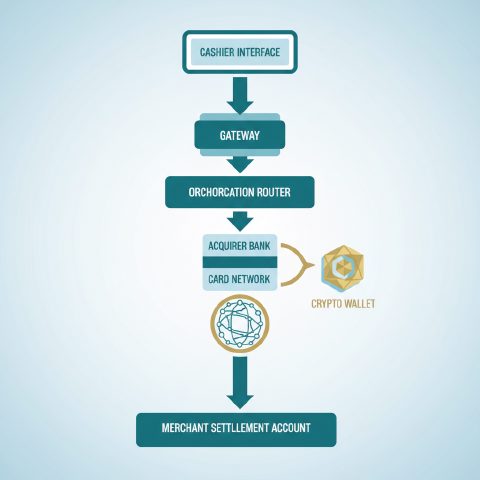
Settlement architecture is the other major differentiator. A casino needs to convert crypto to fiat (or stablecoins) on a defined schedule to manage volatility exposure and pay providers in EUR or USD. Casino gateways offer auto-conversion at point of deposit, end-of-day net settlement, or hold-in-crypto options with configurable thresholds. Generic processors typically offer manual withdrawals to an exchange, which means your finance team is manually moving funds and eating spread on every conversion — that kills the cost advantage of crypto rails entirely.
Finally, fraud patterns in gambling are different from retail. Bonus abuse via multiple wallets, rapid deposit-withdraw cycles designed to launder funds, and address reuse across accounts are casino-specific attack vectors. Purpose-built gateways maintain velocity rules, duplicate wallet detection, and shared fraud intelligence across their operator network. That shared intelligence is genuinely valuable and something you cannot replicate by bolting a generic processor onto your platform.
Which crypto currencies should your casino actually accept in 2026?
Bitcoin, Ethereum, Litecoin, Tether (USDT on TRC-20 and ERC-20), and USDC cover roughly 85% of player demand across EU, LATAM, and offshore markets. Adding BNB and Tron extends reach in Asia and emerging markets. Beyond that, the marginal volume rarely justifies the integration overhead and increased compliance surface.
I've seen operators launch with 40+ coins because their gateway supported them and it looked impressive on the deposit page. It's a mistake. Each additional blockchain is another network to monitor for downtime, another gas-fee variable to account for, and another address format your support team needs to troubleshoot. Start narrow, validate volume, then expand.
Stablecoins deserve special attention because they solve the biggest operational headache with crypto — volatility. A player depositing 1,000 USDT knows exactly what they're depositing. Your treasury knows exactly what it received. You don't need to run a real-time hedging operation. USDT on TRC-20 has become the dominant deposit method on crypto-native casinos in LATAM and Southeast Asia because TRC-20 transactions cost fractions of a cent versus $2–15 on ERC-20 depending on Ethereum network congestion. If you only enable one stablecoin, make it USDT TRC-20.
Bitcoin remains the brand signal — players associate BTC acceptance with a legitimate crypto casino — but actual BTC deposit volumes have been declining as a share of crypto casino deposits since 2022. Lightning Network adoption in iGaming is still marginal; the UX friction of opening a Lightning channel is too high for recreational players. Ethereum volumes are meaningful but gas costs during network congestion create support tickets ('my deposit is stuck') that drain your team. Litecoin and BCH are cheap to transact and still have a loyal base among older crypto users.
One coin to be careful about: Monero. Some operators accept it for privacy positioning, but it creates serious AML documentation problems under Curaçao's updated 2023 framework and is outright prohibited under MGA rules. If your licensing counsel hasn't flagged this, ask them directly.
| Asset | Typical deposit share | Network cost | AML complexity | Recommended? |
|---|---|---|---|---|
| Bitcoin (BTC) | 20–30% | Medium ($1–5) | Low | Yes — brand signal |
| Ethereum (ETH) | 15–25% | High ($2–20+) | Low | Yes — but monitor gas |
| USDT TRC-20 | 25–35% | Very low (<$0.01) | Low-Medium | Yes — top priority |
| USDC ERC-20 | 5–10% | High | Low | Optional — EU focus |
| Litecoin (LTC) | 5–8% | Very low | Low | Yes — legacy base |
| BNB / BSC | 5–10% | Very low | Medium | Yes — APAC/LATAM |
| Monero (XMR) | <1% | Low | Very high | No — compliance risk |
| Dogecoin (DOGE) | 1–3% | Very low | Low | Optional — community play |
What do crypto payment gateways actually cost — and where do the hidden fees live?
Headline processing fees run 0.4–1.2% per transaction for most casino-grade gateways, well below card rails. But the real cost stack includes setup fees ($2,000–$15,000), monthly minimums, blockchain network fees passed to the operator, FX conversion spread (0.3–1.5%), and compliance tooling that may be bundled or billed separately. Model the full stack before signing.
CoinsPaid, for example, charges a percentage fee on turnover with tiered discounts at volume thresholds — their published rates start around 0.8% but operators processing $1M+ monthly typically negotiate down to 0.4–0.5%. TripleA's iGaming tier has a similar structure but adds a monthly platform fee in the $500–2,000 range depending on the feature set. SoftSwiss Pay is bundled into the SoftSwiss casino platform, so if you're on their white-label, crypto processing is effectively included in your platform revenue share — which looks cheap until you realize you're paying 15–20% GGR share on everything.
The fee that surprises operators most is the blockchain network fee passthrough. When a player withdraws BTC, someone pays the miner fee. Most gateways pass this to the operator, who then decides whether to absorb it or charge the player. During high-congestion periods on Ethereum, this can be $10–20 per withdrawal — on a $50 withdrawal request, that's 20–40% of the transaction value. This is why TRC-20 USDT withdrawals have become the default for operators who care about unit economics: the network fee is effectively zero.
FX conversion spread is the other underestimated cost. If you're settling in EUR and a player deposits BTC, the gateway converts at spot with a spread — typically 0.3–1.0% above mid-market. On high-volume operations this compounds quickly. Some operators negotiate a fixed spread in their contract; others use the gateway's auto-hedge feature which locks conversion at deposit time. The latter is cleaner for accounting but you give up any upside if BTC appreciates between deposit and settlement.
Finally, if your gateway doesn't include AML screening, you'll need Chainalysis Reactor or Elliptic separately — budget $2,000–5,000/month for a mid-size operation. Some gateways (CoinsPaid includes basic screening; TripleA bundles Elliptic at higher tiers) absorb this. Others don't mention it until you're in due diligence with your licensing authority. Know what's in the bundle before you sign.
| Provider | Processing fee | Setup fee | Monthly fee | AML screening included? | Settlement options |
|---|---|---|---|---|---|
| CoinsPaid | 0.4–0.8% | $3,000–8,000 | None / volume-based | Basic (proprietary) | Fiat, crypto, stablecoin |
| TripleA iGaming | 0.5–1.0% | $2,000–5,000 | $500–2,000 | Elliptic (higher tiers) | Fiat, USDT |
| SoftSwiss Pay | Bundled in GGR share | Included in platform | Included | Yes | EUR/USD fiat |
| Paybis B2B | 0.7–1.2% | $1,500–3,000 | None | Basic | Fiat |
| Utorg | 0.5–0.9% | $2,000–4,000 | None | Partial | Fiat, stablecoin |
How do licensing requirements shape your crypto gateway choice?
Your license jurisdiction dictates which crypto assets you can accept, what AML documentation your gateway must produce, and whether you need a separate Virtual Asset Service Provider (VASP) registration. Curaçao's 2023 framework update, MGA's crypto guidance, and Anjouan's lighter-touch rules create meaningfully different compliance obligations — and your gateway must be able to satisfy all of them.
Curaçao's National Ordinance on Offshore Games of Hazard (NOOGH), updated in 2023, now explicitly requires operators to conduct enhanced due diligence on crypto deposits above defined thresholds and maintain TXID-level records for at least five years. Your gateway must export this data on demand. CoinsPaid and SoftSwiss Pay both produce compliance-ready transaction reports in formats Curaçao's Gaming Control Board has accepted in practice. A gateway that only gives you a CSV of wallet addresses won't cut it.
The MGA (Malta Gaming Authority) is the most demanding of the mainstream offshore licenses on crypto. They require operators to treat crypto deposits equivalently to fiat for AML purposes, which means full KYC before any crypto deposit credits — no anonymous play. They also prohibit privacy coins outright. The upside is that MGA-licensed operators can bank in the EU more easily, which matters when you need to convert crypto settlements to fiat and hold funds in a regulated account. If you're targeting EU players and want MGA licensing, budget for a gateway with deep Chainalysis or Elliptic integration — it's non-negotiable.
Anjouan (Comoros) has become popular for crypto-native startups because the licensing process is faster (8–12 weeks versus 3–6 months for Curaçao's new framework) and the AML requirements, while present, are lighter in practice. The trade-off is banking — Anjouan-licensed operators have a harder time opening business bank accounts in EU jurisdictions, so crypto settlement becomes not just an option but often a necessity. This is actually a reasonable fit: if you're running a crypto-first casino and settling in stablecoins, you may not need a traditional bank account at all for the first 12–18 months.
US operators face a completely different landscape. No federal framework governs online casino crypto payments, and state-by-state rules vary wildly. New Jersey's DGE has issued guidance treating crypto as a payment method subject to existing AML rules; Michigan's MGCB has similar positions. In practice, licensed US operators use payment processors that convert crypto to USD at point of deposit — so the player uses crypto, but the casino's books show USD. BitPay and Paysafe's crypto rail both support this model. If you're in a US state market, talk to your compliance counsel before choosing a gateway — the architecture matters legally.
What's the technical integration path — and how long does it actually take?
A well-documented casino-grade crypto gateway integrates via REST API in 3–6 weeks for a competent back-end team. The timeline blows out when operators underestimate the webhook reliability work, the wallet reconciliation logic, and the compliance configuration that must happen before go-live. Plan for 6–10 weeks end-to-end including QA and UAT.
The core integration is straightforward: your platform calls the gateway API to generate a unique deposit address for each player session, listens for a webhook confirming the transaction and required confirmations, then credits the player balance. Withdrawals work in reverse — you push a payout request to the gateway with a destination wallet address and amount, and the gateway handles the blockchain transaction. Most casino-grade gateways have Postman collections and sandbox environments that make the happy path fast to implement.
The complexity lives in the edge cases, and there are more of them in crypto than in card payments. What happens when a player sends the wrong coin to a deposit address (e.g., sends ETH to a BTC address)? What's your process for underpayments — a player sends 0.0009 BTC when the minimum is 0.001? What's the confirmation threshold for each coin before you credit — and does your gateway let you configure this, or is it fixed? These aren't hypothetical; they generate support tickets daily on any active crypto casino. Map them out before you start writing code.
Wallet reconciliation is where most platform PMs underestimate the work. Your gateway holds funds in hot and cold wallets; your platform has player balance records. These two ledgers must reconcile in real time, and the reconciliation logic needs to handle blockchain reorganizations (rare but real on smaller chains), stuck transactions, and gateway-side settlement delays. Build a reconciliation dashboard from day one — don't try to reconstruct it after launch when discrepancies start appearing.
If you're on a white-label platform (SoftSwiss, EveryMatrix, Turnkey), the integration work is largely pre-built — you're configuring rather than coding. SoftSwiss has CoinsPaid integrated natively; EveryMatrix supports multiple crypto gateways through their payment hub. The trade-off is less flexibility on fee negotiation and settlement configuration. For operators building on a custom or semi-custom stack, budget 200–400 developer hours for a solid integration including reconciliation logic and compliance reporting hooks.
How should you handle crypto-to-fiat settlement and treasury management?
Auto-convert at deposit time using your gateway's built-in settlement to eliminate volatility exposure on player liabilities. Hold operating reserves in USDT or USDC rather than volatile assets. Only hold BTC or ETH as a deliberate treasury position — not by default. Most operators who 'lost money on crypto' simply failed to configure auto-conversion.
The default configuration on many gateways is to hold received crypto in the asset it arrived in. This means if 50 players deposit BTC on a Tuesday and BTC drops 15% by Thursday, your liabilities (player balances) haven't changed but your asset value has. You're running an unintentional short book on your players. Auto-conversion at deposit time — where the gateway immediately converts BTC to EUR or USDT at the prevailing rate — eliminates this exposure. It costs you the conversion spread (0.3–1.0%) but that's a known, manageable cost versus open-ended volatility risk.
Stablecoin settlement is increasingly the preferred model for crypto-native casinos. You settle in USDT or USDC, hold operating funds in stablecoins, and pay providers who accept stablecoin invoices directly. This works well for software providers (many now accept USDT), but breaks down for services that require fiat: payroll in regulated jurisdictions, bank-based payment processors, and most B2B SaaS tools. You'll need at least one fiat off-ramp — typically an OTC desk relationship or an account with a crypto-friendly business bank like Silvergate's successors, Bankera, or Neat.
For operators processing significant volume ($500K+ monthly in crypto), a treasury policy document is worth the legal cost. It should define: maximum crypto holdings as a percentage of total reserves, auto-conversion thresholds, approved stablecoins, OTC desk relationships for large conversions, and who has authorization to move funds. This document also helps when your licensing authority asks about financial controls — and they will ask.
One underrated risk: exchange counterparty exposure. If you're settling through a gateway that holds funds on a centralized exchange before sweeping to your account, you have exchange counterparty risk. The FTX collapse in 2022 hit several mid-size operators who had settlement funds sitting in FTX-connected accounts. Ask your gateway explicitly: where are unsettled funds held, and what's the sweep frequency? Daily sweeps to a wallet you control is the minimum acceptable standard.
How do the leading crypto gateways for iGaming actually compare?
CoinsPaid leads on iGaming-specific features and coin breadth; TripleA has the strongest compliance documentation for EU-regulated operators; SoftSwiss Pay is the path-of-least-resistance if you're already on their platform. None of them is universally best — the right choice depends on your platform architecture, license jurisdiction, and target player geography.
CoinsPaid has processed over $7 billion in crypto transactions (their own figure, worth treating as directional) and has the deepest iGaming client base of any standalone gateway. Their back-office is genuinely casino-aware — you get per-player wallet management, velocity limits, and a compliance dashboard that exports TXID-level reports. The weakness is that their AML screening is proprietary rather than Chainalysis/Elliptic, which some licensing authorities prefer to see from a recognized vendor. For Curaçao and Anjouan operators, CoinsPaid's screening is generally sufficient. For MGA, ask your compliance counsel first.
TripleA positions itself as the compliance-first option and backs it up with Elliptic integration at their iGaming tier. Their documentation for licensing applications is thorough — I've seen operators use TripleA's compliance reports to satisfy MGA inquiries without additional tooling. The trade-off is a slightly higher fee structure and a smaller coin list than CoinsPaid. They're a strong choice for operators who expect regulatory scrutiny or plan to apply for a Tier 1 license (MGA, UKGC-adjacent markets).
SoftSwiss Pay is worth understanding in context. SoftSwiss's white-label casino platform has CoinsPaid integrated as the default crypto gateway — and since SoftSwiss owns CoinsPaid, the integration is genuinely seamless. If you're launching on SoftSwiss's platform, you get crypto payments essentially out of the box. The catch is that you're locked into their ecosystem. Negotiating separate gateway terms or switching providers later is painful. If you're on a custom build or a different white-label, SoftSwiss Pay is not a standalone option.
Newer entrants worth watching: Utorg has been gaining traction with crypto-native operators for their stablecoin-first approach and competitive fees on high-volume accounts. NOWPayments has a large coin list and low setup friction but thinner iGaming-specific features — better suited to crypto-native operators who want breadth over depth. For US-market operators, BitPay's merchant tier and Paysafe's crypto rail are the pragmatic choices given their existing relationships with US payment compliance infrastructure.
| Provider | iGaming-specific API | AML screening | Coin breadth | Stablecoin settlement | Best fit |
|---|---|---|---|---|---|
| CoinsPaid | Yes — native | Proprietary | 50+ coins | Yes (USDT, USDC, BUSD) | Curaçao/Anjouan operators, high volume |
| TripleA iGaming | Yes | Elliptic (higher tiers) | 20+ coins | Yes (USDT) | MGA/EU-regulated operators |
| SoftSwiss Pay | Yes (platform-native) | Via CoinsPaid | 30+ coins | Yes | SoftSwiss white-label operators only |
| Utorg | Partial | Partial | 30+ coins | Yes (USDT TRC-20) | Crypto-native, stablecoin-first |
| BitPay Merchant | No | Basic | 15+ coins | USD settlement only | US-market operators |
| NOWPayments | Partial | Basic | 300+ coins | Yes | Breadth-first, lower volume |
What AML and KYC obligations apply specifically to crypto casino payments?
Crypto deposits trigger the same KYC obligations as fiat under FATF Recommendation 15 and its national implementations — but they add a layer of on-chain due diligence that fiat doesn't require. You need wallet screening on every deposit, source-of-funds documentation for high-value transactions, and TXID-level record keeping. Your gateway must support all three, not just the first.
FATF's 'Travel Rule' — Recommendation 16, extended to Virtual Asset Service Providers in 2019 — requires that originator and beneficiary information travel with crypto transfers above threshold amounts (typically $1,000 or equivalent). For casino operators, this means that for large player deposits, you may need to collect and verify the originating wallet's ownership. In practice, most casino-grade gateways handle this by requiring players to verify wallet ownership (signing a message or completing a small test transaction from the declared wallet) before large withdrawals are processed. This is standard practice on compliant platforms.
On-chain wallet screening is non-negotiable. Every incoming deposit address should be screened against sanctions lists, known mixer/tumbler addresses, darknet market associations, and high-risk exchange clusters. CoinsPaid's proprietary screening covers the major categories; Elliptic and Chainalysis offer more granular risk scoring and are the gold standard for regulators. The risk score should be logged against the transaction record — not just acted on in real time, but stored for audit purposes. If a regulator asks you to demonstrate that you screened a specific deposit from 18 months ago, you need to be able to produce that record.
Source of funds (SOF) documentation for crypto is genuinely harder than for fiat. When a player deposits $50,000 in BTC, asking for a bank statement doesn't work. Accepted alternatives include: exchange account statements showing the purchase of BTC, mining income documentation, or a signed declaration for amounts below enhanced due diligence thresholds. Your compliance policy needs to define these thresholds and document what evidence is acceptable. Most operators set enhanced SOF triggers at $5,000–$10,000 equivalent for crypto, lower than for fiat because the anonymity risk is higher.
One area where operators consistently underinvest: transaction monitoring rules specific to crypto behavior. Rapid deposit-withdrawal cycles (deposit, play minimum, withdraw) are a classic money laundering pattern that looks different on-chain than in fiat. Multiple deposits from different wallets to the same player account suggests wallet rotation. Deposits from wallets that received funds from a known mixer within the last 10 hops are a red flag even if the immediate source looks clean. Your gateway's rule engine should be configurable for these patterns — if it isn't, you need a supplementary transaction monitoring tool.
What are the biggest operational risks operators discover after launch?
The three post-launch surprises that hit operators hardest: blockchain congestion causing deposit delays that generate player complaints and chargebacks-equivalent disputes; wallet address reuse creating AML audit failures; and gateway downtime during high-traffic periods exposing single-point-of-failure risk. All three are preventable with the right architecture — none of them are obvious from a vendor demo.
Blockchain congestion is the one that generates the most player support tickets. When Ethereum gas prices spike — which happens unpredictably during NFT drops, DeFi events, or market volatility — deposits can sit unconfirmed for hours. Players who deposited to play a live casino session are not patient. Your support team needs clear escalation scripts, your gateway needs configurable confirmation thresholds (so you can temporarily accept lower confirmations during congestion), and your player-facing messaging needs to set expectations proactively. Operators who didn't build this out before launch spent their first high-traffic weekend firefighting.
Wallet address reuse is an AML problem that also creates player confusion. If your gateway reuses deposit addresses across sessions — which cheaper or misconfigured gateways sometimes do — two problems emerge. First, a player who sends a second deposit to an 'old' address may have it credited incorrectly or delayed. Second, address reuse allows anyone to trace a player's full deposit history on-chain, which is both a privacy issue and an AML documentation complication. Require fresh deposit addresses per session from your gateway contract — this should be a technical requirement, not a preference.
Gateway downtime is the single-point-of-failure risk most operators don't think about until it happens. If your crypto gateway goes down, you have zero crypto deposit and withdrawal capability. Unlike card payments where you can failover to a second acquirer, most operators run a single crypto gateway. The mitigation is either a backup gateway integration (expensive but worth it above $500K monthly crypto volume) or, more practically, a clear player communication protocol and SLA-backed uptime guarantee in your gateway contract. Demand 99.9% uptime SLA minimum and understand what the compensation mechanism is if they miss it.
One risk that's genuinely hard to manage: regulatory changes to crypto AML rules mid-operation. The EU's MiCA regulation (fully in force by end of 2024) changed compliance obligations for crypto-asset service providers operating in EU markets. Curaçao's 2023 framework update surprised several operators who had been operating under the old rules. Build a regulatory monitoring cadence into your operations — quarterly reviews of your licensing jurisdiction's crypto guidance, not just annual. Your gateway provider should be proactively communicating these changes; if they aren't, that's a signal about their compliance culture.
How do you evaluate a crypto gateway vendor before signing — and what should the contract cover?
Run a technical due diligence checklist, not just a demo. Test the sandbox API yourself or have your lead developer do it. Verify the compliance documentation they produce against your licensing authority's stated requirements. And read the contract for settlement timing, fund custody terms, termination clauses, and liability caps — these are where operators get surprised.
The demo will always look good. The sandbox is where you learn the truth. Specifically: test the webhook reliability under simulated load, check how the gateway handles underpayments and overpayments, verify that the compliance report exports include the fields your licensing authority requires (TXID, wallet address, risk score, timestamp, player ID), and test the withdrawal flow end-to-end including the confirmation time. If the vendor won't give you full sandbox access before signing, that's a red flag.
Reference checks matter more in crypto gateway selection than almost anywhere else in iGaming vendor procurement. Ask for three operator references in your license jurisdiction — not just any clients, specifically operators licensed where you're licensed. Ask those operators specifically about: compliance report quality during regulatory inquiries, gateway uptime during high-traffic events, and how the vendor handled a serious incident (there will have been one). If the vendor can't provide references or the references are vague, weight that heavily.
The contract needs to explicitly cover: settlement timing (T+1 is standard; T+3 is acceptable; anything longer is a working capital problem), fund custody (where are your unsettled funds held and under what legal structure), termination notice period (30 days is standard; 90 days is punitive if you need to switch), liability cap (most gateways cap liability at one month's fees — negotiate this up if you're processing significant volume), and data portability (you must be able to export your full transaction history and player wallet records on termination). The data portability clause is the one most operators forget to negotiate and regret most when they want to switch providers.


Comments
No comments yet, be the first.