How to Get a Gambling Merchant Account Approved in 2026: The Operator's Real Playbook

What is a gambling merchant account and why is it so hard to get?
A gambling merchant account is a card-acquiring relationship that lets an online casino accept Visa and Mastercard payments from players. It is classified as high-risk because of elevated chargeback rates, regulatory complexity and reputational exposure for banks. Most mainstream acquirers decline gambling outright, which forces operators toward a narrow pool of specialist processors.
The core problem is MCC code 7995. That four-digit Merchant Category Code is how card networks tag gambling transactions, and it triggers automatic rejection at most retail banks and payment service providers. Stripe, Square, PayPal and the vast majority of PSPs that serve e-commerce explicitly exclude MCC 7995 in their terms of service. When an operator tries to sneak gambling through a generic e-commerce account, the account gets terminated and the operator lands on a terminated merchant file (TMF), which makes future applications even harder.
The high-risk designation is not arbitrary. Gambling genuinely produces chargeback rates that run 2-5x higher than typical e-commerce, partly because players dispute charges after losing, partly because of friendly fraud, and partly because card-not-present transactions in gambling carry real fraud exposure. Acquirers price this risk into their fees and underwriting standards. A processor willing to take on a new gambling operator with no processing history is taking a real financial risk, and they structure the relationship accordingly.
The market for specialist gambling acquirers is smaller than most operators expect. A handful of banks in Malta, Cyprus, Gibraltar and offshore jurisdictions like the Cayman Islands dominate the space. On the payment facilitator side, companies like Payvision (now part of ING), Nuvei, Paysafe and Worldline's high-risk division handle significant gambling volume. Getting access to any of them requires a credible license, a clean compliance posture and, ideally, a warm introduction through a platform provider or payments consultant who already has a relationship with the underwriting team.
Which MCC code applies to online gambling and what does it mean for your application?
Online gambling transactions are coded under MCC 7995 (Betting, including Lottery Tickets, Casino Gaming Chips, Off-Track Betting and Wagers at Race Tracks). This code signals high-risk status to every card network and issuing bank in the chain. It affects interchange rates, issuer approval rates, chargeback thresholds and which acquirers will even consider your application.
MCC 7995 is not a death sentence, but it does define the entire commercial structure of your card processing relationship. Interchange rates under 7995 are higher than standard e-commerce, which means the acquirer's base cost is higher before they add their own margin. You should expect blended rates of 3.5-6% for card-present-equivalent online gambling transactions, compared to 1.5-2.5% for a typical SaaS business. That spread directly affects your player acquisition economics, so model it carefully before you commit to a bonus strategy.
What many first-time operators miss is that MCC 7995 also affects issuer-side approval rates. Even if you have a legitimate acquiring relationship, issuing banks in certain jurisdictions block or decline 7995 transactions by default. This is particularly pronounced in the United States, where most US-issued cards will decline a gambling charge from an offshore operator regardless of the merchant's acquiring setup. Some operators attempt to work around this by using alternative MCCs, but that is misrepresentation to the card network and a fast path to account termination and potential fraud liability.
The practical implication for your application is that you need to be transparent about your MCC from the first conversation with a potential acquirer. Any processor who suggests you can process gambling under a different MCC is either uninformed or unethical. Stick to 7995, find acquirers who specialize in it, and compete on compliance quality rather than trying to obscure what you do.
What do acquirers actually look at when underwriting a gambling merchant account?
Acquirers underwrite the entire business, not just the website. They want to see a valid gambling license, a clean corporate structure, AML and KYC policies that match regulatory requirements, chargeback history below 1%, and evidence that player funds are segregated. First-time operators with no processing history face the toughest scrutiny and the most conservative reserve terms.
The underwriting checklist varies by acquirer, but after reviewing dozens of these applications I can tell you the core documents are consistent. You will need: the gambling license certificate and any associated terms or conditions, a corporate structure chart showing ultimate beneficial ownership (UBO) down to individuals holding 10% or more, 6-12 months of bank statements for the operating entity, your AML/KYC policy document, your responsible gambling policy, a sample player agreement and terms of service, and a description of your fraud and chargeback management procedures. If you have prior processing history with another acquirer, those statements are worth their weight in gold.
The license jurisdiction is the single biggest variable in how smoothly underwriting goes. An MGA license (Malta) or a UKGC license will open doors that a Curaçao eGaming sub-license simply cannot. This is not a knock on Curaçao as a jurisdiction. It is a practical reality: the MGA's AML requirements are stricter, its player protection rules are more detailed, and acquirers have been doing business with MGA licensees for twenty years. A Curaçao sub-license from a master license holder like Antillephone or Gaming Curacao is faster and cheaper to obtain, but you will pay for it in narrower processor options and higher fees. Anjouan licenses, which became more prominent after Curaçao's 2023 reform process, face similar skepticism from most mainstream acquirers.
Chargeback ratios are the metric acquirers watch most closely once you are live. Visa's threshold for high-risk merchants is 2% before they escalate to their High Brand Risk program. Mastercard's Excessive Chargeback Program kicks in at 1.5%. Most specialist gambling acquirers will put you on a performance improvement plan at 1% and terminate the account if you consistently breach 1.5%. Building your fraud prevention stack before you go live, not after your first chargeback wave, is the difference between a sustainable processing relationship and a terminated account six months in.
| Requirement | Tier 1 Acquirer (e.g. Nuvei, Paysafe) | Tier 2 Specialist (e.g. offshore acquiring bank) | First-Time Operator Reality |
|---|---|---|---|
| License jurisdiction | MGA, UKGC, Gibraltar preferred | Curaçao, Anjouan accepted with caveats | Curaçao sub-license limits options significantly |
| Processing history | 6-12 months preferred | 3-6 months or none accepted | No history means higher reserves and lower limits |
| Chargeback threshold | Below 1% required | Below 1.5% typical | First 90 days closely monitored |
| Rolling reserve | 5-10% for 90 days | 10-15% for 180 days | Can tie up significant working capital |
| AML/KYC documentation | Full policy + audit trail | Policy document required | Must match the license jurisdiction's requirements |
| UBO disclosure | Full KYC on all UBOs | Full KYC on all UBOs | No exceptions; undisclosed UBOs kill applications |
How does your gambling license choice affect which payment processors will work with you?
Your license jurisdiction is the most influential factor in determining which acquirers will approve your application. MGA and UKGC licenses unlock the broadest range of processors. Curaçao and Anjouan licenses narrow the field considerably and typically push operators toward offshore acquiring banks or high-risk payment facilitators who charge premium rates.
I have seen operators spend months chasing a payment processor only to discover that the acquirer's compliance team will not touch their Curaçao sub-license. The frustration is real, but it is predictable. Acquirers have their own regulatory obligations. A bank in Malta processing payments for a Curaçao-licensed operator is making a judgment call about the quality of that license's AML oversight. Many banks have decided that judgment call is not worth making, especially post-2023 when Curaçao's own reform process created uncertainty about which sub-licensees would survive the transition to the new National Ordinance framework.
The practical hierarchy looks like this. UKGC and MGA licenses give you access to Nuvei, Paysafe, Worldline's high-risk division, and several acquiring banks in Malta and Cyprus. A Gibraltar or Isle of Man license is similarly well-regarded. A Curaçao license from a reputable master license holder (Antillephone, Gaming Curacao, Curacao eGaming) will get you through the door at a narrower set of processors, typically offshore acquiring banks in the Cayman Islands, Belize or certain Eastern European jurisdictions, plus high-risk payment facilitators who specialize in offshore operators. Anjouan licenses are the newest entrant and most mainstream acquirers are still developing their policies around them.
If you are serious about card processing at scale, the license cost differential between Curaçao and the MGA is worth running as a business case. A Curaçao sub-license costs roughly $15,000-$30,000 all-in for the first year. An MGA license runs $25,000+ in application fees alone, plus compliance infrastructure and a Malta-based presence. But if the MGA license gets you processing rates that are 1.5 percentage points lower and approval rates that are 15% higher, the payback period on that extra licensing cost can be surprisingly short at any meaningful volume.
| License Jurisdiction | Mainstream Acquirers | Specialist High-Risk Processors | Typical Card Rate Range | Notes |
|---|---|---|---|---|
| UKGC (UK) | Yes, with restrictions | Yes | 3.5-5.5% | UK player restrictions apply; strong compliance bar |
| MGA (Malta) | Yes | Yes | 3.5-5.5% | Best balance of access and cost for EU-facing operators |
| Gibraltar | Yes | Yes | 3.5-5.5% | Strong reputation; smaller jurisdiction |
| Isle of Man | Yes | Yes | 3.8-5.8% | Excellent reputation; less common |
| Curaçao (sub-license) | Rarely | Yes | 4.5-7% | Post-2023 reform adds uncertainty; offshore banks mainly |
| Anjouan | No | Limited | 5-8% | Very new; most acquirers still building policy |
| US State License (e.g. NJ DGE) | Yes (in-state) | Yes | 3.5-5% | Geofenced; requires US acquiring relationships |
What is a rolling reserve and how should operators plan for it?
A rolling reserve is a percentage of your card processing volume that the acquirer withholds for a set period, typically 5-15% held for 90-180 days. It protects the acquirer against chargebacks that arrive after a transaction. For new gambling operators, rolling reserves can lock up hundreds of thousands of dollars in working capital during the critical early months of operation.
Here is the part most operators discover too late. If you are processing $500,000 per month in card volume at a 10% rolling reserve held for 180 days, you have $300,000 sitting in the acquirer's account at any given time that you cannot touch. That is not a fee. It is not lost money. It will come back to you. But it is not available for operations, bonuses, or payroll during those six months. I have seen operators run into genuine cash flow crises because their investor deck modeled gross revenue but forgot to subtract the reserve float.
Reserve terms are negotiable, but your leverage depends on your processing history and chargeback performance. A brand-new operator with no history will get the worst terms. After 6-12 months of clean performance, you can typically negotiate the reserve percentage down or shorten the holding period. Some acquirers will reduce reserves below 5% for operators with consistently low chargebacks and a strong compliance record. Build the reserve into your financial model from day one, not as an afterthought.
There is a second reserve issue that catches operators off guard: the terminal reserve. When an acquirer terminates a gambling account (voluntarily or otherwise), they typically hold the rolling reserve for the full tail period after termination, sometimes longer if there is a chargeback dispute in progress. This means you can be cut off from a significant chunk of cash for six months after losing a processing relationship. It is another reason why diversifying across multiple processors is not just a business continuity nicety. It is a financial survival strategy.
Why do operators need backup payment processors and how many should you have?
Every gambling operator needs at least two active card processing relationships and ideally a third in reserve. Processors terminate gambling accounts with minimal notice, sometimes for reasons outside the operator's control. A single processor failure can halt card revenue for days or weeks. The cost of maintaining redundant processors is trivial compared to the cost of a processing outage during peak traffic.
This is the advice I give every operator before they go live, and it is the advice most of them do not take seriously until they get burned. Card processors in the gambling space operate under pressure from card networks, correspondent banks and regulators. A change in network rules, a spike in chargebacks across the processor's portfolio (not just yours), or a compliance review at the acquiring bank can result in your account being suspended or terminated with 24-72 hours notice. There is no appeals process that will save your revenue in that window.
The practical setup I recommend is two active processors handling live volume, split by geography or payment method if possible, plus a third relationship that is approved and technically integrated but handling minimal volume. That third processor serves as your warm spare. If one of your primary processors goes down, you can shift volume to the spare immediately without scrambling to complete a new underwriting process from scratch. Onboarding a new processor from application to first transaction typically takes 4-12 weeks for a gambling merchant. You cannot afford to start that clock after an outage.
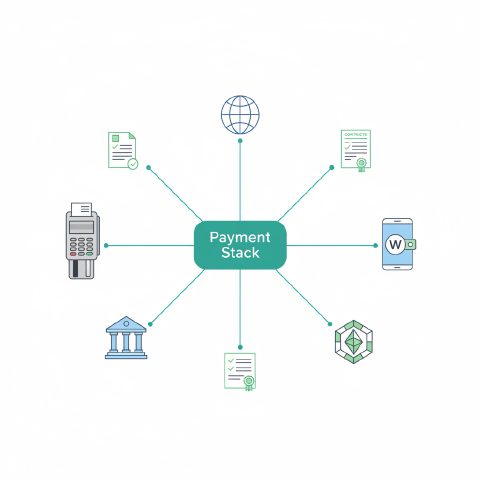
Beyond cards, a mature payment stack should include at least one e-wallet option (Skrill and Neteller are the obvious choices for European operators, though both have tightened their gambling policies in recent years), a bank transfer solution, and increasingly a crypto payment gateway. Platforms like CoinsPaid and BitPay have become genuine components of the iGaming payment stack, not just a niche add-on. Crypto payments bypass the card network entirely, which means no MCC 7995 friction, no chargebacks in the traditional sense, and no rolling reserve. They are not a replacement for card processing, but they are a meaningful hedge against card processor instability.
What are the most common reasons gambling merchant account applications get rejected?
The most common rejection triggers are: an unacceptable license jurisdiction, undisclosed beneficial owners, a website that is live before the account is approved, missing or inadequate AML/KYC documentation, and prior terminations on the TMF/MATCH list. Each of these is avoidable with proper preparation, but they collectively account for the majority of failed applications I have reviewed.
The TMF (Terminated Merchant File) and Mastercard's MATCH list are the most damaging issues because they follow an operator across applications. If a previous processing relationship was terminated for cause, that record is visible to any acquirer who runs a standard check. Operators who tried to process gambling through a non-gambling merchant account and got terminated for misrepresentation are particularly exposed here. The only path forward from a TMF listing is time, transparency and a very compelling compliance story. Some specialist acquirers will work with TMF-listed operators, but the terms will be punitive.
Website readiness is a subtler issue. Many acquirers require that your website be live and fully compliant before they will complete underwriting. That creates a chicken-and-egg problem: you need a processor to take payments, but you need a live site to get a processor. The solution is to build a compliant site with a soft-launch or coming-soon state that shows the full terms of service, responsible gambling tools, age verification, and AML disclosures. Some acquirers will underwrite against a staging environment. Others insist on a live URL. Know which type you are dealing with before you invest in the build.
AML and KYC documentation quality is consistently underestimated. Operators often submit a generic policy template downloaded from the internet rather than a policy that actually reflects their operational procedures. Underwriters at serious acquirers read these documents carefully. A policy that references a jurisdiction or regulatory body that does not match your license, or that describes KYC processes you are not actually equipped to run, will get flagged immediately. Have a compliance consultant review your AML policy before submission, not after rejection.
How long does it take to get a gambling merchant account approved?
For a well-prepared application with a recognized license, expect 4-8 weeks from submission to first live transaction. Incomplete applications, unusual corporate structures or less-recognized license jurisdictions can push this to 12-16 weeks or longer. Operators who start the processor search before their license is issued will lose most of that time waiting.
The timeline breaks down roughly as follows. Initial outreach and relationship building takes 1-2 weeks. Most serious acquirers will not begin formal underwriting until they have had at least one call with the operator's principals. Submitting a cold application through a web form rarely works for gambling. You need an introduction, either through your platform provider, your license agent, or a payments consultant who has existing relationships with the underwriting teams.
Document collection and initial review typically runs 2-3 weeks. This is where incomplete applications die. If the acquirer's compliance team has to chase you for missing UBO documentation or a revised AML policy, each back-and-forth adds days. Have everything ready before you submit. The formal credit and compliance committee review, which is where the actual approval decision is made, takes another 1-2 weeks at most acquirers. Then there is technical integration: connecting your platform to the acquirer's payment gateway, testing the integration in a sandbox environment, and completing the acquirer's certification process. Budget 1-3 weeks for this depending on your platform's existing integrations.
One practical note: if you are using a white-label platform from a provider like SoftSwiss, EveryMatrix or Softgamings, they will typically have pre-existing technical integrations with several acquirers. That can compress the technical phase significantly. It does not accelerate the underwriting phase, which is entirely about your business, not your platform. But getting the technical piece down to days instead of weeks is a real advantage of the white-label route for operators who are under time pressure.
What fees should operators expect on a high-risk gambling merchant account?
Expect a blended card processing rate of 3.5-7% depending on your license, processing history and volume. On top of that, plan for a monthly account fee, a chargeback fee per incident (typically $25-50), a rolling reserve holdback, and potentially a setup fee. The total cost of card acceptance for a new gambling operator is materially higher than any mainstream e-commerce benchmark.
The rate spread in gambling acquiring is wider than most operators model. A well-established operator with an MGA license, two years of processing history and sub-1% chargebacks might negotiate a blended rate of 3.5-4%. A brand-new operator with a Curaçao license and no history might pay 6-7% blended, or more from certain offshore processors who price in the full risk premium upfront. That 3-point difference is enormous at scale. On $1 million per month in card volume, it is $30,000 per month in extra processing cost. Over a year, that is $360,000 that could have funded player acquisition.
Chargeback fees are a separate line item that operators often forget to model. At $25-50 per chargeback, and assuming a 1% chargeback rate on $500,000 monthly volume (that is 500 transactions at an average ticket of $100), you are looking at $12,500-$25,000 per month in chargeback fees alone before you even consider the lost revenue from the disputed transactions. This is why fraud prevention and chargeback management tools are not optional overhead. They are direct cost reduction. Tools like Ethoca and Verifi (both now part of Mastercard's ecosystem) can intercept disputes before they become formal chargebacks, and the ROI calculation is usually straightforward.
Setup fees vary widely. Some acquirers charge $500-2,000 for a new gambling account setup. Others waive the setup fee in favor of higher ongoing rates. Neither model is inherently better; it depends on your projected volume and how long you expect to stay with that processor. Monthly minimum fees are also common: if you do not process enough volume to generate a minimum fee, you pay the minimum anyway. For a new operator ramping up, those minimums can feel punitive in the early months. Negotiate them explicitly, or choose a processor that does not impose them until you hit a volume threshold.
How do US-based gambling operators approach merchant accounts differently from offshore operators?
US-licensed operators in regulated states work with US-based acquiring banks and payment processors who have specific igaming programs, including FIS, Global Payments and state-specific bank partners. The framework is stricter and more expensive to set up, but the card approval rates are far higher because US-issued cards are not blocked by default. Offshore operators targeting US players face near-total card processing barriers.
The US market is genuinely different from every other jurisdiction I work in. In states with legal online gambling (New Jersey, Pennsylvania, Michigan, West Virginia, Delaware, Connecticut and a growing list of others), the payment processing infrastructure is built around licensed operators who have gone through the state's licensing process. The New Jersey Division of Gaming Enforcement, for example, requires that all payment processors used by NJ-licensed operators also register with the DGE. That registration process filters out the offshore and high-risk processors that serve the rest of the world.
The practical result is that US-licensed operators have access to a different tier of processor. FIS (formerly WorldPay), Global Payments and Paysafe all have dedicated US iGaming programs. The rates are lower than offshore gambling rates, typically 2.5-4% blended, and the card approval rates are dramatically higher because US-issued cards are not blocked. The tradeoff is that the compliance bar is extremely high and the licensing process is expensive and time-consuming. A New Jersey operator license can take 18-24 months and cost $500,000+ in licensing fees, compliance infrastructure and legal costs.
Offshore operators who try to serve US players face a different reality. The Unlawful Internet Gambling Enforcement Act (UIGEA) of 2006 prohibits US financial institutions from processing payments for unlicensed gambling operators. This means US-issued cards will decline at the transaction level, US bank accounts cannot be used for deposits or withdrawals, and most mainstream payment processors will not touch the relationship. Offshore operators serving US players typically rely on cryptocurrency, prepaid cards, and a patchwork of payment methods that work around the banking system rather than through it. It is a workable model, but it is operationally complex and carries legal risk that operators should take seriously.
What role do payment aggregators and white-label platforms play in simplifying gambling merchant account access?
White-label casino platforms like SoftSwiss and EveryMatrix often include pre-negotiated payment processing relationships as part of their service stack. This can dramatically shorten the time to first transaction, but it comes with trade-offs: the operator typically pays a platform margin on top of the acquirer's rate, and the processing relationship belongs to the platform, not the operator.
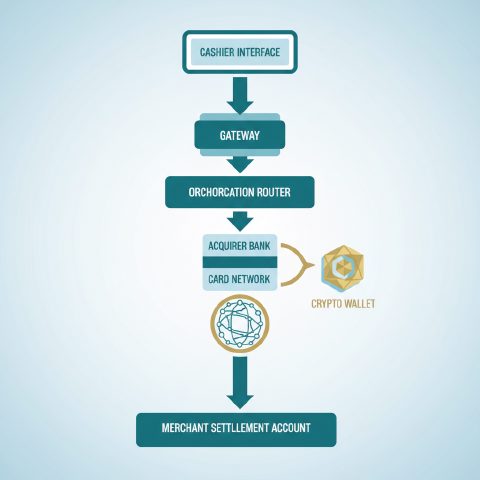
This is one of the most significant hidden trade-offs in the white-label versus turnkey decision. When you launch on a white-label platform, the platform provider often acts as the merchant of record or has pre-existing acquiring relationships that you can tap into quickly. SoftSwiss's payment hub, for example, connects operators to a range of acquirers and alternative payment methods through a single integration. EveryMatrix's CashierEngine works similarly. The onboarding time for payment processing through these platforms can be 2-4 weeks instead of 4-8 weeks for a standalone application.
The cost of that convenience is real. The platform takes a margin on every transaction that goes through their payment infrastructure, typically 0.5-1.5 percentage points on top of the acquirer's rate. At low volumes, that is a reasonable price for speed and simplicity. At high volumes, it becomes a meaningful drag on margins. More importantly, the acquiring relationship is technically with the platform, not with you. If you ever migrate off the platform, you cannot take those processing relationships with you. You start the acquirer search from scratch, which is a significant operational risk if you are doing meaningful volume.
My recommendation for operators who are serious about building a long-term business is to use the platform's payment infrastructure to get live quickly, but simultaneously pursue your own direct acquiring relationships. Use the platform's stack for the first 6-12 months while you build processing history under your own entity. Then use that history to apply for direct acquiring relationships that you own. It takes more effort upfront, but it gives you independence and better economics as you scale.



Comments
No comments yet, be the first.