The iGaming Alternative Payment Solution Stack for LATAM Casinos in 2026: PIX, SPEI, PSE and Beyond

Why does LATAM need a dedicated iGaming alternative payment solution strategy?
Cards fail at the checkout in LATAM at rates that would be unacceptable in Europe — issuer-level blocks on gambling MCC codes, low card penetration in Brazil and Mexico, and currency controls in Argentina mean that a card-only stack leaves the majority of your addressable market unable to deposit. Local rails are not a nice-to-have; they are the product.
Brazil has roughly 160 million adults but Visa/Mastercard penetration for online transactions sits well below European norms, and Brazilian issuers routinely decline cross-border gambling charges even on cards that technically work. Mexico's banked population is growing but still under 50% of adults, and OXXO cash vouchers remain the de facto payment method for a substantial slice of the population. Colombia's Coljuegos-licensed operators are legally required to process deposits through PSE — a card-only stack is not just suboptimal, it is non-compliant.
The iGaming alternative payment solution conversation in LATAM is therefore not about redundancy — it is about primary access. When I review operator dashboards from Brazil-facing casinos that added PIX after launch, I consistently see deposit conversion rates jump 25–40 percentage points within the first 60 days. That is not a marginal improvement; it changes the unit economics of the entire acquisition funnel. The cost-per-depositing-player (CPD) drops dramatically when the payment step stops being the bottleneck.
Regulatory complexity layers on top. Each country has its own central bank infrastructure, its own AML reporting obligations, and in some cases — Colombia and Peru being the clearest examples — specific payment method mandates baked into the licensing framework. An operator who builds a generic global payment stack and tries to bolt on LATAM as an afterthought will spend six to twelve months retrofitting integrations that should have been spec'd on day one.
My recommendation: treat payment localisation as a first-class product requirement, not a post-launch optimisation. Budget for it, spec it before you sign a platform contract, and make sure your platform provider (SoftSwiss, EveryMatrix, Softgamings, or whoever you're evaluating) has documented, live integrations with the specific LATAM PSPs you need — not just a sales deck claiming 'LATAM coverage'.
How does PIX work for online casino deposits and withdrawals in Brazil?
PIX is Brazil's central bank instant payment system, live since November 2020 and now processing over 4 billion transactions a month. For casinos, it enables real-time BRL deposits and withdrawals 24/7, including weekends and holidays. Settlement is instant, consumer fees are zero, and the infrastructure is operated by Banco Central do Brasil — making it the most reliable payment rail in the country.
From an operator perspective, PIX access comes through a Brazilian PSP or payment aggregator — you cannot connect directly to the Banco Central PIX rails as a foreign entity. The most common routes are through aggregators like Pagsmile, PayRetailers, Vega Finance, or Zotapay, all of which have Brazilian entity presence and Banco Central registration. Fees to the operator typically range from 1.5% to 3.5% per transaction depending on volume tiers and whether you're using a dedicated or shared merchant account. At high volumes (above R$500K monthly), you can negotiate sub-1.5% rates with some providers.
PIX QR codes and PIX keys (CPF-linked) are the two primary deposit UX flows. The QR code flow — where the player scans a code in their banking app — converts slightly better in my experience because it requires no manual data entry. Critically, PIX deposits carry the player's CPF (Brazilian tax ID) in the transaction metadata, which is enormously useful for KYC matching and AML monitoring. Some operators are now using this CPF data to auto-verify identity at deposit, reducing friction in the verification funnel.
Withdrawals via PIX are where the operational difference from cards becomes starkest. A PIX cashout completes in under 10 seconds, 24 hours a day. Players in Brazil have been conditioned by fintechs like Nubank and PicPay to expect this speed, and casino operators who process withdrawals in 24–48 hours (the old card-era norm) are seeing churn at the cashout stage. Build your withdrawal workflow around same-session PIX payouts where your risk rules allow it — the retention impact is measurable.
One risk to flag: Brazil's regulatory environment for online gambling shifted significantly in 2024–2025, with the Secretaria de Prêmios e Apostas (SPA/MF) issuing federal licensing requirements. PIX processors are increasingly requiring operators to demonstrate licensing compliance before onboarding. Grey-market operators who relied on permissive PSPs in 2023 are finding those relationships harder to maintain. Factor licensing status into your PSP selection — some aggregators will only serve licensed or licence-pending operators for Brazilian PIX.
| Provider | PIX Support | Typical Operator Fee | Withdrawal Speed | Notes |
|---|---|---|---|---|
| Pagsmile | Yes — QR + PIX Key | 1.8–3.0% | Near-instant | Strong iGaming track record in BR; requires compliance docs |
| PayRetailers | Yes — QR + PIX Key | 2.0–3.5% | Near-instant | Multi-LATAM coverage; good for operators needing MX + BR in one contract |
| Localpayment | Yes | 1.5–2.8% | Near-instant | Competitive FX; solid API docs; growing iGaming vertical |
| Zotapay | Yes | 2.0–3.0% | Near-instant | Offshore-friendly; accepts grey-market operators; higher risk tolerance |
| Vega Finance | Yes | Negotiated | Near-instant | Newer entrant; aggressive pricing at volume; limited public case studies |
What do operators need to know about SPEI for Mexican casino payments?
SPEI (Sistema de Pagos Electrónicos Interbancarios) is Mexico's interbank transfer system, operated by Banco de México. It processes transfers between virtually all Mexican banks in real time during business hours. For iGaming operators, SPEI is the primary digital deposit rail — but accessing it requires a licensed Mexican intermediary, making direct integration impossible without local infrastructure.
The core challenge with SPEI for foreign operators is that Banco de México only grants SPEI participation to regulated Mexican financial institutions. You cannot integrate SPEI directly as a Curaçao or MGA-licensed operator. Your options are: work through a Mexican PSP or SOFOM (Sociedad Financiera de Objeto Múltiple) that has SPEI access and offers merchant services to iGaming operators, or use a multi-LATAM aggregator like PayRetailers or Localpayment that has Mexican entity presence and handles the SPEI routing on your behalf.
SPEI operates from roughly 7am to 11pm on business days in its standard window, though SPEI 24/7 (SPEI en línea) has been expanding. For operators, this means same-day settlement during business hours and next-business-day settlement for off-hours transactions — a meaningful difference from PIX's true 24/7 operation. Player expectations in Mexico have been shaped partly by SPEI's business-hours nature, so the UX around 'estimated arrival time' matters more than it does in Brazil.
Mexico's gambling regulator is SEGOB (Secretaría de Gobernación), and while the regulatory framework for online gambling has historically been murky, SEGOB has been tightening enforcement. PSPs serving the Mexican iGaming market are increasingly asking for permiso documentation. Operators targeting Mexico seriously should budget for legal counsel familiar with SEGOB's current enforcement posture — the landscape in 2026 is materially different from 2021.
OXXO Pay deserves mention alongside SPEI. OXXO is Mexico's largest convenience store chain with over 20,000 locations, and OXXO Pay cash vouchers serve the unbanked segment that SPEI doesn't reach. Conekta and OpenPay are the primary aggregators for OXXO Pay in iGaming contexts. The trade-off is a 24–48 hour confirmation window (cash must physically reach the OXXO terminal) and a higher fee — typically 3–5% plus a fixed fee per transaction. For low-ARPU acquisition campaigns targeting the mass market, OXXO Pay is worth the complexity.
Is PSE mandatory for licensed Colombian casinos, and how does it work operationally?
Yes — PSE (Pagos Seguros en Línea) is effectively mandatory for Coljuegos-licensed operators. Colombia's licensing framework requires deposits to flow through approved channels, and PSE is the dominant approved bank-transfer method. It is operated by ACH Colombia, connects to virtually all Colombian banks, and charges a per-transaction fee that operators must factor into their margin model from day one.
PSE works as a redirect flow: the player selects their bank, is redirected to their online banking portal, authenticates, and authorises the transfer. It is not as seamless as PIX's in-app QR experience, and the redirect adds friction — conversion rates on PSE are noticeably lower than PIX in my experience, typically 10–15 percentage points lower on the same player cohort. That said, for a Coljuegos-licensed operator, there is no alternative for the bank-transfer segment, so optimising the PSE UX (pre-filling fields, minimising redirect steps) becomes a meaningful conversion lever.
ACH Colombia charges PSE transaction fees to the merchant (the PSP or aggregator), who passes them through to the operator. Publicly available figures suggest fees in the range of COP 1,500–3,500 per transaction (roughly $0.35–$0.85 USD at 2025 rates), plus a percentage component that varies by agreement. At low average deposit values — say COP 30,000–50,000 ($7–12) — this fixed fee component is a real margin hit. Operators targeting the Colombian mass market need to model this carefully and consider minimum deposit thresholds that make the economics work.
Coljuegos licensing itself is a significant undertaking: the application process typically takes 6–12 months, requires local entity incorporation, a technical audit of the platform, and ongoing compliance reporting. The licence fee structure includes an initial application fee and ongoing revenue-based contributions. If you are considering Colombia as a licensed market, PSE integration should be scoped into your platform requirements before you even file the application — Coljuegos will ask about your payment architecture during the technical review.
Efecty — a cash payment network similar in concept to OXXO — is also widely used in Colombia and should be part of your payment stack for the unbanked segment. Efecty has over 9,000 payment points and is particularly strong outside Bogotá and Medellín. Integration is typically handled through aggregators like PayRetailers or via Efecty's own merchant API. Confirmation windows are longer than PSE (typically same-day to next-day), but the addressable player base it unlocks is substantial.
| Method | Country | Type | Settlement Speed | Typical Operator Fee | Unbanked Reach | Mandatory for Licence? |
|---|---|---|---|---|---|---|
| PIX | Brazil | Instant bank transfer | Real-time 24/7 | 1.5–3.5% | No (requires bank account) | No (but de facto standard) |
| Boleto Bancário | Brazil | Cash/bank slip | 1–3 business days | 2–4% + fixed | Yes — high | No |
| SPEI | Mexico | Interbank transfer | Real-time (business hours) | 1.5–3.0% | No | No |
| OXXO Pay | Mexico | Cash voucher | 24–48 hours | 3–5% + fixed | Yes — very high | No |
| PSE | Colombia | Bank redirect | Near-real-time | Fixed COP fee + % | No | Effectively yes |
| Efecty | Colombia/Peru | Cash network | Same-day to next-day | 3–5% | Yes — high | No |
| PagoEfectivo | Peru | Multi-channel voucher | Real-time to 24h | 2–4% | Partial | No |
Which payment aggregators actually deliver reliable multi-country LATAM coverage for iGaming?
PayRetailers, Localpayment and Pagsmile are the three aggregators with the deepest iGaming-specific LATAM coverage in 2026. Each has genuine local entity presence across multiple LATAM markets, documented iGaming merchant histories, and APIs built for the deposit/withdrawal flow rather than generic e-commerce. Avoid aggregators that list LATAM countries on their website but route everything through a single offshore entity.
The aggregator selection mistake I see most often is operators choosing based on the logo wall on the provider's website — 'we support 40 payment methods in 15 countries' — without verifying which of those methods are live, which are in beta, and what the actual approval rate looks like for iGaming merchants specifically. Ask for iGaming-specific approval rate data, not aggregate approval rates across all merchant categories. A PSP that processes 92% approval for e-commerce will often show 70–75% for iGaming due to issuer-level blocks.
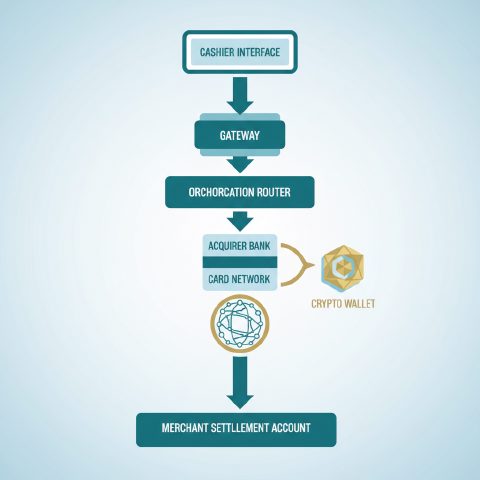
PayRetailers is probably the most widely used aggregator among mid-market LATAM casino operators right now. They cover Brazil (PIX, Boleto), Mexico (SPEI, OXXO), Colombia (PSE, Efecty), Chile, Peru and Argentina under one API. Their iGaming team is experienced and they have a track record of onboarding operators with offshore licences, though their compliance requirements have tightened since 2024. Localpayment is strong on FX — their spread on BRL/USD conversion is typically tighter than competitors, which matters enormously when you're processing high volumes. Pagsmile is Brazil-first and has the deepest PIX optimisation of any aggregator I've reviewed, including features like CPF-linked automatic KYC matching.
For operators running on SoftSwiss or EveryMatrix platforms, check which aggregators are already integrated in the platform's payment hub before signing a direct PSP contract. SoftSwiss's SOFTSWISS Payment System and EveryMatrix's MoneyMatrix both have pre-built LATAM PSP integrations that can save 4–8 weeks of development time. The platform-native integration is rarely as feature-rich as a direct API integration, but for a launch timeline, it is often the pragmatic choice.
One structural issue worth flagging: most LATAM aggregators hold funds in USD and convert at the point of settlement. The FX spread on BRL, MXN and COP conversions is where aggregators quietly make significant margin — I have seen spreads ranging from 0.5% to 2.5% above mid-market, charged on every transaction. On a $1M monthly volume, a 1.5% spread difference is $15,000/month. Always negotiate FX terms explicitly and benchmark the offered rate against mid-market during due diligence.
How should operators handle currency and FX risk across multiple LATAM markets?
LATAM currency volatility — particularly in Argentina, Brazil and Peru — creates real P&L exposure for operators who don't actively manage FX. The practical answer for most operators is to settle in USD or EUR via your aggregator and price bonuses/promotions in local currency with daily rate refreshes. Holding BRL or MXN balances is a risk most offshore operators should avoid without a treasury strategy.
Argentina is the extreme case. The gap between the official ARS exchange rate and the blue-dollar parallel market has historically been 50–100%, and the Argentine government's capital controls make standard PSP settlement essentially impossible through official channels. Most operators serving Argentine players route through alternative methods — crypto, or informal USD-denominated e-wallets — and the regulatory and compliance risk of doing so is real. I'd be cautious about Argentina as a primary market until the regulatory and currency situation stabilises further.
Brazil's BRL is volatile but manageable. PIX transactions settle in BRL, and most aggregators will convert to USD at settlement (T+0 or T+1). The key is locking in your FX rate at transaction time rather than at settlement — some aggregators offer this as an option, which eliminates intra-day BRL/USD movement from your P&L. For operators running significant Brazilian volume, this is worth paying a small premium for.
Mexico's MXN has been relatively stable versus USD over 2023–2025, but operators should still avoid accumulating large MXN balances. SPEI settlements can be structured for same-day USD conversion through most aggregators. Colombia's COP is similarly manageable with standard hedging practices — the bigger COP risk for operators is the fixed-fee structure of PSE at low ticket sizes, which is a margin risk rather than an FX risk.
Practically, the simplest FX strategy for a multi-country LATAM operator is: display prices and bonuses in local currency (players convert better when they see familiar denominations), settle everything to USD via your aggregator, and review your aggregator's FX terms quarterly. Do not let a PSP contract auto-renew on FX terms you negotiated two years ago — the spread landscape shifts as competition among aggregators increases.
What AML and KYC obligations apply to LATAM casino payment processing?
AML obligations for LATAM casino operators vary by jurisdiction but share common threads: transaction monitoring, beneficial ownership reporting, and STR (Suspicious Transaction Report) filing with local FIUs. Coljuegos-licensed operators face the most structured AML framework; offshore operators serving Brazil and Mexico face lighter formal obligations but increasing PSP-level due diligence requirements that effectively impose similar standards.
Colombia has the most developed AML framework for iGaming in LATAM. Coljuegos requires licensed operators to implement a SAGRILAFT-compliant risk management system — Colombia's anti-money laundering and terrorist financing framework for businesses. This means documented customer due diligence, enhanced due diligence for high-value players, transaction monitoring thresholds, and mandatory reporting to the UIAF (Colombia's FIU). Your payment stack needs to support this reporting architecture — PSE's CPF-equivalent data (cédula de ciudadanía) in transaction metadata is useful here, similar to PIX's CPF data in Brazil.
For Brazil-facing operators, the SPA/MF licensing framework introduced in 2024–2025 includes AML obligations aligned with COAF (Brazil's FIU) reporting standards. PIX's CPF metadata makes transaction-to-identity matching significantly easier than card processing, which is actually an AML compliance advantage. The flip side is that CPF data also makes it easier for regulators to identify unlicensed operators — another reason to get your Brazilian licensing status sorted before scaling PIX volume.
At the PSP level, regardless of your formal regulatory obligations, every reputable LATAM aggregator will require you to implement basic KYC before they process withdrawals. The practical minimum is: identity document verification, address verification, and source of funds documentation above certain thresholds (typically $2,000–$5,000 equivalent). Operators who try to run high-volume withdrawals without this infrastructure will find their PSP relationships terminated, usually at the worst possible moment.
Crypto-to-fiat conversion is an area where LATAM AML risk concentrates. Some operators use crypto (USDT, BTC) as a bridge for markets where traditional PSP access is difficult — Argentina being the obvious example. This is a legitimate operational approach but carries its own compliance obligations under FATF guidance on virtual assets. If you're using crypto rails for LATAM, make sure your compliance framework explicitly covers virtual asset transaction monitoring, not just fiat flows.
How do Boleto Bancário and other cash-based methods fit into a Brazil casino payment stack?
Boleto Bancário is a printed or digital bank slip that players pay at bank branches, ATMs or via internet banking — settlement takes 1–3 business days. It serves Brazil's partially banked population and players who prefer not to link their bank account to gambling transactions. For operators, it adds conversion at the top of the funnel but creates a 24–72 hour lag between deposit intent and confirmed funds.
The Boleto use case in iGaming is primarily acquisition: players who won't use PIX (either because they lack a linked bank account or because they prefer the anonymity of a cash payment) will generate a Boleto and pay it at a convenience store or Lotérica. The conversion rate from Boleto generated to Boleto paid is lower than PIX — industry estimates I've seen range from 55–70% completion, compared to 85–95% for PIX. That gap represents real lost deposits, so Boleto should be positioned as a secondary method for the unbanked segment rather than a primary rail.
Operationally, Boleto integration adds complexity: you need to handle pending deposit states in your platform, manage bonus activation timing (do you credit the bonus when the Boleto is generated or when it's confirmed?), and deal with expired Boletos (they typically expire in 1–3 days if unpaid). Most platforms handle this via a pending transaction queue, but it requires explicit configuration. SoftSwiss and EveryMatrix both support Boleto through their payment hubs, but check the pending state handling logic before go-live.
Pix Parcelado (installment PIX) is an emerging variant worth watching. Banco Central do Brasil has been developing a PIX credit/installment feature that would allow players to spread payments — this could meaningfully change the high-ticket deposit dynamic in Brazil. It is not yet widely available in iGaming contexts as of early 2026, but it is worth monitoring as a product differentiator for operators targeting higher-ARPU Brazilian players.
What are the real costs of building a LATAM payment stack — and what do vendors not tell you upfront?
The headline transaction fee (1.5–3.5%) is rarely the largest cost. FX spreads, chargeback reserves, rolling reserves held by PSPs, integration development costs, and the ongoing compliance overhead of managing multiple PSP relationships together typically add 2–5 percentage points to your effective payment processing cost. Model the total cost of payments, not just the transaction fee.
Rolling reserves are the cost that blindsides operators most consistently. Most LATAM PSPs will hold 5–10% of processed volume in a rolling reserve for 90–180 days as a risk buffer. On $500K monthly volume, that is $25,000–$50,000 of working capital tied up at any given time. For a new operator with limited capitalisation, this can create genuine cash flow problems. Negotiate the rolling reserve percentage and release timeline as hard as you negotiate the transaction fee — they are equally important to your economics.
Development costs are frequently underestimated. A clean integration with a single aggregator via REST API takes a competent backend developer 2–4 weeks for the basic deposit/withdrawal flow, plus additional time for webhook handling, reconciliation, and edge cases (failed payments, pending states, refunds). If you are integrating three or four methods directly (rather than through an aggregator), multiply accordingly. Platform-native integrations reduce this, but they introduce dependency on the platform's release cycle for any fixes or new features.
Compliance overhead is an ongoing cost that operators often forget to budget. Someone needs to monitor transaction patterns, respond to PSP risk queries, manage KYC escalations, and keep documentation current. For a mid-size operator, this is 0.5–1 FTE equivalent of work. Outsourcing it to a compliance consultant costs $3,000–$8,000/month depending on volume and complexity. Neither option is free, and operators who try to skip it find their PSP relationships terminated when the first AML query goes unanswered.
Finally, localisation costs beyond the payment method itself: customer support in Portuguese and Spanish, local phone numbers for payment-related queries, and local bank account details for SPEI CLABE numbers all add up. Players who have a payment problem and can't reach support in their language chargeback at higher rates. The payment stack is not just the API — it's the entire operational wrapper around it.
| Cost Component | Typical Range | Often Hidden? | Mitigation |
|---|---|---|---|
| Transaction fee | 1.5–3.5% | No — usually disclosed | Volume negotiation; aggregator competition |
| FX spread | 0.5–2.5% above mid-market | Yes — often buried in T&Cs | Negotiate explicitly; benchmark vs mid-market |
| Rolling reserve | 5–10% held 90–180 days | Partially — disclosed but impact underestimated | Negotiate % and release period upfront |
| Integration development | $8,000–$30,000 per aggregator | Yes — operators underestimate | Use platform-native integrations where possible |
| Chargeback fees | $25–$50 per chargeback | No — disclosed | Strong KYC; fraud rules; 3DS where applicable |
| Compliance overhead | $3,000–$8,000/month (outsourced) | Yes — not in PSP quotes | Budget as a line item from day one |
| Local support infrastructure | $2,000–$5,000/month | Yes | Shared support team with language routing |
How does payment method availability affect player acquisition and retention in LATAM?
Payment method availability is the single largest conversion variable in LATAM — more impactful than bonus offer or game library for first-deposit conversion. Players who reach the cashier and don't see a familiar local method leave and rarely return. The correlation between local payment coverage and FTD (first-time depositor) rate is tighter in LATAM than in any other region I've worked in.
The data point that consistently surprises operators is the withdrawal-driven retention effect. In Europe, players are relatively tolerant of 24–48 hour withdrawal windows. In Brazil, where PIX has conditioned players to expect instant transfers for everything, a 24-hour withdrawal window is perceived as a red flag — players associate it with withdrawal friction tactics. Operators who process PIX withdrawals within 15 minutes show measurably better 30-day retention than those processing in hours. This is not a marginal difference; in cohort analyses I've reviewed, the gap can be 8–12 percentage points in D30 retention.
Bonus design also intersects with payment methods in ways that matter operationally. Welcome bonuses tied to deposit method (e.g., 'extra 20% on PIX deposits') are common in the Brazilian market and do drive incremental PIX adoption among players who might otherwise use a card. But they create reconciliation complexity — your platform needs to correctly attribute the bonus to the payment method, and your PSP needs to correctly identify the method at transaction time. Test this end-to-end before launching a payment-method-specific promotion.
For retention, the cashout experience is the product. Players in LATAM — particularly in Brazil and Mexico — discuss withdrawal speeds on Telegram groups and review sites. Negative withdrawal experiences spread faster than positive ones. Build your operational SLAs around withdrawal processing first, then optimise everything else. A casino with a mediocre game library but instant PIX cashouts will outperform a casino with a premium game library but slow withdrawals, in the LATAM market specifically.
What emerging payment methods should LATAM casino operators watch in 2026?
Open banking APIs, crypto stablecoins (particularly USDT on Tron and Polygon), and account-to-account (A2A) payment schemes are the three areas with the most operator-relevant development in LATAM right now. None of them are replacing PIX or SPEI in the near term, but each addresses a specific gap in the current stack.
Open banking in Brazil (Open Finance, regulated by Banco Central) is the most mature open banking framework in LATAM and is creating new possibilities for account-to-account payments that bypass traditional PSP infrastructure. A handful of iGaming-focused fintechs are building on top of Open Finance APIs to offer lower-cost deposit rails than standard PIX aggregator fees. This is early-stage in iGaming specifically, but operators with technical teams should be monitoring the provider landscape — the cost reduction potential is real if the regulatory treatment of gambling-specific Open Finance flows gets clarified.
USDT (Tether) and USDC on low-fee chains (Tron, Polygon, Stellar) are increasingly used as bridge currencies for LATAM markets where fiat PSP access is difficult — Argentina most prominently, but also Venezuela and Ecuador. The compliance posture around crypto payments is tightening globally, and FATF's travel rule requirements for virtual asset service providers (VASPs) apply here. Operators using crypto rails need a documented VASP compliance framework, not just a crypto payment processor account.
In Mexico, CoDi (Cobro Digital) — the predecessor to the newer DiMo (Dinero Móvil) system — has been evolving as a mobile-first payment rail. DiMo, launched by Banco de México in 2023, allows transfers via phone number rather than CLABE account, which reduces friction for mobile-first players. PSP support for DiMo in iGaming contexts is still limited as of early 2026, but it is worth asking your Mexican PSP partners about their integration timeline.
Finally, digital wallets with LATAM-specific traction — Mercado Pago (dominant in Argentina, Brazil, Mexico), Nequi (Colombia), and Yape (Peru) — deserve attention. Mercado Pago in particular has substantial iGaming merchant experience and offers a single wallet integration that covers multiple LATAM markets. The trade-off is Mercado Libre's increasing scrutiny of gambling merchants and a compliance bar that has risen significantly since 2022. It is not a soft option, but the wallet-to-wallet deposit UX it offers for players who already have Mercado Pago balances is genuinely differentiated.
Comments
No comments yet, be the first.