PSE and Nequi: The Casino Payment Providers Every Colombian Operator Must Get Right in 2026
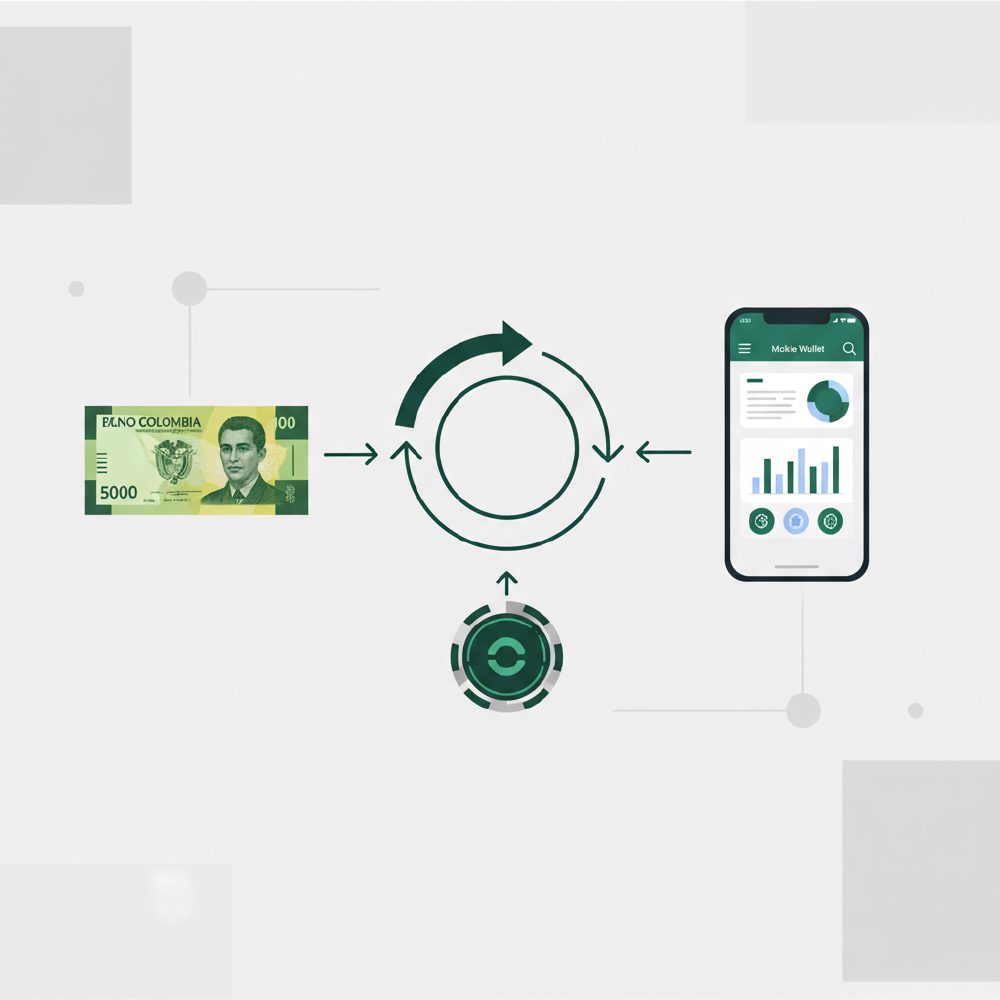
Why does the Colombian market demand a local casino payment provider instead of cards?
Colombia's credit card penetration is relatively low compared to Western Europe, and many Colombians who do hold cards have international transactions blocked by default. PSE, Nequi and Daviplata collectively reach a far larger share of the bankable adult population, which is why operators running only Visa and Mastercard routinely see checkout abandonment rates above 60 percent in this market.
The structural reality of Colombian banking shapes everything about payment strategy here. Roughly 33 percent of adults remain unbanked or underbanked according to Banca de las Oportunidades data, but mobile wallet adoption has accelerated sharply since 2020. Nequi, owned by Bancolombia, reported more than 17 million registered users by late 2024. Daviplata, Davivienda's equivalent product, is not far behind. These are not niche fintech products, they are mainstream financial infrastructure for a population that leapfrogged traditional plastic.
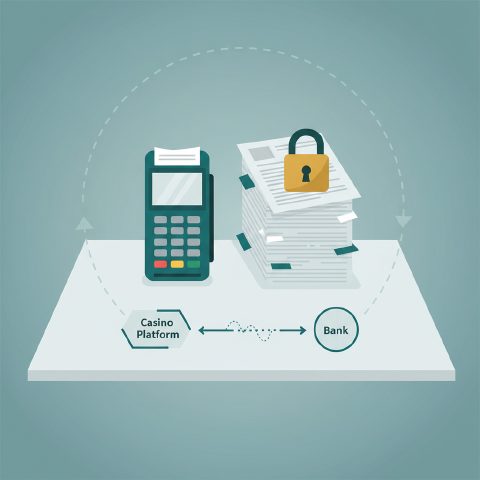
PSE operates differently. It is a real-time bank-debit network managed by ACH Colombia, connecting more than 70 financial institutions. When a player initiates a PSE payment, they are redirected to their own bank's authentication portal, the debit is confirmed in real time, and funds settle to the merchant. There is no card network intermediary, no chargeback window in the Visa sense, and no foreign-exchange conversion for COP-denominated transactions. For an operator, that last point matters: you receive Colombian pesos directly, which means your treasury team needs a COP settlement account or a clear FX policy from day one.
Cards are not irrelevant in Colombia, but they are a secondary rail. Operators entering the market who prioritize getting PSE and at least one mobile wallet live before launch will outperform those who treat local methods as a phase-two project. I have seen operators delay PSE integration by two months because they underestimated the commercial bank agreement requirements, and they paid for it in suppressed first-month revenue that never fully recovered.
How does PSE actually work as a casino payment provider, and what does the operator experience look like?
PSE is a push-payment system: the player authenticates directly with their bank, and the debit is irrevocable once confirmed. For operators, this means near-zero chargeback exposure on deposits, but it also means the payment flow involves a bank redirect that you cannot fully brand or control. Settlement is typically same-day to next-day in COP, routed through ACH Colombia's clearing windows.
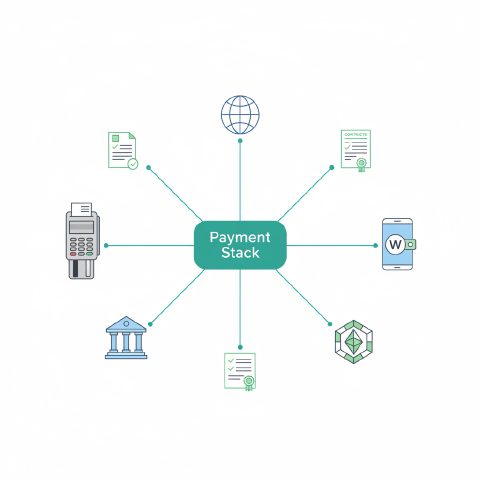
From a technical standpoint, integrating PSE means connecting to ACH Colombia's network, which you cannot do directly as a foreign operator. You need either a Coljuegos-licensed local entity with a direct PSE merchant agreement or, more commonly, a payment aggregator that holds that agreement and exposes it via API. Aggregators like PayRetailers, Kushki, and Payválida have PSE in their product stack and can onboard a licensed casino operator in four to eight weeks, assuming your KYB documentation is clean. Expect a setup fee in the range of USD 500 to 2,000 depending on the aggregator, plus a per-transaction fee that typically sits between 1.5 percent and 2.5 percent of the transaction value for gambling merchants.
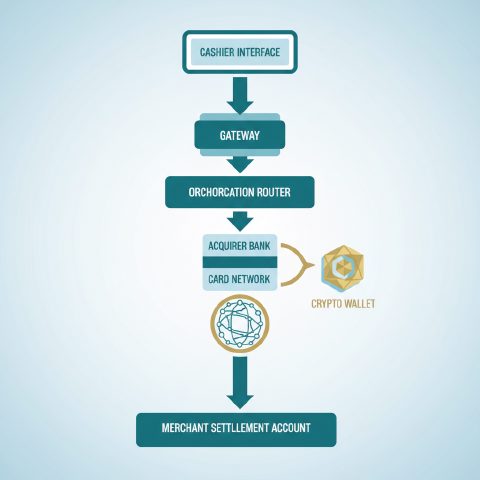
The user flow is worth understanding in detail because it affects conversion. The player selects PSE at checkout, chooses their bank from a dropdown, is redirected to that bank's online banking portal, authenticates, confirms the debit, and is returned to your cashier. The entire flow takes two to four minutes if the bank portal is responsive. ACH Colombia's infrastructure is generally reliable, but peak hours on Colombian banking days can introduce latency. Build a clear pending-state UI in your cashier, players who do not see immediate confirmation will contact support or attempt a duplicate payment.
On the withdrawal side, PSE is not a payout mechanism in the traditional sense. Operators pay out to Colombian bank accounts via local wire transfer (transferencia bancaria) or increasingly via Nequi and Daviplata. This asymmetry, PSE for deposits, wallets for withdrawals, is the standard pattern in the market and your platform should support it natively or via your aggregator's payout API.
| Factor | Via Aggregator (e.g. Kushki, PayRetailers) | Direct ACH Colombia Agreement |
|---|---|---|
| Timeline to go live | 4-8 weeks | 3-6 months |
| Local legal entity required | Not always (depends on aggregator) | Yes, Colombian entity required |
| Transaction fee (approx.) | 1.5%-2.5% per transaction | 0.5%-1.2% per transaction (negotiated) |
| Setup cost | USD 500-2,000 | USD 5,000+ (legal, compliance, setup) |
| Chargeback exposure | Aggregator handles disputes | Operator handles directly |
| Volume scalability | Aggregator limits apply | Higher limits, negotiable |
| Best for | Early-stage or mid-size operators | High-volume established operators |
What makes Nequi and Daviplata different from each other as casino payment options?
Both are mobile wallets tied to major Colombian banks, but they serve slightly different demographic profiles and have different API maturity levels. Nequi skews younger and urban; Daviplata has deeper penetration in lower-income and rural segments. For a casino operator, the practical differences come down to transaction limits, API documentation quality, and which aggregator in your stack already supports each one.
Nequi is the more developer-friendly product of the two. Bancolombia has invested heavily in its open API ecosystem, and most major LatAm payment aggregators have a stable Nequi integration. The standard person-to-business transaction limit on Nequi sits around COP 3,000,000 per transaction (roughly USD 700 at mid-2025 rates), with daily limits that can vary by user verification tier. For casino deposits this is generally adequate, though high-value players will hit the ceiling and need an alternative rail. Nequi transactions settle in near-real-time, which is a genuine advantage for player experience.
Daviplata operates on a slightly different model. It is more tightly integrated with Davivienda's core banking infrastructure, which means it reaches a broader demographic but has historically had a more fragmented API surface for third-party integrations. That gap has been closing. Aggregators like PayU (which has deep Colombian roots as a Davivienda-adjacent business) and Payválida handle Daviplata well. Transaction limits are similar to Nequi in the COP 2,000,000 to 3,000,000 range per transaction, though Daviplata users can often access higher limits if they have a linked Davivienda bank account with full KYC.
From an operator perspective, the right answer is to support both. The incremental integration cost when you are already connected to an aggregator that supports both wallets is low, often just a configuration change rather than a new API build. The player acquisition benefit of covering both user bases is material. Where I see operators make mistakes is in treating Nequi and Daviplata as deposit-only tools. Both can be used for withdrawals, and a fast payout to a Nequi wallet (often under 30 minutes) is a genuine retention differentiator in a market where players are acutely sensitive to withdrawal speed.
| Attribute | Nequi | Daviplata |
|---|---|---|
| Parent institution | Bancolombia | Davivienda |
| Registered users (approx. 2024) | 17M+ | 13M+ |
| Typical deposit limit per transaction | ~COP 3,000,000 | ~COP 2,000,000-3,000,000 |
| API maturity for B2B integration | High (well-documented REST API) | Moderate (improving via aggregators) |
| Settlement speed (deposits) | Near real-time | Near real-time |
| Withdrawal support | Yes (P2P and business payout APIs) | Yes (via linked Davivienda account) |
| Best aggregator coverage | Kushki, PayRetailers, PayU | PayU, Payválida, dLocal |
| Primary user demographic | Urban, 18-35 | Broader income range, including rural |
What does Coljuegos require from operators regarding payment methods?
Coljuegos, Colombia's gambling regulator under MINTIC and operating under Law 643 of 2001, requires licensed operators to process payments through traceable, AML-compliant channels. Unlicensed or informal payment processors are explicitly prohibited. Operators must maintain transaction records for a minimum of five years and report suspicious transactions to the UIAF (Colombia's financial intelligence unit).
Colombia has one of the more structured online gambling frameworks in Latin America. The Coljuegos license (Licencia de Operación de Juegos Novedosos) is a genuine regulatory product, not a rubber stamp. When it comes to payments, the regulator cares about two things above all else: the ability to trace funds back to an identified player, and the prevention of money laundering through gambling accounts. This means your payment stack cannot include anonymous or pseudonymous rails. Every PSE transaction is inherently tied to a verified bank account, which satisfies the traceability requirement. Nequi and Daviplata accounts require identity verification at account opening, which also meets the standard, but you need to confirm with your aggregator that the wallet verification tier your players are using actually includes full KYC, because basic unverified wallet accounts exist and should be blocked at your cashier level.
The UIAF reporting obligation is not theoretical. Colombian AML law (Law 526 of 1999 and its updates) requires casinos to file suspicious transaction reports (ROS) and cash transaction reports (RTE) for transactions above specified thresholds. Your platform's transaction monitoring system needs to be configured for COP thresholds, not just USD equivalents. If you are running a SoftSwiss or EveryMatrix platform, their compliance modules can be configured for this, but you need to do the work, it does not happen automatically out of the box.
One practical compliance point that catches operators off guard: Coljuegos requires that the gambling operator's name (not the payment aggregator's name) appears in the player's bank statement where technically possible. PSE transactions generally do show the merchant name correctly. Wallet transactions sometimes show the aggregator's name instead. This is a minor point in practice, but auditors have flagged it. Confirm the descriptor configuration with your aggregator during onboarding.
Which payment aggregators give Colombian casino operators the best access to PSE, Nequi and Daviplata?
PayRetailers, Kushki, dLocal and PayU are the four aggregators with the strongest Colombian payment method coverage for gambling merchants. Each has different strengths: PayRetailers and Kushki are more gambling-friendly in their merchant onboarding, while dLocal and PayU have deeper banking relationships but can be slower to approve high-risk merchant categories.
PayRetailers is a LatAm-focused aggregator that has built its business substantially on the gambling vertical. They support PSE, Nequi, Daviplata, Efecty (cash vouchers), and local card acquiring in Colombia. Their gambling merchant onboarding is faster than most because they are not treating you as an unusual edge case. Setup fees and transaction rates are negotiable based on volume, but expect to share your Coljuegos license documentation upfront. They have a straightforward REST API and sandbox environment. For an operator launching in Colombia without an existing aggregator relationship, PayRetailers is the path of least resistance.
Kushki is a pan-LatAm payment infrastructure company with strong Colombian roots (founded in Quito but with significant Colombian operations). Their PSE and Nequi integrations are technically solid, and their dashboard tooling for reconciliation is genuinely better than most competitors. The trade-off is that Kushki's gambling merchant approval process has become more selective since 2023 as they have grown and taken on more institutional investors. Budget for a two to four week compliance review on top of the technical integration timeline.
dLocal is the right choice if you are also operating in Brazil, Mexico, Peru or other LatAm markets and want a single aggregator across the region. Their Colombian coverage is good, but their per-transaction fees tend to be higher than local-focused aggregators, and their support response times can be slower for smaller-volume merchants. PayU, historically the dominant Colombian payments player (now owned by Prosus), has deep PSE and Daviplata integration but is notorious in operator circles for a slow and bureaucratic merchant onboarding process for gambling. They are worth pursuing for volume scale, but do not plan your launch timeline around them.
What are the real costs of setting up Colombian casino payments, and what do vendors underquote?
The headline transaction fee is the number aggregators lead with, but the real cost picture includes setup fees, monthly minimums, FX conversion spreads, chargeback handling fees and the internal engineering time to build a compliant cashier flow. For a mid-size operator, total first-year payment infrastructure cost in Colombia typically lands between USD 15,000 and 40,000 including integration work.
Here is the cost breakdown vendors rarely put in the first slide. Transaction fees for gambling merchants on PSE via aggregator typically run 1.5 to 2.5 percent. On Nequi and Daviplata, fees are similar, sometimes slightly lower because the wallet operators have been pushing for merchant adoption. But then add: a setup fee of USD 500 to 2,000 per aggregator, a monthly minimum fee of USD 200 to 500 if you do not hit volume thresholds (which you may not in months one and two), and an FX conversion spread of 0.5 to 1.5 percent if you are settling in USD rather than COP. That FX spread is the one that surprises operators most. If your platform settles in EUR or USD and your aggregator is converting from COP, you are losing margin on every transaction beyond the stated fee.
Engineering costs are the other underestimated line item. A clean PSE integration with proper pending-state handling, webhook confirmations, and a withdrawal flow to local bank accounts takes a competent backend developer two to four weeks of focused work. If you are on a white-label platform like SoftSwiss's SOFTSWISS Casino Platform or EveryMatrix's CasinoEngine, your platform provider may have a pre-built PSE connector, but you will still need to configure it, test it in the Colombian sandbox, and QA the cashier UX. Budget for this explicitly rather than assuming the platform handles it.
Chargeback fees deserve a special mention even though PSE is technically chargeback-resistant. Wallet transactions (Nequi, Daviplata) can generate disputes if a player claims their account was used without authorization. Aggregators typically charge USD 15 to 35 per dispute case, and if your dispute ratio exceeds 1 percent of transactions, some aggregators will put you on a remediation plan or suspend the merchant account. Build fraud screening into your deposit flow from day one, velocity checks on wallet IDs, device fingerprinting, and a manual review queue for first deposits above a threshold are the minimum viable controls.
How should operators structure their cashier to maximize PSE and Nequi conversion rates?
Conversion on local payment methods lives or dies on two things: how quickly the player reaches the payment step, and how clearly your cashier communicates the redirect flow. PSE requires a bank redirect that confuses players who expect an in-page experience. Nequi works best when you offer both QR code and phone-number entry options, since players use both depending on their device.
The single biggest conversion killer I see in Colombian casino cashiers is a poorly designed PSE pending state. When the player completes authentication on their bank's portal and returns to your site, there is a webhook delay of 10 to 60 seconds before your platform confirms the payment. If your cashier shows a blank screen or a generic loading spinner during that window, a meaningful percentage of players will refresh, navigate away, or contact support assuming the payment failed. The fix is straightforward: show a clear 'Your payment is being confirmed' screen with a countdown or progress indicator, and send an SMS or push notification the moment the webhook confirms. This single UX change has moved conversion by five to eight percentage points in my experience with operators who have A/B tested it.
For Nequi, the QR code flow is popular on mobile (the player scans the QR with the Nequi app and confirms in-app), while the phone-number entry flow works better on desktop. Your cashier should detect the device type and present the appropriate flow by default, with a toggle to switch. Do not force mobile players through the phone-number flow, it adds friction and increases drop-off. Daviplata similarly benefits from a phone-number-first entry since most users associate the product with their mobile number rather than an account number.
Deposit limits are a conversion issue too, not just a compliance one. If your cashier defaults to a minimum deposit of COP 50,000 (roughly USD 12), you will exclude a segment of players who want to start with COP 20,000 to 30,000. Check your Coljuegos license conditions on minimum deposit rules, but in general, setting a low minimum and letting players build trust with small initial deposits is the right acquisition strategy for the Colombian market. High minimums are a legacy of operators copy-pasting European cashier configs without adapting them.
What are the withdrawal options for Colombian players and how do they compare to deposit methods?
Withdrawals in Colombia are primarily handled via local bank transfer (PSE is deposit-only), Nequi, and Daviplata. Bank transfers typically settle in one to two business days; wallet payouts can be near-instant. The fastest withdrawal experience in the market is a Nequi payout, and operators who commit to sub-30-minute wallet withdrawals see measurable improvements in player retention metrics.
This is an area where the Colombian market has genuinely high player expectations, shaped partly by the informal betting culture that preceded regulated online gambling. Players are accustomed to fast payouts from local bookmakers, and the regulated online casino market has had to compete on withdrawal speed. Operators who process withdrawals manually during business hours only, with a 24 to 72 hour window, will see churn to competitors who automate the process.
The practical architecture for fast withdrawals is: automated approval for withdrawals below a threshold (say, COP 1,000,000 for players with clean KYC and no open bonus conditions), with a direct API call to your aggregator's payout endpoint for Nequi or Daviplata. PayRetailers, Kushki and dLocal all support automated payout APIs. The technical lift is modest if your platform has a withdrawal automation module. The compliance lift is more significant: you need to confirm that your automated payout flow includes a sanctions screening check against OFAC, the UN consolidated list, and Coljuegos's own exclusion registry (REGISTRO DE AUTOEXCLUIDOS) before releasing funds.
Bank transfer withdrawals (transferencia bancaria) are slower but necessary for players whose primary account is a traditional bank rather than a wallet. The standard Colombian local wire takes one to two business days. Some aggregators offer an 'instant transfer' product for major banks like Bancolombia and Davivienda that can settle in two to four hours for an additional fee per transaction. For VIP players, absorbing that fee is worth it. For the general player base, next-day is acceptable if you communicate the timeline clearly in the cashier and via email confirmation.
| Method | Typical Settlement Time | Operator Cost (approx.) | Player Limit (approx.) | Best For |
|---|---|---|---|---|
| Nequi payout | Under 30 minutes | 1.0%-2.0% per transaction | COP 3,000,000 per transaction | Mass market, mobile-first players |
| Daviplata payout | Under 60 minutes | 1.0%-2.0% per transaction | COP 2,000,000-3,000,000 | Broader demographic, Davivienda users |
| Local bank transfer (standard) | 1-2 business days | 0.5%-1.5% or flat fee | Negotiable with aggregator | Players preferring traditional banking |
| Local bank transfer (instant product) | 2-4 hours | 1.5%-2.5% or flat fee | Varies by bank | VIP players, high-value withdrawals |
| Efecty (cash pickup) | Same day (voucher issuance) | 2.0%-3.5% | COP 1,000,000-2,000,000 | Unbanked or underbanked players |
What tax and reporting obligations apply to Colombian casino payment flows?
Colombian gambling revenue is subject to a 17 percent gaming tax (impuesto de juegos de suerte y azar) on gross gaming revenue, collected by Coljuegos. Separately, operators must comply with DIAN (Colombia's tax authority) obligations for VAT and income tax if operating through a Colombian legal entity. Payment flows themselves are not separately taxed, but AML reporting to UIAF is mandatory for transactions above defined thresholds.
The 17 percent GGR tax is the headline number, but operators with a Colombian entity also face a 9 percent income tax on net profits (under the general corporate tax rate, which was 35 percent as of 2024 for general companies, though gambling entities should confirm their specific treatment with Colombian tax counsel). The interaction between the gambling tax and corporate income tax is not always intuitive, and I have seen operators get surprised by their effective tax rate in year two when they are actually profitable. Budget for local tax advisory from day one, not as an afterthought.
On the payment reporting side, UIAF requires suspicious transaction reports for any transaction or pattern that suggests money laundering or terrorism financing. There are no published fixed COP thresholds for casino transactions in the way that cash-intensive businesses have (the COP 10,000,000 cash report threshold applies to cash transactions, not digital ones), but your AML policy should define internal thresholds for review. A practical approach: flag all deposits above COP 5,000,000 in a single session for manual review, and flag any account that deposits and withdraws more than COP 10,000,000 in a 30-day period without significant play-through. These are internal thresholds, not regulatory mandates, but they represent a defensible AML posture.
One more tax point relevant to payment design: if you offer bonuses denominated in COP, the value of bonuses may have VAT implications under Colombian tax law. This is an area of some uncertainty, and DIAN has not issued comprehensive guidance specific to online gambling bonus accounting. Conservative operators treat bonus liability as a deferred revenue item and consult with local tax counsel before structuring large promotional campaigns.
What are the most common payment integration mistakes Colombian casino operators make?
The most damaging mistakes I see are: launching without a withdrawal solution (deposits only), using a single aggregator with no redundancy, failing to configure COP-denominated transaction limits in the cashier, and not testing the PSE redirect flow on Colombian mobile networks before go-live. Each of these is fixable, but they all cost real revenue if discovered post-launch.
Single-aggregator dependency is the operational risk that keeps me up at night when advising operators. Every aggregator has downtime. PSE itself has had intermittent availability issues during high-traffic periods (Colombian national holidays, major football matches). If your entire deposit infrastructure runs through one aggregator and they go down, your casino goes dark for deposits. The solution is a primary/fallback configuration: primary PSE via your main aggregator, fallback Nequi via a secondary aggregator. Your cashier should detect a failed payment attempt and offer the alternative method automatically, not wait for the player to figure it out.
The COP denomination issue is subtle but real. Operators who configure their cashier in USD or EUR and apply a live FX rate create a confusing player experience: the player sees a COP amount in their bank app that does not match the USD amount in the casino cashier due to rounding and spread. This generates support tickets and, worse, players who feel they were charged incorrectly. The fix is to denominate everything in COP in the cashier UI, apply your FX conversion in the back-office, and show the player a clean COP amount at every step of the payment flow.
Testing on Colombian mobile networks is a point that sounds obvious but is routinely skipped. PSE's bank redirect flow can behave differently on a 4G mobile connection versus a fixed broadband connection, partly because some Colombian banks have mobile-optimized authentication pages and some do not. Run your QA on a Colombian SIM card or use a mobile proxy service to simulate real network conditions. I have seen cashier flows that worked perfectly in a Berlin office fail on Claro Colombia's network because of a timeout parameter that was set too short for the bank redirect round-trip.
How does the Colombian payment landscape compare to other major LatAm casino markets?
Colombia's regulated framework and high digital wallet penetration make it one of the more operator-friendly LatAm markets from a payment standpoint, ahead of Peru (less mature regulation) and more structured than Brazil (which is still building its regulated online gambling framework post-2023 legislation). Mexico is the closest comparator, with SPEI playing a similar role to PSE, but Colombia's wallet ecosystem is arguably more developed.
The PSE-to-SPEI comparison is instructive for operators entering both markets. SPEI in Mexico is a real-time interbank transfer system operated by Banco de México, and it functions as the backbone of Mexican casino payments in a way that closely mirrors PSE's role in Colombia. Both are bank-redirect systems, both have near-zero chargeback exposure, and both require aggregator intermediaries for gambling merchants. The key difference is volume: Mexico's market is larger and SPEI volumes in gambling are higher, which means more aggregators compete for that business and fees are slightly lower. Colombia's market is smaller but the regulatory framework is cleaner, which reduces compliance overhead.
Peru is the market I would watch as a comparator for operators thinking about LatAm expansion. MINCETUR has been developing its online gambling regulatory framework, and Yape (BCP's mobile wallet, with over 12 million users) is the Nequi equivalent. The payment infrastructure exists; the regulatory clarity does not yet match Colombia's. Brazil post-2023 is a different story: the market is enormous and the payment infrastructure (PIX, in particular) is arguably the most advanced in LatAm for real-time payments, but the licensing framework under SECAP is still being operationalized as of 2025. Operators who have built Colombian payment integrations with PSE and Nequi will find the technical concepts transfer well to Brazil's PIX, which is also a bank-linked real-time payment system.
The practical implication for operators: if you are building a LatAm payment stack and Colombia is your first market, choose aggregators with strong multi-country coverage (dLocal, PayRetailers, Kushki all qualify) rather than Colombia-only specialists. The marginal cost of a multi-country aggregator is low, and the optionality when you expand to Mexico or Brazil is valuable. Just do not let the multi-country sales pitch distract you from ensuring the Colombian-specific methods (PSE, Nequi, Daviplata, Efecty) are all properly supported and tested before you go live.
Comments
No comments yet, be the first.