Online Gambling Merchant Accounts in 2026: The Operator's Complete Guide to High-Risk Payment Processing

What exactly is a high-risk gambling merchant account and why does every online casino need one?
A high-risk gambling merchant account is a card processing agreement between an online casino operator and an acquiring bank that accepts the elevated chargeback, fraud, and regulatory risk associated with gambling transactions. Without one, you cannot accept Visa or Mastercard payments, which still account for the majority of casino deposits in most markets.
Acquiring banks segment merchants by risk category, and online gambling sits near the top of that list alongside forex, adult content, and pharmaceuticals. The classification is not arbitrary. Gambling produces chargeback rates that routinely exceed the 1% threshold Visa and Mastercard use as a warning level, because players dispute transactions after losing, claim unauthorized use, or simply forget they deposited. Acquirers absorb the financial exposure when a merchant cannot cover chargebacks, so they price for it and demand collateral in the form of a rolling reserve.
The practical consequence for an operator is that you cannot just open a Stripe account or a standard business bank account and start running card transactions. Stripe, PayPal, and Square explicitly prohibit gambling in their terms. You need a specialist acquirer that has a gambling MCC (Merchant Category Code 7995 for betting and casino, or 7993 for video game arcades with gambling elements) and a risk appetite to match. The pool of willing acquirers is smaller than most founders assume, and the ones who will talk to a brand-new operator with no processing history are smaller still.
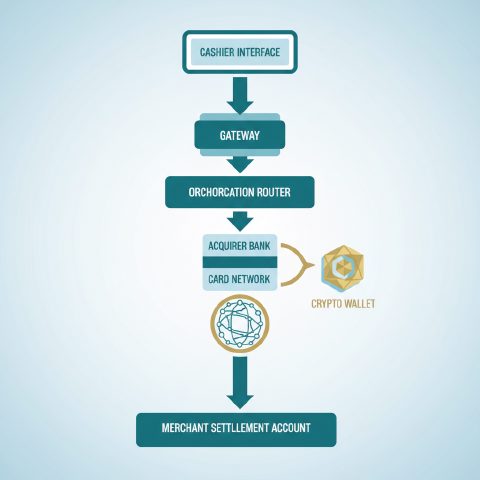
There is also a technical layer people overlook. A gambling merchant account is not just a legal agreement; it requires integration with a payment gateway that supports 3DS2 authentication, real-time fraud scoring, and ideally a payment orchestration layer that can route transactions across multiple MIDs (Merchant IDs) to manage decline rates. Operators who treat payment processing as an afterthought, something to bolt on after the platform is built, consistently run into 60-90 day delays at launch because underwriting was not started early enough.
How does rolling reserve work and what should operators negotiate before signing?
A rolling reserve is a percentage of each processed transaction that the acquirer withholds and holds for a fixed period, typically 90 to 180 days, as a chargeback buffer. It is not a fee. The money is returned to you on a rolling basis once the hold period expires, but it can tie up a significant chunk of your early operating capital if you do not plan for it.
The standard structure for a new gambling operator is a 5-10% reserve held for 90-180 days. On a site processing $500,000 per month, a 10% reserve means $50,000 per month is locked. After six months of operation, you will have up to $300,000 sitting in the reserve account before the first tranche starts releasing. That is real working capital you cannot use for bonuses, marketing, or game licensing fees. Factor it into your funding model before you sign anything.
The reserve percentage and hold period are negotiable, though acquirers will rarely advertise that. Operators with a track record, a strong license (MGA, UKGC), low historical chargeback ratios, and a clean KYC/AML framework will get better terms than a fresh entity with a Curaçao sub-license and no processing history. Some acquirers will agree to step down the reserve rate after six months if chargeback rates stay below 0.5%. Get that step-down clause in writing; verbal commitments mean nothing when the account manager changes.
There are two reserve structures you will encounter. A fixed reserve caps the total amount held (for example, $200,000 regardless of volume). A rolling reserve recalculates every month based on actual processing. Fixed reserves favor high-volume operators because the cap becomes proportionally smaller over time. Rolling reserves are more common for new accounts. Some acquirers also apply a capped rolling reserve, which is a hybrid worth asking for. The release schedule matters as much as the percentage: a 5% reserve released at 90 days is meaningfully better for cash flow than a 5% reserve held for 180 days, even though the headline rate looks identical.
| Structure | How It Works | Best For | Cash Flow Impact |
|---|---|---|---|
| Rolling Reserve | % of each month's volume held for 90-180 days, then released | Acquirer default for new accounts | High in early months; normalizes after hold period |
| Fixed (Capped) Reserve | A fixed dollar/euro cap held regardless of monthly volume | High-volume operators | Lower impact as volume scales |
| Capped Rolling Reserve | Rolling % but with a maximum total cap | Mid-volume operators negotiating better terms | Moderate; predictable ceiling |
| No Reserve (rare) | No funds withheld; operator posts a letter of credit instead | Established operators with strong credit | Minimal cash flow impact but requires bank credit facility |
Which acquirers and payment processors actually work with online casinos in 2026?
The short list of acquirers genuinely active in online gambling includes a mix of specialist processors and offshore-friendly banks. Names that come up consistently in the operator community include Payvision (acquired by ING but still active in gaming), Safecharge (now Nuvei), Paysafe, Credorax (now Bluesnap in some markets), Genome, and a tier of smaller EMIs and offshore acquirers. The right fit depends heavily on your license and target markets.
Nuvei is probably the most cited name for licensed operators targeting Europe and North America. They have a dedicated gaming vertical, support for multiple currencies, and relationships with the card schemes that allow gambling MCC processing in regulated jurisdictions. The trade-off is that they are selective: they want to see a Tier 1 or Tier 2 license (MGA, UKGC, Swedish Spelinspektionen, New Jersey DGE), a compliance framework they can audit, and some indication of projected volume. A startup with a fresh Curaçao license will likely not get approved, or will get approved with terms that make the account economically painful.
Paysafe operates both an acquiring arm and the Skrill/Neteller e-wallet ecosystem, which is a useful combination because you can offer players a familiar payment method while keeping card processing under one commercial relationship. Their rates are not the lowest in the market, but the gambling-specific infrastructure is mature. For operators targeting LATAM, Paysafe has expanded coverage in Brazil and Mexico, which matters given PIX and SPEI integration requirements in those markets.
For operators who cannot get a Tier 1 acquirer, the realistic alternatives are specialist offshore processors (some operating under Curaçao or Vanuatu banking licenses), payment aggregators that bundle multiple MIDs, and increasingly, crypto-native gateways. CoinsPaid processes a significant share of crypto gambling volume globally and integrates with most major casino platforms including SoftSwiss and EveryMatrix. It is not a substitute for card processing in markets where players expect Visa/Mastercard, but for crypto-first brands it can be the primary channel. The honest advice here: build relationships with at least two card acquirers and one crypto gateway from day one. Redundancy is not a nice-to-have; it is operational survival.
| Processor | Type | Typical Discount Rate | License Requirement | Crypto Support |
|---|---|---|---|---|
| Nuvei (Safecharge) | Card acquirer + gateway | 3-5% | MGA, UKGC, US state licenses | Yes |
| Paysafe | Acquirer + e-wallet (Skrill/Neteller) | 3.5-6% | MGA, UKGC, Curaçao (selective) | Limited |
| Genome | EMI + gateway | 4-7% | MGA, Curaçao | No |
| CoinsPaid | Crypto gateway | 0.8-1.5% (crypto) | None required | Yes (primary) |
| Payvision | Card acquirer | 3.5-5.5% | MGA, UKGC, offshore (selective) | No |
| NOWPayments | Crypto gateway | 0.5-1% | None required | Yes (primary) |
How does your gambling license affect your ability to get a merchant account?
Your license jurisdiction is the single biggest factor in determining which acquirers will talk to you and on what terms. MGA and UKGC licenses are the gold standard for European card processing. Curaçao and Anjouan licenses are accepted by some acquirers but trigger higher reserves and rates. US state licenses (New Jersey, Pennsylvania, Michigan) open access to US-facing processors but come with their own compliance burdens.
European acquiring banks are regulated under PSD2 and subject to AML directives that require them to conduct due diligence on their merchants. A gambling operator with an MGA license gives the acquirer something concrete to point to: a regulator that audits AML/KYC procedures, mandates responsible gambling tools, and can revoke the license for non-compliance. That regulatory backstop reduces the acquirer's own compliance risk. The practical result is lower reserve requirements, better rates, and faster underwriting. Operators with MGA licenses typically get merchant accounts approved in 4-8 weeks. Operators with Curaçao sub-licenses often wait 3-5 months, if they get approved at all through mainstream channels.
The Curaçao Gaming Control Board (GCB) completed a regulatory overhaul in 2023-2024, moving from the old master license/sub-license model to a direct licensing system with stricter AML and technical standards. This has improved Curaçao's standing with some processors, but it is not yet on par with MGA or UKGC in the eyes of European acquirers. Anjouan (Comoros) is even newer as a licensing jurisdiction and is largely unrecognized by mainstream processors; operators with Anjouan licenses are almost entirely dependent on crypto gateways and offshore card processors.
For US-facing operators, the licensing picture is fragmented by state. New Jersey's Division of Gaming Enforcement, Pennsylvania's Gaming Control Board, and Michigan's Gaming Control Board each issue iGaming licenses that allow operators to work with US-based processors and banks. But these licenses cost $500,000 to $1 million or more in fees and compliance infrastructure, and they restrict you to players physically located in that state. The payment processing environment is cleaner in regulated US states than offshore, but the total cost of entry is dramatically higher. Operators targeting the US market need to decide early whether they are building a compliant state-by-state operation or an offshore brand, because the payment stack for each looks completely different.
What does the underwriting process actually look like and what documents do acquirers require?
Underwriting for a gambling merchant account is more thorough than most operators expect. Acquirers typically require corporate documents, a valid gambling license, AML/KYC policies, responsible gambling procedures, proof of ownership structure, a website review, and projected processing volumes. The process takes 4-12 weeks depending on the acquirer and the completeness of your submission.
The document checklist varies by acquirer, but the core package is consistent. You will need: certificate of incorporation and shareholder register, proof of identity and address for all UBOs (Ultimate Beneficial Owners) above a threshold (usually 10-25%), a valid gambling license or at minimum a license application in progress, your AML policy and KYC procedures, a responsible gambling policy (self-exclusion, deposit limits, reality checks), a fully functional website or detailed demo, processing history if available, and a business plan with volume projections. Some acquirers also want to see your game supplier agreements to verify you are using licensed content.
The UBO documentation is where many applications stall. Acquirers are subject to their own AML obligations and will not approve an account if the ownership chain is opaque. If your corporate structure runs through a BVI holding company into a Malta OpCo, every layer needs to be documented and every individual with meaningful ownership needs to pass identity verification. Using nominee directors to obscure beneficial ownership is a fast path to rejection and, in some jurisdictions, a compliance violation in its own right.
Your website needs to be live or in a credible near-live state before underwriting completes. Acquirers send their own compliance teams to review the site for responsible gambling disclosures, terms and conditions, age verification prompts, and jurisdictional restrictions. A site that lacks a clear self-exclusion mechanism or does not display the license badge prominently will fail this review. Build those compliance elements into the front end from day one, not as an afterthought after the acquirer flags them. The fastest approvals I have seen came from operators who submitted a complete package on day one and had a compliance-ready site ready for review. The slowest came from operators who submitted incomplete documents and treated the acquirer's follow-up questions as a negotiation rather than a compliance exercise.
What fees should operators realistically budget for high-risk gambling payment processing?
Beyond the headline discount rate, gambling merchant accounts carry a stack of fees that add up quickly: setup fees, monthly minimums, chargeback fees, refund fees, currency conversion margins, and gateway fees on top of acquiring fees. Operators routinely underestimate total payment processing cost by 30-50% by focusing only on the MDR.
The Merchant Discount Rate (MDR) for gambling typically runs 3-8% per transaction, compared to 1.5-2.5% for standard e-commerce. That spread exists because of chargeback risk, scheme fees specific to the gambling MCC, and the acquirer's own risk premium. But the MDR is only the starting point. Setup fees for a gambling merchant account range from $1,000 to $10,000 depending on the processor. Monthly minimums of $500-$2,000 apply even in low-volume months. Chargeback fees are typically $25-$50 per chargeback, plus the disputed transaction amount is reversed. If your chargeback rate climbs above 1%, some acquirers charge an additional monitoring fee or move you into a chargeback monitoring program, which adds another layer of cost and scrutiny.
Gateway fees are separate from acquiring fees unless you are using a combined gateway-acquirer solution. A standalone gateway (for example, using a third-party gateway to connect to multiple acquirers) typically charges a per-transaction fee of $0.10-$0.30 plus a monthly platform fee. Payment orchestration platforms like Ixaris, Spreedly, or IXOPAY add another layer of cost but can reduce overall decline rates enough to justify the expense. A 2% improvement in authorization rate on $1 million monthly volume is worth $20,000 in recovered revenue, which more than covers most orchestration fees.
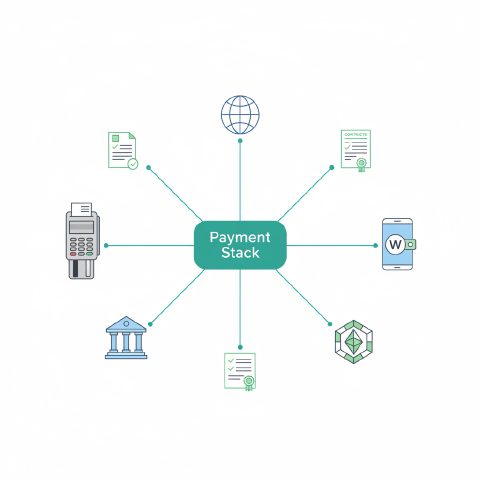
Currency conversion is a cost that surprises operators targeting multiple markets. If you are processing in EUR but your players are depositing in BRL or MXN, the FX margin applied by the acquirer or gateway can be 1.5-3% above the mid-market rate. For LATAM-facing operators, this can be a significant drag on margins. Dedicated local payment methods (PIX in Brazil, OXXO/SPEI in Mexico, PSE in Colombia) avoid this problem entirely and often have lower transaction costs than card processing in those markets, which is why building a multi-method payment stack is not optional for operators with serious LATAM ambitions.
How do chargebacks work in gambling and what is the real risk to your merchant account?
Chargebacks are the central risk that defines the entire high-risk merchant account structure for gambling. A chargeback rate above 1% triggers Visa and Mastercard monitoring programs. Sustained rates above 1.5-2% can result in account termination and placement on the MATCH list, which effectively blacklists you from card processing for five years.
Gambling chargebacks come from several sources. Friendly fraud, where a player disputes a legitimate transaction after losing, is the most common. Unauthorized use claims, where a family member or partner disputes a transaction made on their card, are also frequent. Then there are genuine fraud cases where stolen card data is used to fund gambling accounts. Each category requires a different mitigation strategy. Friendly fraud is addressed through robust player verification, clear transaction descriptors, and documented player consent. Unauthorized use is reduced by requiring 3DS2 authentication on every deposit. Genuine fraud requires real-time fraud scoring and velocity checks on new accounts.
The card scheme monitoring programs are the existential threat. Visa's VDMP (Visa Dispute Monitoring Program) triggers at 100 disputes per month and a 0.9% dispute rate. Mastercard's ETMP (Excessive Chargeback Merchant) program triggers at 100 chargebacks per month and a 1.5% rate. Once you are in a monitoring program, you have a limited window (typically 3-6 months) to bring rates down before the card scheme instructs your acquirer to terminate the account. Termination leads to placement on the MATCH list (Member Alert to Control High-Risk Merchants), which is shared across the Mastercard network. Getting off the MATCH list requires waiting out a five-year period or proving the listing was in error, which is difficult and expensive.
The practical defense is a combination of strong KYC at onboarding (verified identity reduces friendly fraud claims), clear billing descriptors that players recognize on their bank statements, a responsive customer support team that resolves disputes before they become chargebacks, and a chargeback representment process for cases you can win. Some operators use third-party chargeback management services like Chargebacks911 or Midigator, which can recover 20-40% of disputed transactions through representment. At scale, that recovery rate is meaningful. For a site processing $2 million per month with a 0.8% chargeback rate, recovering 30% of those disputes is worth roughly $5,000-$7,000 per month.
Should online casino operators use alternative payment methods instead of or alongside card processing?
Yes, and not just as a backup. In many markets, alternative payment methods (APMs) like e-wallets, bank transfers, and local payment schemes convert better than cards and carry lower chargeback risk. Building a multi-method stack is standard practice for any operator targeting more than one geography.
E-wallets have been a staple of the gambling payment stack for over a decade. Skrill and Neteller (both Paysafe) remain dominant in European markets, though both have tightened their gambling policies in recent years and will scrutinize operator applications carefully. PaySafeCard is popular for players who prefer prepaid options and generates zero chargebacks by design. Trustly, which enables direct bank transfers via open banking, has grown significantly in Scandinavia and the UK and typically converts at higher rates than cards for players who have linked their bank accounts. The chargeback risk on Trustly transactions is essentially zero because the funds are pulled directly from the player's bank account with explicit authorization.
In LATAM, local payment methods are not optional; they are the primary channel. Brazil's PIX instant payment system processed over 40 billion transactions in 2023 and is now the dominant deposit method for Brazilian gambling sites. Mexico's SPEI and OXXO cash voucher system serve players who are unbanked or prefer not to use cards online. Colombia's PSE (Pagos Seguros en Línea) is the standard bank transfer method for licensed operators under Coljuegos. Operators entering these markets without local payment integration will see conversion rates 30-50% below what a properly localized payment stack achieves.
Crypto is the third pillar of the modern gambling payment stack, particularly for offshore operators. CoinsPaid, B2BinPay, and NOWPayments all offer casino-specific integrations with automatic conversion to fiat if the operator prefers not to hold crypto on the balance sheet. The processing fees are lower than card (typically under 1%), there are no chargebacks, and the settlement can be near-instant. The trade-off is that crypto is not universally adopted by players, and in regulated markets like the UK or Sweden, accepting crypto deposits without proper AML controls can create regulatory exposure. For operators with a Curaçao or Anjouan license targeting crypto-native audiences, it is a natural fit. For operators with an MGA license targeting European recreational players, crypto is a supplement, not a replacement.
What are the most common mistakes operators make when setting up gambling payment processing?
The most costly mistakes operators make are: starting the acquirer application too late, relying on a single processor, accepting the first terms offered without negotiating, and building a payment stack that works in one market but cannot scale to others. Each of these mistakes has cost operators real money and launch delays.
Starting the acquirer application too late is probably the single most common error I see. Operators spend months building the platform, negotiating game content deals, and designing the front end, then start the merchant account application four weeks before planned launch. Underwriting for a gambling account takes 4-12 weeks in the best case. If the acquirer comes back with document requests or compliance questions, you are looking at a 3-5 month process. The result is a built platform sitting idle, burning fixed costs, while the payment processing catches up. Start the acquirer application the day you have a corporate entity and a license application in progress. Do not wait for the platform to be ready.
Single-processor dependency is the operational risk that kills operators who have been running successfully for months. Acquirers can and do terminate gambling accounts with 30-day notice, sometimes with less. The reasons range from a portfolio-wide risk policy change at the acquiring bank to a spike in your chargeback rate to a regulatory change in a market you process in. If your entire payment flow runs through one MID, a termination notice means your site cannot accept deposits until you have a replacement in place, which takes weeks. Operators with two or three acquirers and a payment orchestration layer can reroute traffic within hours. Build redundancy before you need it.
On the negotiation point: the first terms sheet an acquirer sends is rarely their best offer. Reserve rates, MDRs, and chargeback fee structures are all negotiable, particularly if you can demonstrate a credible volume projection, a strong license, and a clean compliance framework. I have seen operators save 1-2 percentage points on their MDR and cut their reserve from 10% to 5% simply by pushing back with comparable quotes from competing processors. Get at least three quotes before signing anything. And read the termination clause carefully. Some contracts allow the acquirer to terminate for convenience with 30 days notice; others lock you in for 12 months with early termination fees. You want the flexibility to leave if a better option emerges, but you also want protection against arbitrary termination.
How do payment processing requirements differ between white-label, turnkey, and custom casino builds?
White-label platforms typically include pre-integrated payment processing through the platform provider's existing acquirer relationships, which speeds up launch but limits your control over terms and margins. Turnkey and custom builds give you direct relationships with acquirers, better long-term economics, and full control, but require you to handle underwriting and integration yourself.
White-label providers like SoftSwiss, EveryMatrix, and Delasport include payment processing as part of their platform package. The operator does not need to secure its own merchant account; the platform provider's acquiring relationships handle card processing, and the operator receives settlements net of fees. This is genuinely useful at launch because it removes one of the hardest problems from the critical path. The downside is that the platform provider takes a margin on payment processing on top of the platform fee, and the operator has no direct relationship with the acquirer, which means no ability to negotiate terms or add acquirers independently.
As volume grows, the economics of white-label payment processing become less favorable. A platform provider charging 1-2% on top of the underlying acquiring cost is extracting real margin from your business. At $500,000 per month in processing volume, that 1.5% overhead is $7,500 per month, or $90,000 per year. Operators who have scaled beyond $1-2 million per month in volume almost always migrate to direct acquirer relationships at some point, even if they stay on the white-label platform for everything else. Some platform providers allow this; others do not, or charge a fee for the privilege. Check the contract terms before you sign.
Custom builds and turnkey platforms where the operator owns the technology require direct acquirer relationships from the start. This is more work upfront but gives the operator full control over the payment stack: which acquirers to use, how to route transactions, what APMs to offer, and how to negotiate terms as volume grows. For operators with serious long-term ambitions and a credible funding runway, the direct relationship model is the right architecture. For operators launching quickly with limited capital and wanting to validate the market before investing in infrastructure, white-label payment bundling is a reasonable starting point, with a clear plan to migrate once volume justifies it.
| Build Type | Payment Setup | Acquirer Relationship | Fee Control | Time to Launch |
|---|---|---|---|---|
| White-Label (SoftSwiss, EveryMatrix) | Bundled with platform | Via platform provider | Limited; provider margin added | Fast (2-4 weeks) |
| Turnkey (operator-owned tech) | Operator arranges directly | Direct with acquirer | Full negotiation possible | Medium (8-16 weeks) |
| Custom Build | Operator arranges directly | Direct with acquirer | Full negotiation possible | Slow (6-18 months) |
| Aggregated (via PSP aggregator) | Via aggregator MID | Indirect | Moderate; aggregator margin applies | Medium (4-8 weeks) |
What should operators know about AML compliance and its impact on payment processing relationships?
AML compliance is not just a regulatory obligation; it is a commercial prerequisite for maintaining payment processing relationships. Acquirers conduct periodic reviews of their gambling merchants, and operators with weak AML frameworks risk account suspension even if their chargeback rates are fine. The bar has risen significantly since 2022.
The Financial Action Task Force (FATF) guidelines on gambling have pushed regulators and financial institutions to treat online casinos as high-risk entities for money laundering purposes. This has cascading effects on payment processing. Acquirers are themselves regulated financial institutions subject to AML audits, and they are increasingly requiring their gambling merchants to demonstrate robust Source of Funds (SOF) procedures, enhanced due diligence for high-value players, and transaction monitoring systems that flag suspicious patterns. An operator who cannot produce evidence of these controls during an acquirer review risks account suspension.
The practical requirements vary by license jurisdiction. MGA-licensed operators must follow the Malta Financial Intelligence Analysis Unit (FIAU) implementing procedures, which are detailed and regularly updated. UKGC-licensed operators operate under the UK Money Laundering Regulations 2017 and the UKGC's own AML guidance, which includes specific requirements around customer due diligence thresholds. Curaçao GCB-licensed operators under the new 2023 framework must maintain AML policies that meet FATF standards, though enforcement has historically been lighter than in Malta or the UK. The gap is narrowing, but it exists.
From a payment processing standpoint, the most important AML controls to have documented and operational before approaching acquirers are: a written AML policy reviewed by a qualified MLRO (Money Laundering Reporting Officer), a KYC procedure that verifies identity before first withdrawal, a transaction monitoring system (even a basic rules-based one), a process for Enhanced Due Diligence on players who deposit or withdraw above defined thresholds, and a SAR (Suspicious Activity Report) filing procedure. Operators who can present all of this in an organized compliance pack will move through acquirer underwriting faster and on better terms than those who are assembling it reactively.




Comments
No comments yet, be the first.